English
 Türkçe


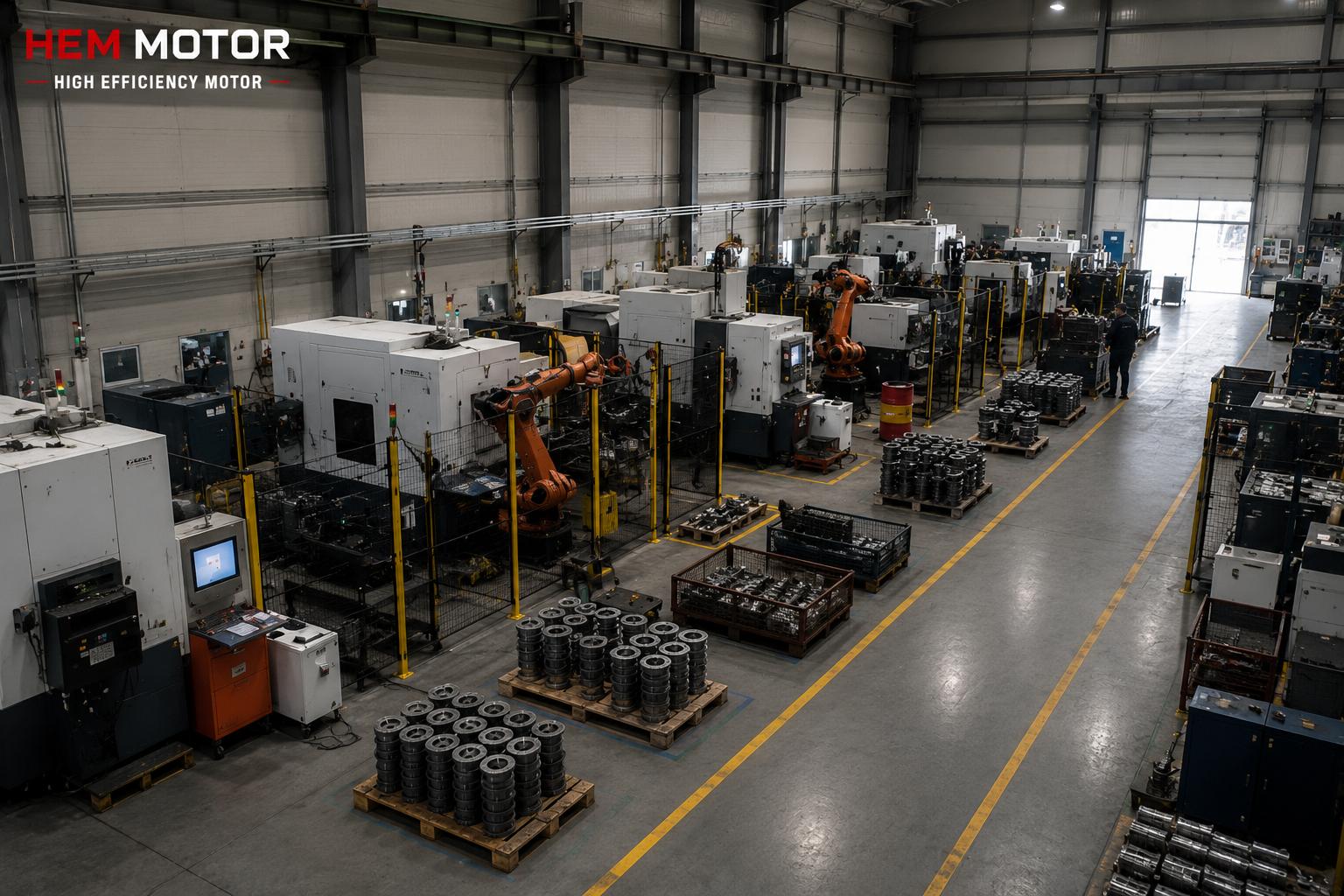

Bakeries, bread factories and flour mills are special facilities where food hygiene, continuous production and different torque profiles coexist. The dough mixer demands very high torque at low speed; flour sifting and aspiration systems run uninterrupted in dusty environments; roller mills and elevators rotate under constant load. In these plants, motor selection requires not only power but also a hygienic structure suitable for food contact, correct IP protection and insulation resistant to continuous operation. As a plant owner, production manager or procurement officer, you know that a wrongly selected mixer motor can both halt production and increase food safety risk. This page is prepared to clarify the correct motor supply decision for every main piece of equipment on a bakery-bread-flour production line. For a fast quote, share your requirement list with us.
Basic Principles of Motor Selection in Bakery, Bread and Flour Production
In this sector, motor selection rests on three basic principles: correct torque-speed profile, food hygiene compliance and continuous operation endurance. Applications requiring high torque-low speed such as dough mixing coexist in the same plant with fan applications requiring high speed such as flour aspiration; this makes a separate motor evaluation mandatory for each piece of equipment. In zones with indirect food contact, the motor is expected to be cleanable, corrosion-resistant and adequately IP-protected. Since flour dust can form a flammable and explosive dust cloud, the dust explosion risk must also be evaluated in enclosed silo and aspiration zones.
While IP55 protection is the starting point in standard production zones, IP65 protection is preferred in continuously cleaned and humid areas. F class insulation is the basic standard. To deepen hygiene and IP protection principles in food factories, our food factory electric motors hygiene article is a comprehensive resource. For equipment-based motor selection specific to flour mills, our feed factory and mill motors article applies similar logic.
Dough Mixer Motors: High Torque, Low Speed
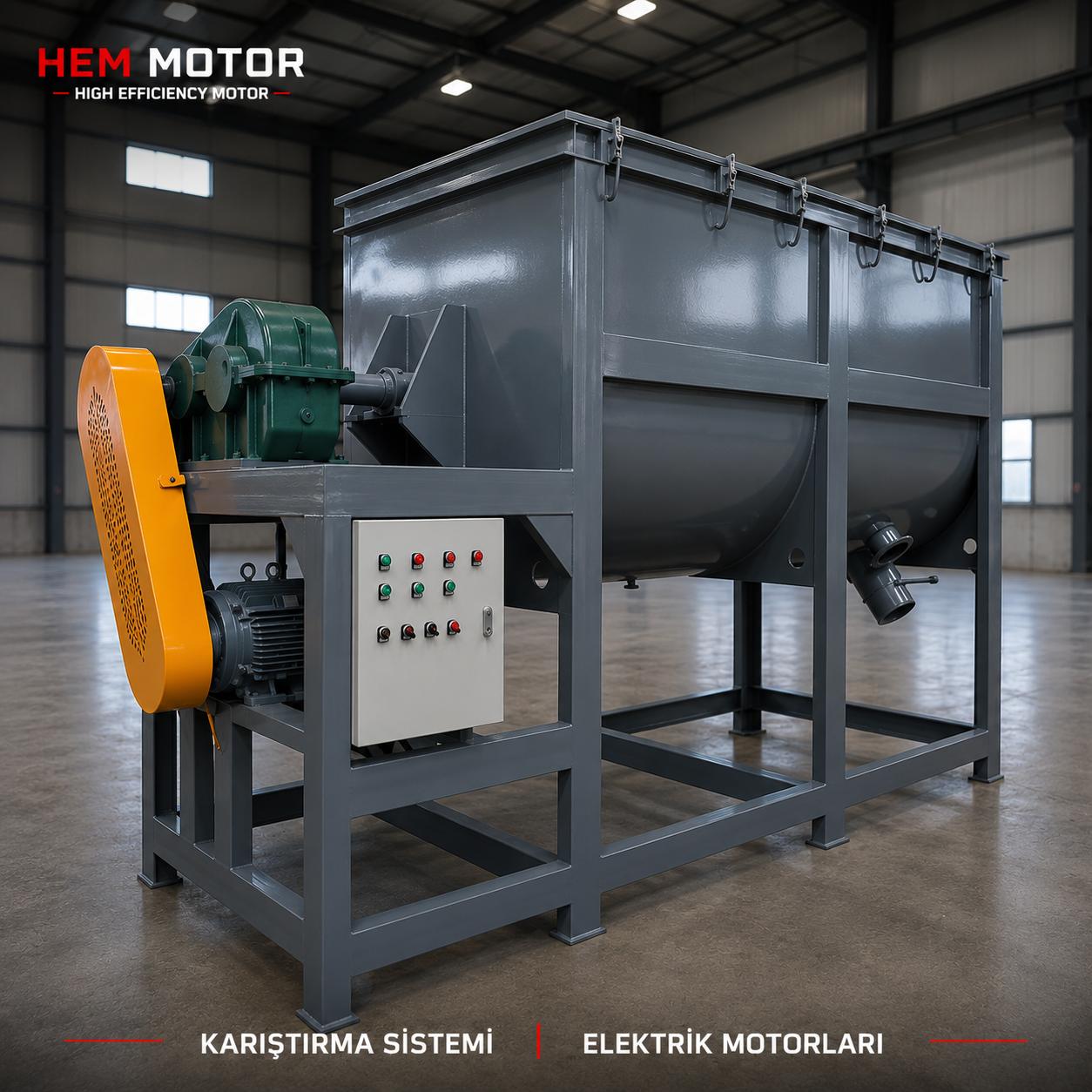
The most critical motor in bread and dough production is the drive motor of the mixer. Dough mixing requires very high torque and low output speed to continuously turn thick, viscous dough. This motor operates under frequent stop-start and variable load; therefore it must have high starting torque and a robust bearing structure. Mixer motors generally operate by stepping down a standard 1500 rpm motor to a low output speed through a gearbox; in some two-speed mixers, a Dahlander (dual-speed) motor is preferred.
Reducer and Dual-Speed Selection
In mixer drives, the motor and gearbox must be evaluated together. For low output speed and high torque, worm gear reducers offer a compact solution, while bevel helical reducers provide an efficiency advantage at higher powers. In mixers requiring different speeds for the kneading and mixing phases, our dual-speed (Dahlander) asynchronous motors article explains when they are preferred. For frame and flange compatibility in motor-gearbox matching, refer to our reducer-to-motor matching guide.
Roller Mill and Flour Grinding Motors
In flour mills, wheat is ground into flour in roller mills. Roller mills operate under continuous and constant load; these motors are selected for S1 continuous duty, running at full load for long periods. Roller mills generally run with a 1500 rpm motor. Since motors on the grinding line run continuously in a dusty environment, IP protection and regular cleaning are important.
Since energy cost is high for roller and grinding motors running continuously at full load, IE4 super premium electric motors provide a fast payback; for regulatory-compliant standard selection, IE3 efficient electric motors are also evaluated. For the importance of duty type in continuously running motors, our duty type (S1-S6) selection article is useful.
Sifter, Aspiration and Flour Handling Motors
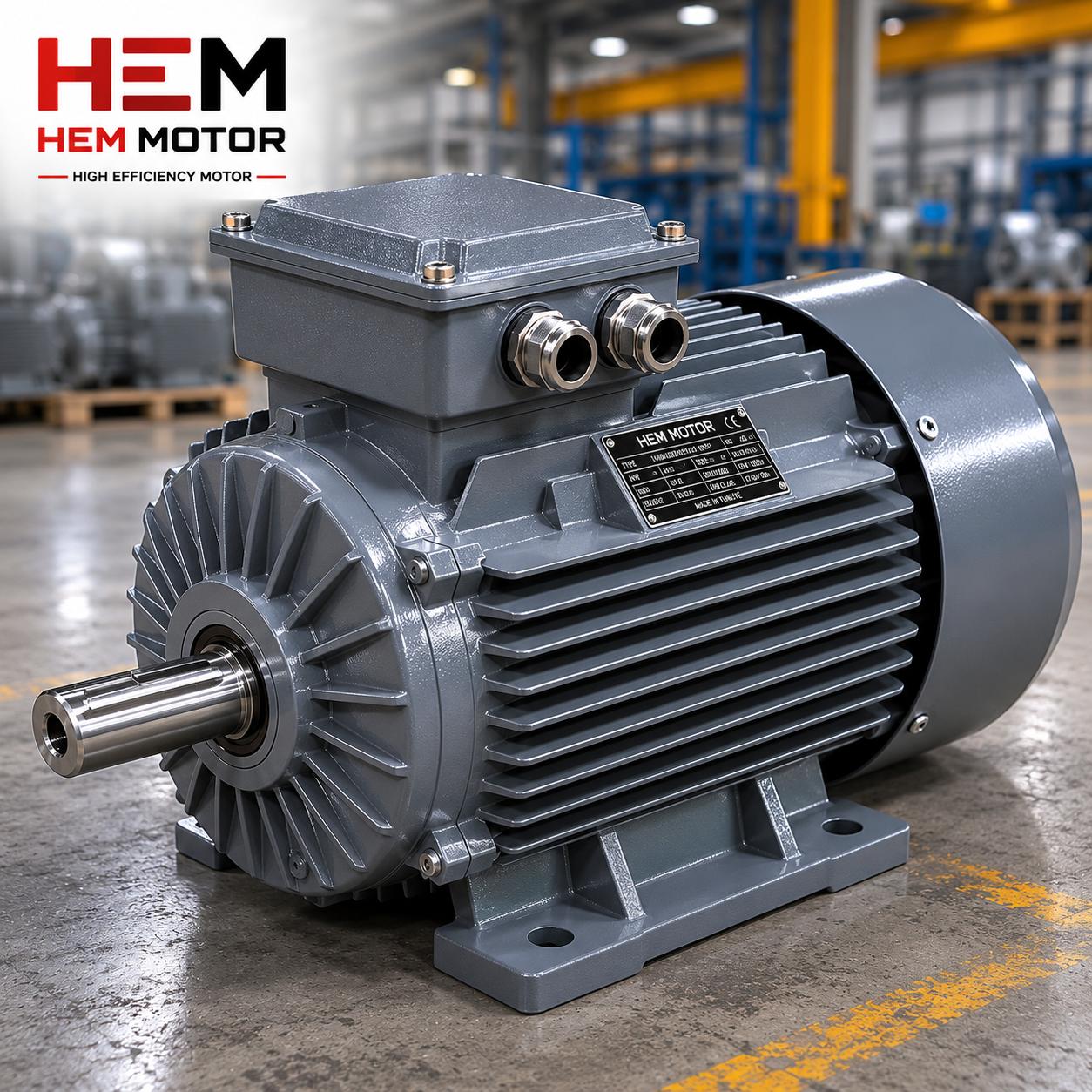
In flour production, sieve machines classify flour with rotary and vibrating screens. Aspiration systems suck up flour dust, both maintaining hygiene and reducing dust explosion risk. Aspiration and fan motors run at high speed (usually 3000 rpm), and selecting them as high-efficiency directly affects energy cost. Bucket elevators and screw conveyors are used in flour and raw material handling; these motors use geared drives to produce high torque at low speed.
Aspiration Fan and Dust Management
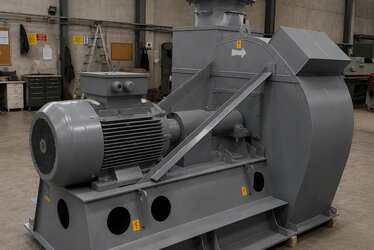
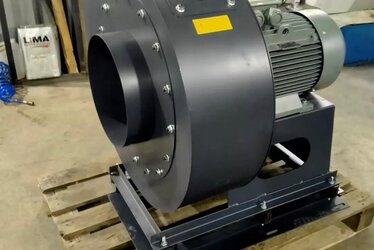
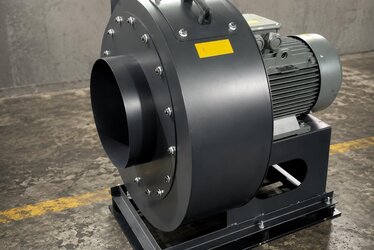
Flour aspiration is a critical system in terms of food hygiene and explosion safety. Aspiration fan motors run continuously and require high IP protection in dusty environments. For dust collection and aspiration fan motor selection, our aspirator and dust collection fan motor article is directly helpful. For power and speed matching by fan type, our centrifugal and axial fan motor selection guide is useful.
Food Hygiene, IP Protection and Continuous Production
In bakeries, bread factories and flour mills, motors have indirect contact with food; therefore they must be cleanable, corrosion-resistant and adequately IP-protected. In continuously cleaned and humid areas, IP65 protection and a sealed terminal box are preferred. Terminal box sealing and correct cable gland selection prevent flour dust and moisture from entering the motor; our motor terminal box and cable connection article gives detailed information on this. To evaluate insulation class in dusty and hot environments, our insulation class in hot and dusty environments article can also be reviewed. For more products and applications, visit the HEM Motor homepage and our industrial motors blog category.
Supply and Stock: Securing Continuous Production
In bakeries and flour mills, production continuity is essential; the failure of a mixer or roller mill motor can stop production entirely. Therefore, keeping critical motors in stock is as important as selecting the right motor. While standard motors in the most commonly used power and speed combinations can be delivered quickly from stock, special-speed mixer and high-power roller mill motors may require lead time planning. For an accurate and fast quote, having the motor's nameplate values ready speeds up the process; our information to provide when requesting a quote article offers a complete checklist. For critical spare motor planning, our critical spare motor list article provides guidance.
Frequently Asked Questions
Why does a dough mixer require high torque and low speed?
Since dough is a thick, viscous material, the mixer demands very high torque and low output speed to continuously turn it. For this reason, mixer motors generally operate by stepping down a standard 1500 rpm motor to a low speed through a gearbox and must have high starting torque and a robust bearing structure. In some two-speed mixers, a Dahlander motor is preferred. If you provide your machine's torque, speed and phase data, we will recommend the correct motor-gearbox combination.
Which protection class is required for a flour aspiration fan motor?
Since aspiration fan motors run continuously in dusty environments, at least IP55 and IP65 protection in dense dust zones is recommended. Because flour dust can form a flammable and explosive dust cloud, the dust explosion risk must also be evaluated in enclosed silo and aspiration zones. In addition, since aspiration fans run continuously at high load, high-efficiency motor selection reduces energy cost.
Should flour and bakery factory motors be selected to suit food hygiene?
Yes. Since motors in these plants have indirect contact with food, they must be selected as cleanable, corrosion-resistant and adequately IP-protected. In continuously cleaned and humid areas, IP65 protection, a sealed terminal box and a corrosion-resistant surface are preferred. If you share your plant's cleaning regime and zone conditions, we will determine the correct protection class together.
Get a Quote
Get supply support for the dough mixer, roller mill, sifter, aspiration fan and elevator motors of your bakery, bread and flour factory, suited to food hygiene, correct torque and IP protection. Send your requirement list via our contact page or call us at +90 (532) 345 49 86. Our expert team is with you for the correct motor selection and fast delivery.