English
 Türkçe


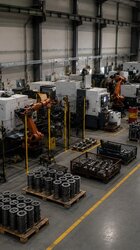
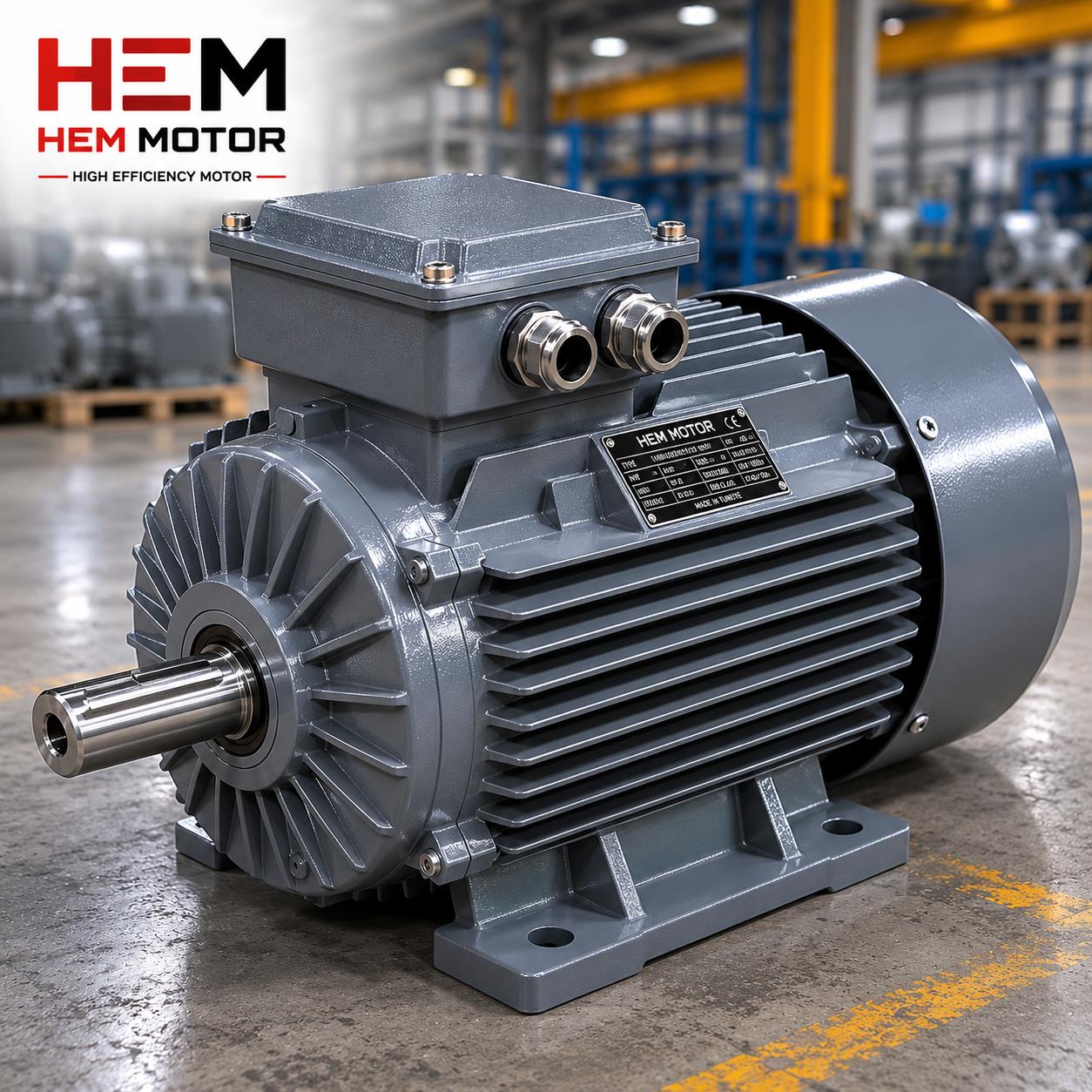

Sugar, starch and yeast factories run continuous-flow processes where any stoppage translates directly into lost production. From processing beet or corn to packaging crystallized sugar, from separating starch milk to fermenting yeast cells, a different load profile drives an electric motor at every step. In these plants the centrifuge separates crystals at high speed, dryers gently remove moisture while turning large fans, and conveyors and elevators move tonnes of product along the line. A single wrongly selected motor spreads through the whole line as overheating, premature bearing failure and unplanned downtime. In this article we cover the three critical motor groups in sugar, starch and yeast production (centrifuge, dryer and material handling) against power, speed, protection class and hygiene criteria, and outline what to watch for during supply.
Mapping the Motor Demand in Sugar, Starch and Yeast Production
Although these three sectors look similar, they differ in process. Sugar factories revolve around beet washing, slicing, diffusion, evaporation and crystallization; starch plants around wet milling, separation and drying; yeast factories around molasses dilution, fermentation, cell harvesting by centrifuge and drying. The common thread is that each line carries hundreds of motors of varying power, most of them working in or near food-contact zones. Motor selection therefore goes beyond a power-speed calculation; washability, hygiene and corrosion resistance also come into play. When deciding which ratings to keep in stock for a plant-wide purchase, the logic of a critical spare motor list prevents the most expensive line stoppages.
Centrifuge Motors: Separating Crystals and Cells at High Speed
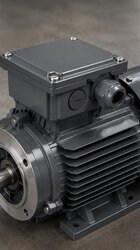
The centrifuge separates sugar crystals from molasses, yeast cells from liquid or starch from protein, and usually runs at high speed (2-pole, 3000 rpm rated) or via gradually accelerating drives. The most critical property here is the motor's ability to drag a high inertia at start-up; spinning a full basket demands high starting torque and balanced acceleration. A cast iron frame is preferred for absorbing vibration under unbalanced load and for its mechanical strength. For centrifuge motors running continuously under heavy load, IE4 efficiency class lowers both energy cost and heating, which is why IE4 electric motors stand out here. Because starting current is high in these applications, the starting method must also be chosen correctly; you can compare options in our star-delta versus soft starter article.
Dryer and Fluidized Bed Fan Motors
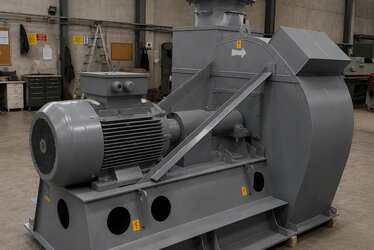
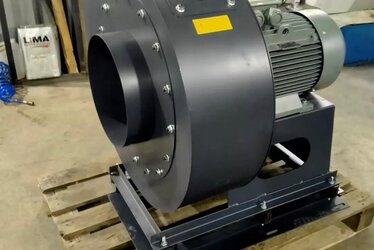
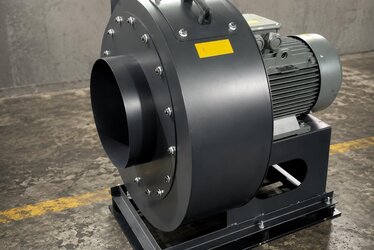
Crystallized sugar, starch granules and pressed yeast are dried to reduce moisture before packaging. Fluidized bed dryers, rotary drum dryers and hot-air systems run on large centrifugal or axial fans. These fan motors require continuous duty (S1) and a high protection class; moisture, steam and fine dust call for IP55 and above. Because fan speed directly sets airflow, the power-speed match must be made carefully. For fan motors on the aspiration and dust collection side, our aspirator and dust collection fan motor selection and centrifugal and axial fan motor articles detail power selection by fan type. Plants seeking to raise dryer-line efficiency cut annual energy cost with high-efficiency electric motors on fan drives.
Conveyor, Elevator and Screw Motors
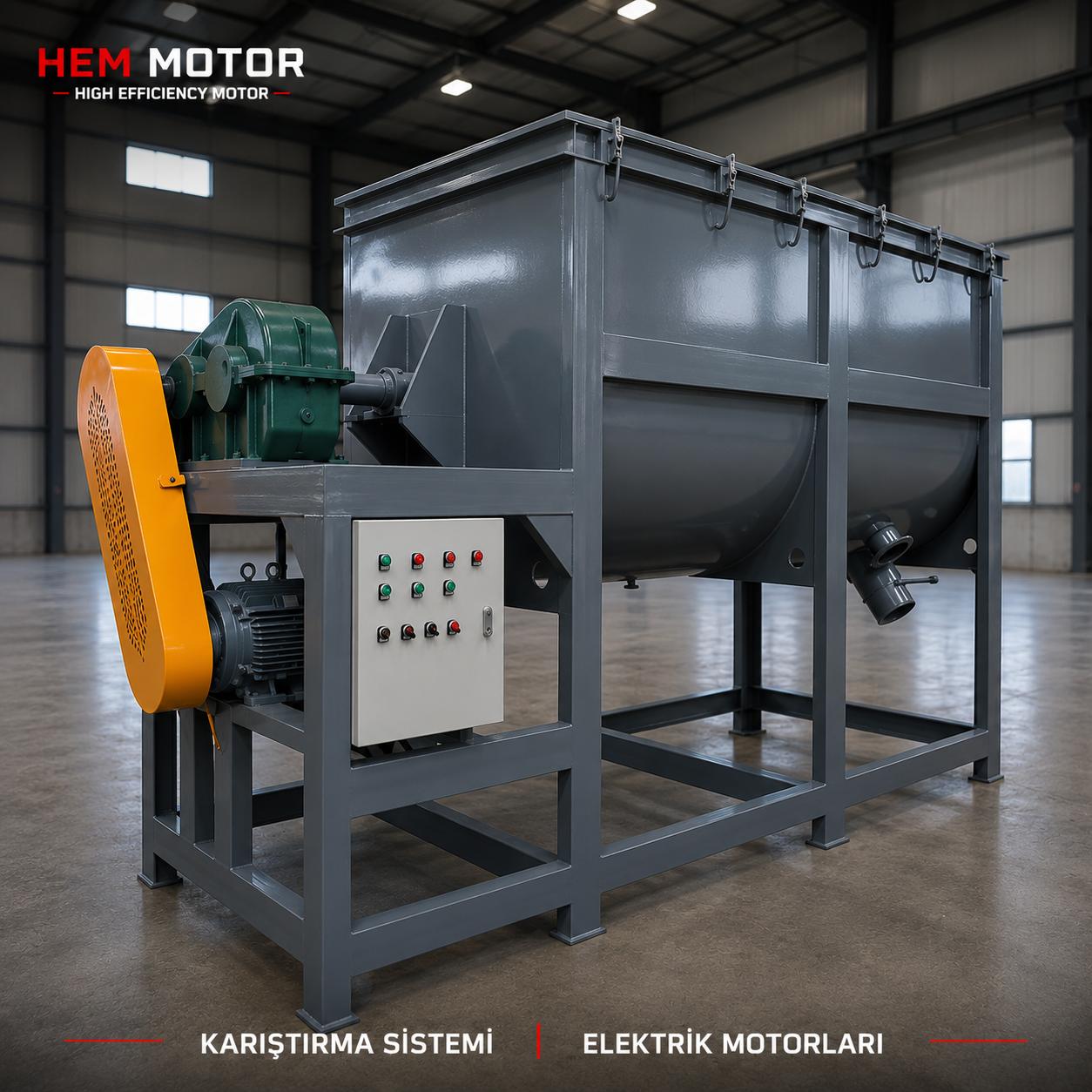
Carrying beet and corn into the line, lifting crystallized sugar with elevators, moving dry yeast and starch granules to silos; all of this runs on belt conveyors, bucket elevators and screw conveyors. Since speed is reduced to obtain high torque, the motor usually works with a gear unit. For correct drive, the IEC frame, flange and shaft compatibility between gearbox and motor is critical; worm gear reducers suit light-to-medium loads, while helical worm gear reducers serve conveyors needing higher torque and efficiency. The mounting type (B3 foot, B5 flange, B35 combined) is chosen to fit the machine; see our electric motor mounting types page for details. To avoid stopping the line when a conveyor motor fails, our emergency replacement and direct swap checklist is a useful guide.
Food Hygiene, IP Protection and Duty Type Criteria
Sugar, starch and yeast plants are wet, dusty environments with heavy washdown. Protection class is therefore decisive: IP55 is enough in dry zones, while areas washed with pressurized water or exposed to direct steam and moisture demand higher protection. To set the right class, review our IP protection class selection article. Food lines favour smooth, easy-to-clean and corrosion-resistant frames; on this subject our food factory motor hygiene and dairy, meat and beverage hygiene articles offer practical criteria for washable environments. Continuous centrifuges and fans need S1 duty, while intermittent dosing and feeding motors suit other duty types; use our duty type (S1-S6) selection guide for correct classification.
Insulation Class and Hot-Environment Endurance
Ambient temperatures rise in evaporation and drying zones. Class F insulation provides a standard level of protection; at points exposed to continuous high heat, class H insulation extends life. To evaluate frame and insulation together for hot, dusty conditions, our motors in hot and dusty environments article helps. In plants like sugar factories that run 24 hours a day during campaign periods, keeping the motor efficient at its real load ratio also matters; for correct sizing see our motor load ratio and correct sizing article.
Supply and Stock Planning
In sugar factories, production peaks during the beet campaign, when a single motor failure can halt the entire line. Keeping spares for the most critical ratings (centrifuge, main dryer fan, main conveyor) is therefore a smart investment. Providing accurate information speeds up bulk quotations; for what to prepare beforehand, use our information to provide when requesting a quote article. To decide whether a production order or stock delivery is more advantageous, clarify it with our stock delivery vs production order content. If you are replacing an existing motor one-to-one, follow the steps in nameplate matching to avoid the wrong motor to prevent receiving the wrong product.
Power and Speed Combinations: The Right Choice at Different Points of the Line
On sugar, starch and yeast lines, motor power and speed vary widely from application to application. Beet washing drums and diffusion mixers need high torque at low speed; here 4-, 6- or 8-pole motors are used with a gearbox. Centrifuges and evaporator circulation pumps run at high speed (2-pole), while main dryer fans mostly provide balanced airflow with 4-pole motors. Choosing the right pole count is decisive for both efficiency and noise; we compared the differences between 2-, 4-, 6- and 8-pole motors in our asynchronous motor pole selection article. Remember that an asynchronous motor's actual speed is slightly below the rated value due to slip; for example, a 4-pole motor turns at about 1440 rpm instead of 1500. We explain the effect of this difference on pump and fan flow in our slip and actual speed in asynchronous motors article. During busy periods such as the beet campaign, running the motor at its real load ratio benefits both efficiency and cooling.
Power Calculation for Pump and Mixer Motors
Sugar and starch plants have many pumps moving juice, molasses, starch milk and various fluids. These pumps' motor power is calculated from flow and head; a wrongly sized pump motor is either inadequate or runs inefficiently at constant low load. To set the right power, our motor power calculation article explains the kW needed for pumps, fans and conveyors step by step. For centrifugal pumps, you can find the flow-head-power relationship and correct motor matching in our centrifugal pump motor selection content. Since mixer and agitator drives reduce speed to obtain high torque, choosing the right gearbox ratio directly sets the output speed.
Energy Efficiency and Maintenance Economics
Because sugar factories run 24 hours a day during the campaign period, electricity cost makes up a large share of total operating cost. Switching to high-efficiency motors therefore gives quick payback, especially on continuously running centrifuges, pumps and fans. We examine the effect of replacing an old standard motor with a more efficient one on annual consumption and payback in our total cost of ownership (TCO) article. Besides efficiency gains, a correctly selected motor heats less and has longer bearing life, reducing unplanned downtime. Regular maintenance is critical in food plants for both hygiene and reliability; you can find the periodic check schedule in our electric motor maintenance and periodic check schedule article. Bearing greasing and lubrication directly affect maintenance cost on continuously running motors; we cover this in our bearing greasing and lubrication content. We detail the causes of early failure and understanding quality at purchase in our electric motor lifespan and early failure causes article.
A Purchasing Checklist for Selecting the Right Motor
Supplying the right motor in a sugar, starch or yeast factory directly affects production continuity, so a few critical pieces of information should be clarified before purchase. First, define the application type: is a centrifuge, dryer fan, pump or conveyor being driven? Each application requires a different power, speed and duty type. Then assess the environmental conditions: is the area dry, washed with pressurized water, and how high is the temperature? This information sets the protection class (IP55 and above) and insulation class (F or H). Third, check the mechanical connection: are the motor's mounting type (B3, B5, B35), shaft diameter and key size compatible with the machine? If replacing an existing motor, matching the nameplate one-to-one eliminates the risk of the wrong product. Finally, review the efficiency and regulation side; on continuously running motors a high efficiency class both lowers energy cost and complies with current efficiency requirements. We examine the efficiency class mandate and which power requires which class in our IE3 and IE4 efficiency mandate article. By following this checklist, you both select the right motor and speed up the quote process. You can also find the motor needs of flour, bakery and similar lines in food plants in our bakery, bread and flour factory electric motors article.
Frequently Asked Questions
What speed should a sugar factory centrifuge motor be?
Centrifuge applications usually run at high speed; 2-pole motors (around 3000 rpm rated) are common. However, the correct speed is the value the machine manufacturer sets based on basket diameter and target g-force. What matters is having enough starting torque and the right starting equipment to drag the high inertia of a full basket. If you are replacing an existing centrifuge, matching the power, speed and mounting type on the motor nameplate one-to-one is the safest route.
Which IP protection class is needed on yeast and starch lines?
IP55 is generally sufficient in dry, dust-heavy areas. However, zones washed with pressurized water or exposed to direct steam or high humidity require a higher protection class. To set the right class for your hygiene regime, clarify the cleaning method (dry brushing or pressurized water) and exposure frequency, then request the protection class accordingly.
Should I buy conveyor and elevator motors with a gearbox?
On belt conveyors, bucket elevators and screw conveyors, speed is reduced to obtain high torque, so the motor almost always works with a gearbox. Whether you procure the geared motor as a single (monoblock) unit or as separate motor and gearbox depends on your maintenance and stock strategy. As long as you set IEC frame, flange and shaft compatibility correctly, both approaches work; we can determine the right gearbox housing together based on the output speed and torque you need.
Get a Quote
If you want to supply centrifuge, dryer fan, conveyor and elevator motors for your sugar, starch or yeast factory with the right power, speed, protection class and mounting type, our team is here to help. Share your requirement list and we will prepare a fast, accurate quote. Call us at +90 (532) 345 49 86 or reach us through our contact page.