English
 Türkçe

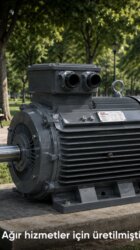
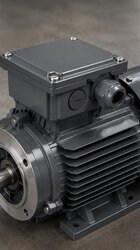
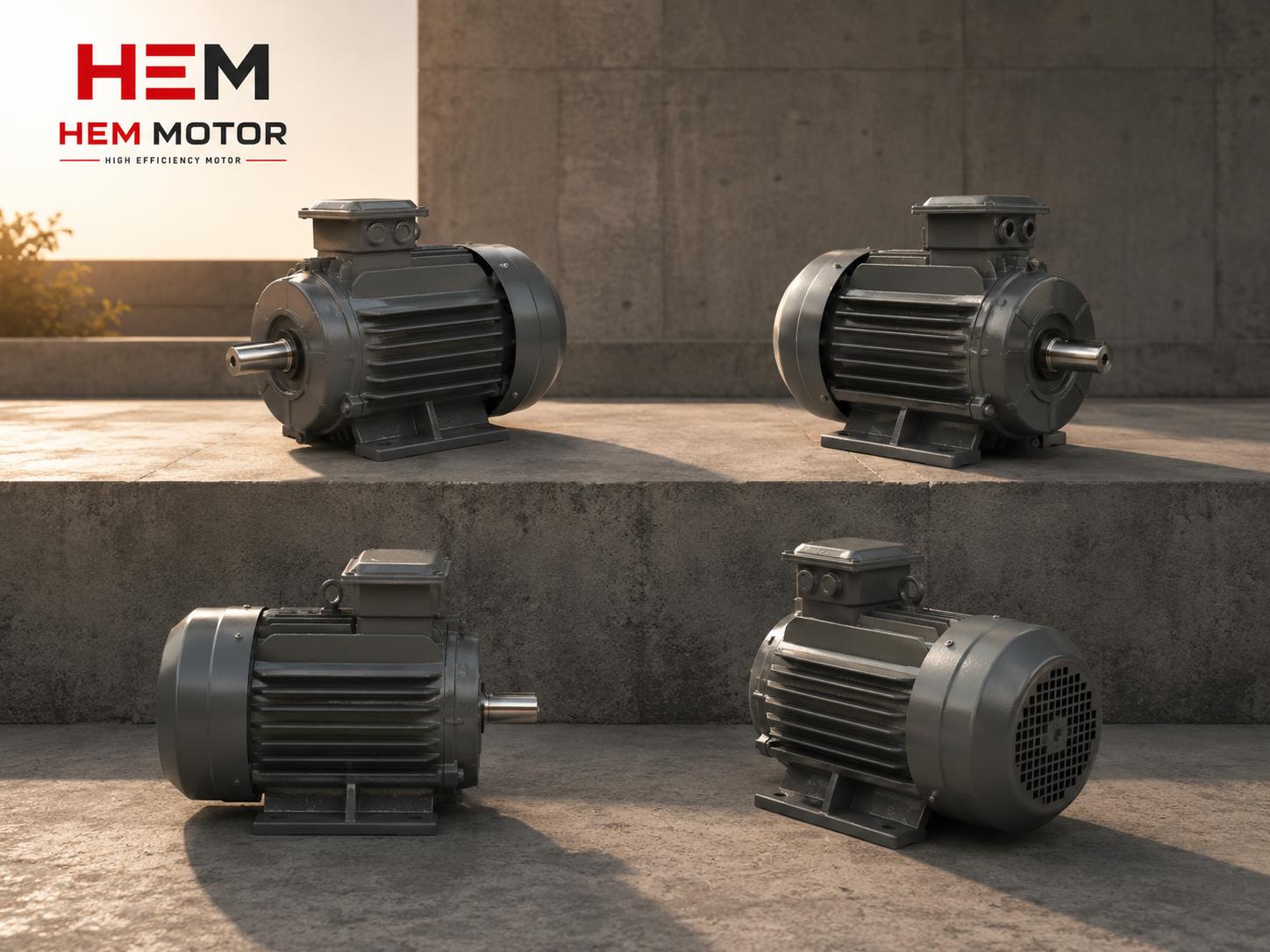

Elevator and escalator systems are drive applications that must operate continuously and safely; in these systems the motor not only provides motion but also undertakes critical tasks such as safely carrying the load, stopping at the correct position and holding the load. Therefore, supplying an elevator and escalator motor is different from an ordinary motor purchase; torque, speed, gearbox compatibility, braking and exact replacement must be correctly evaluated. This guide clearly explains, for building managements, elevator maintenance companies, procurement managers and machine manufacturers, the criteria for selecting the right drive motor and how to exactly replace an existing motor. The goal is to supply the right motor without disrupting the safety and continuity of the system.
The Basic Difference Between Elevator and Escalator Drives
Although elevators and escalators both carry heavy and continuous loads, their drive characteristics are different. The elevator is a vertically moving system with frequent starts and stops; as the cabin rises, the motor lifts the load, and as it descends, it holds the load in a controlled manner. Therefore, high starting torque, precise positioning and safe load holding are critical in elevator drives. The escalator, on the other hand, is a horizontal-inclined, continuous and balanced-load system; here the priority is uninterrupted and low-vibration operation.
In both applications the motor usually works together with a gearbox, because the required low output speed and high torque are obtained not directly from the motor but from the gearbox. We discuss the logic of geared drives in our geared motor vs separate motor + reducer article. You can review alternatives that meet the low-speed requirement without a gearbox in our low-speed high-pole motors article.
Torque: Why Is It the Most Critical Parameter in an Elevator Motor?
In an elevator drive, the decisive parameter is torque rather than power. This is because the motor's job is to lift the cabin and the load inside it against gravity; this requires sufficient starting torque. A motor with insufficient torque struggles to lift a full cabin, jerks at start-up and overheats. Therefore, when selecting an elevator motor, the maximum load to be carried, the cabin weight, the counterweight balance and the speed are evaluated together.
The torque requirement is calculated together with the gearbox ratio: while the motor produces low torque at high speed, the gearbox reduces the speed and increases the torque. Therefore, the motor and gearbox must be sized together. We discuss in detail the effect of the motor's torque class on starting behaviour in our asynchronous motor torque classes and starting torque article.
Speed and Speed Control: Comfort and Safety
In elevators and escalators, the output speed directly determines the speed and comfort of the system. In an elevator, the smooth starting and stopping of the cabin depends on speed control; sudden acceleration or deceleration both disrupts comfort and increases the mechanical load. Therefore, in modern systems the motor is usually driven by a frequency drive (VFD); the drive smooths the start and stop and ensures precise stopping at floor level.
Drive With a Frequency Drive
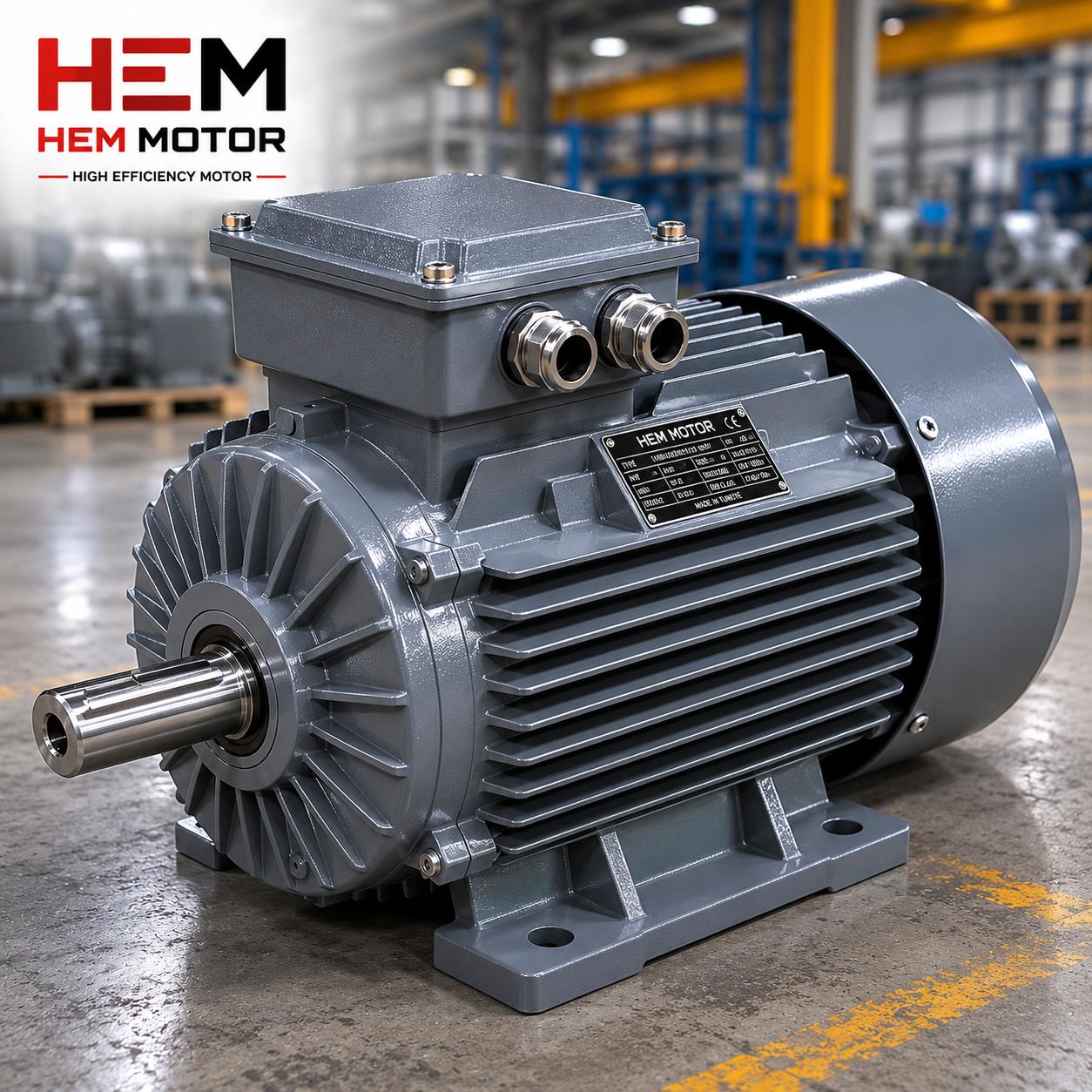
An elevator or escalator motor running with a VFD can adjust the speed profile according to the need; this provides both energy savings and comfort. However, in a drive application the motor's compatibility with the drive, its cooling and its heating at low speed must be evaluated carefully. We cover asynchronous motor selection with a VFD in our frequency drive with asynchronous motor article. You can review whether constant or variable torque is needed in a variable-speed application in our variable-speed application motor selection article.
Brake and Position Holding: The Heart of Safety
In an elevator drive, braking and load holding are directly related to safety. When the cabin stops, the motor or gearbox must hold the load safely; and when power is cut, the brake must engage to keep the cabin fixed. Therefore, elevator motors usually operate with an integrated brake system (brake motor). The brake both maintains the position during a normal stop and ensures safety in an emergency.
One advantage of worm gear reducers is that they exhibit a self-locking feature at certain ratios; this helps prevent the load from running back. We cover the self-locking feature in our self-locking in worm gear reducers article. We detail brake motor supply and its applications in our brake motor supply article.
The Specific Needs of Escalator Drives
Unlike elevators, escalators and moving walkways run almost uninterrupted throughout the day and must move in a balanced way under a continuously changing passenger load. Therefore, the drive motor must be able to efficiently handle both the full load during peak hours and the partial load during low-intensity periods. Low vibration and quiet operation are important for both user comfort and mechanical life; a vibrating motor accelerates wear in the step chain and gear system.
In these systems the motor usually works with a high-torque gearbox at a low output speed. Because of the continuous duty regime, the motor's cooling and insulation resistance are critical. We cover low-noise and low-vibration motor selection in our noise and vibration: low-noise motor selection article, and the continuous line and torque requirement in our continuous line and torque applications article.
Body Material and Protection: Durability Priority
Elevator and escalator motors are critical equipment expected to operate trouble-free for years; therefore body durability is important. In heavy-duty and high-vibration applications, the cast iron body offers superior resistance to mechanical impact and vibration. In more compact and lighter applications, an aluminium body may be preferred. The motors in our catalogue range are produced with 100% copper winding and IP55 protection class; this ensures a long life and reliable operation.
In cases where the escalator is outdoors (for example a metro entrance, an open shopping mall passage), the motor's protection against moisture and dust may need to be higher. You can review body material selection according to environmental conditions in our cast iron or aluminium body article, and IP protection class selection in our IP protection class selection article.
Geared Drive: Motor and Gearbox Matching
In elevator and escalator systems, the required low output speed and high torque are obtained with a gearbox. Here the motor's IEC frame and flange dimension must match the gearbox's input connection exactly; otherwise mechanical mounting is not possible. The motor power is matched with the torque the gearbox can carry, and the gearbox ratio with the required output speed.
For correct motor-gearbox matching, the motor's frame type (for example IEC 90, 100, 112), flange type (B5/B14) and shaft diameter must be known. We cover motor selection suitable for worm and helical reducers in our worm gear reducer motor matching article. For our gearbox range, you can look at our worm gear reducers and helical worm gear reducers pages, and for the motor range our high-efficiency electric motors page.
Exact Replacement: Correctly Replacing the Existing Motor
When an elevator or escalator motor fails, the safest method is to replace the existing motor with exactly the same specifications. For this, the power (kW), speed/pole, voltage, frequency, connection type (B3/B5/B14), frame size, shaft diameter and brake feature, if any, on the motor's nameplate must be matched completely. In an elevator drive, even the smallest incompatibility can cause a mounting problem or a safety gap; therefore the replacement selection must be made meticulously.
The fastest and safest method is to send photos of the existing motor and gearbox nameplates; this way all mechanical and electrical features are matched correctly. We cover the exact replacement process in our old brand motor direct replacement article, and preventing the wrong motor from arriving in our avoid the wrong motor delivery article.
Shaft, Key and Coupling: Details of Mechanical Compatibility
In an elevator and escalator drive, how this power is transmitted to the mechanical system is as important as the motor's power. The motor shaft is connected to the gearbox or drive sheave through a coupling or pulley; in this connection, the shaft diameter, key dimension and coupling compatibility must be exact. A wrong shaft diameter or key dimension makes mounting impossible or leads to vibration and early wear.
Therefore, in replacement motor selection, not only the electrical values but also the shaft diameter and key dimension must be matched with the existing motor. We discuss shaft diameter, key and coupling compatibility in detail in our motor shaft diameter and key dimensions article. For the correct connection type selection, our B5 vs B14 connection type selection article is a guide.
Continuous Operation, Maintenance and Supply Continuity
Escalators often run uninterrupted throughout the day; this requires the motor to have a continuous duty (S1) regime and a low-vibration, reliable structure. Elevators, on the other hand, run with frequent starts and stops, so they must be selected in the correct duty type. We cover duty type selection in our duty type (S1-S6) selection article.
In these systems, downtime means direct user inconvenience and commercial loss; therefore, backing up critical motors and fast supply are important. You can review spare motor planning in our critical spare motor list article. You can visit our products page for the entire product range and our mounting types page for mounting options.
Frequently Asked Questions
What should I pay attention to when replacing my elevator motor?
The most important thing is exact matching: the power (kW), speed/pole, voltage, connection type, frame size, shaft diameter and brake feature must be the same as the existing motor. In a geared drive, the motor's flange and shaft dimensions must also fit the gearbox exactly. The safest method is to send us photos of the existing motor and gearbox nameplates.
Is power or torque more important in an elevator motor?
Torque is decisive in an elevator drive, because the motor's job is to lift the load against gravity. The power value is important but, without sufficient starting torque, the motor cannot safely lift a full cabin. The right choice is made by evaluating the load to be carried, the speed and the gearbox ratio together.
How much does an elevator motor cost?
Instead of giving a fixed list price, we offer a quote specific to your need, because the price varies according to power, speed, brake feature, gearbox compatibility and connection type. If you send us the nameplate information of the existing motor or the requirements of the system, we will quickly provide you with the correct quote.
Get a Quote
We supply drive motors with the correct torque, speed, brake and gearbox compatibility for your elevator and escalator systems, with the assurance of exact replacement. To get the right motor without disrupting the safety and continuity of the system, request a quote from our expert team: call +90 (532) 345 49 86 or send your request through our contact page.