English
 Türkçe


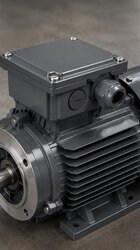
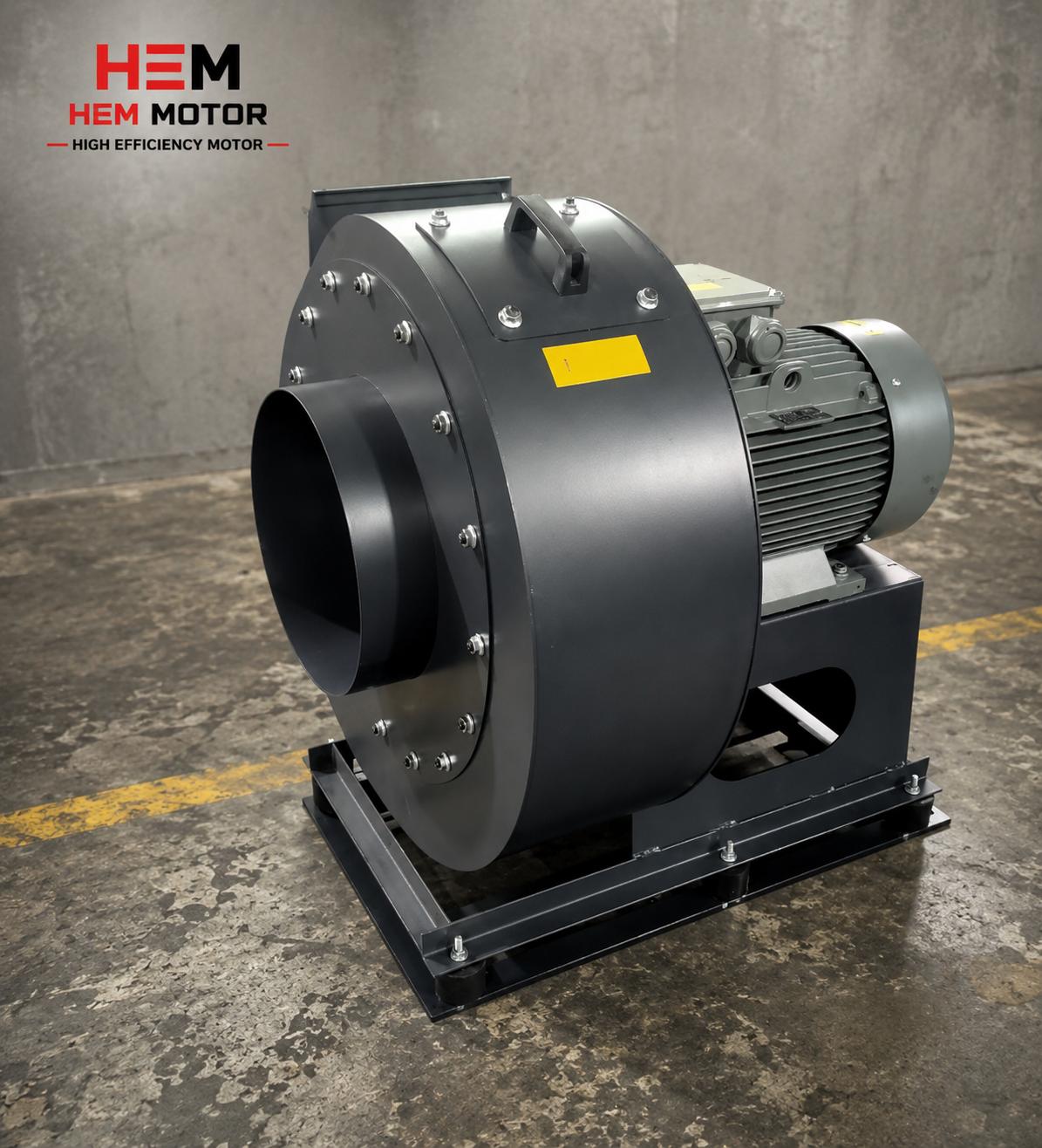

An olive oil mill or oil press plant is a production line that runs for weeks almost without stopping once the season opens. From crushing the olives to separating oil from water and vegetation water in the decanter, from gently kneading the paste in the malaxer to the press pumps that push the liquid through the line, an electric motor sits at the heart of every stage. A wrongly selected motor fails on the busiest day of the season, the line stops, and the harvested olives lose quality while they wait. In this article we cover motor selection for olive oil and oil press plants step by step: the high-speed centrifuge drive of the decanter, the low-speed high-torque mixer of the malaxer, press and olive crushing pumps, food hygiene, IP55 protection and the humid, corrosive environment. As HEM Motor, with our identity as both manufacturer and seller, we keep stock motors ready before the season begins.
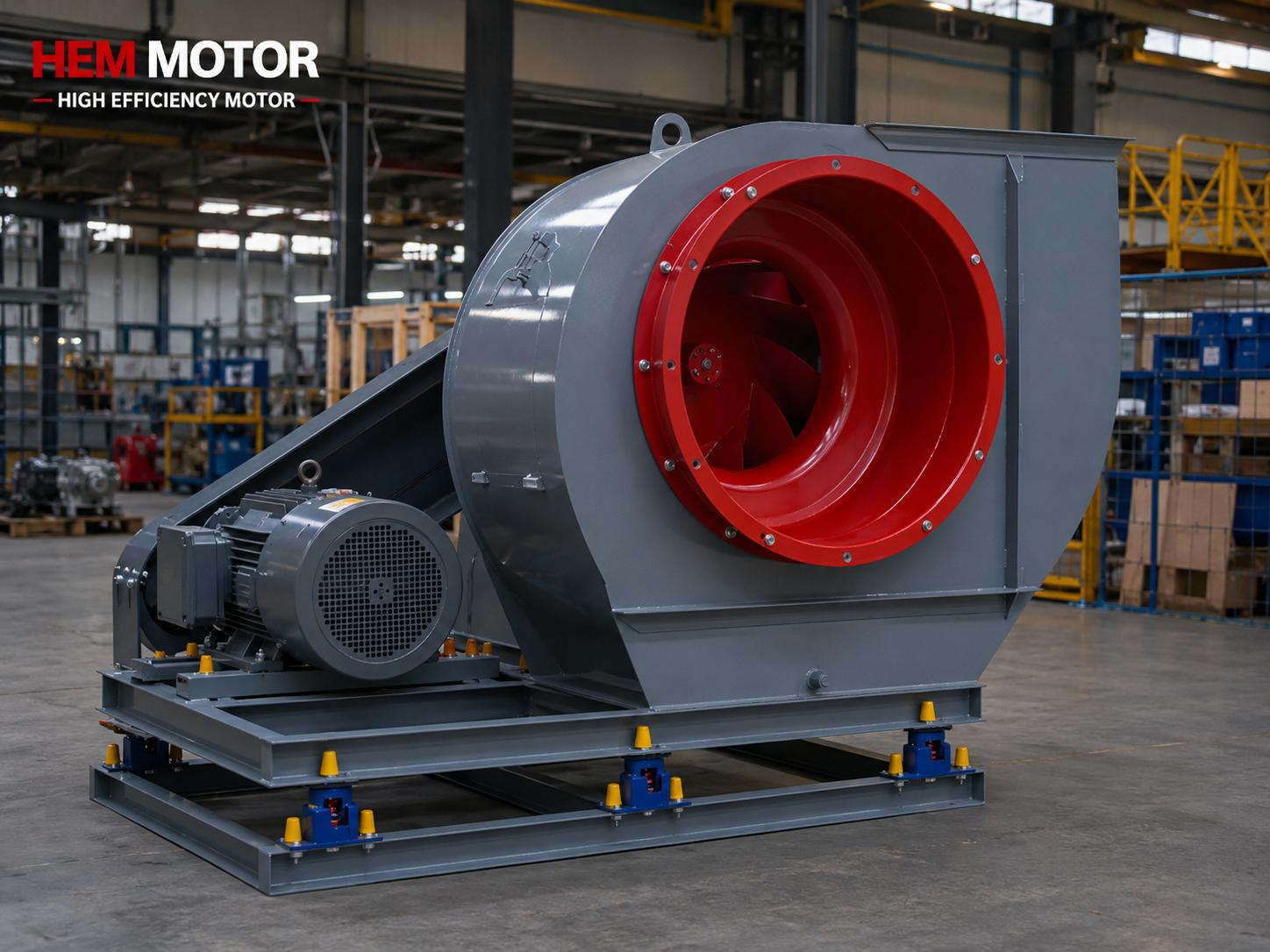
Motorized Equipment in an Olive Oil Plant and Their Roles
In a modern continuous olive oil plant the main motor-driven equipment includes: olive washing and conveying elevator, hammer crusher (olive crushing), malaxer (kneading trough), feed pump, decanter (horizontal centrifuge), separator (vertical centrifuge), press pumps and oil transfer pumps. Each has a different load profile, so a single motor type does not suit the whole plant. For a sector overview, our article on dairy, meat and beverage plant motors and hygiene is a useful companion read alongside food factory electric motors.
Hammer Crusher (Olive Crushing) Motor
The hammer mill, where olives are crushed together with their stones, demands high starting torque and handles an impact load. It usually runs with 2-pole (3000 rpm) or 4-pole (1500 rpm) motors at 5.5 kW to 30 kW. A cast iron body is preferred here because impact and vibration tire aluminum frames. Since starting torque is high, the starting method also matters; we examined a similar impact-load logic in our article on impact load, flywheel and inertia in motors.
Malaxer (Kneading) Motor: Low Speed, High Torque
The malaxer slowly kneads the crushed olive paste at around 25-30 °C so that oil droplets coalesce. The mixing must be very slow; typical output speed is 12-30 rpm. Therefore the malaxer motor is not used directly but together with a worm gear reducer or a helical-bevel reducer. Reducing a 1400 rpm motor with a 1/50 or 1/80 ratio gives the slow, powerful rotation the malaxer paddle needs. IEC frame and flange compatibility is critical in this motor + reducer match; see matching a motor to a worm gear reducer and monoblock geared motor selection. For those who want to meet the low-speed need without a reducer, low-speed high-pole motors are an alternative.
Decanter (Horizontal Centrifuge) Motor: High Speed
The decanter spins the olive paste at high g-force to separate oil, water and pomace. The drum drive runs at 1500-3000 rpm via belt-pulley and usually needs 15 kW to 45 kW. There is also a second drive (back-drive) turning the internal scroll. Balanced, low-vibration operation is essential in a high-speed centrifuge, which is why IE4 high-efficiency electric motors are preferred. In these motors that run continuously throughout the season, the efficiency class is reflected directly in the electricity bill.
Speed, Pole and Power Selection
Pole/speed choice by equipment in an olive oil plant can be summarized as:
- 2-pole / 3000 rpm: Decanter drum, separator, high-speed pumps.
- 4-pole / 1500 rpm: Hammer crusher, feed and press pumps, general drive (most common).
- 6-8 pole / 1000-750 rpm or geared: Malaxer, elevator, slow mixers.
Power typically ranges from 0.75 kW to 4 kW for small pumps, 5.5 kW to 30 kW for crushers and pumps, and 15 kW to 45 kW for the decanter. If you hesitate on HP-kW conversion, our HP-kW motor power and ordering article helps. If unsure on pole count, see 2, 4, 6 pole selection.
Food Hygiene, IP Protection and Corrosive Environment
An olive oil plant is a humid, oily and occasionally vegetation-water-laden corrosive environment. Because of wash water and steam, motors should be at least IP55; at points exposed to direct pressure washing, IP65 is recommended. We explained the difference between IP classes in IP protection class selection. For the body, corrosion-resistant cast iron body electric motors and, where needed, cataphoresis/epoxy painted surfaces should be preferred; our cataphoresis protection on cast iron motors article covers this. As insulation class, Class F is standard and Class H is safer under hot, continuous load.
Seasonal Continuous Operation and Duty Type (S1)
The olive season is short but intense; the plant runs over 20 hours a day for weeks without interruption. Therefore motors must be selected for S1 continuous duty. Running a motor designed for intermittent duty under continuous load causes overheating and winding burnout. We examined duty types in S1-S6 duty type selection. In a continuously running plant, monitoring motor temperature with PT100 or thermistors should also be considered. For motors that sit idle for long periods off-season, moisture and bearing protection matter too; our periodic maintenance schedule article guides this idle period.
Efficient Drive with a VFD (Variable Frequency Drive)
In the malaxer and some pumps the speed must be adjusted to suit the process. A VFD runs the motor at different speeds, providing both process control and energy savings. With VFD-driven motors, winding insulation and cooling become more critical; you can find the details in VFD with asynchronous motor. We explained the gain an IE4 motor provides with a VFD in pump and fan applications in the IE4 threshold in pumps, fans and compressors.
Press Pump and Transfer Pumps
In classic press systems and continuous lines, centrifugal pumps push the oil-water mixture. Motor selection here is based on flow and head; for the right power our centrifugal pump motor selection article is a practical calculation guide. Press pumps usually use the pump electric motors range with B5 or B35 flange bodies.
Purchasing and Selection Checklist
- Are the required kW, speed (pole) and output speed (ratio if geared) clarified for each equipment?
- Are the reducer type and ratio (e.g. 1/50, 1/80) defined for the malaxer?
- Is the mounting type (B3 foot, B5/B35 flange) suitable for the machine?
- Is the protection class IP55 (IP65 at pressure-washing points) selected?
- Are insulation class F/H, cast iron body and corrosion protection (cataphoresis/epoxy) requested?
- Is S1 continuous duty confirmed?
- Does the efficiency class (IE4 on continuously running decanter/pumps) meet the regulation and energy target?
- Are stock and lead time confirmed before the season starts?
Mounting Type and Mechanical Matching
Each equipment in an olive oil plant requires a different mounting type. The belt-pulley driven decanter and crusher usually use a B3 foot motor; units directly coupled to a pump or reducer prefer a B5 or B35 flange body. A wrong mounting type creates field installation problems and delays. For the differences between B3, B5, B14 and B35, see our B5 flange electric motors and B35 flange electric motors pages. Shaft diameter, key size and coupling/pulley compatibility should also be clarified at order time; when replacing an old motor one-to-one, matching the nameplate data prevents wrong delivery. For a general product map, review our efficient electric motors category.
One-to-One Replacement and Substitution of an Old Motor
A decanter or pump motor that fails mid-season must be replaced quickly. In this case the kW, speed, frame, mounting type, shaft diameter and efficiency class on the existing motor nameplate are taken as the basis. Reading and matching the nameplate data correctly prevents the wrong motor from arriving and commissions the line in the shortest time. Keeping spare motors in critical powers during the busy season significantly shortens downtime; therefore plants prefer to keep their most used power-speed combinations in stock. As HEM Motor, we keep the most requested powers ready in stock and quickly ship a one-to-one substitute motor based on the nameplate data.
Energy Efficiency and Regulatory Compliance
In an olive oil plant, the decanter, separator and continuously running pumps consume a significant amount of energy during the year. High-efficiency-class (IE3/IE4) motors provide tangible savings on the electricity bill as they run through the season and pay back the investment quickly. In addition, the efficiency regulations in force require a minimum efficiency class (IE3/IE4) in certain power ranges; when making a new investment, you must ensure the motor meets this requirement. Choosing IE4 on continuously running centrifuges and pumps is the most correct decision both for regulatory compliance and for low operating cost.
Bearings, Bearing Life and Vibration
In high-speed centrifuges such as the decanter and separator, bearing selection and bearing life directly determine the reliability of the motor. In a motor running continuously at high speed, a weak bearing soon produces vibration and overheating. Therefore motors with heavy-duty bearings and balanced rotors are preferred. A low vibration level protects both oil quality and machine life. In belt-pulley driven units, the shaft load (radial load) must be taken into account and, if necessary, a motor with reinforced bearings requested. Checking bearings and oil seals before the season prevents unexpected failures mid-season. In an oily and humid environment, oil seal tightness protects the windings by preventing liquid from entering the motor.
Terminal Box, Cable and Grounding
In a humid olive oil plant, the tightness of the motor terminal box is as important as IP protection. Water entering the terminal box during pressure washing causes short circuits and failure, so a suitable cable gland and gasket must be selected. Grounding is essential both for operator safety and motor protection. In three-phase motors, the correct phase sequence determines the direction of rotation; in pumps and centrifuges, a wrong rotation direction can cause product loss and damage. During commissioning, winding health should be checked by measuring insulation resistance (megger), and motors that have waited a long time should be dried out.
Correct Sizing and Load Ratio
Selecting a motor larger than needed (oversizing) increases the initial investment and lowers efficiency at low load ratio; selecting one too small means continuous overload and early failure. The ideal load ratio is usually in the 75-90% band of the rated power. In an olive oil plant, calculating the real power need of each equipment (pump flow/pressure, crusher capacity, decanter load) and selecting the right motor provides both energy savings and long life. Load ratio and sizing directly affect operating cost in a continuously running seasonal plant.
Supply Process, Lead Time and Season Planning
Motor supply in an olive oil plant should be planned around the season calendar. Weeks before the harvest starts, the spare motor needs of critical equipment (decanter, separator, crusher, main pumps) should be identified and stock confirmed. A supply delay mid-season means harvested olives cannot be processed, which is a direct loss of product and revenue. Delivery from manufacturer stock is much faster than a production order, so the most used power-speed combinations should be planned in advance. The process speeds up when the equipment list, existing motor nameplate data, mounting types and delivery address are shared for an accurate quote. Protecting the motor from impact and moisture during shipping, checking it on delivery, and verifying insulation before commissioning prevents surprises in the field.
Frequently Asked Questions
Why is a reducer essential on the malaxer motor?
The malaxer runs at very low speed such as 12-30 rpm; a standard motor gives 750 rpm (8-pole) at lowest. A worm gear or helical-bevel reducer closes the gap. Reducing a 1400 rpm motor with a 1/50-1/80 ratio gives slow, high-torque rotation. See geared motor vs separate motor and reducer.
Is IP55 enough in an olive oil plant, or is IP65 a must?
IP55 is enough for the general environment and steam. However, IP65 is recommended around the decanter, malaxer and filling points that are washed with direct pressure water. The decision depends on how often the area is washed.
Since I run seasonally, can I just buy a cheap motor?
Even if the season is short, the running time is intense (S1, 20+ hours a day). An economy motor that does not match the duty type can burn out mid-season and stop the line; the harvested olives lose quality while they wait. The right duty type and efficiency class are more economical in the long run.
Supply with HEM Motor
In olive oil regions, securing motors before the season is critical. For plants in the Aegean and surrounding provinces we offer fast shipping with options like same-day delivery in Izmir and the Aegean and Bursa and Marmara supply. We summarized which information to prepare before requesting a quote in information to provide when requesting a quote. For the difference between stock and production order, see stock delivery vs production order.
Get a Quote
Share your plant machine list, the nameplate data of your existing motors (kW, speed, frame, mounting type) and your delivery address; we will supply the most suitable motor from manufacturer stock with fast delivery. For an up-to-date, clear quote instead of a fixed price, contact us at +90 (532) 345 49 86 or through our contact page. As HEM Motor, with our identity as both manufacturer and seller, we ship the right motor in the shortest time.