English
 Türkçe

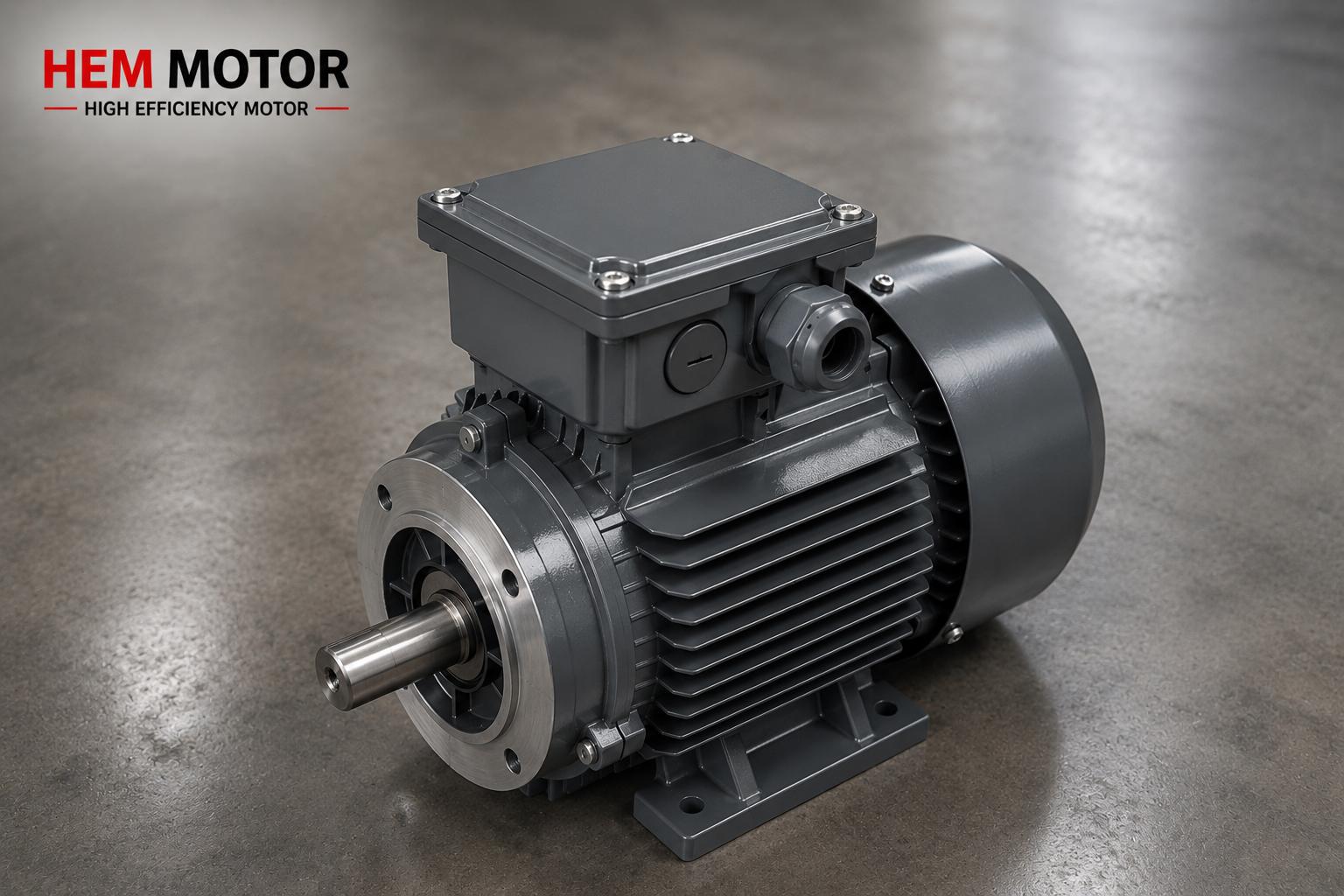

In three-phase asynchronous motors the most insidious and most common cause of burnout is single-phasing – the loss of one of the three phases. When a fuse blows, a contactor contact stays open, a terminal connection loosens or one phase of the grid is cut, the motor keeps being fed through two phases. The danger lies here: the motor does not stop; it keeps turning under load, often humming. But because the two remaining windings must produce with two what three windings should carry, they draw an overcurrent up to 1.7 to 2 times the normal current. This overcurrent burns the winding insulation within minutes. In this article we explain the mechanism of single-phasing, why the current rises so fast, the effect of voltage unbalance and the correct choice of protection (phase-failure relay, thermal relay, motor protection breaker) with concrete tables – so you can protect the motor you buy from HEM Motor stock against this classic failure.
What Is Single-Phasing?
In a three-phase motor the three windings are fed by a balanced three-phase system and create a rotating magnetic field. If one of the three phases is lost for any reason, the motor starts to behave like a single-phase system. If the phase is lost at start, the motor cannot start at all; it only hums and draws a locked-rotor-like overcurrent. If a phase is lost while running, the rotor keeps turning by inertia but the two windings are seriously overloaded. We covered the protection and burnout mechanism of phase loss in more depth in our article on single-phasing, phase loss protection and burnout.
Typical Causes of Phase Loss
- A single fuse blowing (the other two stay intact).
- A contactor contact burning or staying open.
- A terminal connection loosening, a cable breaking or oxidising.
- One grid-side phase being cut (overhead line, transformer).
- One pole of a thermal-magnetic breaker opening.
Why Do the Two Windings Burn from Overcurrent?
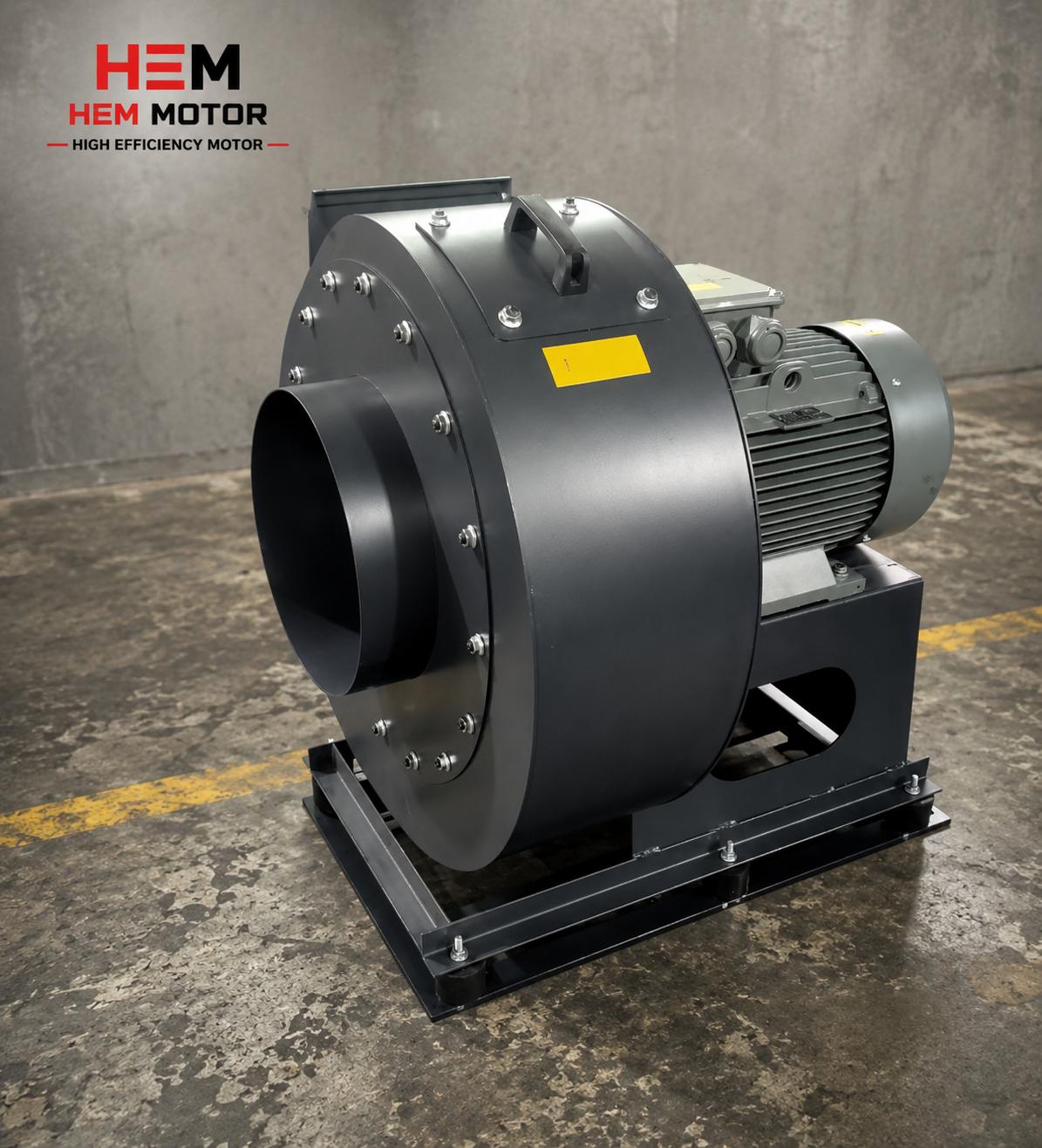
The motor carries a fixed mechanical load. Because power is conserved, the current shared by three windings is loaded onto the remaining two when one phase is lost. In a star-connected motor the two remaining windings stay in series, and to produce the same torque their currents rise by about √3 (about 1.73). On a motor at full load this means a continuous current up to about 2 times rated. Because the heat dissipated in the winding rises with current squared, 2 times current means about 4 times heat; this overheats and burns the insulation within minutes.
| Condition | Winding current (rated=1) | Winding heat (rated=1) | Result |
|---|---|---|---|
| Normal 3-phase, full load | 1.0 | 1.0 | Continuous duty |
| Phase loss, 50% load | ~1.2 - 1.4 | ~1.4 - 2.0 | Thermal trips eventually |
| Phase loss, full load | ~1.7 - 2.0 | ~3 - 4 | Burnout within minutes |
| Phase loss at start | ~locked rotor (5-7) | very high | Damage within seconds |
In single-phasing the motor usually keeps turning, so the operator does not notice the fault; there is only humming and heating. That is why single-phasing cannot always be caught by simple current-based protection; dedicated phase protection is needed.
Voltage Unbalance Creates the Same Danger
Even if a phase is not fully lost, voltage unbalance between phases creates similar overheating. In asynchronous motors a small unbalance in voltage turns into a much larger unbalance in current. As a rule of thumb, a 3–4% voltage unbalance raises the winding temperature dangerously and requires the motor to derate. For grid fluctuation and voltage tolerance, our article on IE3 motor voltage tolerance and grid fluctuation gives detailed information.
| Voltage unbalance | Approx. current unbalance | Winding temperature rise | Recommendation |
|---|---|---|---|
| 1% | ~6-10% | Mild | Acceptable |
| 2% | ~12-18% | Noticeable | Monitor |
| 3.5% | ~25% | High | Derate + protect |
| 5% | ~35-40% | Very high | Do not run |
Correct Protection Choice: Phase-Failure Relay, Thermal, MPCB
A single protection is not enough against single-phasing and voltage unbalance; layered protection is recommended.
- Phase protection (phase sequence/phase loss) relay: directly detects phase loss, phase-sequence error and voltage unbalance; the fastest, most certain protection.
- Thermal overload relay (phase-loss sensitive): modern thermal relays are specially sensitive to single-phase loss; they trip faster on current unbalance.
- Motor protection breaker (MPCB): combines overload and short circuit; choose types with phase-loss sensitivity.
- Thermistor (PTC) / PT100: monitors winding temperature directly; provides certain thermal protection independent of current.
For thermal relay and fuse selection, our electric motor protection: thermal relay and fuse selection, for breaker setting our motor protection breaker (MPCB) setting and for winding temperature protection our PTC/PT100 wiring articles are practical guides.
Practical Steps to Prevent Single-Phasing
- Fit a phase-protection (phase loss + unbalance) relay at the panel inlet.
- Choose a phase-loss-sensitive thermal relay or MPCB; avoid cheap single-pole protections.
- Periodically tighten terminal and cable connections; a loose connection is the most common cause of phase loss.
- For critical motors ask for a PTC thermistor embedded in the winding; you gain current-independent protection.
- Measure voltage unbalance regularly; if it exceeds 3%, investigate the grid side.
How Does Phase Loss Differ in Star and Delta Connection?
The effect of single-phasing varies slightly with the motor’s connection. In a star-connected motor, when one phase is lost the two remaining windings stay in series between the two grid phases and their currents rise markedly to preserve torque. In a delta-connected motor the current distribution among windings is more complex; one winding can be loaded more than the others and local overheating spots can form. In both cases the result is the same: certain windings heat from overcurrent and the insulation is damaged. So protection must be able to detect phase loss directly, regardless of the connection type.
On terminal connection and star-delta selection, our articles on electric motor terminal 230V/400V star-delta voltage selection and IE3 motor star-delta winding connection offer technical detail. A contact fault during the star-delta transition can also cause single-phasing; star-delta transition time and timer setting helps reduce this risk.
Single-Phasing Should Not Be Confused with Running a Three-Phase Motor on Single Phase
Some users deliberately try to run a three-phase motor from a single-phase (220V) source; while this is possible at limited power with special capacitor arrangements, it must not be confused with uncontrolled single-phasing. Single-phasing is an unintended fault and burns the motor if there is no protection. Running a three-phase motor on single phase deliberately brings serious power loss and efficiency drop, and is done only when unavoidable and with correct capacitor selection. On this, our articles on running a three-phase motor on single-phase 220V and single-phase motor start/run capacitor microfarad selection are explanatory. For single-phase vs three-phase selection, review our single-phase vs three-phase motor selection reference.
Phase Sequence, Rotation Direction and Protection
Phase-protection relays check not only phase loss but also phase sequence. A wrong phase sequence makes the motor turn in reverse and in some applications (pump, compressor) causes serious mechanical damage. So a phase-protection relay provides both protection and a guarantee of correct rotation. For rotation direction and phase sequence, see our articles on motor rotation direction and phase sequence and IE3 motor rotation direction phase sequence reversal.
- Phase loss: absence of one phase; leads to winding burnout.
- Phase sequence error: reverse rotation; mechanical damage risk.
- Voltage unbalance: insidious overheating; efficiency drop.
- Under/over voltage: disturbs the torque and current balance.
A good phase-protection relay checks all these conditions in a single device and protects the motor by opening the contactor at the moment of fault.
The Role of Winding Quality and Insulation Class
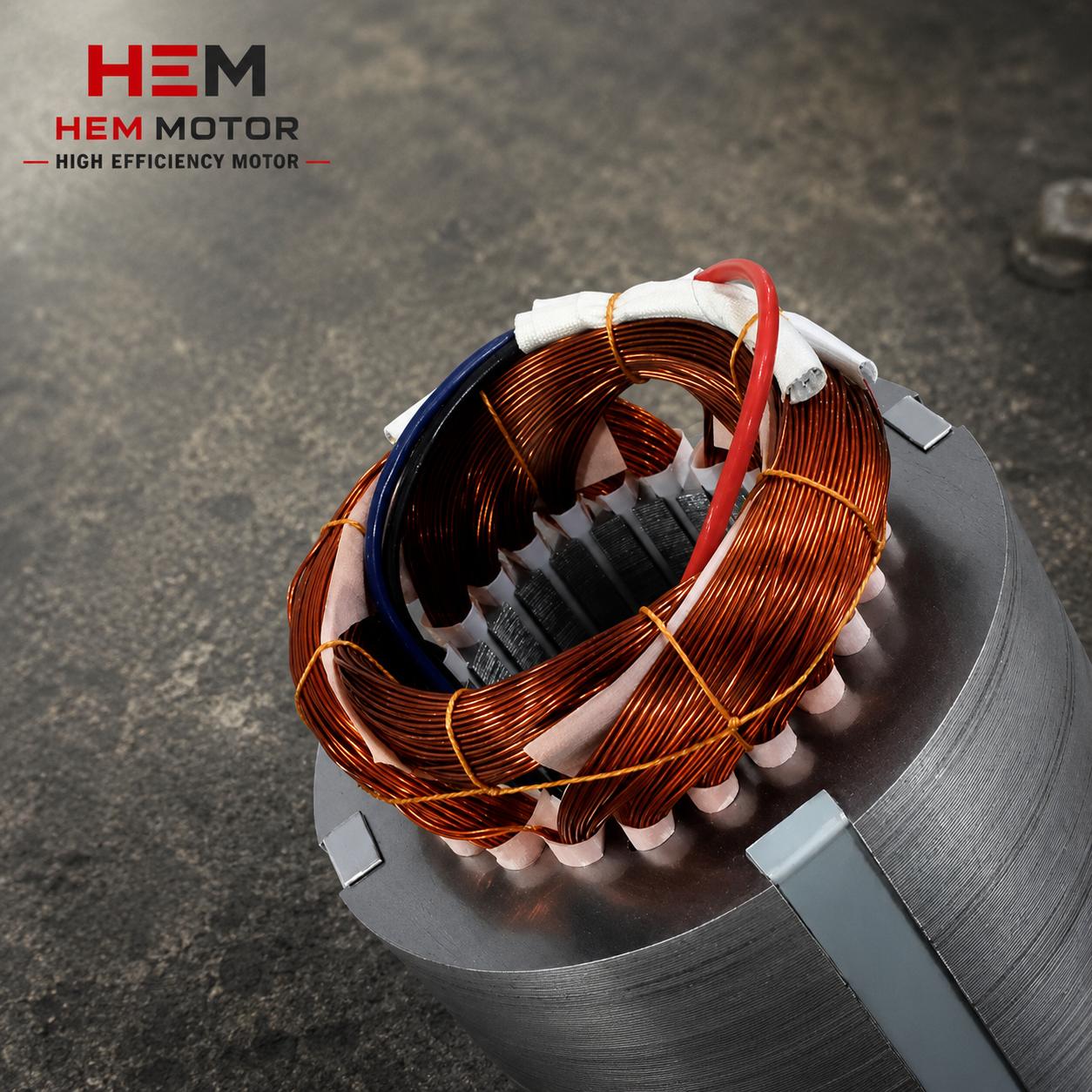
Even in a plant unprotected against single-phasing, the motor’s winding quality and insulation class affect the withstand time. Class F or H insulation lasts longer than Class B under the same overheating; but no insulation can withstand full-load single-phasing for minutes. A copper winding conducts heat better than an aluminium winding and its thermal behaviour is more predictable. For the winding material difference, our article on IE3 motor copper-aluminium winding difference and for insulation class our IE3 motor winding insulation class F-H are helpful. Still, the single and certain solution is to build the right protection infrastructure; winding quality only provides an extra safety margin.
Fault Diagnosis and Maintenance in Single-Phasing
To tell whether a motor burned out due to single-phasing, a winding inspection is done. In single-phasing usually two of the three windings overheat and turn dark or burnt while one stays relatively clean; this asymmetric burn pattern is a classic single-phasing sign. By contrast, balanced overload or general overheating affects all three windings equally. This distinction matters for finding the root cause; if there is asymmetric burning, the protection infrastructure must be reviewed and a phase-protection relay added.
- Asymmetric burn: two windings dark, one clean → single-phasing.
- Symmetric burn: three windings equally dark → general overload.
- Local spot burn: a specific winding section → winding short circuit.
- Bearing-driven heating: winding clean, bearing damaged → mechanical fault.
Whether rewinding the motor or buying a new one is more sensible depends on the degree of burning and the motor’s age; remember that repeated burnouts stem from a lack of protection. For the rewind decision, our article on rewinding, efficiency loss and the new-purchase decision is a guide.
Temperature Monitoring: PT100 and Thermistor
The most reliable protection is to monitor the winding temperature directly. A PT100 sensor measures temperature continuously as an analogue value and allows precise monitoring; a PTC thermistor sharply raises its resistance when a certain threshold temperature is reached, triggering the protection circuit. Because the winding heats fast in single-phasing, these sensors catch cases that current-based protection might miss. For temperature monitoring, our article on motor temperature monitoring PT100 and thermistor is detailed.
The Cost-Benefit Balance of Protection Investment
A phase-protection relay or a phase-loss-sensitive thermal relay is a very small investment compared with the value of the motor; by contrast, rewinding a burnt motor or replacing it with a new one adds a production-stop cost on top. So the protection infrastructure is one of the fastest-payback investments. A motor burning out once due to single-phasing usually costs many times the price of a good protection set. Especially on a continuously running, critical pump or fan motor, protection is not a choice but a necessity.
- Phase-protection relay: low cost, phase loss + sequence + unbalance protection.
- Phase-loss-sensitive thermal: far safer than a standard thermal for little extra.
- PTC thermistor: embedded in the winding, current-independent, certain protection.
- Regular maintenance: terminal tightness, the cheapest measure.
The question of rewinding versus buying new is also assessed in this frame; the root cause of repeated burnouts is often a lack of protection. On this, our articles on rewinding versus buying a new motor and for purchase mistakes mistakes when buying an electric motor are guides.
Frequently Asked Questions
Why doesn’t the motor stop when one phase is lost?
If a phase is lost while running, the rotor keeps turning by inertia and the two remaining windings partly produce torque with a single-phase field. The motor does not stop but, because it draws overcurrent, it hums and heats fast. If the phase is lost at start it cannot start at all and only hums.
Does a standard thermal relay catch single-phasing?
Partly. At full load the current rises markedly so a well-set thermal relay trips; but at low load the current rise may stay borderline and the thermal may not trip. That is why a phase-loss-sensitive thermal or a separate phase-protection relay is recommended.
Is voltage unbalance as dangerous as single-phasing?
Yes, insidiously so. A small voltage unbalance turns into a much larger current unbalance; even 3–4% unbalance raises winding temperature dangerously and shortens insulation life over time.
Supply a Protected, Correctly Selected Motor from Stock
Single-phasing and voltage unbalance are preventable risks with the right protection and a robust winding. We deliver fast, from manufacturer stock, motors with a PTC thermistor option, the right insulation class and the correct power-speed. Share your application and your protection infrastructure; let the HEM Motor team identify the right motor and protection solution for you and prepare a quote. Contact us for a plant that does not burn out.