English
 Türkçe

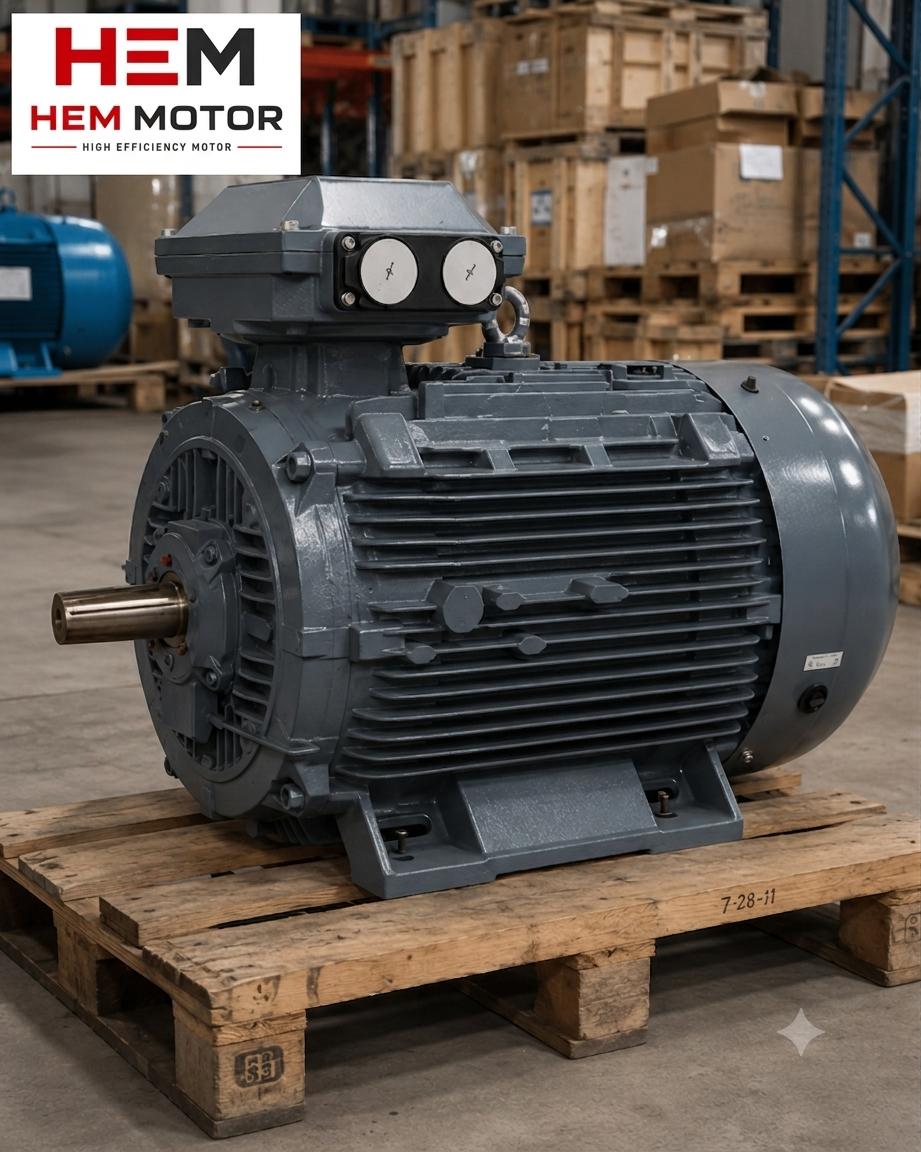

Star-delta starting is one of the most common methods for reducing starting current in medium and large asynchronous motors. However, the success of this method often depends on a single, frequently overlooked setting: the star-to-delta transition time, that is, the timer setting. If the transition is made too early, the motor switches to delta before it has accelerated enough, creating a second large current surge; this completely defeats the purpose of using star-delta. If the transition is made too late, the motor stays in star longer than necessary, heats up due to insufficient torque, and the contactors wear unnecessarily. This article covers how the star-delta transition time is determined, how the timer is set, the open and closed transition types, and contactor sizing. Unlike a discussion of terminal bridging or a DOL/soft-starter decision, this article focuses specifically on transition timing.
The Logic of Star-Delta Starting
In star-delta starting, the motor is first energized in the star connection. In star connection, the voltage across each winding is about root 3 (approximately 1.73) times lower than in delta. This reduces the starting current to about one third and the starting torque to about one third as well. After the motor has accelerated somewhat in star, it switches to delta and begins running at full voltage and full torque. This method is used to avoid imposing the high starting current of direct-on-line (DOL) starting on the grid or generator. We explained how the star-delta connection is physically made and terminal bridging in our terminal connection and voltage selection article, and the wiring diagram in our star-delta wiring diagram article.
The basic choice between star-delta and a soft starter depends on the load type and starting comfort; we compared this decision in our star-delta or soft starter article. In this article, we assume you have already chosen star-delta and focus on the transition timing, which is the key to success.
Transition Time: The Motor Reaching About 80-90% Speed
In star-delta starting, the correct transition moment is when the motor reaches about 80-90% of its rated speed in star. At this point the motor is already turning at high speed, so the current surge during the switch to delta remains limited. The transition time is not a fixed value; it varies with the load inertia, motor power and load characteristic:
- Low inertia (pump, small fan): The motor accelerates quickly in star, and the transition time is usually in the 3-7 second range.
- Medium inertia (conveyor, compressor): The transition time is typically between 5 and 12 seconds.
- High inertia (large fan, mill, flywheel load): Acceleration takes a long time; in this case star-delta is generally unsuitable, and a soft starter or slip-ring motor is preferred.
In practice, the transition time is determined by watching the motor in star: when the motor current drops and stabilizes after the starting peak in star (settles after the current peak), the motor has accelerated enough and it is time to transition. To catch this point, the ammeter or current meter on the panel can be monitored.
Setting the Timer
The star-delta timer determines how long the star contactor stays closed. When this time elapses, the relay opens the star contactor and closes the delta contactor. When setting the relay, an estimated time based on the load type above is entered, then the motor is run and fine-tuned by observing actual behavior. Two extremes are avoided when setting: too short a time leads to early transition, and too long a time leads to unnecessary star operation. Modern star-delta relays also have a transition dead time; this is the very short period (typically 30-100 ms) between the star contactor opening and the delta contactor closing, and it prevents the two contactors from closing simultaneously and short-circuiting.
The Result of Early Transition: A Second Current Surge
If the transition is made before the motor has accelerated enough, for example while it is at 50-60% of rated speed, a second current surge nearly as large as direct-on-line starting occurs at the moment of switching to delta. This surge is harmful in two ways. First, the entire purpose of star-delta, reducing the starting current, is lost; a large current is again imposed on the grid or generator. Second, at the moment of switching to delta, a phase difference can occur between the motor and the grid, creating a sudden mechanical shock (torque pulse). This torque pulse can damage couplings, belts, gearboxes and the machine. Early transition can, especially in generator-fed plants, cause the generator to momentarily overload and trip; we covered generator-motor matching in our how many kVA generator for how many kW motor article.
The Result of Late Transition: Heating and Torque Insufficiency
If the transition is made too late, that is, the motor is still held in star although it has already reached rated speed, the motor runs longer than necessary in star at low torque and low voltage. The harms of this situation include motor heating, the load failing to reach full speed, and, if the load cannot overcome the low torque in star, the motor stopping its acceleration. Especially in applications where the load torque is high, the motor cannot reach the desired speed in star and cannot transition to delta. For this reason, star-delta is only suitable for loads that require low torque at start (such as pumps and fans); it is inadequate for loads requiring high torque at start. We detailed the topic of starting torque in our rated torque and starting torque and torque classes (Design N/H) articles.
Open and Closed Transition Types
There are two basic types of star-delta transition:
- Open transition: The most common and economical type. The star contactor opens, the motor is disconnected from the grid for a very short moment, then the delta contactor closes. During this brief disconnection the motor turns freely and a phase mismatch can occur, so the transition surge is more pronounced in open transition.
- Closed transition: The motor is never disconnected from the grid during the transition; a transition resistor is temporarily inserted and the current surge is smoothed. It is more expensive and complex and is preferred in critical applications and sensitive loads.
In most standard industrial applications open transition is sufficient; however, closed transition should be considered in sensitive mechanisms where the transition surge could damage the machine. For a holistic evaluation of starting methods, our starting current (LRA) and starting article is a comprehensive reference.
Contactor Sizing
Three contactors are used in star-delta starting: the main (line) contactor, the delta contactor and the star contactor. These contactors have different current ratings and must be sized correctly. The main and delta contactors carry about 0.58 times the phase current (the line current divided by root 3) in delta operation. The star contactor can be chosen smaller, because it operates only during start and at lower current. An incorrectly sized contactor fails early and risks contact welding. The motor rated current is the basis for contactor selection; we covered this value and cable-fuse selection in our rated current, cable, fuse and contactor selection article. A thermal relay or motor protection circuit breaker (MPCB) should also be added for motor protection; we examined this in our MPCB selection and setting article.
Which Motors Are Suitable for Star-Delta?
For star-delta starting, the motor must be suitable for both connections, that is, have 6 terminals (6 leads in the terminal box) and show a suitable dual voltage on its nameplate (e.g. 400V delta / 690V star). A motor running at 400V delta on the grid must be rated 400/690V for star-delta starting. For nameplate reading and correct voltage selection, our 690V connection selection and reading the IE3 motor nameplate articles are guides. Also, star-delta requires care regarding heating in applications needing many starts per hour; our starts per hour limit article is important on this topic. You can review our product range in the asynchronous AC motors category.
Frequently Asked Questions
How many seconds should I set the star-delta transition time to?
There is no fixed value; it depends on the load inertia. For low-inertia loads such as pumps and small fans, 3-7 seconds is typical, and for medium-inertia loads such as conveyors and compressors, 5-12 seconds. The most accurate method is to run the motor, watch the current on the ammeter, and set the relay to transition when the starting current peak drops and stabilizes. It is recommended to start with an estimated value and fine-tune by observation.
The panel fuse blows during transition; what could be the cause?
The most likely cause is early transition: when the switch to delta is made before the motor has accelerated enough, a large second current surge occurs and the fuse sees this surge as overcurrent and blows. The solution is to lengthen the timer slightly so the motor accelerates more in star. Also, if the transition dead time is too short, the two contactors may momentarily overlap and short-circuit; the relay dead time setting should also be checked.
Can star-delta be applied to every motor?
No. The motor must have 6 terminals and a dual voltage on its nameplate suitable for star-delta starting (e.g. 400/690V). Also, star-delta is inadequate for loads requiring high torque at start (loaded conveyors, crushers, etc.); a soft starter or direct-on-line starting should be preferred in these applications. If the load cannot overcome the low torque in star, the motor cannot accelerate.
Get a Quote
If you would like expert support for correct motor selection, contactor sizing and transition timing for the star-delta starting application in your plant, our team can help. You can reach us through our contact page or by phone at +90 (532) 345 49 86. For more technical content, visit our home page and our asynchronous AC motors category.
Starting Setup Checklist
- Verify the motor has 6 terminals and a suitable dual voltage (e.g. 400/690V) on its nameplate.
- Determine the estimated transition time based on load inertia (short for pump-fan, medium for conveyor-compressor).
- Run the motor and watch the starting current on the ammeter; identify the transition moment when the current stabilizes.
- Set the timer to this duration; fine-tune by observation if needed.
- Check the transition dead time (30-100 ms); prevent overlap of the two contactors.
- Size the main and delta contactors for the phase current (about 0.58 times the line current).
- Evaluate whether open transition is sufficient or whether closed transition is needed for a sensitive load.
- Add motor protection with a thermal relay or MPCB and set it to the rated current.
- Make sure the starts per hour does not exceed the motor limit.