English
 Türkçe

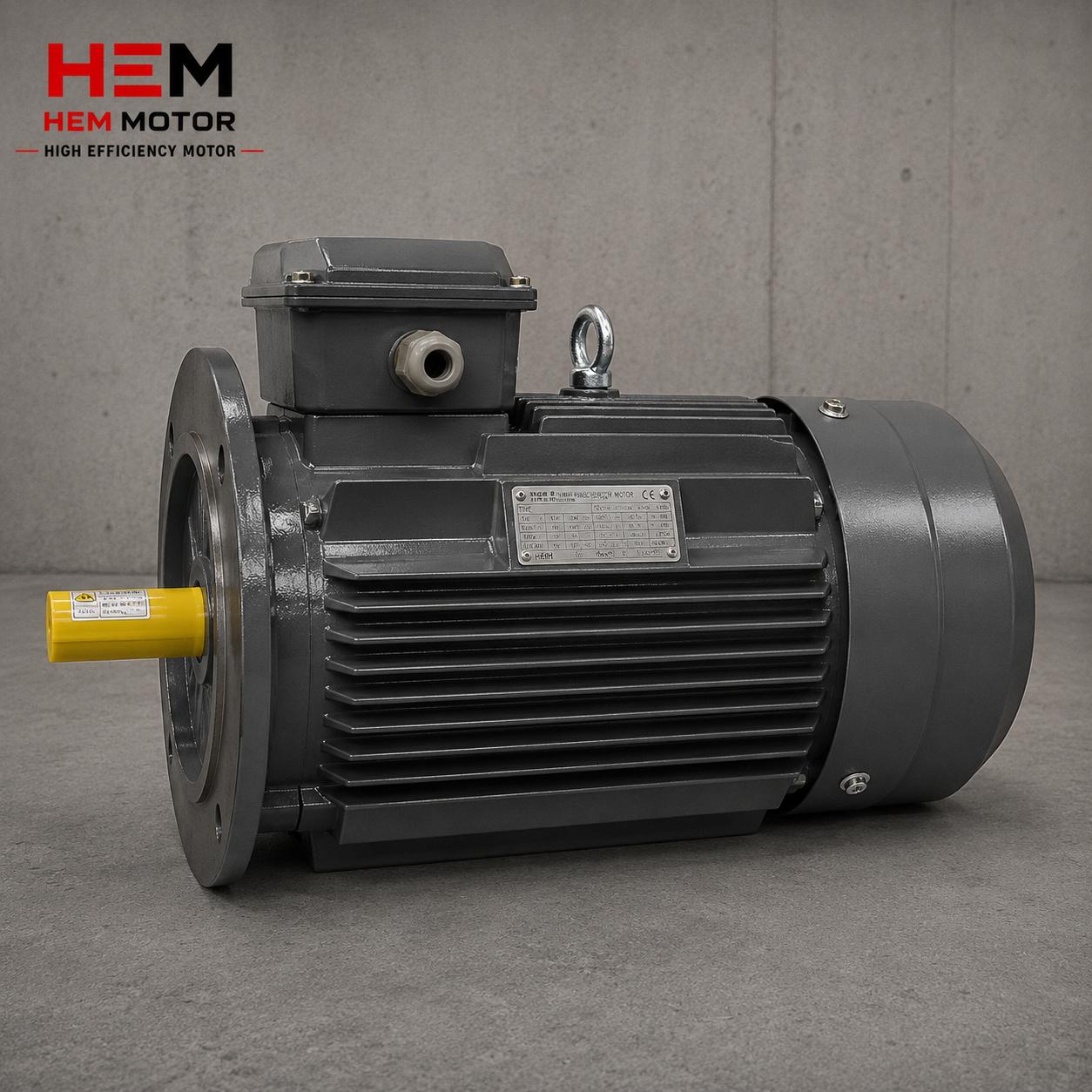

The vast majority of asynchronous motors are squirrel-cage rotor motors, and at the heart of these rotors lies a detail most buyers never see: the material of the rotor bars. Whether these bars are produced from die-cast aluminium or from copper, they directly affect the motor's efficiency, starting torque, heating and even its IE efficiency class. Two motors that look alike from the outside can behave very differently in the field solely because of the rotor bar material. In this article we address the bar material of the squirrel-cage rotor; we compare die-cast aluminium and copper rotors in terms of efficiency, starting torque, production and cost, and explain the effect of this material choice on the IE class and motor quality. As HEM Motor, while we supply IE3 and IE4 motors from 0.25 kW to 355 kW with 100% copper windings, a cast iron frame and class F insulation, we also understand well the role of material on efficiency and durability on the rotor side. The aim is to be able to look, when buying a motor, not only at the nameplate power but also at how efficiently and durably it produces that power.
The Squirrel-Cage Rotor and Bar Material
The squirrel-cage rotor takes its name from its structure: conductive bars running parallel to the axis on the rotor are joined at both ends by short-circuit rings, forming a cage. The rotating magnetic field created by the stator winding induces current in these bars; the interaction of the induced current with the field turns the rotor. The conductor these bars are made of determines the basis of the motor's electrical behaviour.
What Does the Rotor Bar Do?
The rotor bars are the motor's secondary conductor; they are the path through which the energy transferred from the stator to the rotor flows. The electrical resistance of the bars determines both the motor's starting torque and its running efficiency. A low-resistance rotor turns with less loss, that is, higher efficiency, in operation; whereas a higher-resistance rotor can produce more torque at start. This balance is the essence of the material choice. We covered the general difference between squirrel-cage and slip-ring rotors in our article on the difference between squirrel-cage and slip-ring asynchronous motors.
Two Main Materials: Aluminium and Copper
Rotor bars are produced in industry by two basic methods: die-cast aluminium and copper. Aluminium is injected molten into the rotor pack in a single operation by die casting; the bars and short-circuit rings are formed in one piece. In copper rotors, the bars are usually produced and inserted separately or cast with a special die-casting technique. The electrical and mechanical results of these two methods differ markedly from each other.
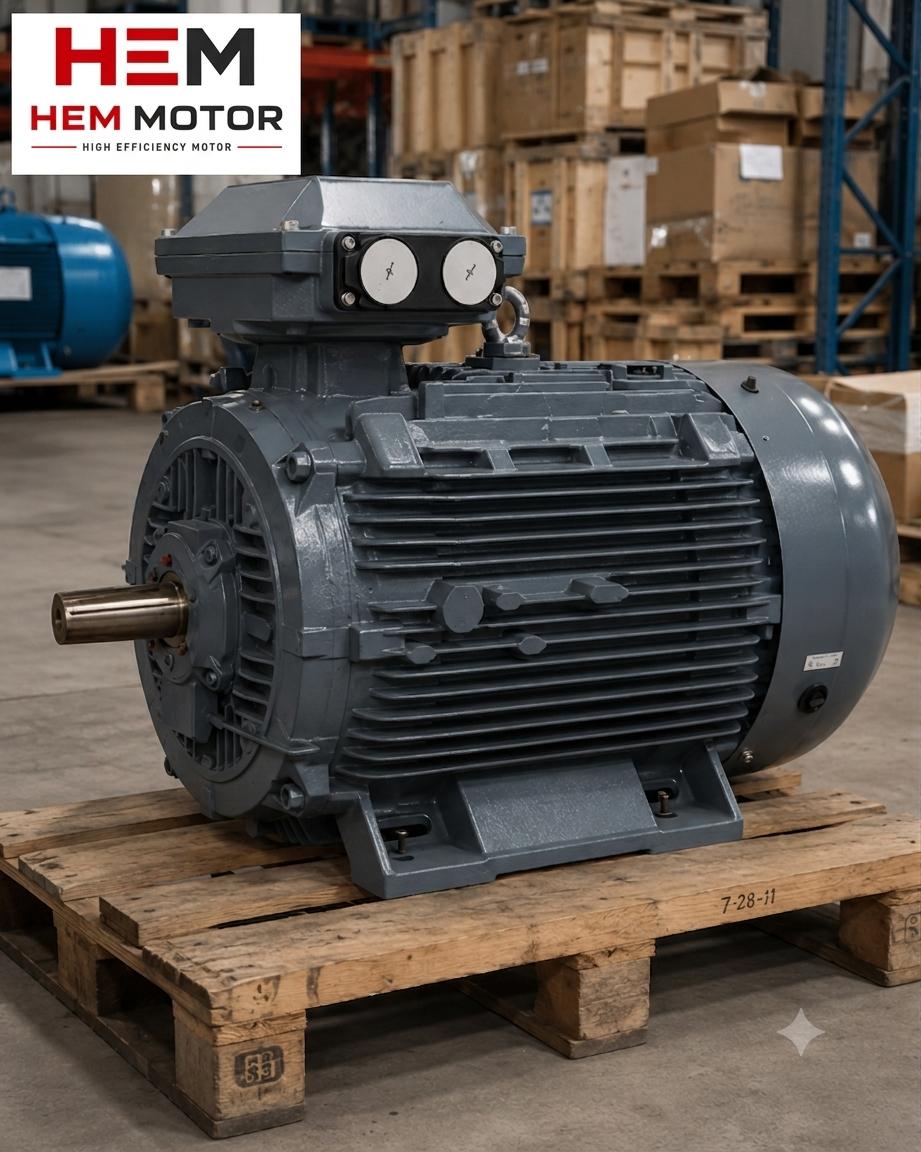
The Efficiency Advantage of the Copper Rotor
The electrical conductivity of copper is markedly higher than that of aluminium. At the same cross-section, a copper bar has lower resistance than aluminium, which means less resistive loss (I²R loss) in the rotor. Because rotor losses make up a significant portion of the motor's total losses, a copper rotor directly provides higher efficiency.
Low Rotor Loss, High Efficiency
A motor with a copper rotor does the same mechanical work while producing less heat, because the resistive losses in the rotor are lower. This means both energy efficiency and a cooler-running motor. A cooler-running motor stresses its insulation less and is generally longer-lasting. We covered the effect of efficiency on motor life and cost in general in our article on efficiency and pole count in asynchronous motors.
The Copper Rotor and IE Class
To reach high efficiency classes (especially IE4 and above), motor manufacturers must reduce rotor losses, so the copper rotor is an important tool in high-efficiency motor design. An efficiency that cannot be reached with an aluminium rotor in the same frame size may be possible with a copper rotor. We covered what the IE efficiency classes mean and from which date they are mandatory in our article on IE3 and IE4 efficiency mandate. And we examined the distinction between copper and aluminium windings (on the stator side, different from the rotor) in our article on the difference between copper and aluminium windings in a motor.
The Production and Cost Advantage of the Die-Cast Aluminium Rotor
The aluminium rotor is the most common solution in industry, and there are solid reasons for this. The die-cast aluminium method allows the rotor bars and short-circuit rings to be produced in a single operation, quickly and economically.
Fast and Economical Production
In die-cast aluminium, molten metal is injected at high pressure into the slots of the rotor pack in a single operation; the bars and rings are formed flawlessly in one piece. This method is both fast and very suitable for mass production, so the vast majority of standard and general-purpose motors have aluminium rotors. The low density of aluminium also reduces the rotor's inertia, which positively affects starting behaviour in some applications.
Cost and Prevalence
Aluminium is more economical than copper in terms of both raw material and labour. Especially in the IE3 class and at small-to-medium powers, a die-cast aluminium rotor is the most sensible choice as long as it can meet the efficiency target. This does not mean the aluminium rotor is low-efficiency; a well-designed aluminium-rotor motor can comfortably meet the targeted efficiency class. We covered the source of the cost difference and why motors of the same kW are priced differently in our article on the difference in motor price by brand, origin and warranty.
Difference in Starting Torque
The rotor bar material also affects the motor's starting behaviour. What is decisive here is the bar's electrical resistance and how the effective resistance at the moment of start changes with the "skin effect."
The Relationship Between Resistance and Starting Torque
At the moment of start, the rotor frequency is high and the effective resistance in the bars increases due to the skin effect; this increase raises the starting torque. Aluminium bars, thanks to their higher resistance, can provide good starting torque in certain rotor designs. Because copper bars are low-resistance, they offer superior efficiency in operation, while the starting torque design is balanced with careful slot geometry. Therefore, material selection should be considered together not only with efficiency but with the application's starting need. We detailed the relationship between starting current and torque in our article on starting current (LRA) in asynchronous motors.
Preference by Application
In continuously running pump, fan and compressor applications with high energy cost, the efficiency advantage of the copper rotor stands out. By contrast, in applications that start and stop very frequently, require high starting torque and are cost-sensitive, a well-designed aluminium rotor can be a balanced choice. We covered torque class selection by load in our article on asynchronous motor torque classes (Design N/H) and starting torque.
Quality and the Right Choice When Buying
Rotor bar material is one of the most important indicators of a motor's "invisible quality." The buyer often cannot see the rotor, so it is necessary to ask the right questions and take the efficiency class as a reference.
Casting Quality and Porosity
In aluminium die-cast rotors, the most critical quality criterion is the voids and porosity that may form during casting. Air voids forming in the bars reduce the effective cross-section, increasing rotor resistance, lowering efficiency and causing local heating. A quality die casting minimizes these voids. We covered how to assess casting quality in general in our article on casting quality in cast iron motors: porosity and wall thickness; the same quality logic applies to rotor casting.
Take the Efficiency Class as a Reference
Even if you cannot see the rotor material directly, the IE efficiency class on the motor's nameplate gives you indirect quality information, because a high efficiency class requires low rotor loss and therefore a well-designed rotor. We detailed the symptoms of rotor-related faults such as a broken rotor bar in our article on broken rotor bar in asynchronous motors; this is a good complement for understanding the field consequences of material quality.
- In continuously running applications with high energy cost, evaluate the efficiency advantage of the copper rotor.
- In cost-sensitive and standard applications, prefer a well-designed die-cast aluminium rotor.
- If you target a high efficiency class (IE4 and above), question the rotor material.
- Evaluate the starting torque need together with the material and slot geometry.
- In aluminium casting, treat porosity and casting quality as a quality criterion.
- If you cannot see the rotor, use the IE efficiency class on the nameplate as an indirect quality indicator.
- Relate the price difference between motors of the same kW to efficiency and material quality.
Frequently Asked Questions
Which is better, a copper rotor or an aluminium rotor?
Both have their place. A copper rotor offers lower rotor loss and higher efficiency thanks to its high conductivity, so it stands out in continuously running applications with high energy cost and where a high efficiency class (IE4 and above) is targeted. A die-cast aluminium rotor, with its fast, economical production and low inertia, is the most common solution in standard and cost-sensitive applications. A well-designed aluminium-rotor motor can comfortably meet the targeted efficiency class.
Does the rotor bar material affect the IE efficiency class?
Yes, it affects it directly. The resistive losses in the rotor make up a significant portion of the motor's total losses. Because copper's low resistance reduces rotor loss, the copper rotor is an important tool especially in reaching high efficiency classes (IE4 and above). An efficiency that cannot be reached with aluminium in the same frame size may be possible with a copper rotor.
Does a die-cast aluminium rotor mean low quality?
No. A die-cast aluminium rotor, when designed correctly and cast with quality, is a reliable solution that meets the targeted efficiency class. What matters is the casting quality: porosity and voids in the bars must be kept to a minimum. A low-quality casting lowers efficiency and causes local heating regardless of the material, so quality should be assessed independently of the material.
Get a Quote
If you want to select the motor in the rotor and efficiency class best suited to your application, share the machine you will drive, the daily operating time and your expectation of starting behaviour with us. Our expert team will clarify the right motor together, balancing efficiency and cost. You can call us at +90 (532) 345 49 86 or send your request via our contact page. You can review our asynchronous motor range in our asynchronous (AC) motors category, and explore our products on the products page and our home page (HEM Motor).