English
 Türkçe

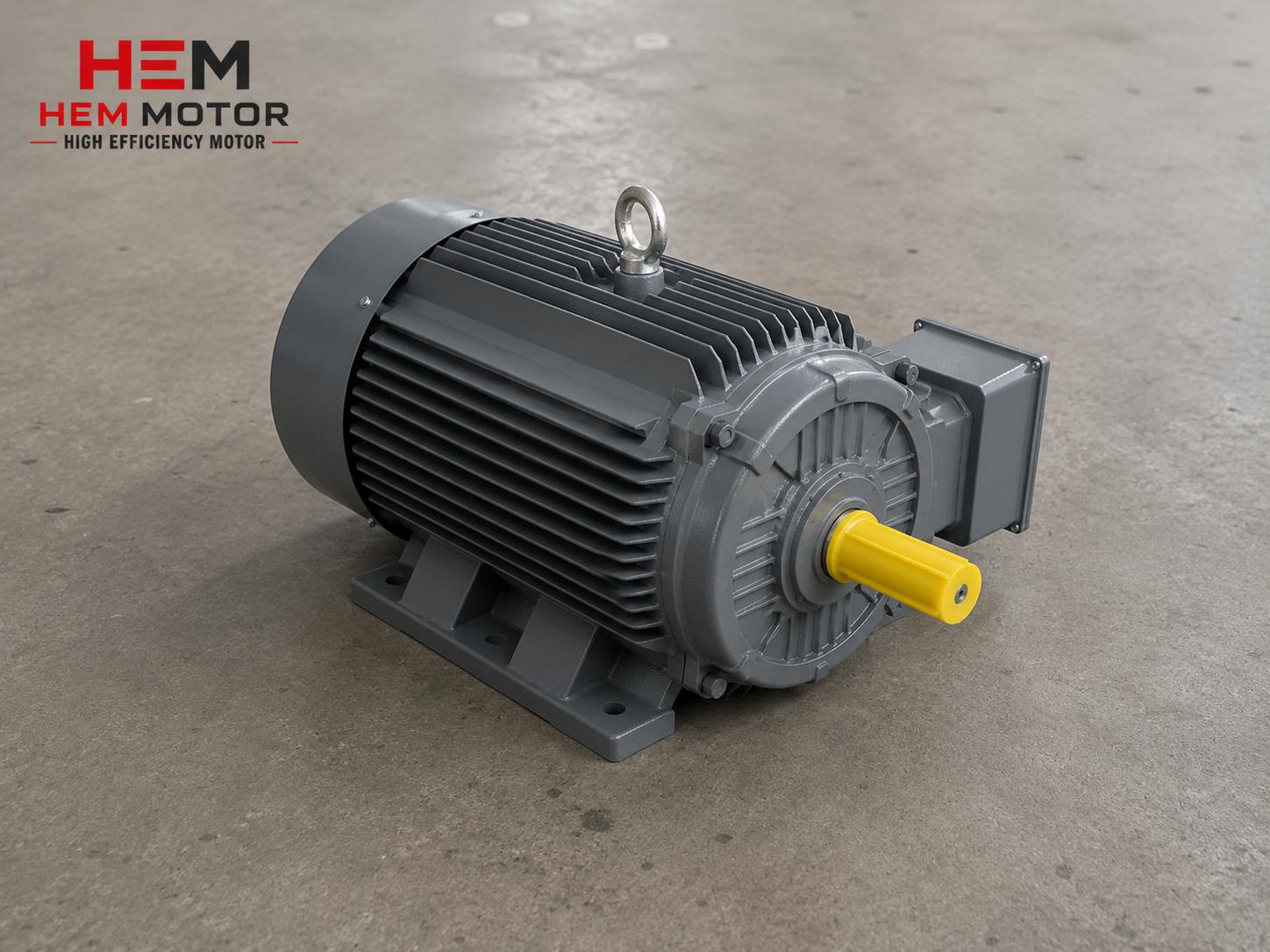

The noise an asynchronous motor makes does not always come from the bearing or from imbalance. Often, especially at no load or light load, a thin, high-pitched whine (magnetic hum) comes directly from the motor's magnetic design. At the root of this sound are the stator and rotor slot counts, the tooth-passing frequency they create, and the slot geometry. If you want a quiet motor, or if you have encountered an unexpected tonal noise in the field, understanding where this magnetically originated sound comes from is decisive in selection and purchasing. In this article we cover the effect of slot count on noise, the tooth-passing frequency, slot skew, and what to watch for in a quiet motor.
What Are Stator and Rotor Slots?
The cavities in an asynchronous motor's stator where the windings are placed are called stator slots. In the rotor, the cavities holding the conductor bars are rotor slots. A motor's stator slot count and rotor slot count directly determine how the magnetic field is distributed in the air gap and at which frequencies it creates force ripple as it rotates. The ratio of these two numbers affects the motor's quality in terms of noise, vibration, starting behavior and even torque ripple (cogging).
The distribution of the magnetic field in the air gap is among the elements that determine the motor's fundamental performance. We addressed the air gap's relationship with efficiency in our air gap and efficiency article. We examined the effect of rotor bar material on starting and efficiency in our rotor bar material content. Slot count selection is an inseparable part of these structural decisions.
Tooth-Passing Frequency and Magnetic Whine
As the rotor turns, the rotor teeth pass in front of the stator teeth. At each passing, the magnetic permeance (reluctance) in the air gap changes, creating a periodic force ripple. The frequency of this ripple is called the slot-passing (tooth-passing) frequency and is approximately equal to the rotor slot count multiplied by the rotor speed. For example, in a motor with many rotor slots running at high speed, this frequency rises into the kHz range; in this band where the human ear is most sensitive, a thin, high-pitched whine is heard.
The tooth-passing frequency is the dominant component of magnetic noise and can be heard even without a mechanical fault. So if a new motor emits a high-pitched hum, it is not always a defect; it can be a natural consequence of the design. However, in a well-designed motor the slot counts and slot geometry are chosen to minimize this sound. We compiled how magnetic noise is distinguished from mechanical and aerodynamic noise in our noise sources: magnetic, mechanical, aerodynamic article; while that article focuses on the general source breakdown, here we go specifically into slots and tooth passing.
The Sound Rising at No Load
Magnetically originated whine is usually more pronounced when the motor runs at no load or light load. As load increases, mechanical sound components become dominant and the magnetic tone is relatively masked. So when you run a motor unloaded during acceptance inspection and hear a high-pitched sound, it is important to distinguish whether it is magnetic or mechanical. To assess a motor's no-load behavior and sound at stock entry, the steps in our incoming and acceptance inspection article provide guidance.
Slot Count, Efficiency and Magnetic Design
Slot count selection affects not only noise but also the motor's efficiency and magnetic performance. The stator slot count determines the winding distribution and therefore how smooth (close to sinusoidal) the magnetic flux wave is. More slots bring the flux wave closer to a sinusoid and reduce harmonic losses, which means both a quieter and a more efficient motor. However, as the slot count increases, manufacturing becomes more complex and, because the teeth become thinner, mechanical strength can drop. Therefore, the slot count is determined by carefully balancing efficiency, noise and manufacturability.
If you want to assess the effect of magnetic design on efficiency holistically, you can find how IE efficiency classes are determined and what the nameplate efficiency means in our reading the IE3 motor nameplate article. We addressed how efficiency changes with load in our efficiency and load curve content. A design that produces a low-harmonic, near-sinusoidal flux wave indicates top-tier quality in both efficiency and quietness.
Slot Skew: The Key to a Quiet Motor
One of the most effective ways to reduce tooth-passing noise is to slightly tilt the rotor (or stator) slots relative to the shaft axis. This is called slot skew. Thanks to skewed slots, the rotor teeth pass in front of the stator teeth gradually rather than all at once; this smooths the force ripple over time and largely suppresses the high-pitched tone. Skew also reduces torque ripple (cogging) and starting hesitations. In a quality asynchronous motor, having the rotor slots skewed at an appropriate angle is one of the basic indicators of quiet operation.
Slot skew affects not only noise but also the motor's starting torque characteristic. We addressed starting and breakdown torque behavior in our speed-torque curve and breakdown torque article, and torque classes in our torque classes (Design N/H) content. Because harmonic torques are reduced thanks to skew, the motor starts more smoothly and runs more quietly.

Slot Count Combination and Harmonics
Certain combinations of stator and rotor slot counts produce unwanted force harmonics in the air gap. A poorly chosen slot combination can lead to single-tone (tonal) noise, high vibration and, in some cases, the motor sticking at certain speeds during start (crawling). For this reason, the stator-rotor slot count ratio is chosen carefully in motor design; suitable combinations provide low noise and smooth starting, while unsuitable combinations lead to field complaints.
The vibration these harmonics create differs from imbalance-driven vibration and appears as a distinct peak at the tooth-passing frequency in frequency analysis. We addressed the motor's vibration level and acceptance values in our vibration and balance (ISO 10816/20816) article. We compiled all aspects of selecting a low-noise motor in our noise and vibration content.
Slot Opening Width
The width of the slot opening also affects noise. A wide slot opening sharpens the change in magnetic permeance in the air gap and increases the tooth-passing force; a narrow slot opening smooths this change and reduces the sound. However, a very narrow opening makes winding placement difficult and can affect efficiency. Therefore, the slot opening is determined by balancing noise, efficiency and manufacturability. In a quality motor, this balance being struck correctly means both quietness and efficiency.
Magnetic Noise When Running with a VFD
The noise picture changes in asynchronous motors run with a variable frequency drive (VFD). The drive's switching frequency creates an additional magnetic sound component in the motor; at low switching frequency this sound turns into an audible whine. When the tooth-passing frequency and the drive switching frequency overlap, the tonal noise can become pronounced. In that case, raising the switching frequency often reduces the sound. We addressed the VFD's effect on the motor in our VFD with asynchronous motor article, and harmonic heating and bearing current under drive operation in our VFD harmonic heating and bearing current content.
Under drive operation the motor's efficiency and thermal behavior also change, so in VFD applications the motor's thermal behavior should be assessed as much as its quietness. You can find the effect of pole count on efficiency and sound in our pole count and efficiency article.

Effect of Slot Count on Starting: Crawling and Cogging
The slot count combination affects not only the running noise but also the starting behavior. With unsuitable stator-rotor slot ratios, the motor may stick at a certain speed during start and fail to reach rated speed; this is called crawling. Crawling occurs when high harmonic components of the asynchronous field feed a synchronous-like torque and lock the rotor at low speed. Similarly, the rotor sticking slightly at certain angles when stationary (cogging) is another sign of an unsuitable slot combination. In a well-designed motor, the slot counts and slot skew are chosen to prevent these behaviors.
Crawling and cogging make starting difficult especially in motors driving high-inertia loads or a gearbox. We addressed starting time and inertia matching in our starting time and inertia moment article, and reducing the starting current in our starting current (LRA) reduction content. A sound slot design means both quiet operation and smooth starting.
Field Complaint: Correctly Diagnosing the Noise Source
When a motor makes unexpected noise, diagnosing the source correctly prevents both needless returns and wrong interventions. Magnetically originated tooth-passing sound is a constant-frequency tone at constant speed and disappears quickly when the motor is disconnected from the supply and left to coast down, because the sound stops when the magnetic field is cut. By contrast, bearing or mechanically originated sound continues while the motor coasts. This simple distinction is a quick way to tell in the field whether the sound is magnetic or mechanical.
We compiled the symptoms and causes of bearing-related sounds in our bearing type and life article, and general motor fault symptoms in our motor failures: symptoms and causes content. If you can measure the sound's frequency, a peak at the tooth-passing frequency indicates a magnetic origin, while a peak at the bearing characteristic frequencies indicates a mechanical origin.
What to Watch When Buying a Quiet Motor?
When selecting a quiet asynchronous motor, looking only at the sound level (dB) on the nameplate is not enough; the quality of the motor's magnetic design also matters. In a well-designed motor the slot counts are chosen suitably, the rotor slots are skewed, and the slot opening is balanced. These features are not written directly on the nameplate but reveal themselves as low noise and vibration values. Asking for the manufacturer's sound and vibration class information at purchase is decisive in environments requiring quietness (hospitals, offices, laboratories).
If quietness is critical, choosing a lower-speed (4- or 6-pole) motor also helps, because at low speed both the tooth-passing frequency and the aerodynamic fan sound decrease. For pole selection, you can see our 2/4/6 pole selection guide. For a general check, our broken rotor bar and quality content also helps in assessing motor quality.
Frequently Asked Questions
My new motor emits a high-pitched whine at no load; is it faulty?
Not necessarily. A thin, high-pitched whine heard at no load or light load is often a magnetic sound from the tooth-passing frequency and can be a natural result of the design. As load increases, this sound usually gets masked. However, if the sound is abnormally loud or accompanied by vibration, it may be a slot-combination or mounting-related problem and should be assessed with an acceptance inspection.
Why is slot skew important?
Slot skew makes the rotor teeth pass in front of the stator teeth gradually, largely suppressing the tonal noise created by the tooth-passing force. It also reduces torque ripple (cogging) and starting hesitations. In a quality asynchronous motor, having the rotor slots skewed at an appropriate angle is one of the basic indicators of quiet operation.
Why does the motor whine more when run with a VFD?
The drive's switching frequency creates an additional magnetic sound component in the motor. At low switching frequency this sound turns into an audible whine and becomes pronounced when it overlaps with the tooth-passing frequency. Raising the drive's switching frequency often reduces this sound.
Get a Quote
Contact us to supply, for your application requiring quiet operation, an asynchronous motor with low noise and vibration values and a quality magnetic design. Tell us your environment and quietness requirements, and we will determine the most suitable motor for your application together. Phone: +90 (532) 345 49 86. For a detailed quote, you can use our contact page.
Pre-Purchase Checklist
- Does the application require quietness (hospital, office, laboratory)?
- Has the manufacturer's sound (dB) and vibration class information been requested?
- Has it been verified that the rotor slots are skewed?
- Has a lower-speed (4/6-pole) option been assessed?
- If it will run with a VFD, has the switching frequency been planned?
- Has the magnetic tone been distinguished from mechanical sound at no load?
- Is there an abnormal peak at the tooth-passing frequency in vibration measurement?
- Has a no-load sound assessment been done in the acceptance inspection?