English
 Türkçe

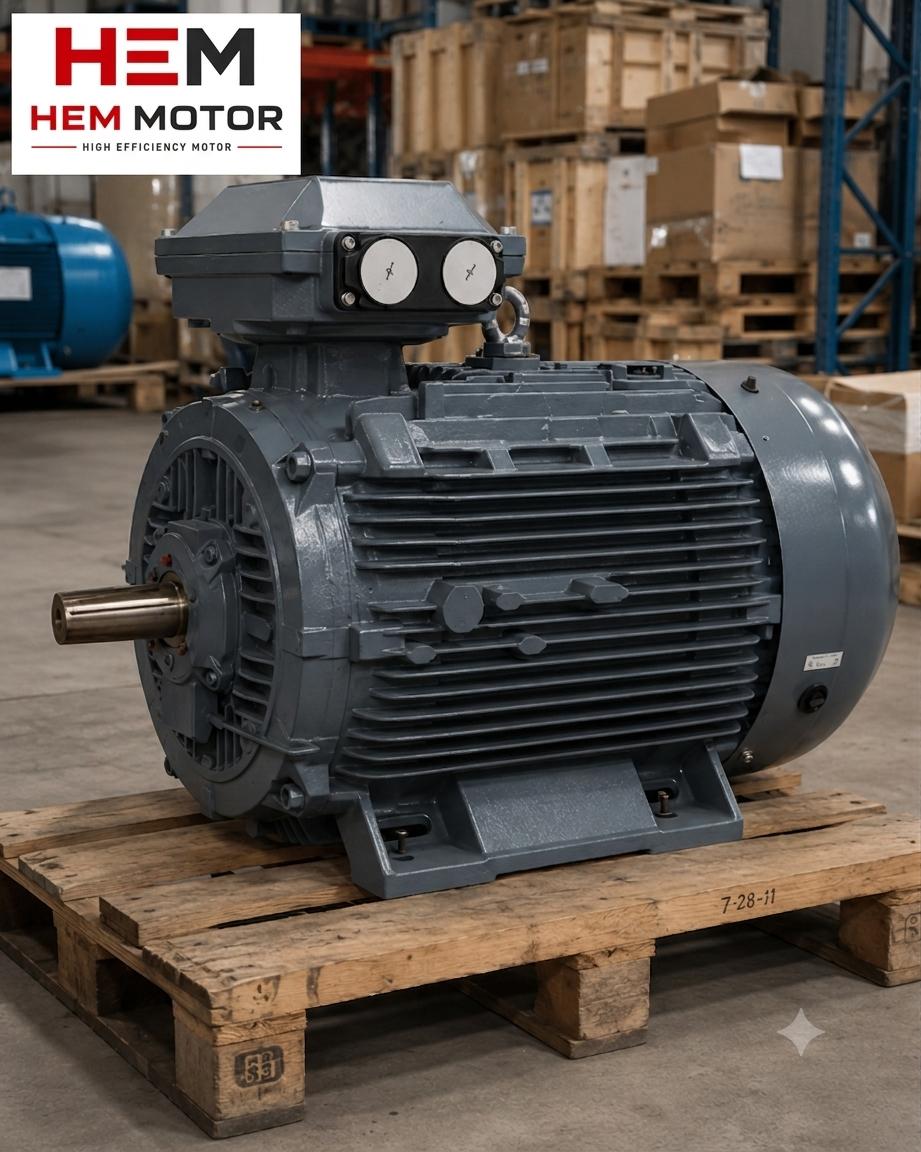

An electric motor's noise and vibration are often not just a comfort matter; high noise and vibration directly affect both workplace standards and the life of the motor and the connected machine. For facilities near hospitals, hotels, schools and offices, and for industrial environments with noise limits, selecting a low-noise motor is an important part of the purchasing decision. As both a manufacturer and supplier, HEM Motor provides three-phase motors, asynchronous motors and IE3/IE4 high-efficiency motors optimized for low noise and low vibration, from stock and to order. This guide looks at the sources of noise and vibration, the concepts of sound level (dB(A)) and vibration class, and how to select a low-noise motor, all from a buyer's perspective.
Where Do Noise and Vibration in an Electric Motor Come From?
Motor noise comes from three main sources: electromagnetic, mechanical and aerodynamic. Electromagnetic noise arises from the interaction of the winding and the magnetic field; mechanical noise from bearings and imbalance; and aerodynamic noise from the cooling fan moving air. In most standard motors the largest noise source is the cooling fan; fan noise is especially pronounced on 2-pole (3000 rpm) high-speed motors.
Vibration usually arises from rotor imbalance, bearing wear, loose mounting or misalignment. High vibration both produces unpleasant noise and shortens bearing and winding life, so vibration is also an indicator of quality and reliability. We cover the effect of bearing quality on vibration and life in our bearing and bearing life on cast iron motors article. You can find general motor failure symptoms in our electric motor failures: symptoms and causes article.
What Is Sound Level (dB(A)) and How to Read It on the Nameplate?
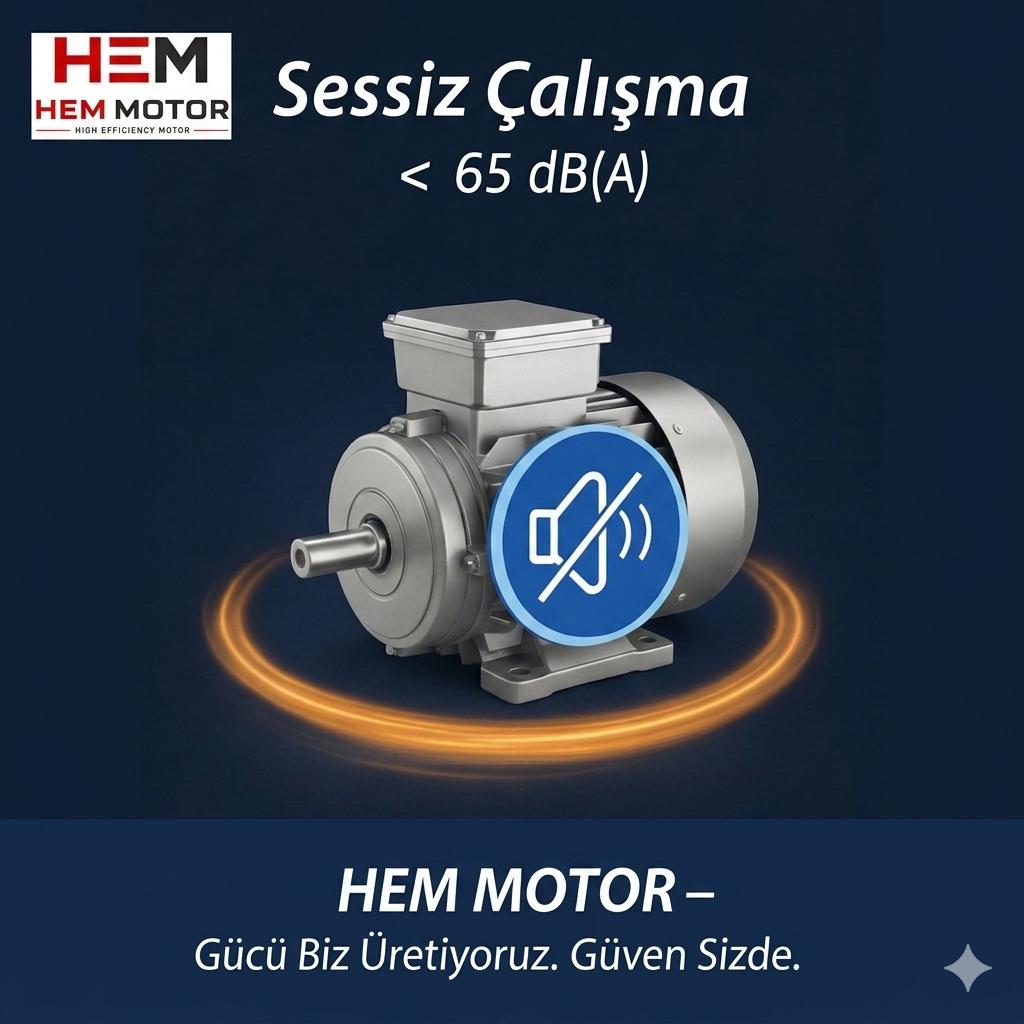
A motor's noise is expressed in dB(A) as a sound pressure level. A lower dB(A) value means a quieter motor; however, the distance and load at which this value was measured also matter. As a general rule, sound level rises with speed: a 4-pole (1500 rpm) motor of the same power is usually quieter than a 2-pole (3000 rpm) one, because both fan and magnetic noise decrease at lower speed.
When selecting a motor for an environment with a noise limit, you should request the relevant sound-level information from the manufacturer and compare it with the limit allowed by the application. The dB(A) scale is logarithmic, so even a 3 dB reduction makes a noticeable difference in perceived sound power. We explain the motor nameplate and which information is essential when ordering in our avoid the wrong motor: nameplate matching article. If you share your low-noise motor requirement, we recommend a model with a sound level suited to your application.
Vibration Class: A, B and Special Low Vibration
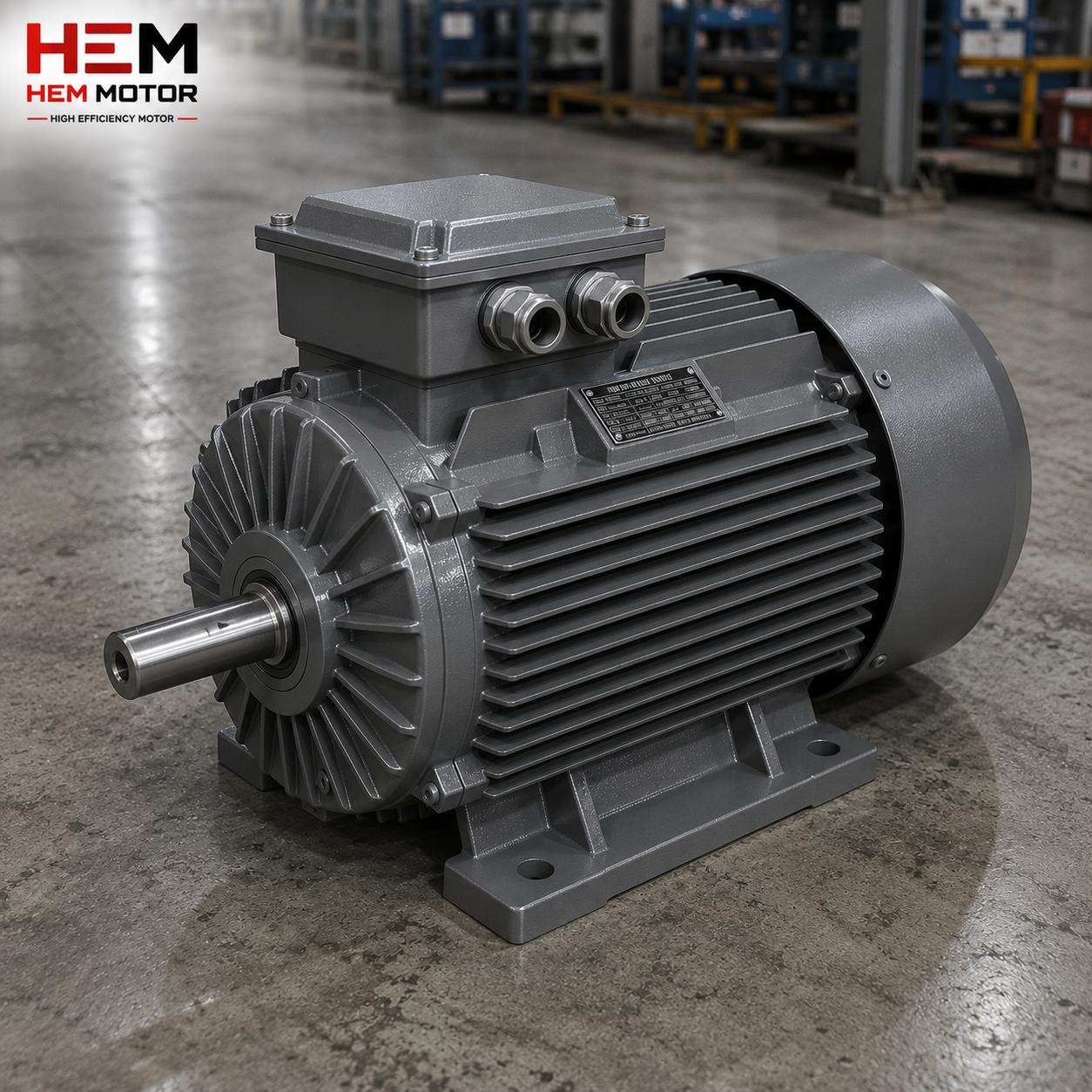
In electric motors, the vibration level is classified according to international standards. The standard vibration class (usually "A" or normal class) is sufficient for most industrial applications. For more sensitive applications, a low-vibration ("B" or specially reduced vibration) class is produced; these motors are balanced to tighter tolerances and run quieter and more steadily.
The low-vibration class is preferred especially in precision machine manufacturing, machine tools, precision pump and fan applications, and processes where vibration affects product quality. Low vibration also extends bearing and coupling life, which reduces maintenance cost. We detail the quiet, low-vibration operation advantage of IE4 Super Premium motors in our quiet and low-vibration operation in IE4 motors article. We determine the vibration class suited to your needs together at the quotation stage.
Rotor Balance and Bearings: The Mechanical Basis of Quietness
How quietly a motor runs depends largely on rotor balance and bearing quality. A well-balanced rotor creates no centrifugal imbalance as it turns, keeping vibration and therefore mechanical noise to a minimum. Quality, correctly preloaded bearings run quieter and last longer.
HEM Motor motors are built for low-vibration operation with 100% copper winding, a quality bearing structure and a balanced rotor design. Low vibration protects the life of the connected machine as much as the motor itself, because vibration also wears couplings, belts and bearings. For facilities that want early warning by monitoring motor temperature and mechanical condition, our PT100 and PTC thermistor temperature monitoring article offers guidance. To catch a rise in vibration early through periodic checks, see our electric motor maintenance and periodic check schedule article.
Practical Strategies for Selecting a Low-Noise Motor
Reducing noise at its source is far more economical than adding sound insulation later. Strategies you can apply when selecting a low-noise motor:
Choose a Lower Speed
If the application allows, choosing a 4 or 6-pole motor instead of a 2-pole one noticeably reduces fan and magnetic noise. Obtaining the required output speed with a reducer is also an option.
Cast Iron Body Advantage
A cast iron body damps vibration better than aluminum and provides steadier, quieter operation. This difference matters in heavy, continuously running applications.
Correct Sizing
An oversized motor can run inefficiently and sometimes more noisily at low load. Choosing a motor of the correct power is advantageous for both efficiency and noise.
We evaluate these strategies together according to your application and recommend the most suitable low-noise motor. Where low output speed is needed with a reducer, we can offer the motor as a single geared motor assembly with a worm gear reducer or helical worm gear reducer.
In Which Applications Is a Low-Noise Motor Essential?
A low-noise motor is not just a preference but a necessity in some applications. In ventilation and air-conditioning (HVAC) systems, the fan motor's noise is carried directly into the living space, so selecting a low-noise fan motor is critical. Our fan motor supply in HVAC projects article addresses this choice. Similarly, in booster and pump systems, quiet operation matters for building occupants' comfort.
Food factories, precision production facilities and environments near laboratories also require low noise and vibration. In all these applications, choosing the right speed, body material and appropriate vibration class ensures both standards compliance and comfort. As HEM Motor, we offer our full efficient electric motors range with low-noise and low-vibration options, and help you identify the most suitable model from the product groups on our home page.
The Role of the VFD and Switching in Noise
When a motor is run with a variable frequency drive (VFD), the noise behavior changes. The high-frequency switching of the drive can add an audible, sometimes high-pitched magnetic noise to the motor, especially at low speeds. This noise can be reduced by adjusting the drive's switching frequency and by using a motor designed for inverter duty. So if you plan to run your low-noise motor with a VFD, the drive setting matters as much as the motor selection.
On the other hand, a VFD lets a fan or pump run at exactly the needed speed instead of full speed, which often reduces overall noise on partial-load applications, since both fan and flow noise drop with speed. We explain VFD selection and matching in our VFD with an asynchronous motor article. For low-noise applications driven by a VFD, we recommend a suitable inverter-compatible motor and guide the right configuration.
Installation and Mounting: Quietness Is Not Only About the Motor
Even the quietest motor can become noisy if installed incorrectly. A loose foot, an unlevel base, a misaligned coupling or an over-tensioned belt all create vibration and noise that did not originate in the motor itself. Therefore, a rigid, level mounting surface, correct alignment and, where appropriate, anti-vibration mounts are essential for quiet operation. The mounting type also matters: foot-mounted (B3), flanged (B5/B14) or combined (B35) mountings transmit vibration to the machine differently.
To select the right mounting type for your machine, our electric motor mounting types page shows the differences between B3, B5 and B35, and our B5 or B14 connection-type selection article guides the choice. A correct commissioning that checks rotation direction, alignment and mounting is the final step in quiet operation; for facilities replacing an existing motor, sharing the nameplate data ensures a mechanically identical, low-noise replacement.
Ordering a Low-Noise Motor: What to Tell Us
To supply the right low-noise motor quickly, we recommend confirming the following at the quotation stage: motor power (kW), speed (rpm) or required output speed, mounting type (B3/B5/B35), body material preference (cast iron / aluminum), the application's noise limit if any, and whether the motor will run on a VFD. If quietness is critical, also tell us whether a low-vibration class is required. If you are replacing an existing motor, sharing its nameplate data is the most reliable starting point; our information to provide when requesting a quote list shows exactly what we need.
Based on this information, we recommend a model with the correct speed, body material and vibration class, and where lower output speed is needed, we pair it with a suitable reducer as a single assembly. As HEM Motor, with our manufacturer and supplier identity, we provide quiet, low-vibration motors that comply with your environment's noise requirements, from stock and with fast shipment.
Frequently Asked Questions
Which motor is quieter: 2-pole or 4-pole?
Generally, a 4-pole (1500 rpm) motor of the same power is quieter than a 2-pole (3000 rpm) one, because both the cooling fan and magnetic noise decrease at lower speed. If your application allows, choosing a lower-speed motor for quietness is the most practical solution. We can also obtain the required output speed with a reducer.
Does a low-vibration motor cost more?
A special low-vibration class may differ from the standard class because it requires tighter balance tolerance; however, by extending bearing and coupling life it offers an advantage in total cost of ownership. If your need is a standard industrial application, the normal vibration class is usually sufficient; for sensitive applications we recommend the low-vibration class.
Can I replace my current noisy motor with a quiet model?
Yes. If you share the existing motor's nameplate data (power, speed, frame, mounting type), we recommend a direct replacement with the same mechanical dimensions but a lower-noise, low-vibration model. Replacing a high-speed motor with a lower-speed motor and a reducer is also an option.
Get a Quote
Share your low-noise, low-vibration electric motor requirement and we will offer the most suitable motor in the speed, body material and vibration class suited to your application, together with stock and lead-time information. Reach us now via our contact page or call us at +90 (532) 345 49 86. As both manufacturer and supplier, HEM Motor delivers the right quiet, reliable motor at the right price with fast shipment.