English
 Türkçe

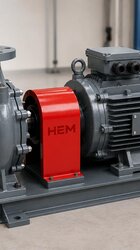

Buying an electric motor looks, at first glance, like a simple transaction: people assume that saying "I need a 5.5 kW motor" is enough. In practice, however, the vast majority of motor returns and wrong deliveries are caused not by the quality of the motor, but by an incomplete or incorrect specification at the ordering stage. The wrong speed, an omitted shaft dimension, an unclear mounting type or an unspecified efficiency class — each of these can cause a brand-new motor to fail to fit the machine or to fall short of the expected performance.
The good news is this: almost all of these mistakes can be prevented with a few minutes of proper preparation before placing the order. In this article we go through the 7 most common mistakes made when buying an electric motor one by one, showing how each can be avoided and which information must be communicated completely to ensure a correct purchase. As a manufacturer and seller, our aim is to help you get the right motor the first time.

Mistake 1: Specifying the Power (kW) Incorrectly
The most frequent and most costly mistake is choosing the motor's rated power incorrectly. Many users buy an oversized motor on the assumption that "the bigger, the better"; this means both an unnecessary investment and inefficient operation at low load. Conversely, choosing too little power causes the motor to overheat, fail prematurely and constantly trip its protection relay.
The correct power selection must be based on the machine's real load profile. Does it run continuously or intermittently? Does it require high torque at start-up? Does the load change over time? The answers to these questions determine the correct power rating. If you are replacing an existing motor, the safest reference is the kW value on the old motor's nameplate.
It is also worth remembering that a motor delivers its best efficiency and power factor near its rated load, not at a small fraction of it. An oversized motor that spends its working life lightly loaded draws more reactive power and runs colder than its design intends, while still costing more to buy and to install. A correctly sized motor, by contrast, sits in the sweet spot of its efficiency curve and pays back across years of operation. As a manufacturer and seller, the first thing we ask a buyer is therefore not "how big" but "how the machine actually works."
Mistake 2: Skipping the Speed / Number of Poles
Two motors of the same power but different speed are designed for completely different jobs. A motor's speed (rpm) is determined by its number of poles:
- 2 poles: ~3000 rpm — high-speed applications such as pumps and compressors.
- 4 poles: ~1500 rpm — the most common general-purpose speed.
- 6 poles: ~1000 rpm — fans, conveyors and applications requiring high torque.
Simply saying "a 5.5 kW motor" is an open invitation to a wrong delivery, because no speed is specified. For the correct pole selection, our guide on choosing between 2, 4 and 6 poles in asynchronous motors explains this subject in depth.
Mistake 3: Skipping the Shaft and Key Dimensions
Even if the motor is the right power and speed, if the shaft diameter and key dimensions do not match the existing coupling, pulley or gearbox, it simply cannot be mounted. Although shaft diameters are well defined for standard IEC frame sizes, there can be differences in special applications. Measuring the shaft diameter, shaft length and key width before ordering prevents mounting surprises.
This detail is overlooked surprisingly often, because buyers assume that once the kW and speed are right, the mechanical fit will simply follow. In reality, a coupling bored for one shaft diameter will not slide onto a shaft that is even a few millimetres larger or smaller, and a keyway that does not match the existing key forces an unplanned machining job in the field. A few measurements taken with a caliper before the order goes out remove this entire risk at no cost.
Mistake 4: Failing to Clarify the Mounting Type
The way a motor is connected to the machine is determined by its mounting type. The most common types are:
- B3 (foot-mounted): The motor is fixed to the floor or chassis through its feet.
- B5 (large flange): Connected at the front via a flange, usually to a gearbox or pump.
- B14 (small flange): Compact applications connected to a surface via a flange.
- B35 (combined foot + flange): Both foot and flange connection.
Ordering a foot-mounted motor and then trying to fit it to a flange application is a common and preventable mistake. Confirming the mounting type from the nameplate or the existing motor is essential.
Mistake 5: Leaving the Efficiency Class Undefined
Today's regulations make IE3 and increasingly IE4 efficiency classes mandatory in certain power ranges. Choosing a motor of a lower efficiency class can both create a legal compliance problem and return for years as a high energy bill. Clarifying the efficiency class at the ordering stage is critical both for regulatory compliance and for operating cost. Energy savings are a far larger item than the purchase price of the motor.
Mistake 6: Ignoring the Environmental Conditions and Protection Class
The environment in which the motor will operate determines the correct choice. A motor that will run in dusty, humid, outdoor or wash-down environments must have an adequate IP protection class (for example IP55). In addition, special conditions such as high temperature, high altitude or an explosive atmosphere (Ex) change the motor's specifications. Failing to state these conditions can result in a motor that fails within a short time.
Ambient temperature deserves particular attention, because the rated power of a motor is defined for a standard ambient and a standard altitude. In a hot boiler room or a high-altitude plant, the same motor must effectively be derated, and an efficiency or protection class that was acceptable indoors may no longer be suitable outdoors. Stating the real operating environment up front lets us match a motor whose insulation, cooling and protection are built for those exact conditions, rather than one that merely looks right on paper.
Mistake 7: Not Considering the Load Profile and Starting Method
How the motor will be started is at least as important as what it is. In an application that starts under load, direct-on-line starting may not be suitable; starting methods such as star-delta, a soft starter or a VFD (variable frequency drive) come into play. The starting method affects not only the cost of the panel but also the motor's lifetime and the disturbance on the grid. You can find this subject in detail in our article star-delta or soft starter.
What Must Be Communicated in Full for a Correct Purchase
All of the mistakes above are prevented by communicating the following information completely before placing the order:
- Rated power (kW) and the real load profile.
- Speed (rpm) or number of poles.
- Voltage and frequency (for example 400 V, 50 Hz).
- Mounting type (B3, B5, B14, B35).
- Frame size and shaft dimensions.
- Efficiency class (IE3, IE4).
- Protection class (IP) and environmental conditions.
- Starting method and application type.
If you are replacing an existing motor, a legible photo of the nameplate provides most of this information at once. To quickly source the right motor from a broad stock structure, you can visit our electric motors homepage.
Conclusion: Preparation Comes Before Motor Quality
Most returns stem not from motor quality but from an incomplete specification. A few minutes of proper preparation — nameplate information, connection dimensions and the real load profile — lets you get the right motor the first time. Businesses that do this preparation save both time and money and keep their production running without interruption. As a manufacturer and seller, this is the single habit we recommend above all others.
Frequently Asked Questions
What is the most critical piece of information when ordering an electric motor?
It is not a single piece of information but a complete set: power (kW), speed / number of poles, mounting type, shaft dimension and efficiency class together define the correct motor. If any one of these is missing, it can lead to a wrong delivery. A photo of the existing motor's nameplate provides most of this information at once.
Is it harmful to choose more power than needed?
Yes. An oversized motor means both an unnecessary investment and inefficient operation at low load. When a motor runs far below its rated load, its efficiency and power factor drop. The correct approach is to choose the power according to the machine's real load profile.
Does the efficiency class really matter when purchasing?
Absolutely. Today's regulations make IE3 and IE4 efficiency classes mandatory in certain power ranges; in addition, a low-efficiency motor returns for years as a high energy bill. Energy savings are often a far larger item than the motor's purchase price, which is why the efficiency class must always be clarified at the ordering stage.