English
 Türkçe

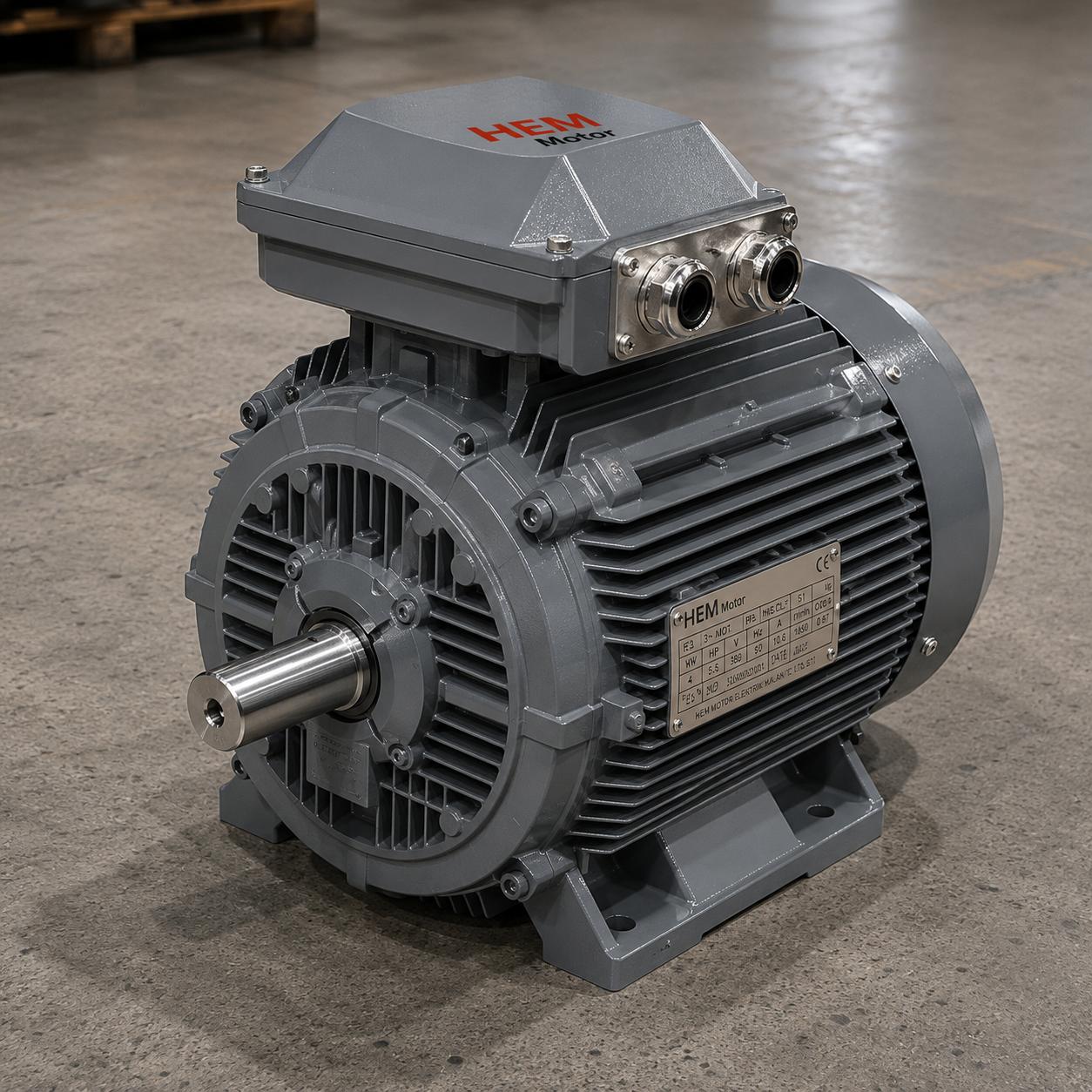

You connected the motor, threw the switch, and instead of the pump pushing water it pushes air back, or the fan turns the wrong way. In this scene there is usually no fault in the motor; the problem is the rotation direction. The direction a three-phase motor turns depends on the phase sequence at the terminal block, and this is a matter that can be solved with a few minutes of care at the order stage and during commissioning. In this guide we explain how the direction is determined, in which applications the wrong direction causes real damage, and how to verify direction safely during commissioning.
At HEM Motor, while supplying the electric motors we have manufactured since 1979 from our stock in Turkey, we know how much time and money the right information about direction and connection saves in the field. That is why, during the quotation and dispatch process, clarifying whether your application requires a specific direction is part of our job.
How Is Direction Determined in a Three-Phase Motor?
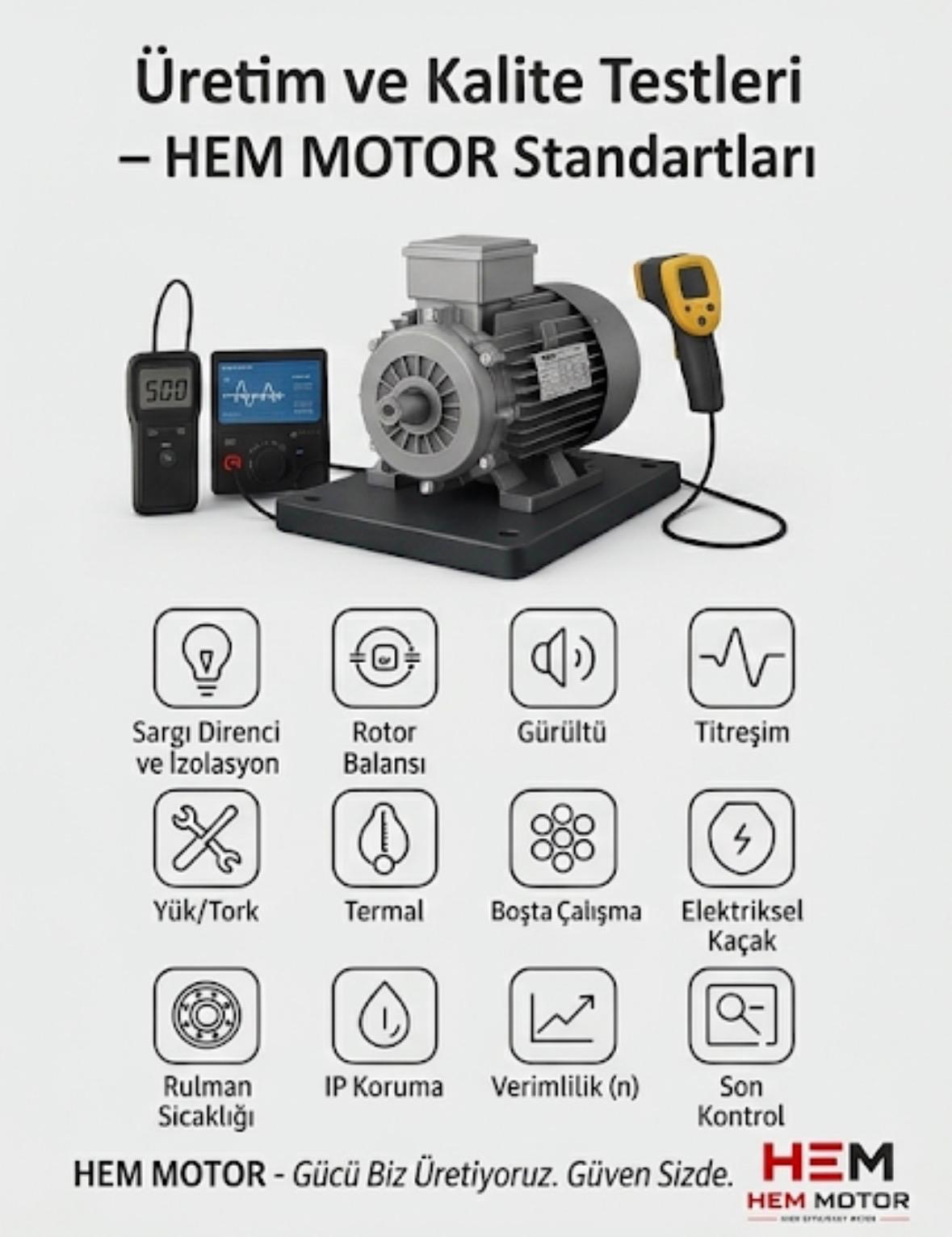
What determines the direction of rotation in a three-phase asynchronous motor is the direction of the rotating magnetic field the windings see. The direction of that field, in turn, depends on the sequence in which the three phases are connected to the terminal block. When the phase sequence is connected in the standard order, the motor turns one way, and when any two phases are swapped, it turns the other way. In other words, to reverse the direction there is no need to make any change inside the motor; swapping the position of two phases at the terminal block is enough.
This simple rule is the most frequently used solution in the field. If the motor turns the wrong way, cutting the power and swapping the position of any two of the three phases at the terminal block corrects the direction instantly. The position of the third phase makes no difference to direction; what matters is only swapping the two phases. The situation is different in single-phase motors, where the direction is set by the auxiliary winding connection; you can find this and other differences between three-phase and single-phase in our article on single-phase or three-phase.
Swapping Two Phases to Change Direction
In practice it works like this: the motor power is cut safely, the terminal box is opened, and two of the supply leads (for example L1 and L2) are swapped. When the box is closed and power is applied, the motor now turns in the opposite direction. This operation is done not on the motor's own winding leads but on the incoming supply cables; this way the internal connection of the motor is not touched. In starting connections such as star-delta, the phase swap must be made at the point that suits the connection diagram.
When a starting method comes into play, the connection requires a little more care, because the delta and star leads are connected in a specific order. We covered the logic of star-delta starting and the lead connections in detail in our article on star-delta and softstarter. Making the direction swap without disturbing this diagram preserves both the correct direction and the correct starting.
In Which Application Does the Wrong Direction Create Risk?
In some applications the wrong direction only creates inefficiency; in others it leads directly to damage. In centrifugal pumps, when the impeller turns the wrong way the pump either does not deliver at all or runs with very low flow; moreover, in some pumps the impeller can loosen and damage the shaft. In fans, the wrong direction causes a serious drop in air flow and loads the motor differently than expected. In these cases, even if the motor is sound, the system cannot do its job.
In compressors, gear pumps, augers and some geared drives, the wrong direction can go as far as mechanical damage, because these systems are designed to run in one direction only. For this reason, in direction-critical applications such as pumps and fans, the direction must be verified when commissioning the motor. When selecting suitable pump electric motors for pump drives, making the direction check the first step of the commissioning plan is the safest route.
Direction Check on Pumps and Fans
The safest way to check direction is to run the system for a brief moment without putting it under load and observe the shaft direction by eye. Most pump and fan housings have an arrow showing the correct direction of rotation; running the motor momentarily and comparing it with this arrow is enough. If the direction is reversed, the power is cut, two phases are swapped, and it is tried again. This check takes a few minutes but prevents from the outset the failure that running in the wrong direction for a long time would cause.
It can sometimes be hard to distinguish the direction of fan blades or a pump impeller by eye; in this case checking the supply sequence with a phase sequence meter provides clarity. To plan the entire commissioning process step by step, you can make use of our article on the motor commissioning checklist; the direction check is an indispensable item on this list.
Noting the Direction on the Order
Because direction can be easily set in the field by swapping phases on standard three-phase motors, most orders do not require a special direction request. However, if a motor needs to be fixed to a specific direction, a mechanical lock, a device that prevents reverse rotation or a specific direction label, stating this at the order stage makes the job easier. Especially if you want a ready-made drive group or a geared combination, it is useful to share your output direction expectation from the start.
Our range of three-phase electric motors, offered across a wide range of power and speed, is delivered with the standard phase sequence and the direction is easily set in the field. If you are building a line with several motors and all drives need to run in the same direction, it is enough for us to note this at the quotation stage too.
Phase Sequence, Starting and Protection Must Be Considered Together
Direction of rotation is not a stand-alone matter; the motor's starting method, protection equipment and phase connection must be considered as a whole. While in small direct-on-line motors the direction swap is made simply at the terminal block, in motors started with star-delta or a softstarter the swap must be made while preserving the connection diagram. Otherwise, there is a risk of disturbing the starting connection while correcting the direction, which leads to the starting current or torque coming out different than expected.
A wrong phase sequence can sometimes be a herald not only of direction but also of more serious problems such as phase loss or imbalance. For this reason, during commissioning, phase relays and thermal protection help catch both the wrong direction and a missing-phase condition early. Choosing suitable protection equipment together with the motor protects both the motor and the machine it drives. To plan the right protection you can evaluate drive and starting options and choose a motor suited to your application from our range of general purpose industrial motors.
Phase Sequence Measurement and Practical Tips
To avoid leaving the direction check to guesswork, using a phase sequence meter is the most reliable way. This small device shows the order in which the supply arrives and lets you predict the direction without running the motor at all. Especially on lines where several motors need to run in the same direction, keeping the same phase sequence in all panels prevents confusion. In-panel labelling and tidy marking of leads reduce the risk of wrong connections in future maintenance.
Another practical point is that the phase sequence can change during grid or generator switchovers. On sites running on a generator, the generator connection's phase sequence may differ from the grid's; this causes the same motor to turn the wrong way on different sources. For this reason, repeating the direction check during source switchovers is a good habit. To carry out all these steps systematically, following the commissioning checklist ensures no step is skipped.
In Which Drives Should Direction Be Fixed in Advance?
In some applications, direction is not something to be found by trial during commissioning but a criterion that must be guaranteed from the start. In compressors, gear pumps and some geared drives designed to run in one direction only, the wrong direction can cause damage even on the first start. In such systems it is essential to measure the phase sequence before commissioning and to verify it with a short trial without putting the motor under load at all.
A similar care is needed in pump drives, because some impellers turning the wrong way can loosen. For this reason, making the direction check the first item of the commissioning plan when selecting a pump motor is the safest route. When you tell us the direction sensitivity of your application, we plan both the right motor and the right commissioning approach together.
Common Mistakes When Changing Direction
Although the direction swap is a simple operation, a few typical mistakes are often repeated in the field. The first is intervening at the terminal block without cutting the power; this is both a serious safety risk and an unacceptable practice. The second is mistakenly rearranging all three phases instead of two, with the result that the direction does not change at all. The third is making the phase swap at the wrong point on a star-delta connected motor and disturbing the starting diagram.
Another common mistake is not tightening the connection leads enough after the direction swap; a loose phase connection leads over time to heating, sparking and phase loss. Properly closing the terminal cover and seating the gasket are also important for preserving the IP protection class. Skipping these small but critical steps can turn a simple direction correction into a major failure later. Carrying out the operation step by step and in a controlled manner protects both safety and the health of the motor.
The Order of Commissioning on a New Line
When commissioning motors on a newly built line, following a specific order minimises direction and connection errors. First all connections are checked visually and with an insulation measurement, then the direction is verified with a short momentary run without putting the motor under load. If the direction is correct, the motor is put under load; if not, the power is cut, the phases are swapped, and it is tried again. This order protects both the motor and the driven machine from unnecessary risks.
On multi-motor lines, commissioning each drive one by one makes it easier to isolate the source of a problem. Commissioning in sequence rather than starting all motors at once lets you catch a drive turning the wrong way early. This disciplined approach saves time and repair cost especially on interconnected conveyor and pump lines. Carrying out the commissioning process with a checklist guarantees that no step is skipped.
Clarifying Direction and Connection Information on the Order
In a sound motor order, direction usually does not require a separate request because it can be set in the field; however, in some special cases clarifying it from the start makes the job easier. If there are needs such as the motor arriving with a specific direction label, a ready-made drive group running in a specific direction, or the output direction of a geared combination being defined in advance, these should be stated at the quotation stage. This information ensures the motor and, if any, the gearbox are prepared correctly.
On the connection side, what voltage the motor will run at and which starting method it will use matter, because this affects the terminal connection diagram and therefore how the direction swap is made. The terminal connection of a 380 V three-phase motor and the starting method must be considered together. When you tell us your application's voltage, starting method and direction expectation, we plan together both the right motor and a connection arrangement that will be commissioned smoothly in the field.
Output Direction in Geared Drives
In a geared drive, the motor's direction of rotation also determines the gearbox's output direction; for this reason, in direction-critical applications such as conveying or lifting, the output direction must be planned from the start. The gearbox type and mounting form affect which direction the motor needs to turn. If you are ordering a ready geared group, stating the output direction your machine requires ensures the correct combination is delivered.
In such combinations the direction swap can again be made at the motor's terminal block, but the gearbox's mechanical structure and the safety of the application must be considered together. Evaluating the output direction and load-holding expectation as a whole lets you choose both the right motor and the right gearbox. When you share your need as a complete drive group, we recommend a compatible solution that runs in the correct direction.
Frequently Asked Questions
My motor turns the wrong way, is it faulty?
In most cases no. If a three-phase motor turns the wrong way, the cause is usually the phase sequence, not the motor itself. After safely cutting the power, swapping the position of two phases at the terminal block corrects the direction. If there is still unexpected behaviour after the direction swap, then the connection or mechanical side needs checking. This operation, made only on the supply leads without touching the motor's winding, is safe.
Which two of the three phases should I swap?
Any two reverse the direction; all three possible pairs give the same result, that is reversing the direction. The position of the third phase makes no difference to direction. In practice, swapping the two most easily accessible leads is enough. What matters is doing the operation with the power off and tightening the connection back firmly.
How do I check direction safely during commissioning?
Run the system for a brief moment without putting it under load and compare the shaft direction with the rotation arrow on the pump or fan housing. If the direction is reversed, cut the power, swap two phases, and try again. If it is hard to distinguish the blade or impeller direction by eye, use a phase sequence meter. This short check prevents from the outset the loss of flow and possible mechanical damage that running in the wrong direction would cause.
Get a Quote
So that your pump delivers water and your fan blows in the right direction, let us select the motor correctly from the start and plan the direction together during commissioning. Tell us your application, your starting method and your direction expectation; let us recommend a three-phase motor suited to your need from our stock. For a fast and accurate price you can call us on +90 (532) 345 49 86 or reach us through our contact us page.