English
 Türkçe

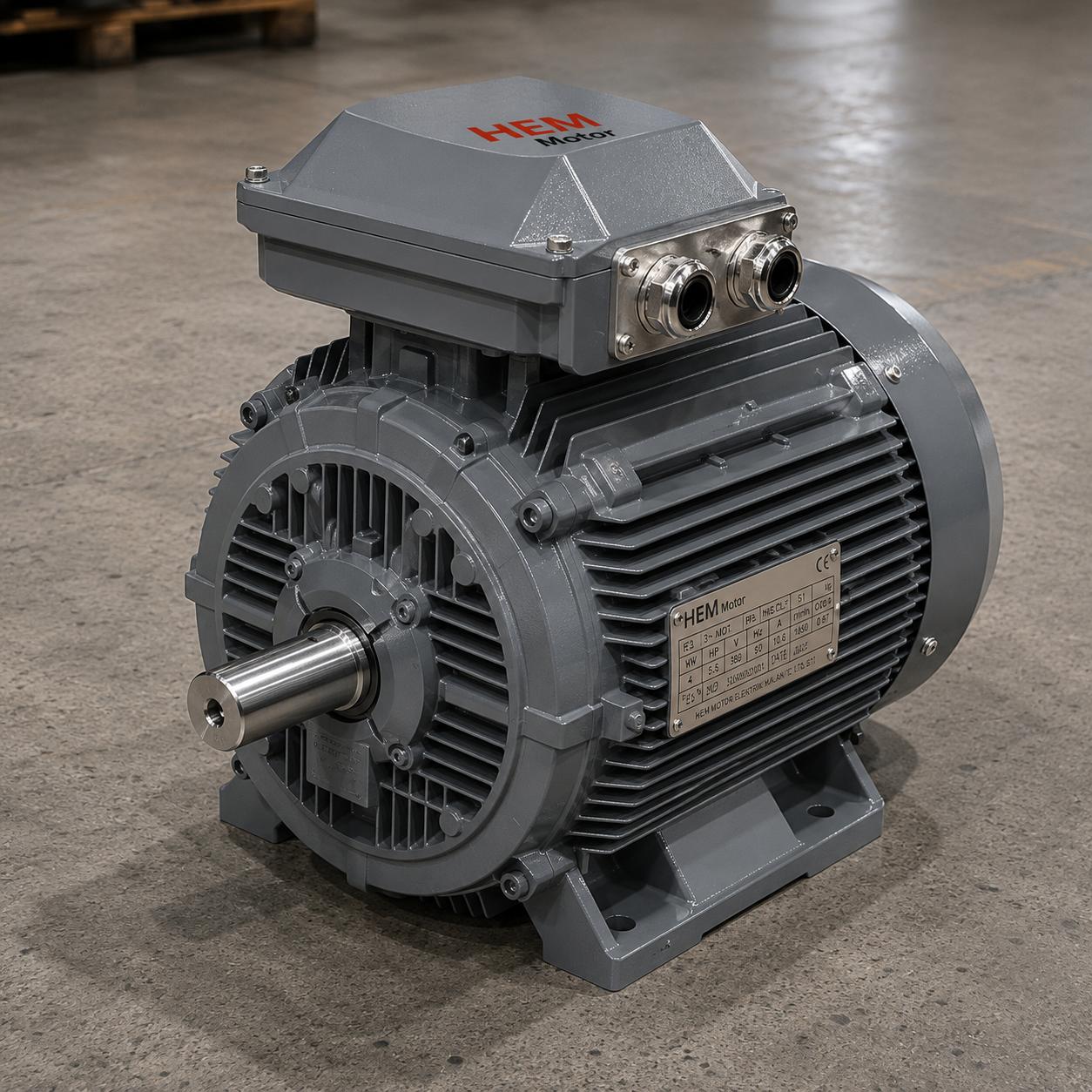

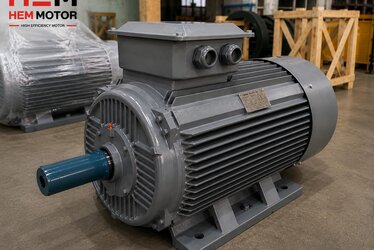
The first decision facing anyone who is going to set up a new machine, replace an old motor or buy the first motor for their workshop is this: single-phase or three-phase? This choice is not merely a technical preference; it is a purchasing decision that directly affects the facility's electrical infrastructure, the motor's power, its efficiency and the long-term operating cost. The wrong phase choice leads either to an expensive infrastructure change or to a low-efficiency, short-lived installation. This article addresses the selection of 220V single-phase and 380V three-phase electric motors from the buyer's decision standpoint: which supply line your facility has, which range your power is in, and in which situation you should prefer which one. HEM Motor, as an electric motor factory manufacturing since 1979, supplies three-phase asynchronous motors from Türkiye stock.
The First Question: Which Supply Line Does the Facility Have?
The most decisive point of the phase decision is the existing electrical infrastructure in your facility. Residential and small-business subscriptions usually come with a single-phase (220V) supply. Industrial estates, factories, workshops and agricultural irrigation facilities are mostly supplied with a three-phase (380V) line. If your facility has a three-phase line, a three-phase motor should be preferred in almost every case; because a three-phase motor is more efficient, more durable and produced across a wider power range. It makes sense to prefer a single-phase motor only in situations where there is no three-phase line and bringing one in is expensive or impossible. In short, the phase decision is as much about your existing infrastructure as it is about your power.
For this reason, the first question to ask before buying should not be "how many kW of motor do I need?" but "does three-phase reach my panel?" The cost of running a three-phase line varies with the subscription type and the distance; however, in the long term the efficiency and durability advantage of the three-phase motor more than covers this cost in most industrial applications. If you do not have a three-phase line and will run only a single small machine, a single-phase motor is a practical solution; but if you have a growth plan, setting up three-phase infrastructure from the start saves you from a second investment later.
A practical way to check your existing line is to look at your electrical panel and your meter. If there is a single phase cable (and neutral) in the panel, your facility is single-phase; if you see three separate phase cables, you have a three-phase supply. The type of your subscription is also stated on your bill. If three-phase machines are already running, it means there is a three-phase line at the facility and it is best to buy the new motor as three-phase too. This simple check prevents returns and delays caused by the wrong phase choice; because saying "the motor does not fit my line" after the purchase is a loss of both time and cost.
Power Range: Single-Phase Small Power, Three-Phase Industrial Standard
The two motor types are produced in different power ranges, and this determines a large part of the decision on its own. Knowing which power range you are in lets you head toward the right type without getting into an unnecessary infrastructure discussion.
Single-phase motors are typically produced in small powers between about 0.18 kW and 2.2 kW. To produce a rotating magnetic field from the single-phase mains, they use an auxiliary winding and a capacitor; that is why most single-phase motors are also called "capacitor motors." The capacitor provides the starting torque, but by their nature single-phase motors are lower in efficiency and limited in power. Finding a single-phase motor above 2.2 kW is both difficult and inefficient; above these powers three-phase is the only practical option.
Three-phase motors, on the other hand, run without needing an additional capacitor thanks to the rotating magnetic field that three phases naturally produce. This makes them the standard for industrial applications of 1.5 kW and above. In the HEM range, three-phase asynchronous motors are produced across a wide range from 0.55 kW up to 355 kW; that is, there is a three-phase solution at every power from a small conveyor to a large crusher. When your industrial electric motor requirement exceeds 1.5 kW, the question is no longer "single-phase or three-phase" but "which three-phase motor."
This power distinction often makes the selection on its own in the purchasing decision. For example, a 0.75 kW single-phase motor is sufficient and suitable for a small bench fan, a display cooler or a light grinder. However, when it comes to a booster pump set, an industrial compressor, a conveyor line or a crushing-screening plant, the power requirement quickly exceeds 2.2 kW and three-phase becomes the only option. So when you clarify the power of your application, the phase decision mostly emerges on its own: low power with a single-phase line means single-phase, industrial power or a three-phase line means three-phase.
The Limits of the Single-Phase Capacitor Motor
The capacitor of the single-phase motor is also its weak point. The capacitor wears out over time, loses its capacitance and the motor's starting torque drops; this leads to frequent failures, especially in applications that must start under load. In addition, single-phase motors run with more vibration and a lower power factor than their three-phase counterpart of the same power. They are sufficient for low-power, occasionally running, lightly loaded applications; but in continuously running industrial applications that start and stop frequently under load, they cannot provide the stability that a three-phase motor offers.
Why Is Three-Phase More Efficient and Durable?
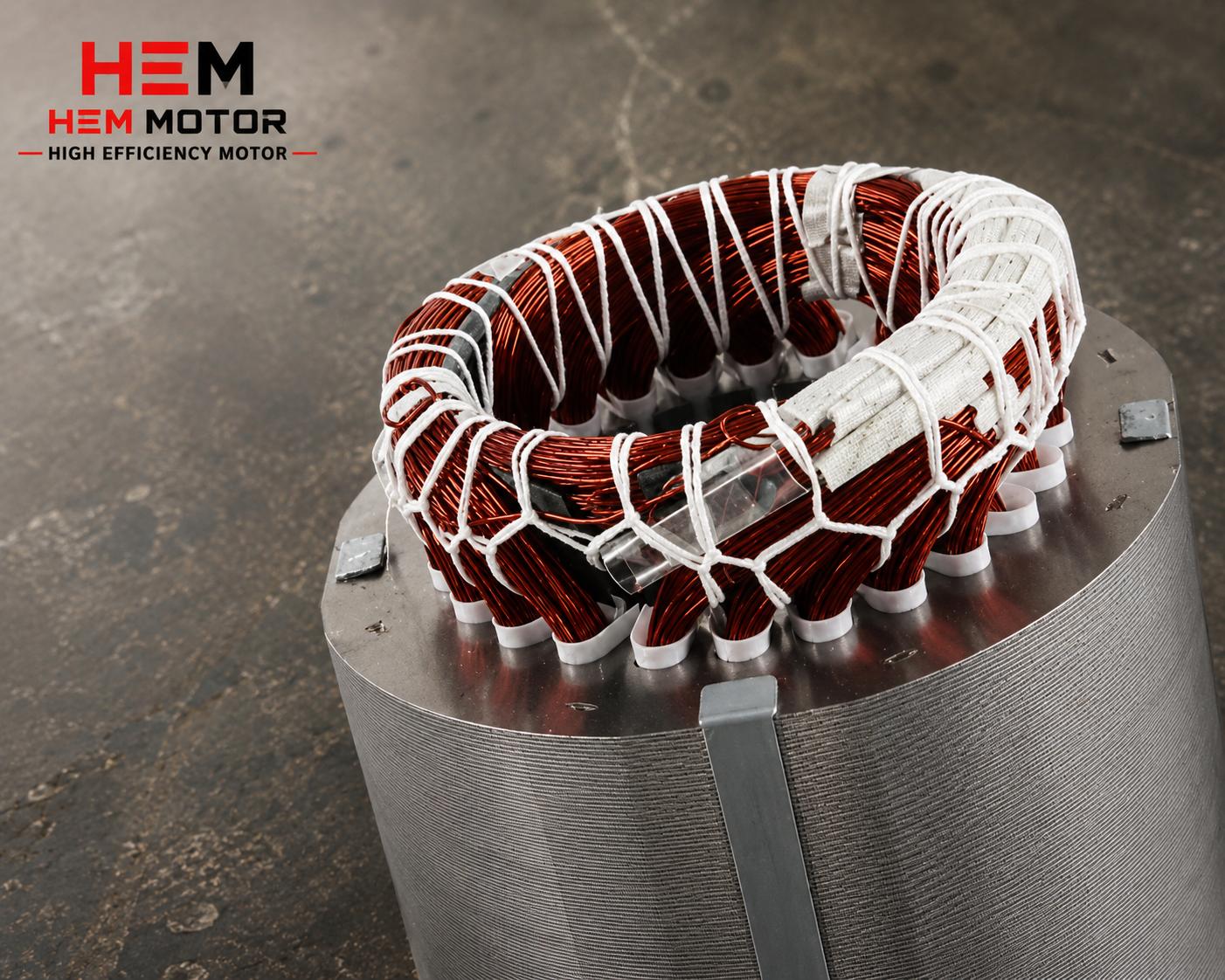
The superiority of the three-phase asynchronous motor is not a coincidence but a natural result of its operating principle. The three phases create a smooth and continuously rotating magnetic field inside the motor; this means less vibration, lower heating and higher efficiency. In a single-phase motor, an "artificial" rotating field is produced with a single phase, an auxiliary winding and a capacitor, so efficiency and smoothness are naturally lower. A three-phase motor doing the same job is generally available in a higher efficiency class (IE3, IE4) than its single-phase counterpart and lowers the energy cost.
In terms of durability, three-phase is also ahead. The absence of a wearing component such as a capacitor, a more balanced load distribution and a lower operating temperature extend the winding and bearing life of the three-phase motor. In continuously running facilities, this comes back as fewer failures and lower maintenance cost. In addition, three-phase motors can easily be paired with starting and speed control options such as star-delta, a soft starter or a frequency inverter; this flexibility is very limited in single-phase motors. So when you choose three-phase, you acquire not only a more efficient motor but also an infrastructure open to future needs such as speed control or soft starting. Moreover, EU and Türkiye regulations have made a minimum efficiency class (IE3, and IE4 at large powers) mandatory for three-phase motors above certain powers; that is, high efficiency is now standard on the three-phase side. To evaluate the efficiency class decision in depth, you can review our IE3 or IE4 investment guide.
Pole, Speed and Mounting: Steps After the Phase Decision
The selection does not end after determining the phase type; in a three-phase motor the speed (pole count) and the mounting type are also selected according to the application. A 2-pole motor turns at ~3000 rpm, a 4-pole at ~1500 rpm, a 6-pole at ~1000 rpm; the speed your application requires determines this selection. In high-speed applications such as pumps and fans, 2 poles are preferred; in general industrial drives, 4 poles; in heavy work requiring high torque, 6 poles. To detail this decision, you can look at our asynchronous motor pole selection guide. On the mounting side, the foot-mounted (B3), flange-mounted (B5/B14) and combined (B35) options are determined according to your machine; since it depends on directly matching the connection type, stating the flange or foot dimensions of your existing machine at the quote stage prevents the wrong part from arriving. The body material (cast iron or aluminum) is also selected according to ambient conditions; for details on this, you can look at our cast iron or aluminum frame guide.
HEM's three-phase electric motors offer a wide range of options across all of these axes - power, speed, mounting, efficiency class. For general industrial drives, the AC electric motors category also includes the most preferred power-speed combinations. To see the entire high-efficiency three-phase range collectively, you can review our efficient electric motors product category. It is most reliable to plan which three-phase motor fits your machine in a single quote, together with the nameplate information and application details.
The Effect of the Phase Choice on Operating Cost
The phase decision determines not only the initial investment but also the energy the motor will consume throughout its entire operating life. A large part of a motor's lifetime cost is not the purchase price but the electricity bill it draws. For this reason, in a continuously running application, choosing a high-efficiency three-phase motor instead of a low-efficiency single-phase motor more than pays back the price difference within a few years. The return of preferring three-phase and a high efficiency class is clear, especially in loads such as compressors, pumps, fans and conveyors that run long hours a day. When evaluating electric motor prices, looking not only at the listed price but also at the motor's annual energy consumption leads to the right decision.
In addition, load balance is also important in three-phase facilities. While connecting more than one small single-phase motor to the same panel can create imbalance between the phases, three-phase motors naturally distribute the load equally among the three phases. This means both more efficient use of your subscription and a more balanced operation on the panel and cable side. Therefore, in a growing facility, three-phase infrastructure makes not only the motor selection but the whole electrical installation healthier.
Is It Possible to Run a Three-Phase Motor on a Single-Phase Line?
This is a frequently asked subject that affects the purchasing decision. Technically, it is possible to run a three-phase motor from the single-phase mains with a frequency inverter (of the type that gives single-phase input and three-phase output); however, in this solution the power is limited and the inverter cost comes into play. Running a three-phase motor on a single-phase line with a capacitor (Steinmetz connection) is also possible, but the motor's power and torque drop significantly; it is not recommended for continuous industrial use. So instead of forcing a three-phase motor onto a single-phase line, either having a three-phase line run to the facility or, if the power is suitable, buying a single-phase motor from the start is in most cases a more correct decision. If the decision is not clear, send us your intended use and your existing line; let us determine the most correct solution together. To see the entire three-phase range collectively, you can also take a look at our asynchronous / AC motors guide section.
Frequently Asked Questions
Should I buy a single-phase or a three-phase motor?
The decision depends first on the line in your facility. If you have a three-phase (380V) line, a three-phase motor should be preferred in almost every case; it is more efficient, more durable and available in a wider power range. If you do not have a three-phase line and your need is limited to a single machine below 2.2 kW, a single-phase motor is a practical solution. In industrial applications above 1.5 kW, three-phase is the standard.
Up to how many kW are single-phase motors available?
Single-phase (capacitor) motors are typically produced between about 0.18 kW and 2.2 kW. Above these powers, finding a single-phase motor is both difficult and inefficient in terms of efficiency and torque. For applications above 2.2 kW, a three-phase motor is the only practical option. The HEM range covers three-phase asynchronous motors between 0.55 and 355 kW. For this reason, clearly determining your power requirement directly resolves a large part of the phase selection: with low power and a single-phase line, single-phase; when industrial power is involved, it is correct to proceed toward three-phase.
Why is a three-phase motor more advantageous than a single-phase motor?
A three-phase motor runs without needing an additional capacitor thanks to the smooth rotating magnetic field that the three phases naturally produce; this means higher efficiency, lower vibration and lower heating. Because there is no wearing capacitor component, the maintenance requirement decreases and the winding/bearing life is extended. In addition, high efficiency classes (IE3, IE4) are standard on the three-phase side; this provides a lower energy cost over the long term. In continuously running facilities, these differences come back concretely as fewer stoppages and a lower total cost of ownership.
Will a 380V three-phase motor run on 220V?
A standard 380V three-phase motor cannot be run by connecting it directly to the 220V single-phase mains. If you want to feed it from a single-phase line, you must either use a frequency inverter that gives single-phase input and three-phase output, or, if the power is suitable, select a single-phase motor from the start. The inverter solution has a power limit and an additional cost; that is why, in continuous industrial use, having a three-phase line run to the facility is often a more correct and economical decision. Sharing your intended use and your existing line with us before deciding lets us determine the most suitable solution.
Get a Quote
Send us the line in your facility (220V single-phase or 380V three-phase), the power you need and the type of your machine; let us present the most suitable motor for you - with the right phase, power, speed and mounting type - in a single quote. As HEM Motor, we supply three-phase asynchronous motors between 0.55 and 355 kW from Türkiye stock with fast shipping. Reach us right away at +90 (532) 345 49 86 or fill out the form on our contact us page; let our technical team plan the most suitable motor selection for your facility together with you. The right phase choice means both trouble-free operation at the initial installation and a low energy and maintenance cost over the long term.