English
 Türkçe

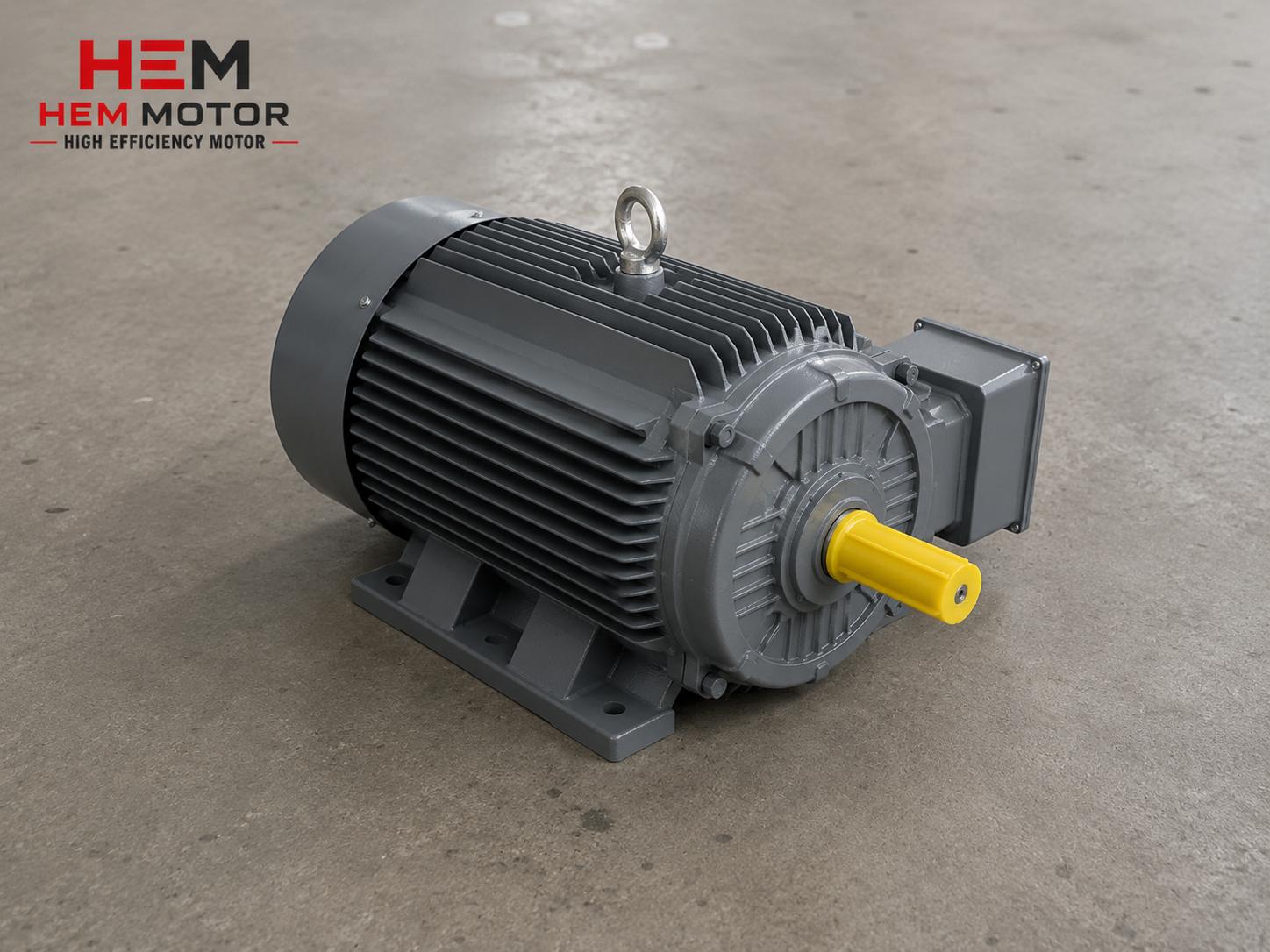

The cylindrical capacitor you see when you open the black box of a single-phase motor is really the heart of that motor. A single-phase supply needs this capacitor for the motor to start turning on its own; if the correct microfarad (uF) and the correct voltage (V) are not chosen, the motor either will not start, struggles, or burns out quickly. In this article we explain, from a buyer's viewpoint, the function of the auxiliary winding, the difference between the start capacitor and the run capacitor, correct uF and V selection, the role of the centrifugal switch and the symptoms of capacitor failure. The aim is to help you decide correctly when buying a spare capacitor or choosing a new motor.
Why Does a Single-Phase Motor Need a Capacitor?
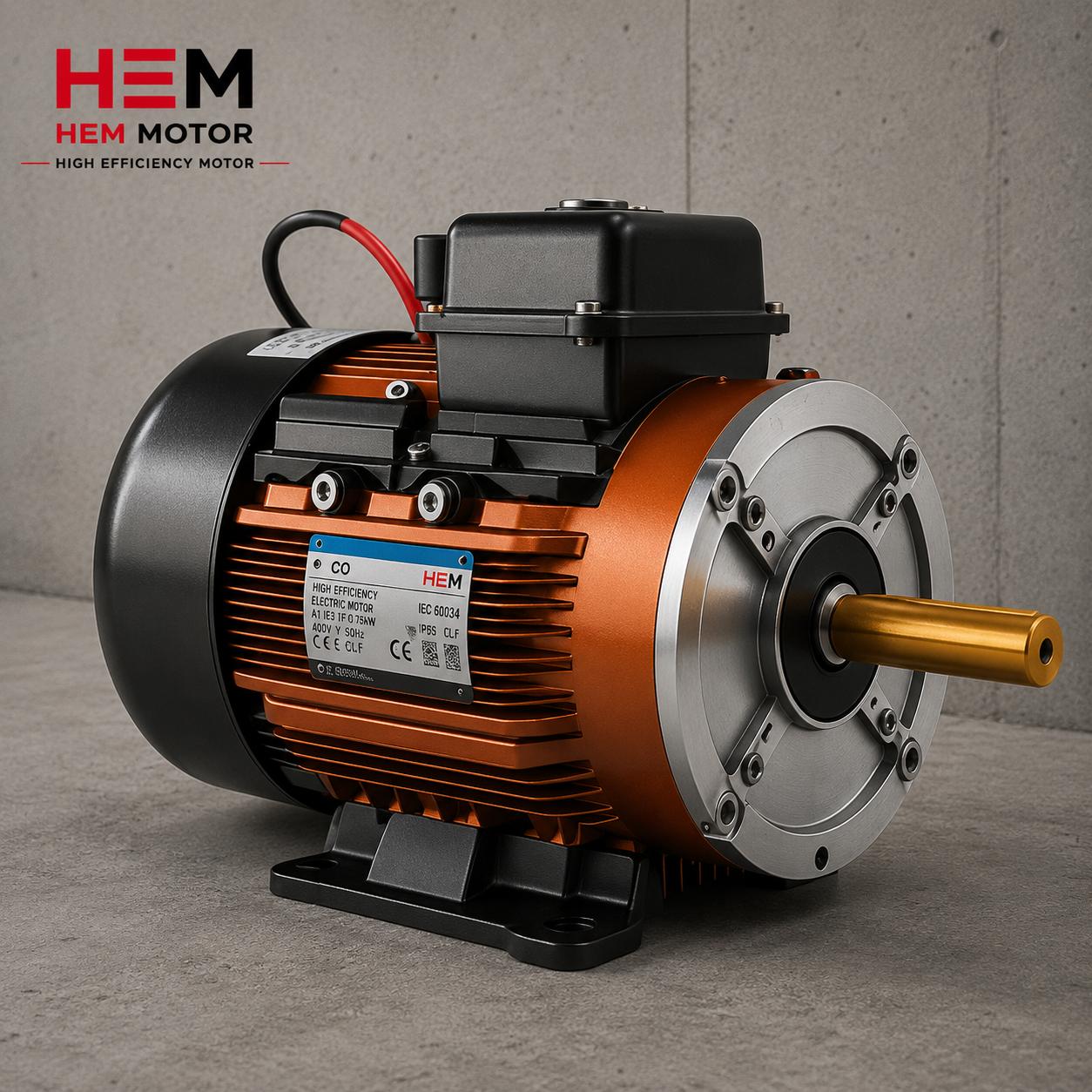
A three-phase motor creates a rotating magnetic field thanks to the natural sequence of the three phases and starts on its own. On a single-phase supply there is only one alternating field; this field alone cannot turn the motor, only vibrate it. That is why a single-phase motor uses an auxiliary winding and a capacitor in series with it. The capacitor shifts the current in the auxiliary winding in phase relative to the main winding; this creates an artificial second phase and a rotating field. The motor can then start on its own and in the right direction.
We covered the basic choice between single-phase and three-phase in our single-phase vs three-phase motor selection article. For single-phase motor price and selection details, see our single-phase asynchronous motor selection and price article. For running a three-phase motor on single phase, see our running a three-phase motor on 220V single phase article.
Difference Between Start and Run Capacitors
Single-phase motors have two distinct capacitor types, and mixing them up is the most common mistake:
Start Capacitor
Usually an electrolytic type with a high uF value (for example hundreds of uF) and active only during starting. Its high capacitance produces a strong starting torque. Once the motor reaches a certain speed, the centrifugal switch removes this capacitor from the circuit. The start capacitor is not suitable for continuous operation; if left in circuit it swells and bursts quickly. This type is used in applications needing high starting torque such as compressors; we covered the topic in our compressor motor replacement guide article.
Run Capacitor
Usually a permanent (dry, polypropylene film) type with a lower uF value, staying in circuit continuously while the motor runs. It improves running efficiency, power factor and quiet operation. It has a more durable construction suited to staying in circuit continuously. Some motors have both a start and a run capacitor (two-capacitor motor); this gives the highest starting torque and the best continuous running performance.
Correct uF and Voltage (V) Selection
Two values are critical when choosing a capacitor: capacitance (uF) and voltage (V).
- Capacitance (uF): must match the value written on the motor nameplate or the old capacitor. If the uF is too low the motor starts weakly; if too high the auxiliary winding overheats. Never change it by guesswork; stick to the rating.
- Voltage (V): the capacitor's rated voltage must be above the operating voltage. For run capacitors on a 220 V supply, a capacitor rated 400 V or 450 V is typically used, because a voltage higher than the supply appears across the auxiliary winding. Using a lower-V capacitor leads to early failure.
When buying a spare capacitor, read the uF and V values on the old part exactly. This is the basic rule for avoiding wrong motor or part delivery; our nameplate matching and reading the motor nameplate articles guide you here.
The Role of the Centrifugal Switch
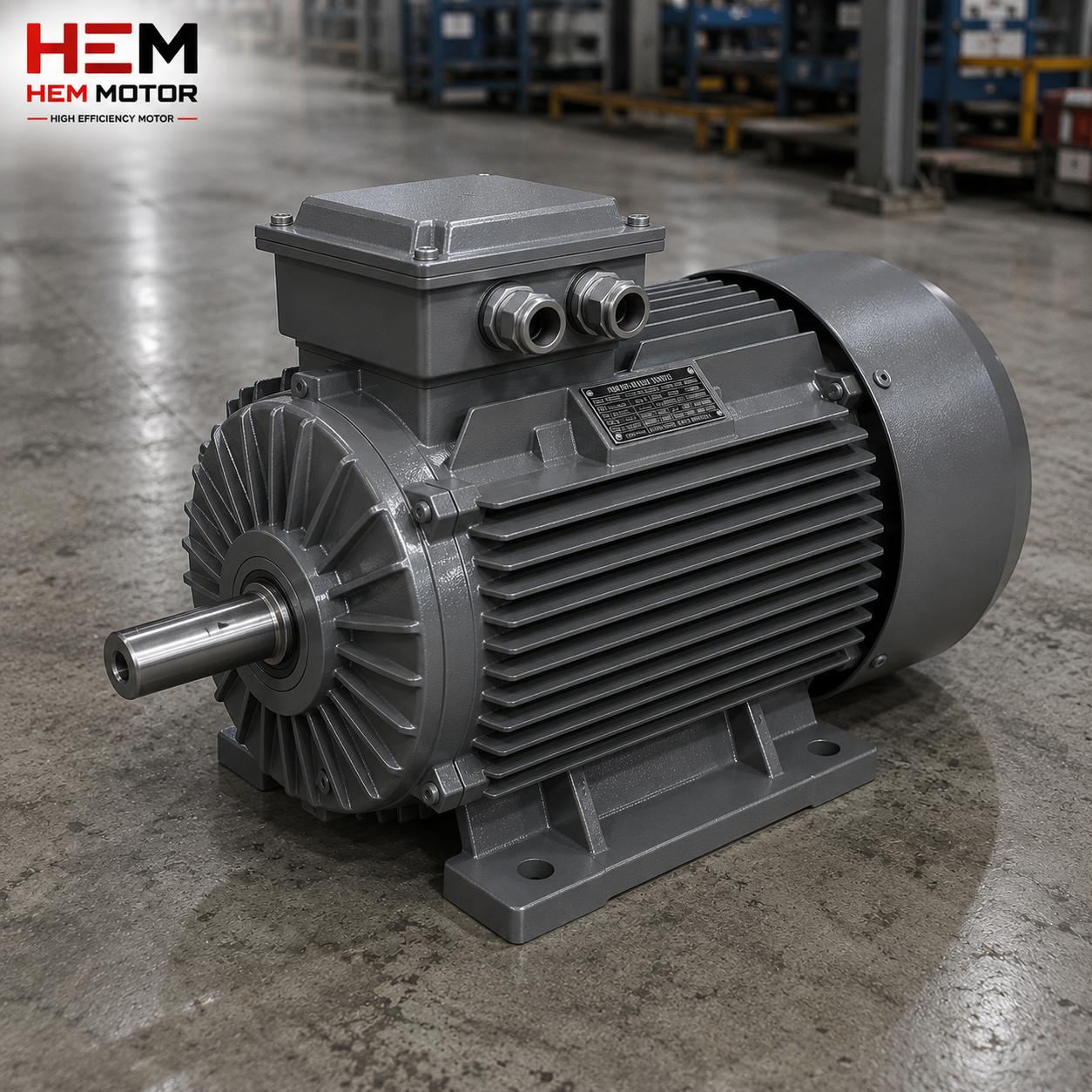
In motors with a start capacitor, the centrifugal switch opens by centrifugal force when the motor reaches a certain speed, removing the start capacitor and auxiliary winding from the circuit. If this switch fails, two kinds of problems arise: if it stays open the motor cannot start, if it stays closed the start capacitor is left in circuit and burns out. If the motor struggles and hums at start, the centrifugal switch should be checked as well as the capacitor. We gathered such fault symptoms in our electric motor failures: symptoms and causes article.
Symptoms of Capacitor Failure
You can recognise capacitor failure in a single-phase motor from these symptoms:
- Motor will not start, only hums: usually a start capacitor or centrifugal switch fault.
- Motor starts when turned by hand: the start circuit (capacitor/switch/auxiliary winding) is faulty.
- Motor is weak, heats up, trips the fuse: the run capacitor value may have drifted or degraded.
- Capacitor swollen or leaking: clearly needs replacing; a sign of wrong V rating or excessive heat.
To catch overheating early, temperature monitoring with PT100 and PTC thermistors and correct thermal relay and fuse selection are important. You can find the general causes that trigger early failure in our early failure causes article.
Choosing the Right Spare and the Right Motor
If capacitor failure recurs, the problem is often not in the capacitor but in the motor's quality or in the wrong motor being chosen for the application. A weak single-phase motor in a job needing continuous high torque struggles and burns its capacitor. In this case switching to a correctly sized, quality motor is the permanent solution. See HEM Motor's efficient electric motors range and, for mounting options, the electric motor mounting types page. If your application needs low speed with a reducer, our monoblock geared motor purchasing and geared motor vs separate motor and reducer articles guide you. For the right power-speed combination, see our HP-kW matching at 220V and 380V table.
Single-Phase Motor Types and Capacitor Arrangement
Single-phase motors are divided into different types by their auxiliary winding and capacitor arrangement. A permanent split capacitor (PSC) motor has only a run capacitor; it is continuously in circuit, runs quietly and efficiently, but has a medium starting torque. It is ideal for jobs with low starting load such as fans and pumps. A capacitor-start (CSIR) motor has a high-uF start capacitor and a centrifugal switch; it gives high starting torque. A two-capacitor (CSCR) motor has both a start and a run capacitor; it offers the highest starting torque and the best continuous running together. Choosing the right type for your application prevents most capacitor failures from the start. We covered the right power and speed combination in our 2.2 / 3 / 4 kW asynchronous motor selection article.
Is It Worth Switching from Single-Phase to Three-Phase?
If your application is growing and the single-phase motor is constantly struggling, switching to a three-phase motor is usually a more permanent solution when a three-phase supply is available. A three-phase motor uses no capacitor, starts on its own and at the same power is smaller, more efficient and less failure-prone. Our single-phase vs three-phase motor selection article guides this decision. But if you only have a single-phase supply and the power need is limited, a quality single-phase motor is the right choice. You can review the options for running a three-phase motor on single phase in our running a three-phase motor on 220V single phase article; that solution also uses a capacitor or phase converter.
Conditions That Extend Capacitor Life
Capacitor life is affected by temperature, voltage and operating time. High ambient temperature rapidly shortens the life of an electrolytic start capacitor; so it is important that the motor runs in a well-cooled environment. Excessively frequent starting tires the start capacitor and the centrifugal switch. Choosing a low voltage rating leads to early bursting. We gathered the motor's overall life and early failure causes in our early failure causes article. To monitor temperature and load conditions, temperature monitoring and correct protection selection help.
Spare Capacitor and Motor Supply
Although a capacitor looks like a small part, bought with the wrong value it can burn the motor. So when buying a spare it is essential to read the old part's uF and V values exactly. Better still, if the capacitor fails often, question the root cause: is the motor powerful enough for your load, is the ambient temperature suitable, does the starting frequency suit the motor's duty type? Our duty type (S1-S6) selection article answers these questions. Switching to a quality motor eliminates most recurring capacitor failures. The HEM Motor efficient electric motors and IE3 ranges, chosen at the right power and duty type, offer a long-life solution. Starting with a quality motor is far more economical than the cost of frequent capacitor replacement and downtime.
Frequently Asked Questions
Will choosing a slightly larger capacitor make the motor more powerful?
No. Increasing the uF does not strengthen the motor; it causes the auxiliary winding to overheat and efficiency to drop. Always stick to the uF value written on the nameplate or the old capacitor.
Can I fit a run capacitor instead of a start capacitor?
No. The uF of a run capacitor is insufficient for starting; the motor starts weakly or not at all. Fitting a permanent type instead of a start capacitor is also wrong. Use each capacitor according to its duty and value.
Why is the capacitor voltage (V) higher than the supply?
Because a voltage higher than the supply appears across the auxiliary winding and capacitor due to a resonance effect. That is why a 400 V or 450 V capacitor is usually used on a 220 V supply. A low-V capacitor bursts early.
Get a Quote
If you want a correctly sized, quality and long-life motor for your single-phase application, share your requirement. The HEM Motor team recommends the best single-phase or three-phase solution based on your application, power and speed. Call +90 (532) 345 49 86 for a quote or use our contact page.
Capacitor Selection and Replacement Checklist
- Has the uF value on the old capacitor been read?
- Is the voltage (V) rating suitable for the supply (typically 400/450 V for 220 V)?
- Is it clear whether a start or run capacitor is needed?
- Has the health of the centrifugal switch been checked?
- Is there swelling, leakage or darkening on the capacitor?
- If the fault recurs, has it been questioned whether the motor is the right power and quality?
- Should a two-capacitor motor be chosen for a job needing high starting torque?