English
 Türkçe

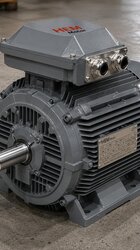
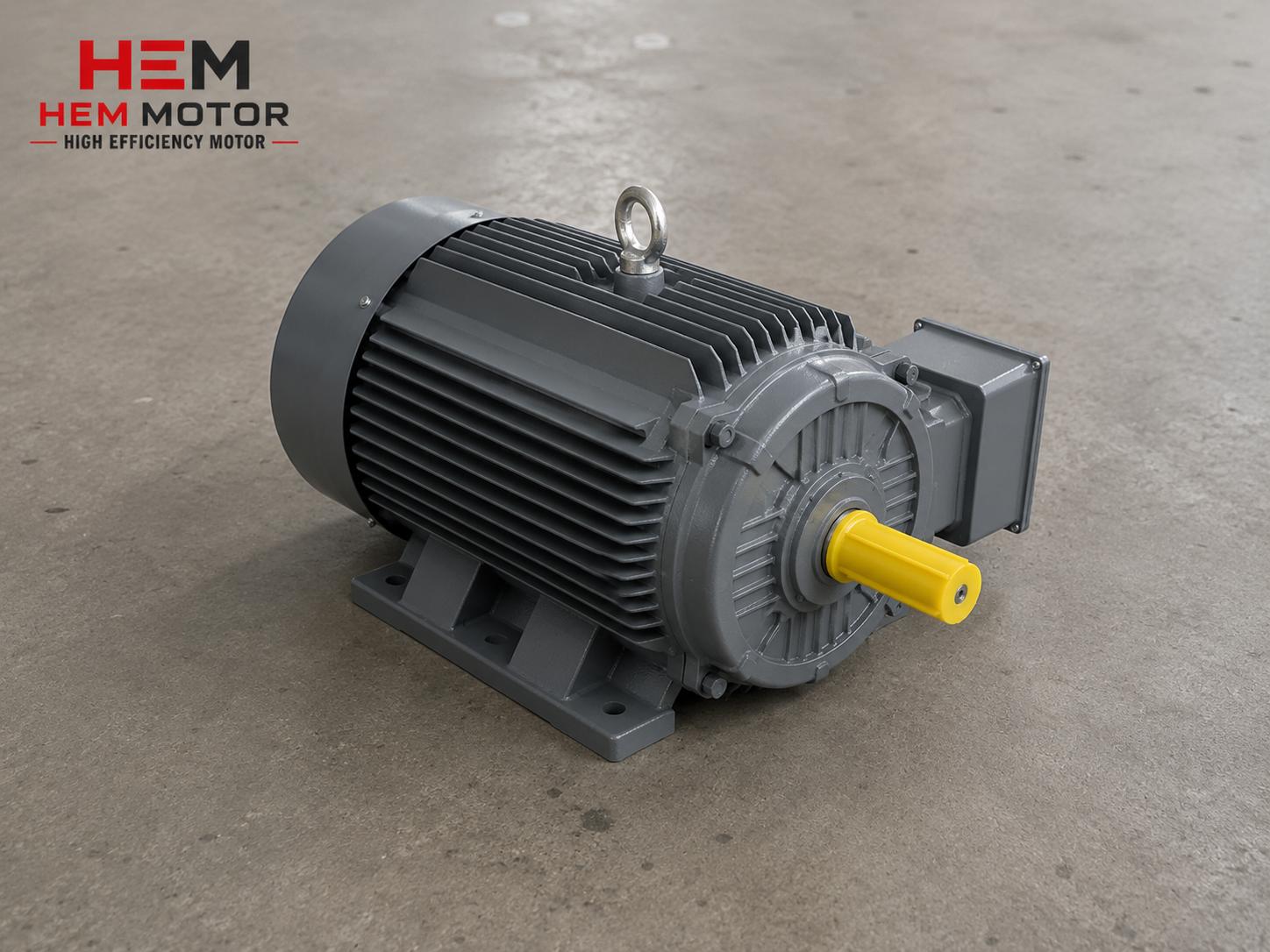

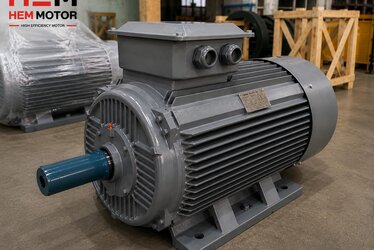
In workshops, small machines and household-type agricultural equipment where there is single-phase (220V) supply, the right solution is most often a single-phase asynchronous motor. However, selecting a single-phase motor involves a few extra decisions compared with three-phase: matters such as capacitor type, power limit and starting torque directly determine whether the motor will work in the application. In this article we address single-phase asynchronous motor selection and the pricing approach from a commercial perspective. Instead of giving a fixed list price, we focus on identifying the right motor and offering you the most suitable quote, because the price of a single-phase motor varies by power, speed, capacitor design and body material.
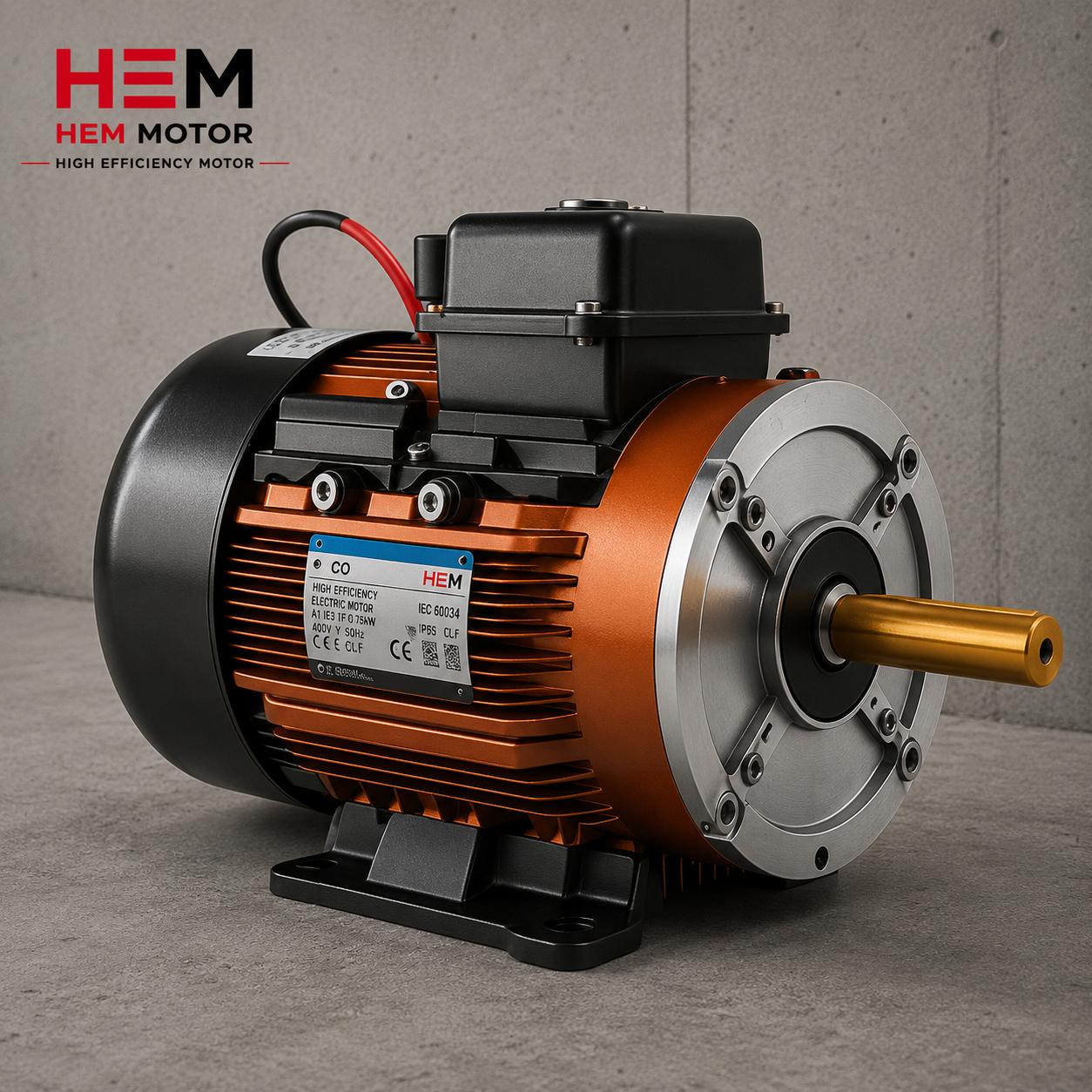
What Is a Single-Phase Asynchronous Motor and Where Is It Used?
A single-phase asynchronous motor is an AC motor fed from a single-phase 220V supply that uses an auxiliary winding and a capacitor for starting. Its difference from a three-phase motor is that, being single-phase, it cannot create a self-rotating magnetic field on its own; therefore it needs a capacitor for starting and often for running. Small workshops with single-phase 220V supply, water pumps, compressors, fans, air blowers, and some agricultural and food machines are typical areas of use.
The single-phase or three-phase question is a decision that must be answered correctly from the very start. If your facility has three-phase (380V) supply, a three-phase motor of the same power is usually more efficient and economical. We compared this decision end to end in our single-phase or three-phase: 220V and 380V motor selection article. If you want to run a three-phase machine while you only have single-phase supply, we addressed the limits in our running a three-phase motor on a 220V single-phase grid article.
Capacitor Type: Start or Permanent?
Single-phase motors have two basic capacitor approaches, and this is chosen by application. In permanent-capacitor motors the capacitor is always in circuit; it is preferred for loads such as fans and pumps that need quiet, balanced operation with low starting torque. In start-capacitor motors, an additional capacitor that engages at the moment of starting provides high starting torque; it is suitable for applications requiring a tough start, such as compressors and loaded conveyors. Some motors use both at once.
Choosing the right capacitor type ensures the motor starts without stalling in the application and runs with a long life. The wrong choice can result in difficulty starting, overheating and early failure. We addressed starting methods in AC motors in a broader frame in our starting in AC asynchronous motors article. If you are curious about the actual speed and slip of an asynchronous motor, our slip and actual speed in asynchronous motors article is informative.
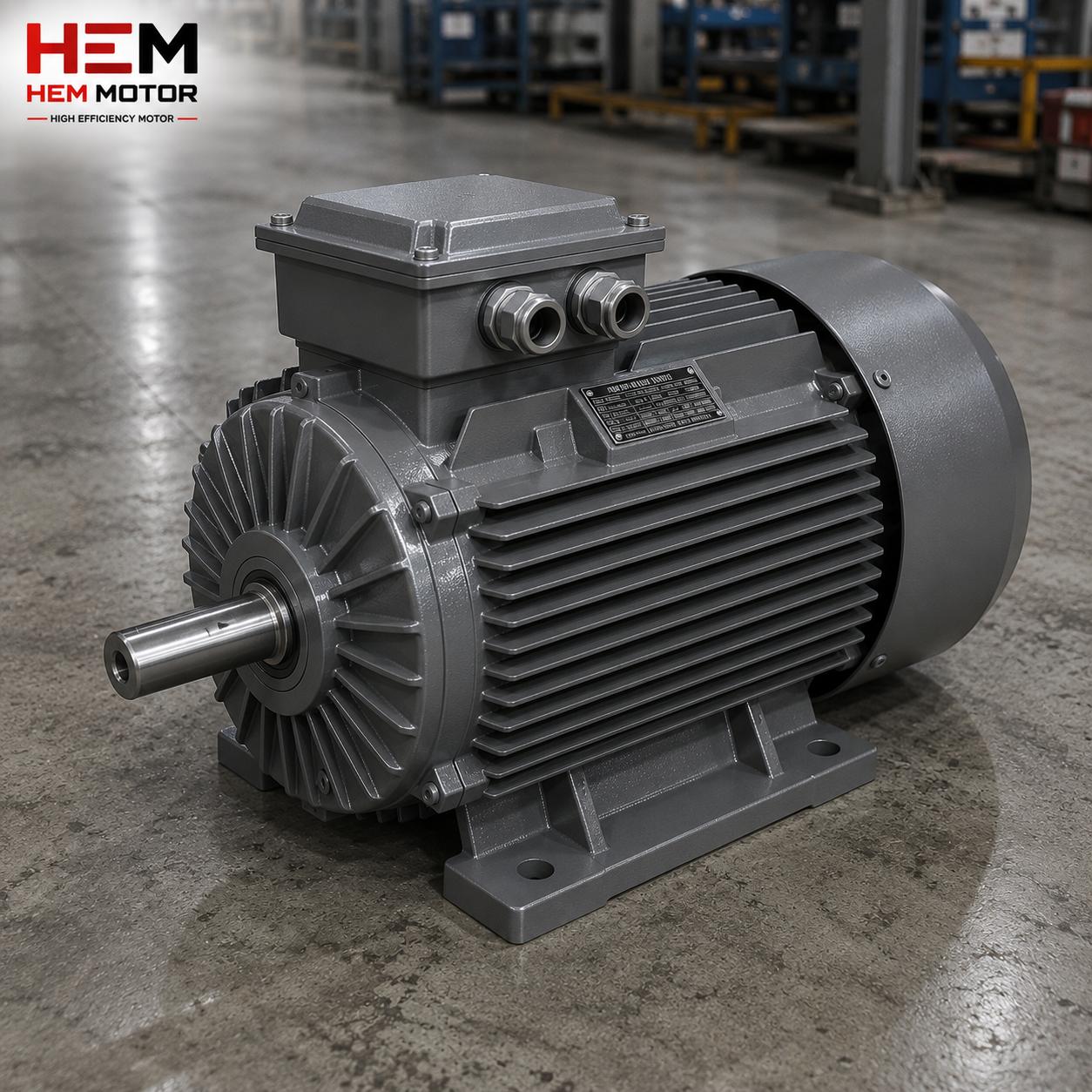
Power Limit: How Far Does a Single-Phase Motor Go?
Single-phase motors have a practical power limit. Because drawing high power from a single phase leads to both high current and grid imbalance, single-phase motors are usually produced between about 0.18 kW and 3 kW. For powers above this range you need to switch to a 380V three-phase motor. We showed, with the HP-kW and rated current table, that a single-phase motor of the same power draws significantly more current than a three-phase one in our HP-kW matching table for 220V and 380V motors article. You can find speed selection by pole count in our asynchronous motor buying guide: 2, 4, 6 poles article.
Body, Protection and Factors Affecting the Price
The price of a single-phase motor does not depend on a single value; power, speed, capacitor design, body material (aluminium or cast iron), protection class and mounting type together determine the price. At low powers an aluminium body is a compact and economical solution; in dusty, humid or harsh environments a cast-iron body is more durable. We addressed the cast iron vs aluminium body decision by environmental conditions in our cast iron or aluminium body article. We collected all the factors affecting electric motor price as a buyer guide in our factors affecting electric motor prices article.
That is why the right approach with a single-phase motor is to clarify your need and get a quote, rather than looking for a fixed list price. We listed what information to provide when requesting a quote in our information to provide when requesting an electric motor quote article. You can reach all our asynchronous motor guides, our high-efficiency electric motors category for the product range, and our main HEM Motor page.
Protection in a Single-Phase Motor: Thermal, Fuse and Overload
Single-phase asynchronous motors, being fed from a single phase, are more sensitive to overload and overheating than three-phase ones. Drawing high current at startup and being single-phase make the right protection equipment essential. A thermal protection that will protect the motor against overcurrent, a fuse against short circuit and, if needed, a motor protection switch both extend the motor''s life and reduce the risk of fire and failure. Especially in applications with a loaded start such as pumps and compressors, a protection choice that accounts for the starting current is important.
In single-phase motors the capacitor is also a wear part; a capacitor that loses its capacity over time can cause the motor to start with difficulty or not at all. That is why we recommend periodic checking of the capacitor in your protection planning. We addressed thermal, relay and fuse selection in our electric motor protection: thermal, relay and fuse selection article, and the protection equipment to request together with the motor in our buying protection devices article. If you send us your application, we add the suitable protection equipment to the quote together with the motor.
Body Material and Protection Class: Selection by Environment
The environment in which the single-phase motor will run directly affects the choice of body material and protection class. In clean, dry and enclosed workshops, an aluminium-body motor with IP55 protection is an economical and sufficient solution. However, in dusty, humid, splash-exposed or open-field applications, a higher protection class and a more durable cast-iron body may be needed. The wrong protection class choice results in winding failures due to moisture or dust, which means an early failure outside warranty.
We explained what the IP protection class means and which class is needed in which environment in our IP protection class selection in electric motors article. We addressed the cast iron vs aluminium body decision by environmental conditions in our cast iron or aluminium body article. If you tell us the environment where your motor will run (indoor, open field, moisture, dust condition), we prepare a quote with the right protection class and body material.
Second-Hand or New Stock? Real Cost in a Single-Phase Motor
In single-phase motors, low power and a relatively affordable price sometimes lead people toward a second-hand motor. However, in a second-hand single-phase motor, capacitor fatigue, winding ageing and bearing wear are often invisible; they appear after installation on site and raise the total cost. A new stock motor, on the other hand, offers warranty, known efficiency and long life. Since the price difference is usually small in low-power single-phase motors, new stock is the more sensible purchase in most cases.
Our article comparing second-hand and new stock motors in terms of cost and risk, second-hand or new stock motor, helps when making this decision. We offered a clear view on whether to rewind a motor or buy a new one in our rewind a motor or buy a new one article; especially in small-frame motors, replacing with a new one is usually more economical. You can browse all our asynchronous motor guides to make the right purchase decision.
Efficiency, Regulation and Speed Selection in a Single-Phase Motor
Efficiency regulation has now come into force for single-phase motors too. As of 2023, a requirement of at least IE2 efficiency class was introduced for single-phase motors above 0.12 kW; before this date there was no restriction on single-phase motors. So when buying a new single-phase motor, the efficiency class must also be suitable depending on its power. This matters for both legal compliance and operating cost; a continuously running single-phase pump or fan consumes extra electricity throughout the year with a low-efficiency motor.
Speed selection also depends on the application in a single-phase motor. 2-pole (about 2800 rpm) single-phase motors are preferred in compact pumps, compressors and high-speed fans; 4-pole (about 1400 rpm) single-phase motors are preferred where quieter and more balanced operation is needed. At the same power, the torque and starting behaviour of 2-pole and 4-pole motors differ; that is why knowing the speed and starting torque your machine requires clarifies the choice. We explained why the actual speed of an asynchronous motor is slightly lower than the synchronous speed in our slip and actual speed in asynchronous motors article.
In agricultural and irrigation applications where single-phase motors are used, the correct motor selection carries separate importance; our irrigation and agricultural pump motors article addresses this topic. In booster applications, we explained how to select the motor suitable for the existing pump from the nameplate in our booster motor replacement article. If you send us the power, speed, voltage and machine type information, we prepare a quote with a regulation-compliant efficiency class and the right speed, and offer a solution tailored to your need instead of a list price.
Frequently Asked Questions
What is the maximum kW for a single-phase motor?
Single-phase motors are produced in practice between about 0.18 kW and 3 kW. Above this range a single-phase grid becomes inadequate due to high current and imbalance; you need to switch to a 380V three-phase motor. If your need is near this limit, we can determine the best solution together based on the supply type in your facility.
Should I buy a permanent-capacitor or a start-capacitor motor?
This depends on the application's starting torque need. A permanent-capacitor motor is suitable for low-starting-torque loads such as fans and light pumps; a start-capacitor motor is needed for tough starts such as compressors and loaded conveyors. If you tell us the type of your machine, we will recommend the right capacitor design.
What should I do to learn the price of a single-phase motor?
The price of a single-phase motor varies by power, speed, capacitor design, body material and mounting type. For this reason, instead of giving a fixed list price, we prefer to clarify your need and offer the most suitable quote. Sharing the power, speed, voltage and application information is enough for a fast quote.
Get a Quote
Let us determine the right single-phase asynchronous motor for your 220V application together. Share the power, speed and machine type; we will offer the suitable capacitor design, body and fast delivery options. For a quote tailored to your need rather than a list price, call us now at +90 (532) 345 49 86 or send your request via our contact page.