English
 Türkçe

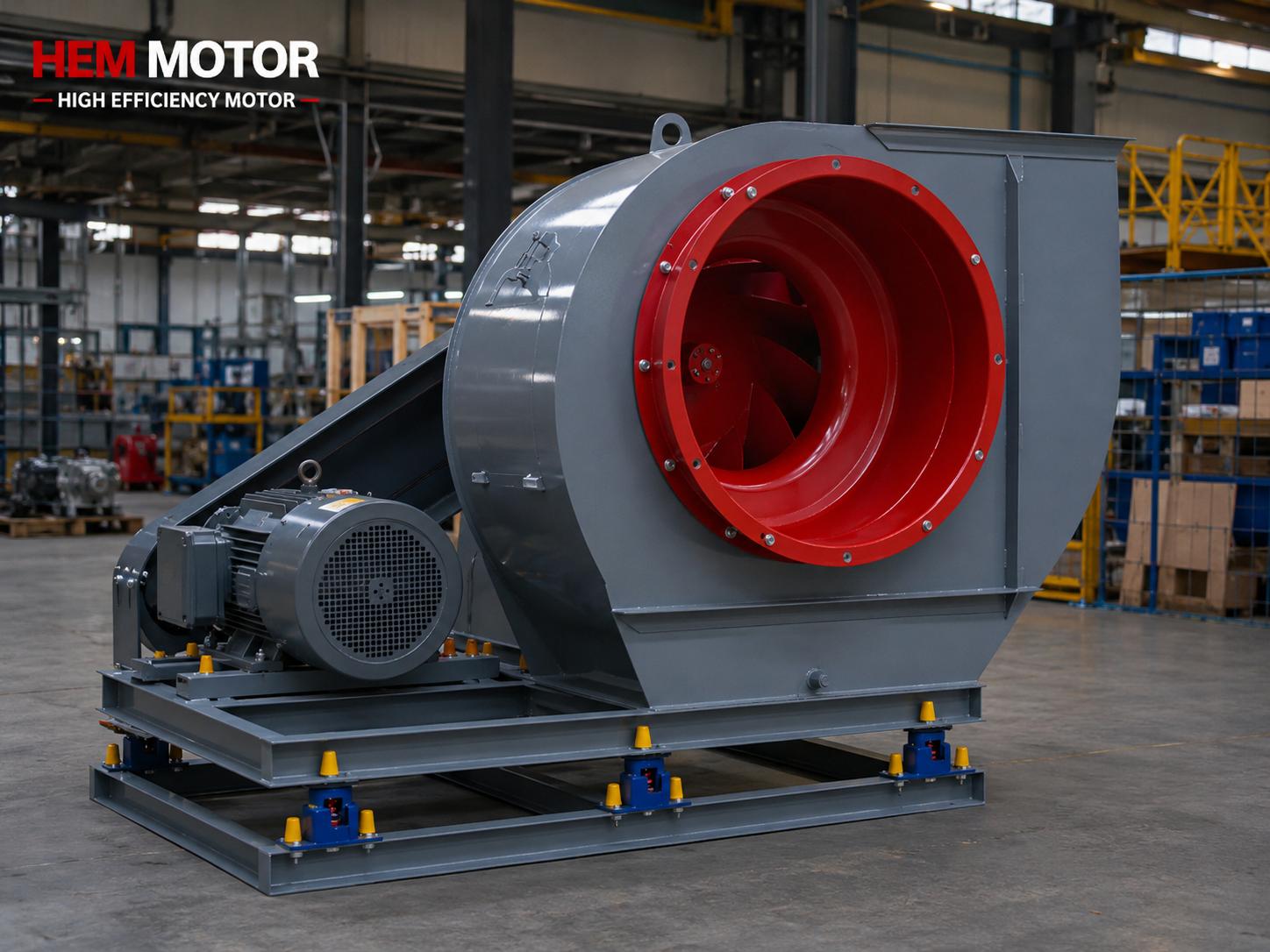

When you decide to run an asynchronous motor with a variable frequency drive (VFD), the control mode the drive will operate in is a question at least as important as the motor itself. Scalar (V/f) control, or vector (sensorless or closed-loop) control? This choice directly determines the torque you can get at low speed, speed and torque accuracy, speed stability, the need for auto-tuning, and ultimately the success of the application. A wrong mode choice can leave you with an expensive drive yet a motor that stalls at low speed and cannot lift the load, or conversely add needless complexity to a simple fan job. This guide explains, in plain language and with technical tables, what scalar and vector control are, the core differences between them, which mode to choose for which application, why auto-tuning matters, and how to match drive and motor correctly.
What Is Scalar (V/f) Control?
Scalar control is the most basic and most common operating mode of frequency drives. As the name implies, it works by keeping the ratio of voltage (V) to frequency (f) constant; that is, as the frequency is lowered the voltage is lowered proportionally. This keeps the motor magnetization (magnetic flux) roughly constant, so the motor delivers similar torque at different speeds. V/f control works by managing only voltage and frequency, without knowing the motor's internal model; it is therefore simple, cheap and easy to commission. For most pump and fan applications it is more than sufficient.
- Operating principle: the V/f ratio is kept constant; flux stays roughly constant.
- Advantage: simple, cheap, quick commissioning, ability to feed several motors from one drive.
- Weakness: torque weakens at very low speed; slow response to sudden load changes.
- Typical application: pumps, fans, simple conveyors, constant-load applications.
At very low frequencies (for example below 5 Hz) the motor's resistive drop becomes dominant in V/f control and torque falls; to compensate, drives have a "torque boost" (voltage boost) setting. Even so, in applications needing high torque at low speed, V/f alone may fall short.
What Is Vector Control? (Sensorless and Closed-Loop)
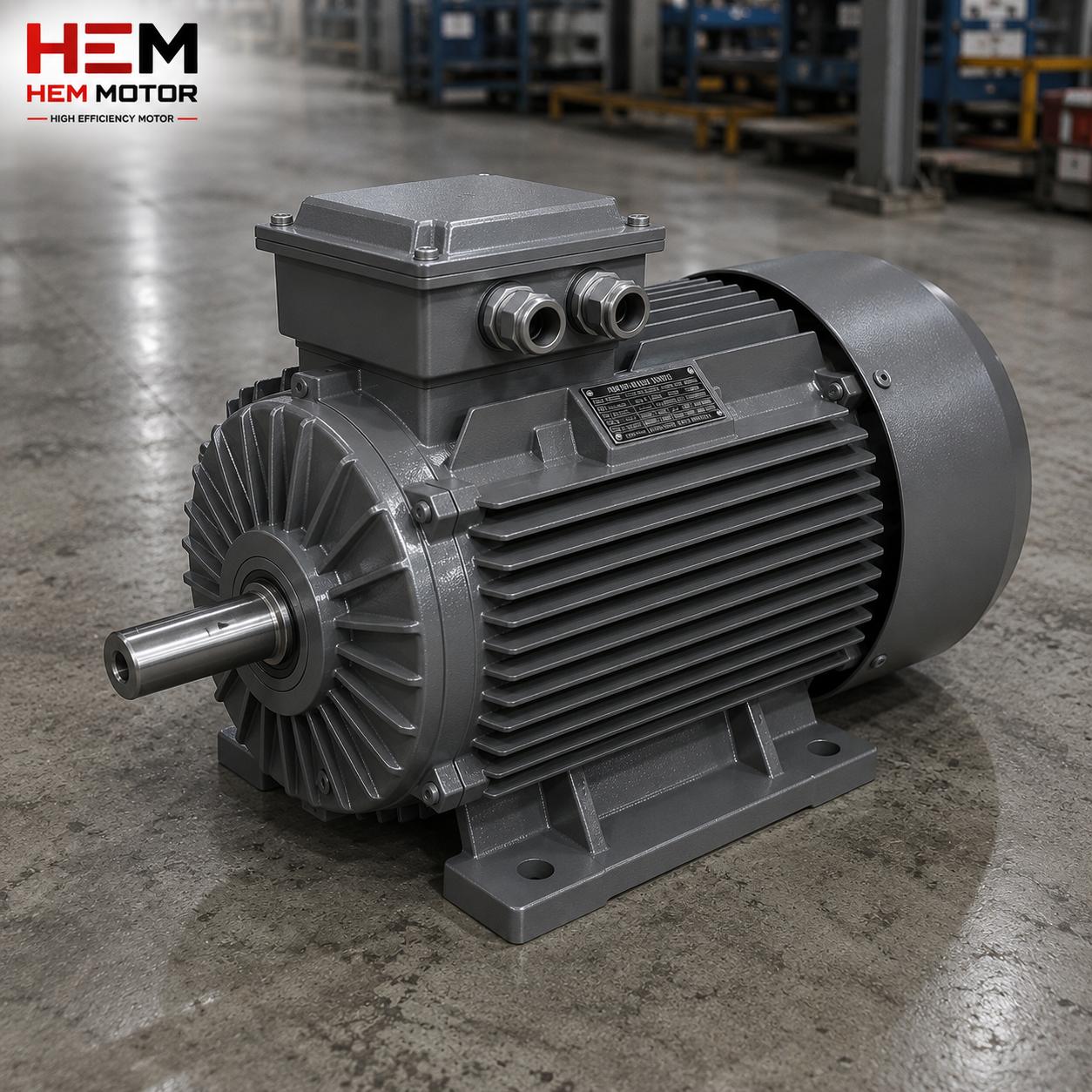
Vector control (field-oriented control, FOC) manages the motor's current by splitting it into two components: one producing the magnetic flux (magnetization), the other producing torque. Using a mathematical model of the motor, the drive controls these two components independently; just as in a DC motor, torque and flux are managed separately. This lets vector control produce high, stable torque even at very low speed, respond quickly to sudden load changes and provide precise speed control. Vector control is implemented in two forms:
- Sensorless vector (open-loop, SLV): no extra sensor (encoder) is fitted to the motor shaft; the drive estimates speed and position from current and voltage measurements. It gives good torque and speed control, but is limited near zero speed.
- Closed-loop vector (with encoder): an encoder is fitted to the motor shaft; the drive continuously measures actual speed and position. It offers full torque at zero speed, the highest accuracy and positioning capability.
For vector control to work correctly, the drive must know the motor parameters (resistance, inductance, magnetizing current); this is done with auto-tuning.
Scalar (V/f) vs Vector Control Capability Comparison
| Feature | Scalar (V/f) | Sensorless Vector | Closed-Loop Vector |
|---|---|---|---|
| Torque at low speed | Weak (partly with boost) | Good | Very good (full torque at zero) |
| Speed accuracy | Medium | Good | Very high |
| Torque accuracy | Low | Good | Very high |
| Sudden-load response | Slow | Fast | Very fast |
| Encoder requirement | None | None | Yes |
| Ease of commissioning | Very easy | Medium (auto-tune needed) | Hard (encoder + tuning) |
| Multi-motor operation | Suitable | Usually single motor | Single motor |
| Typical cost | Lowest | Medium | Highest |
Which Mode for Which Application?
The right mode choice depends almost entirely on the load characteristic of the application. How much torque the load needs at low speed, how precisely speed must be held, and whether there are sudden load changes are the deciding factors.
- Pump and fan (variable torque): scalar (V/f) control is ideal. Since the load also drops at low speed, high starting torque is not needed; the simple, economical solution fits best.
- Conveyor, mixer, extruder (constant torque): sensorless vector is preferred; it holds torque at low speed too.
- Crane, elevator, winder, positioning (high accuracy): closed-loop vector (with encoder) is essential; holding the load at zero speed and precise positioning are needed.
- High-inertia, shock-loaded drives: vector control holds speed stability by responding quickly to sudden load changes.
For when a drive is needed and general selection, our VFD with asynchronous motor article is a good start. On torque and cooling at low speed, our running below 50 Hz and external forced cooling fan articles are complementary.
Why Is Auto-Tuning Important?
The high performance of vector control rests on the drive knowing the motor's actual electrical parameters. These parameters (stator resistance, rotor resistance, leakage inductance, magnetizing current) differ for every motor. The drive learns them through auto-tuning: while the motor is stationary or slowly turning, the drive applies test currents and measures the parameters. If vector control is run without auto-tune, the drive works on a wrong model; the result is stalling, oscillation or torque shortage at low speed.
- Static tuning: parameters are measured without the motor turning; used when the load is connected.
- Rotating tuning: the motor turns unloaded for more precise measurement; the best result.
- Nameplate entry: the power, voltage, current, cosφ and speed on the label must be entered correctly.
Correct nameplate entry matters in scalar control too, but in vector control auto-tune is practically mandatory. For drive parameterization and commissioning steps, our drive parameterization and autotune article is a useful reference.
Types of Vector Control: VFC and DTC
Vector control appears under different names from drive makers, in two main approaches. The first is field-oriented control (FOC / VFC); current is split into two components and voltage is produced via PWM to control torque and flux. The second is direct torque control (DTC); the drive directly estimates the motor's stator flux and torque and selects switching states very quickly to control torque almost instantly. DTC responds extremely fast to sudden load changes and performs well at low speed even without an encoder; FOC offers smoother current and lower ripple. In practice, what the user usually has to choose are the "V/f", "sensorless vector" and "closed-loop vector" modes in the drive menu; whether the maker implements DTC or FOC behind the scenes is a technical detail.
- FOC / VFC: smooth current, low torque ripple; the most common vector approach.
- DTC: very fast torque response; an advantage in shock-loaded applications.
- User side: the menu shows V/f, sensorless vector and closed-loop vector options.
The Relationship Between Low-Speed Torque and Cooling
Whatever the control mode, running a motor at low speed for a long time creates a cooling problem. In a standard TEFC (IC411) motor the cooling fan is on the shaft end; when the motor slows, the fan slows and cooling weakens. Vector control lets you produce high torque at low speed, but high torque means high current; current produces heat, and since the fan slows, this heat cannot be removed well. The result is motor overheating. So in applications needing continuous high torque at low speed, an external forced cooling fan (IC416) running independently of the motor is used, making cooling independent of motor speed. The way to use the power of vector control safely is through correct cooling.
- Problem: high torque at low speed = high current, but slow fan = weak cooling.
- Solution: IC416 forced cooling; cooling becomes speed-independent.
- Alternative: choosing a one-size-larger motor to leave thermal margin.
Slip, Slip Compensation and Speed Stability
An asynchronous motor inherently slips under load; that is, actual speed is slightly below synchronous speed, and this gap grows as load rises. In scalar control the drive manages only frequency, so when load rises the motor speed drops a little. To compensate, drives have a "slip compensation" setting; the drive senses the load and raises frequency a little to try to hold speed constant. In vector control, because torque is directly controlled, speed stability is much better. In applications where speed must stay constant under load (for example an extruder or winder needing constant line speed), this difference can be decisive.
Correct Drive-Motor Matching
As important as the control mode is choosing a drive and motor suited to each other. The drive must be sized to comfortably supply the motor's rated current; especially in vector applications needing high starting torque, the drive's overload capacity must be adequate. The motor should also have inverter-duty winding insulation suited to drive operation and withstand the voltage spikes (du/dt) on long cables.
| Topic | Scalar Application | Vector Application |
|---|---|---|
| Drive overload capacity | Standard (e.g. 110-120%) | High (e.g. 150% for 60 s) |
| Winding insulation | Standard/inverter-duty | Inverter-duty advised |
| Cooling at low speed | Usually sufficient | IC416 forced cooling may be needed |
| Encoder | Not needed | Needed in closed loop |
For grounding, shielded cable and bearing currents in a drive system, our grounding and EMC article, and for winding insulation and filters our inverter-duty winding and du/dt article, are important resources. For the concept of slip and actual speed, see our slip and actual speed article.
Frequently Asked Questions
Is vector control needed for pumps and fans?
Usually no. Pumps and fans have a variable-torque characteristic; as speed drops the load drops too, so high torque is not needed at low speed. In these applications scalar (V/f) control is both sufficient and more economical and easier to commission. Vector control only makes sense in special cases needing high torque at very low speed or very precise speed. For a standard pump-fan drive, V/f is the right choice.
What is the difference between sensorless and closed-loop vector?
Both rely on the motor's mathematical model, but in closed loop an encoder is fitted to the shaft and the drive continuously measures actual speed. In sensorless vector there is no encoder; speed is estimated from current/voltage measurement. Closed loop provides full torque at zero speed and the highest positioning accuracy; it is essential for cranes, elevators and precise positioning. Sensorless vector is sufficient for most constant-torque applications and gives good performance without the cost of an encoder.
Does vector control work without auto-tune?
It runs, but performance is poor. Vector control cannot produce good torque without knowing the motor's electrical parameters; without auto-tune you see stalling, oscillation or torque shortage at low speed. So when commissioning in vector mode, the nameplate data must first be entered correctly and an auto-tune (rotating tuning if possible) performed. Auto-tune is not required in scalar control, but correct nameplate entry still matters.
Let us pick the drive mode right for your application. We will evaluate your load's low-speed torque need, speed and torque accuracy and speed range together, clarify whether scalar or vector is required, and match the motor and drive to each other. To request a quote for the right motor-drive solution with manufacturer stock and fast delivery, contact HEM Motor.