English
 Türkçe



If you run your IE4 motor with a variable frequency drive (VFD) to produce continuous full torque at low speed, the fan on the motor's own shaft end may let you down halfway. In a standard motor the cooling fan is mounted on the shaft; as speed drops the fan slows, airflow falls, and the motor cannot cool enough while drawing full load at low speed. The solution is a separately supplied external forced-cooling fan added to the rear of the motor; this fan turns at a fixed speed independent of motor speed and cools the motor with the same intensity at every speed. This guide addresses, from a buyer's perspective, the external forced-cooling fan on IE4 motors (the IC416 cooling method), the need for continuous torque at low speed, PTC temperature protection, and constant-torque applications such as extruders and conveyors. The right cooling solution protects the motor's life and efficiency.
Why Does the Standard Shaft Fan Fall Short at Low Speed?
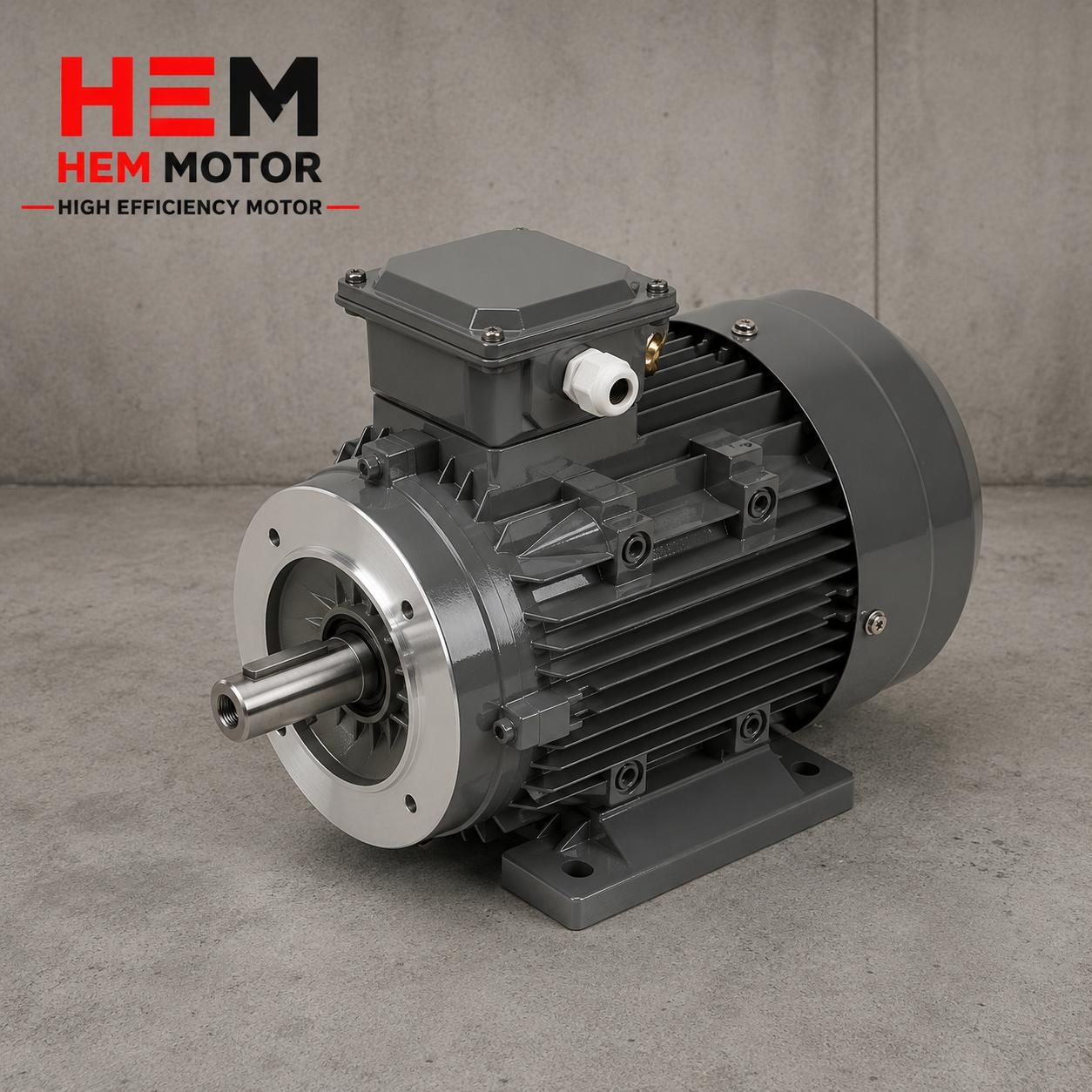
A standard IE4 motor cools itself with a bladed fan on the shaft end; this method is called IC411 (self-fanned, surface cooling). Because the fan is on the shaft, when the motor turns at 1500 rpm the fan also turns at 1500 rpm and blows plenty of air. But when you reduce the motor to, say, 300 rpm with a VFD, the fan drops to 300 rpm too; airflow falls sharply with speed. If you still expect full torque (full current) from the motor at this low speed, the copper and iron losses stay the same while cooling becomes inadequate and the motor overheats. In constant-torque applications this can cause the motor to burn out or shorten its life. We covered the basic logic of cooling methods in detail in our electric motor cooling methods (IC411 and IC416) article.
Another source of extra heating in an IE4 motor running at low speed on a VFD is the harmonics produced by the drive. We explained this in our VFD and harmonic-induced extra heating and bearing current article. You can review the effect of an IE4 motor's cooling and fan design on efficiency in our cooling and fan design in IE4 motors article.
External Forced-Cooling Fan (IC416): How Does the Solution Work?
An external forced-cooling fan is an independent fan mounted on the rear cover of the motor with its own separate supply. Whatever speed the motor turns at, this fan runs at a fixed speed (usually with a small mains-fed fan motor) and continuously blows air over the body at the same intensity. This cooling method is called IC416: forced surface cooling. As a result the motor receives the same cooling air at 50 rpm as at 1500 rpm; it can therefore draw continuous full torque at low speed. This is a critical feature for applications that demand constant torque over a wide speed range, such as extruders, conveyors, agitators and mixers.
Because the external fan's supply is separate from the motor's supply, the fan can keep running when the motor is stopped; this also speeds the cooling of a motor that stops while hot. The power the fan draws is small and does not noticeably affect the main motor's efficiency. We addressed the constant-torque vs variable-torque distinction and which group your application falls into in our constant torque or variable torque article. In variable-torque applications such as pumps and fans, the load also drops as speed drops, so a forced fan is often not needed; but it is needed in constant-torque applications such as conveyors and extruders.
Which Applications Need Forced Cooling?
A forced-cooling fan should be considered in every application where the motor draws full torque at low speed for long periods. Typical examples: plastic extruder lines, heavy conveyor drives, agitators and mixers, calender lines, and some presses and test benches. We covered efficiency and correct power supply at continuous high load in a plastic extruder in our IE4 plastic extruder and process line article. For heavy-duty conveyor drives, our cast iron heavy-duty conveyor drive motor guide is useful. We explained the efficiency-torque balance in low-speed 6/8 pole motors in our IE4 low-speed 6/8 pole motor article.
Why Are PTC Thermistor and Temperature Protection Essential?
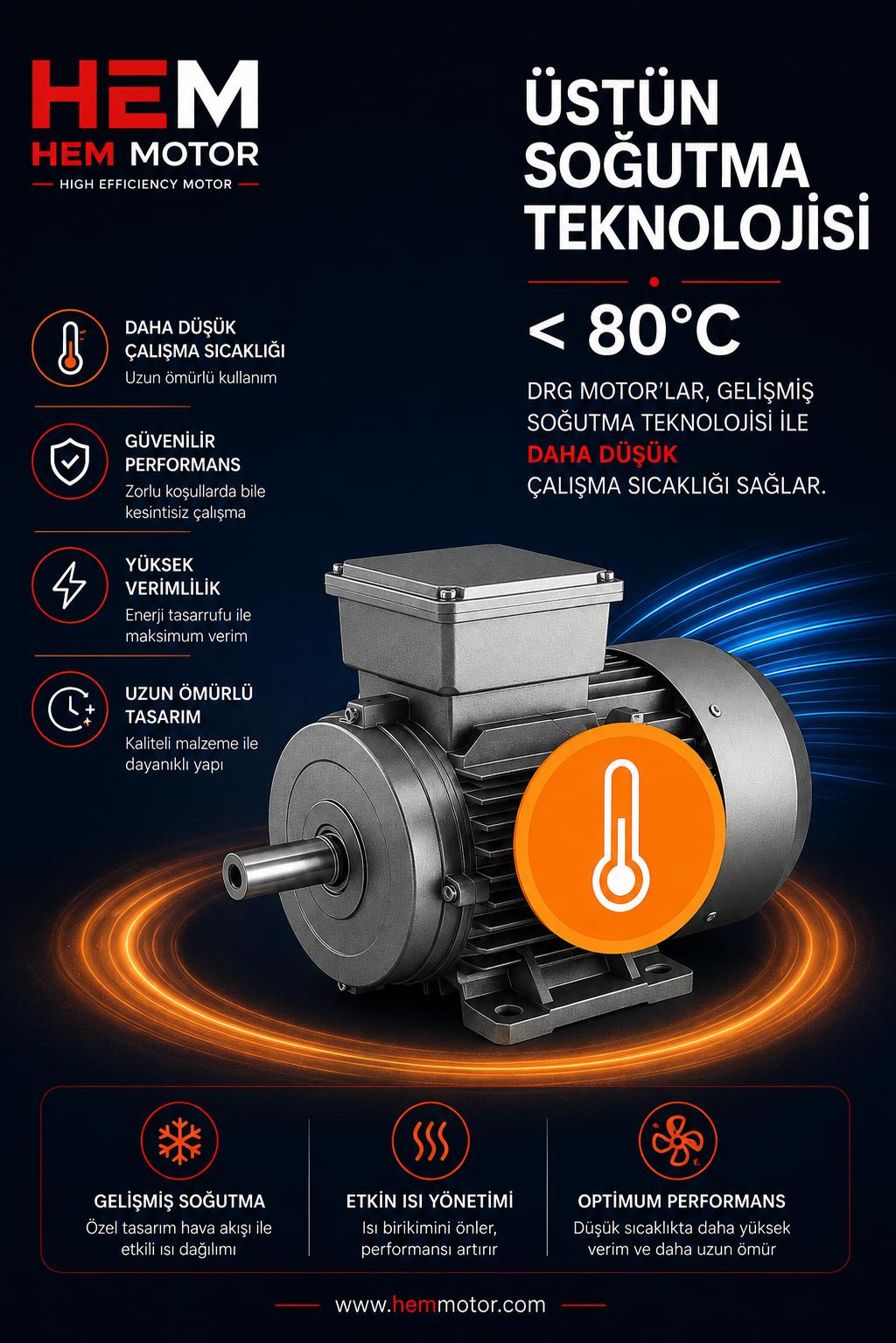
In a motor that draws continuous torque at low speed, monitoring the winding temperature is important even with a forced-cooling fan; because a blocked air duct, fouled fins or a failed fan motor can let the motor overheat unnoticed. Therefore it is recommended to embed a PTC thermistor (or in some applications a PT100) temperature sensor in the windings. The PTC changes its resistance sharply when the winding reaches a certain temperature and stops the motor via a protection relay. This is the safety complement to forced cooling. We gathered winding temperature monitoring methods in our protection with PT100 and PTC thermistor article, and general protection devices in our thermal, relay and fuse selection article.
Besides temperature protection, dirt and dust accumulation on the motor fins also reduces cooling; periodic cleaning is essential. We addressed this for cast iron motors in our cooling fins and dirt accumulation cleaning article. We also explained the heating limit in frequent start-stop and jogging in our jogging and frequent start-stop heating limit article.
Protecting IE4 Efficiency and Life With Correct Cooling
An IE4 motor is chosen because it is one of the highest efficiency classes; but in an application drawing continuous torque at low speed, without forced cooling the motor overheats, efficiency drops and life shortens. With an external forced-cooling fan (IC416) and PTC temperature protection the motor runs safely at every speed. This solution ensures the IE4 investment truly pays back in constant-torque applications such as extruders and conveyors. You can review all IE4 motor options from our IE4 electric motors blog category. We covered when a VFD is needed and how it is selected in our frequency drive (VFD) with motor article, and continuous-process IE4 supply for paper/textile lines in our IE4 paper and textile line in continuous process article. For our general products, visit the HEM Motor home page.
Supply and Connection of the Forced-Cooling Fan
Because the external forced-cooling fan is separately supplied, how this supply will be made must be planned from the start in the panel design. The small fan motor is usually fed from a circuit independent of the main motor; this allows the fan to keep running and cool a hot motor even when the main motor is stopped. In some applications the fan is set to run automatically via a contactor as long as the main motor is energized, and in others it is left permanently on. What matters is that the fan supply is configured separately from the main motor''s starting logic and that a fan failure is monitored by a signal. We covered panel layout and protection devices in our protection devices purchasing article, and terminal box orientation selection in our terminal box orientation and cable entry side article.
The rotation direction of the forced-cooling fan also matters; a fan turning the wrong way blows air in reverse and cooling is lower than expected. Checking the fan rotation direction at commissioning relates to phase sequence; we explained this in our motor rotation direction and phase sequence article. We gathered the motor commissioning checklist in our commissioning and first start checklist article.
Correct Power and Frame Selection in a Constant-Torque Application
The forced-cooling fan makes it possible for the motor to draw full torque at low speed; but the motor''s power and frame size must also be selected correctly for this continuous load. A motor drawing continuous full torque at low speed runs near full-load current; so the frame size and winding must have the capacity to handle this thermal load. In a constant-torque application the motor power must be determined according to the torque the machine requires and the speed range. We covered duty type (S1 continuous, S6 intermittent) selection in our duty type (S1-S6) selection article, and the IE4 paper/textile line in continuous process in our paper and textile line in continuous process article. For the right power-speed combination, you can also see our constant torque or variable torque guide.
Maintenance and Monitoring of Forced Cooling
Because the external forced-cooling fan cools the motor at every speed, it is a critical component; so its maintenance and monitoring also matter. The fan motor''s bearings wear over time, the blades collect dust and airflow can drop; so the fan must be checked and cleaned periodically. To prevent the motor overheating unnoticed when the fan fails, it is recommended to add a fault-monitoring signal (for example current monitoring or a thermal) to the fan supply. The system then warns when the fan stops and the main motor is protected. We covered creating a periodic maintenance schedule in our maintenance and periodic check schedule article, and motor fault symptoms in our motor failures: symptoms and causes article.
Operation Over a Wide Speed Range With a VFD
The real value of the forced-cooling fan is that it lets the motor draw constant torque over a wide speed range. With a variable frequency drive the motor can run over a wide band, for example from 5 Hz to 50 Hz; at the low end of this band its own shaft fan falls short while the forced fan cools continuously. This is needed especially for applications that demand high torque at low speed, such as extruders, agitators and test benches. We covered the basic logic of running a motor with a VFD in our frequency drive (VFD) with asynchronous motor article, and the IE4 transition decision in our stay with IE3 or move to IE4 article. You can also review efficiency and torque balance in low-speed 6/8 pole motors in our 6/8 pole low-speed motor selection article.
Frequently Asked Questions
When should I request an external forced-cooling fan?
A forced-cooling fan is needed if your motor draws full torque (full current) for long periods over a wide speed range on a VFD, especially at low speeds. Typical examples are constant-torque applications such as extruders, heavy conveyors, agitators and mixers. In variable-torque applications such as pumps and fans, the load also drops as speed drops, so it is often not needed. If you tell us your application's torque type and speed range, we can clarify the forced fan need together.
Does a forced-cooling fan reduce the motor's efficiency?
No, not appreciably. The external fan runs with a small separately supplied fan motor and draws very little power compared to the main motor. In return the benefit is large: the motor can draw full torque at low speed without overheating, preventing strain and efficiency loss. In fact, correct cooling lets the motor run at its designed efficiency, so it provides a net gain overall. The fan's small consumption is negligible next to the protected life and performance of the motor.
Is a PTC thermistor still needed when a forced-cooling fan is fitted?
Yes, it is needed and recommended. Although the forced fan cools continuously, the fan motor can fail, the air duct can block, or the fins can foul; in these cases the motor overheats unnoticed. A PTC thermistor embedded in the winding stops the motor via a protection relay when the temperature reaches a dangerous level, preventing burnout. So forced cooling is the primary solution and the PTC is the safety net; used together, the motor runs safely in a continuous low-speed torque application.
Get a Quote
To plan your IE4 motor with an external forced-cooling fan (IC416) and PTC temperature protection, suited to your continuous low-speed torque application, get in touch with us. Tell us your application (extruder, conveyor, agitator), speed range and torque type; we will quote the right motor, forced fan and protection package. Phone: +90 (532) 345 49 86. For a fast quote, use our contact page.
Purchasing and Selection Checklist
- Does the motor draw full torque at low speed on a VFD for long periods?
- Is the application constant torque (extruder/conveyor) or variable torque (pump/fan)?
- For constant torque and a wide speed range, is an external forced fan (IC416) added?
- Is the forced fan's separate supply accounted for in the panel design?
- Is a PTC thermistor (or PT100) embedded in the windings?
- Is a protection relay for the PTC planned on the panel?
- Are the lowest operating speed and the torque needed at that speed clarified?
- Is periodic cleaning of the cooling fins included in the maintenance plan?
- Is the motor power and frame size selected for the continuous full-torque load?
- Is the necessary protection (reactor etc.) for VFD harmonic effects evaluated?