English
 Türkçe

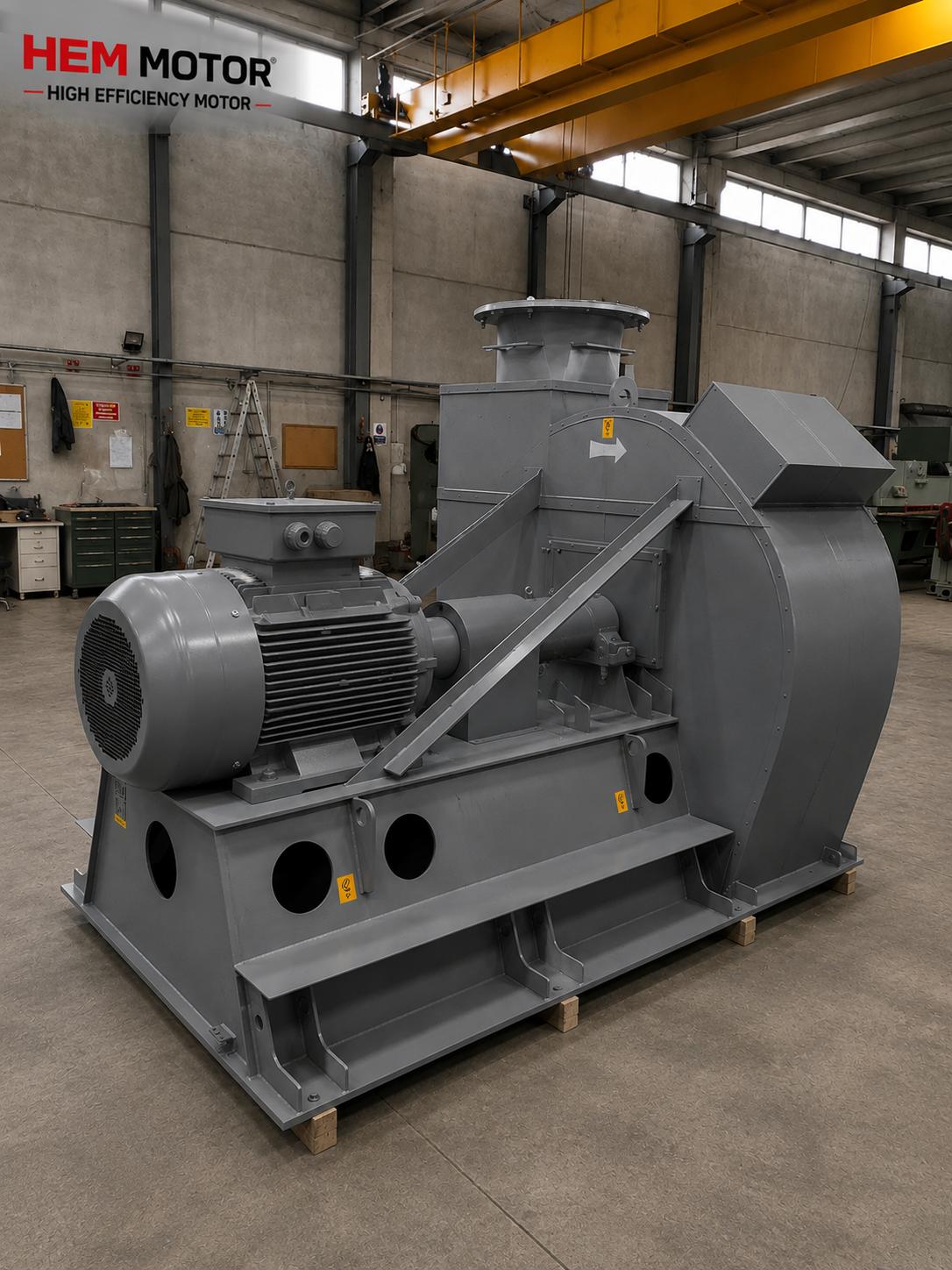

Izmir is one of Turkiye's strongest export gateways, and at the center of this strength sit Alsancak Port and the surrounding logistics corridor. Alsancak Port is a hub that carries the products of export-focused manufacturing sectors such as food, textiles, machinery, packaging and chemicals to world markets. Behind this intense traffic are hundreds of electric motors that must run without interruption: conveyor drives, crane and lifting systems, pumps, fans and the main motors of export machinery. In this article we cover electric motor supply to the exporter industry in the Izmir Alsancak Port and logistics zone; port equipment motors, the 50/60 Hz and multi-voltage need for export machinery, and why fast delivery is critical.
The Industrial Profile of Alsancak Port and the Logistics Corridor
Alsancak Port and the surrounding logistics zone are a center of attraction for exporting manufacturers. Businesses along the Konak, Bayrakli and port axis concentrate in fields such as food processing, textiles and apparel, machinery manufacturing, packaging, and cold-chain logistics. The port carries intense traffic through container handling, bulk cargo, ro-ro and dry cargo operations, and every stage of this traffic relies on electric motors. What these businesses share is shipping their products quickly from locations near the port, and that production stoppage directly causes missed export deadlines. Missing a vessel departure damages not only that shipment but also the customer relationship. So motor supply in this zone is not just a technical matter but a guarantee of the export schedule; the right motor must be supplied at the right time with the right protection. To see our supply network across Izmir, review our same-day delivery in Izmir and the Aegean article and our Kemalpasa and Aliaga OIZ supply content.
Port and Logistics Equipment Motors
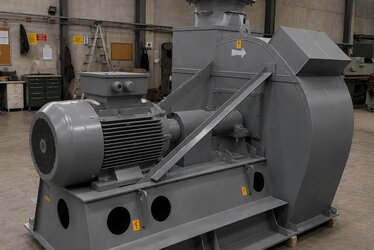
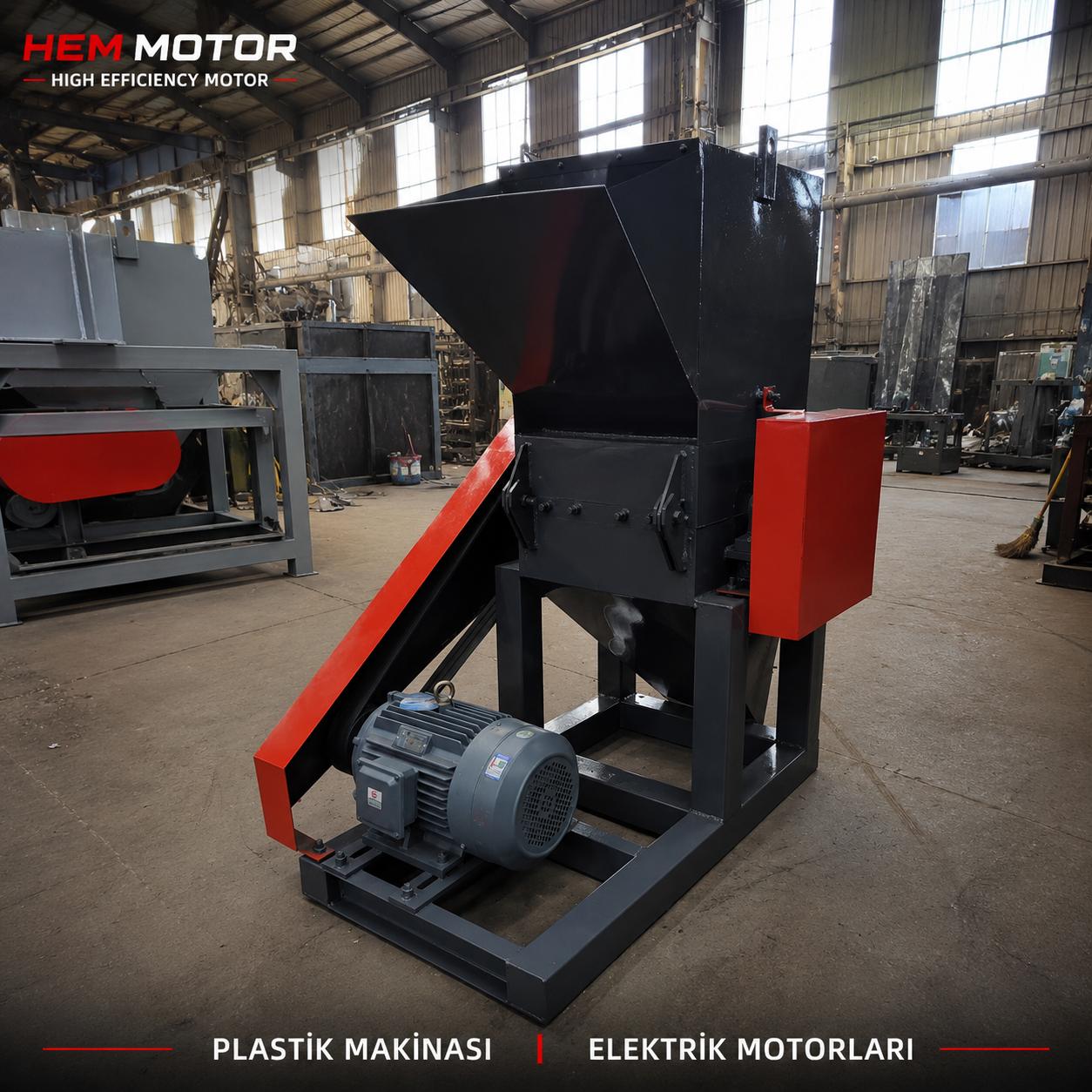
Port and logistics operations run on the motors of moving equipment. Conveyor and belt systems work continuously on loading-unloading lines and require high starting torque and overload capacity; starting under a full belt is a demanding task for the motor and requires the right torque-class selection. In these applications, correctly assessing the speed-torque curve and starting torque prevents the motor from overheating early. For these applications our conveyor belt motor emergency replacement article and high-efficiency motor range are suitable. Crane, lifting and handling systems need brake motors and precise torque control; our IE4 brake motor for conveyor and crane article meets this need. Pumps (ballast, fire, drainage) and ventilation fans are selected from our pump, fan and blower motors category. For equipment working outdoors, IP protection class selection is critical.
Corrosion in the Marine and Port Environment: The Right Frame and Protection
A port is a humid and salty environment, which brings the motor's frame and protection to the fore. Salty sea air causes corrosion on aluminum and especially on poorly painted surfaces; over time corrosion thins the frame, erodes the cooling fins and degrades the terminal-box sealing. For this reason, cast-iron frame, cataphoresis coating and high IP protection (IP55/IP65) are preferred in port and coastal applications. In addition, terminal-box sealing, correct selection of cable glands and regular cleaning are important details that extend motor life in a marine environment. On motors exposed directly to rain and salty spray outdoors, raising the protection class by one step lowers the failure cost over the long term. Our cast-iron motor in marine and coastal facilities, salt protection and corrosion protection with cataphoresis coating articles clarify this choice. Our cast-iron body motor category suits port conditions.
50/60 Hz and Multi-Voltage for Export Machinery
Izmir's exporting manufacturers often export not only products but also machines, or produce for the export market. Here a critical technical issue arises: the grid frequency and voltage of the target country. While Turkiye is 50 Hz / 400 V, the Americas and some countries use 60 Hz and different voltages. A motor designed for 50 Hz turns about 20% faster at 60 Hz; the power and torque balance changes. If this difference is not calculated correctly, the machine will not perform as expected in the target market, and warranty problems may even arise. So a manufacturer producing export machinery should select the motor from the start according to the target market's grid values; motors with a multi-voltage and dual-frequency nameplate provide this flexibility. Our motor rated voltage and 50/60 Hz difference article explains this effect in detail. You can find the correct terminal bridging for different voltage grids in our terminal 230/400V star-delta content, and wide voltage tolerance in our voltage tolerance article.
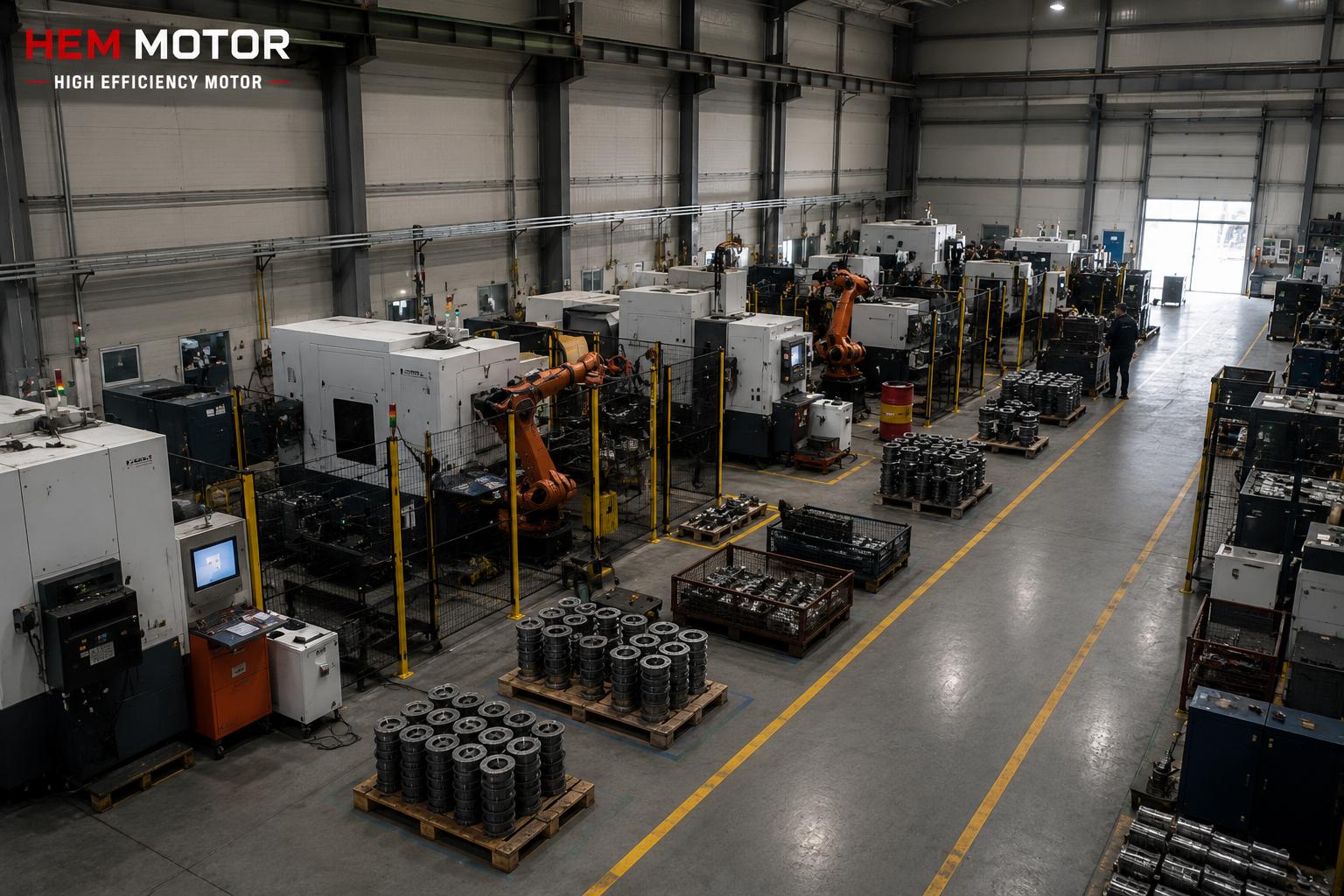
Sector Applications: Food, Textile, Machinery and Packaging
Each exporting sector around Alsancak has a different motor need. Considered together with the other industrial zones across Izmir, the port zone is the export exit point of this basin; our Torbali, Menemen and Cigli industry and Bornova, Gaziemir and Buca supply networks complete this whole. In food processing plants, hygiene and washability come to the fore; lines with high-pressure cleaning need IP69K washdown protection. In these plants, stainless or specially coated, hygienically designed motors are preferred. In textile and apparel lines, low vibration and correct speed affect yarn quality; our motor renewal and speed selection in textiles article guides this. For machinery manufacturing, B5/B14 flanged motor and gearbox matching is important; see our B5 vs B14 article. Packaging machines expect continuous, quiet operation; our continuous-process line supply content covers this application.
Fast Delivery: Not Missing the Export Deadline
For an exporter, the most expensive thing is missing a vessel or shipment deadline due to a production stoppage. When a conveyor motor fails or a crane stops, hours, not minutes, are critical; because customs, transport and the vessel schedule are chained together, and when one link breaks the whole chain is delayed. That is why we provide fast, often same-day delivery to Izmir and the Aegean region in the most sought-after power and speed combinations. Holding stock near the port zone and prioritizing emergency replacement requests is the most concrete contribution to protecting the exporter's schedule. We explained which powers should be kept in stock in our critical spare motor list article; for emergency replacement, nameplate matching helps you obtain the correct motor on the first try. For shipments to neighboring countries, our motor supply from Turkiye to neighboring countries article explains the export process.
Cold Chain and Logistics Warehouse Motors
The Alsancak logistics corridor is full of cold storage and logistics facilities holding products before export. Especially in food and citrus exports, the cold chain is critical; refrigeration compressors, evaporator fans and condenser fans run continuously. These motors must run reliably at low temperatures and be protected against condensation. We covered cold storage applications in our cold storage fan and compressor motors article and cooling tower and chiller fans in our cooling tower and chiller fan motors content. For continuously running compressor applications, see our IE4 screw compressor motor selection article.
Efficiency and Energy Cost: Competitiveness for the Exporter
For an exporting manufacturer, energy cost directly affects product price and competitiveness. Choosing a high efficiency class (IE3/IE4) in the continuously running conveyor, pump and fan motors in the port zone significantly lowers the annual energy bill. In a plant running at continuous high load, the efficiency difference pays for itself in a short time. Our total cost of ownership of a high-efficiency motor article explains this calculation, and our high-efficiency motor + frequency drive savings content explains savings with a VFD on pumps and fans. Efficiency class is also a legal requirement; see our IE3 and IE4 efficiency mandate article.
Port Pump, Fire and Drainage Systems
In port and logistics facilities, pump motors take on many critical tasks. Fire pumps must be ready to engage at any moment for the safety of life and property; so high reliability and correct power selection are essential. Drainage and ballast pumps provide water evacuation; in warehouses and bonded stores, circulation and process pumps are used. In these applications, correct flow-head-speed matching and the S1 duty type suited to continuous operation come to the fore. Our 10 questions when buying a fire pump motor and centrifugal pump motor selection articles cover these choices. For water treatment and wastewater plants, see our water treatment and wastewater plant motors content. You can find our entire pump motor range in the pump, fan and blower motors category.
Correct Mounting and Connection: Ordering to Suit the Machine
In export machinery and port equipment, connecting the motor correctly to the machine determines performance. A B5 large-flange motor connects directly to a pump or reducer, a B3 foot-mounted motor to a base, and B35 to both at once. A wrong mounting type means the motor arriving on site cannot be mounted, delaying the export deadline. To settle the mounting type before ordering, see our B5 vs B14 mounting type selection article. Verifying shaft diameter, key and coupling compatibility up front also ensures no problems at commissioning. To obtain the right product on the first try, all technical parameters must be conveyed completely.
Emergency Replacement and Spare Motor Strategy
In port and logistics operations, a motor failure can stop the whole line and break the export chain. So a spare motor strategy is essential for the motors of critical equipment. Planning in advance which powers and speeds to keep as spares enables commissioning within minutes instead of hours at the moment of failure. Our critical spare motor list and stock planning article offers this strategy, and our conveyor belt motor emergency replacement content offers a direct-swap checklist. To quickly replace an existing motor with an equivalent, our direct replacement of an old brand motor article guides you.
Frequently Asked Questions
Which motor frame is suitable in a port and coastal environment?
Because salty, humid sea air creates a corrosion risk, cast-iron frame, cataphoresis coating and at least IP55 (IP65 if needed) protection are recommended in port and coastal applications. On outdoor crane, conveyor and pump motors, this protection directly extends life.
How do I select a motor for a 60 Hz country for my export machine?
At 60 Hz the motor speed increases by about 20%, and power and torque also change. You need to select a motor with a multi-voltage/dual-frequency nameplate suitable for the target country's frequency and voltage. For correct selection, send us the grid values where the machine will operate; we recommend a suitable motor taking the 50/60 Hz difference into account.
How long does delivery to the Alsancak area take?
In the most sought-after power and speed combinations we provide fast, often same-day delivery to Izmir and its surroundings. To avoid missing the export deadline, we supply critical motors from stock and prioritize emergency replacement requests.
Get a Quote
We supply your exporting facility in the Izmir Alsancak Port and logistics zone with the right product, from port equipment to machine motors, with fast delivery. Reach us via our contact page or at +90 (532) 345 49 86; let us determine together the motor suited to your application and export market. Visit our home page for our full product range.
Checklist for the Port and Export Industry
- Have the equipment type (conveyor, crane, pump, fan) and load profile been determined?
- Have the frame material and IP protection been chosen for the marine/coastal environment?
- For an export machine, are the target country's frequency (50/60 Hz) and voltage clarified?
- Is the efficiency class (IE3/IE4) legally and economically suitable?
- Is the mounting type (B3/B5/B35) suitable for the machine?
- Has spare stock been planned for critical motors?
- Have the fast-delivery and deadline requirements been conveyed?
- For emergency replacement, are the existing motor's nameplate details ready?