English
 Türkçe


In textiles, quality is most often lost in a moment that the eye cannot see: the moment the yarn breaks. When a yarn breaks, it is not only that one machine that stops; the operator covering the station loses time, the batch picks up a defect and waste rises at final inspection. Plant managers usually look for the cause in yarn quality, humidity or operator error. Yet a significant share of breaks is hidden in the speed instability of the motor that turns the machine.
A tired motor with loosened bearings and a disturbed rotor balance does not deliver a steady speed; it produces a fluctuating speed that rises and falls in small but continuous steps. This fluctuation passes straight into yarn tension. The yarn is stretched one instant and slackened the next, and it breaks at its weakest point. In this article we cover how the right speed choice reduces yarn breakage and how an ageing motor fleet can be renewed gradually without stopping production.
The Hidden Source of Yarn Breakage: Speed Fluctuation
Yarn is a material of limited elasticity, fed into the machine to be processed within a defined tension range. In each of the spinning, twisting, winding or knitting processes the yarn advances at a certain speed, and the more constant that speed is, the more balanced the tension on the yarn becomes. As long as the speed stays constant, the yarn tension stays within a safe band.
The problem begins when the motor ages. A motor with increased bearing clearances and a slightly unbalanced rotor may appear to run at its nameplate speed, but in reality it produces small speed oscillations. These oscillations can be shorter than a second, too brief to notice by eye; the yarn, however, feels them. With every sudden acceleration the yarn is stretched a little more, and these micro-stretches, repeated over thousands of metres, accumulate at the yarn's weakest point and trigger a break.
For this reason, when the break rate climbs in a textile plant, the maintenance team should look not only at the yarn and the humid environment but also at the health and speed stability of the motor turning the machine. A strong, balanced asynchronous motor solution eliminates these micro-stretches from the outset by delivering a steady speed.
Why Is the Right Speed Choice So Important?
Textile machines perform best within a certain speed range. The relationship between motor speed and the machine's process speed is set by pulley and belt ratios or by a direct coupling. The most common mistake when replacing an old motor is to look only at power and ignore the speed. Yet a motor with the wrong speed, even at the right power, disrupts the machine's process speed.
The main points to watch in speed selection are:
- Synchronous speed match: The pole count of the new motor should be chosen so it delivers the same process speed as the old motor; otherwise the pulley ratios must be recalculated.
- Speed stability under load: Since how much the motor's speed drops as load rises (slip) is passed on to the yarn, a low-slip, balanced motor should be preferred.
- Need for speed control: On machines running different yarn counts, a motor whose speed can be set by a frequency inverter brings flexibility.
- Mechanical balance: The new motor's rotor balance and bearing quality are decisive for fluctuation-free speed.
A motor with the correct speed and good mechanical balance feeds the yarn at the same speed at all times. This stability lowers the break rate, improves batch consistency and reduces the waste margin at final inspection. So the speed choice is not just a technical preference but a decision that directly affects quality and efficiency.
Speed Flexibility With a Frequency Inverter
In modern textile production a single machine often processes different yarn types. The speed ideal for a fine yarn can be too aggressive for a thick one. A fixed-speed motor cannot provide this flexibility, and changing the pulley for each yarn type is impractical.
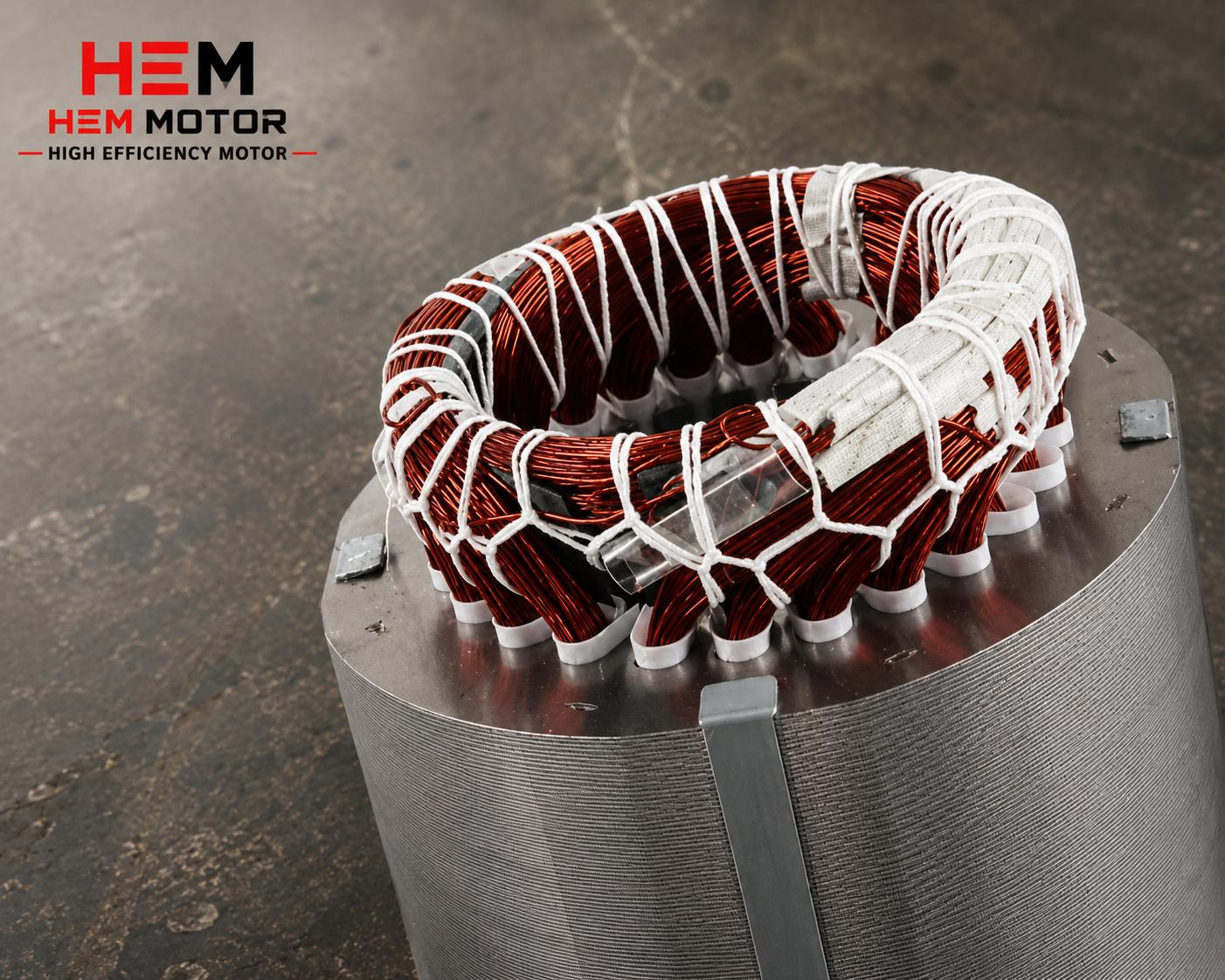
This is where a motor driven by a frequency inverter (drive) stands out. The inverter allows the motor's speed to be set steplessly according to the yarn type. The operator can therefore pick the most suitable speed for each yarn count and stay inside the tension window. Inverter-based soft starting also reduces breaks at start-up because it brings the machine in without a jolt. When the old motor fleet is renewed, choosing inverter-compatible motors gives the plant long-term flexibility.
Gradual Renewal Without Stopping Production
In a textile plant dozens, sometimes hundreds, of motors run at the same time. Replacing all of them over a single weekend is neither possible nor necessary. A gradual renewal plan carried out without stopping production protects cash flow and spreads the risk.
A sensible sequence for gradual renewal is:
- First the most tired motors, those with the highest break rates, are identified and given priority.
- The replacement motors are chosen in standard frames and speeds for easy future supply, which simplifies stock management.
- Spare motors for critical machines are held in stock in advance so that an unexpected failure causes minimal downtime.
- Renewal batches are aligned with planned maintenance shutdowns so no extra production is lost.
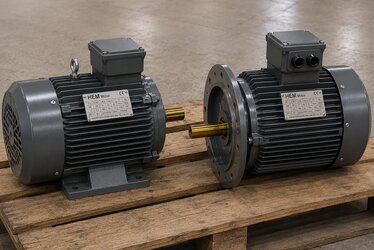
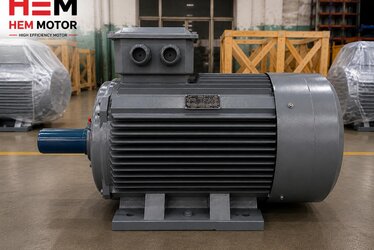
This approach gradually converts the whole motor fleet into balanced, speed-stable motors over time without straining the budget. The most effective way to speed up the renewal process is to source the needed motors in a planned way from a single source. By reviewing our broad product and solution range, you can build a renewal plan in standard speeds and frames suited to your machine fleet.
The Signs That Call for Renewal
The signs that a motor needs renewing usually show themselves before a break occurs. Rising bearing noise, increasing vibration, a frame too hot to touch and, above all, a marked speed drop under load all indicate that the motor is tired. Tracking these signs together with the break rate is the soundest way to set renewal priority correctly. A motor renewal done at the right time does not just prevent a failure; by protecting the yarn it also safeguards quality.
Speed Needs by Textile Process
Textiles are not a single process; spinning, twisting, winding, weaving and knitting each have their own speed and stability needs. When choosing the speed, which process is involved is decisive. Spinning machines demand a high and extremely stable speed, because the yarn's twist depends directly on the spindle speed and the smallest fluctuation in speed leads to twist irregularity.
On winding and transfer machines, keeping the yarn tension constant is the priority; here it matters that the motor can hold its speed as load changes, that is, that it has low slip. On weaving looms, the drive motor being resistant to impact load and stable keeps the weft and warp tension balanced. On knitting machines, a low and constant speed determines the regularity of the loop structure.
- Spinning: High, extremely stable speed; twist regularity depends on spindle speed.
- Winding-transfer: A low-slip motor is critical for constant yarn tension.
- Weaving: An impact-load-resistant, stable drive motor.
- Knitting: A low, constant speed determines loop regularity.
This variety shows that motor renewal cannot be done with the same recipe on every machine. The right approach is to assess each process's speed and balance need separately and choose the motor accordingly.
Energy Efficiency and the Renewal Opportunity
Ageing motors do not just produce breaks; they also use energy inefficiently. A motor with tired bearings and increased friction draws more energy to do the same job. In facilities such as textile plants where many motors run twenty-four hours a day, this difference forms a noticeable item on the annual energy bill. For this reason, motor renewal is an opportunity not only for quality but also for energy cost.
Preferring efficient motors when making the renewal plan recovers the initial investment over time. Even a small efficiency gain on a continuously running motor turns into a meaningful saving by the end of the year. Motors driven by a frequency inverter run at the speed the machine actually needs and so prevent energy from being wasted. In this way renewal both lowers the break rate and improves energy efficiency.
The combination of these two gains noticeably shortens the payback period of the renewal investment. A well-planned renewal gives the plant a long-term advantage on both the quality and the cost front.
Spare Motor Strategy
In a textile plant running continuous production, an unexpected motor failure can cause hours of lost production. The most effective way to manage this risk is to hold spare motors in stock in advance for critical machines. Choosing motors in standard frames and speeds during renewal also eases this spare strategy, because a single spare motor can fit more than one machine of the same type.
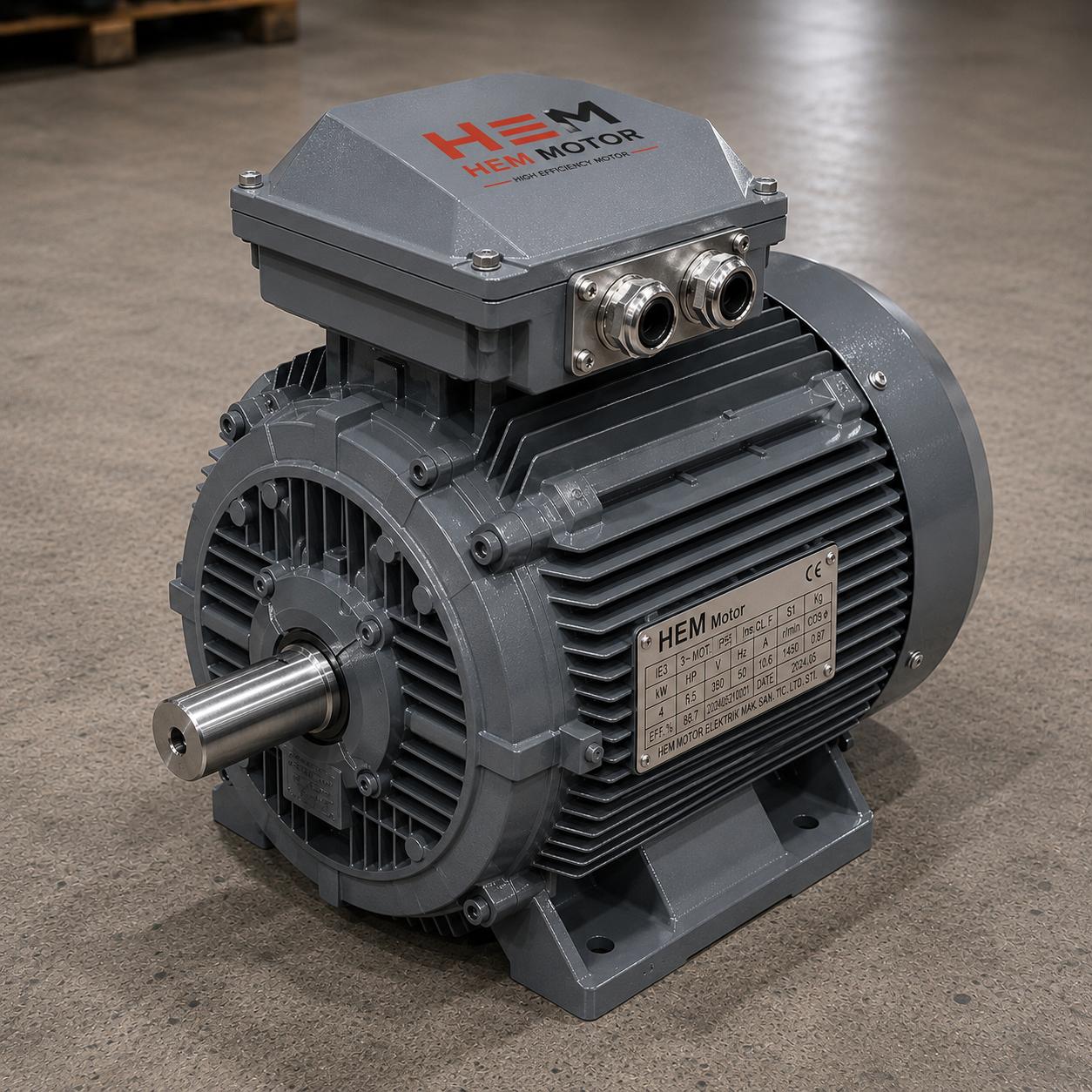
The spare motor strategy rests on these principles: always having a ready spare for the most critical machines, choosing spares from standard, interchangeable types, and managing the spare stock in harmony with the renewal plan. This approach lets production restart within minutes rather than hours when a failure occurs. To supply the needed spares in a planned way, you can review our three-phase motor options and build a stock plan suited to your facility.
Frequently Asked Questions
Our break rate is high; how do I know the cause is the motor?
If there is no clear problem with the yarn or the humid environment and the breaks concentrate on specific machines, the first place to look is the motors driving those machines. A marked speed drop under load, increased vibration and bearing noise all point to a motor producing unstable speed. A vibration measurement and a speed check under load quickly reveal the mechanical root of the problem. If motor-related fluctuation is confirmed, replacement with a balanced motor noticeably reduces the breaks.
Is it enough to buy a new motor of the same power as the old one?
Power alone is not a sufficient criterion. The pole count and speed of the new motor must be chosen to keep the machine's process speed the same as the old motor; otherwise the pulley ratios must be readjusted. In addition, speed stability under load and mechanical balance directly affect how steady the speed delivered to the yarn is. For this reason renewal must consider not only power but also speed, slip and balance quality.
Should I renew all the motors at once?
No, and it is actually not recommended. The right approach is a gradual renewal plan starting with the most tired motors that have the highest break rates. Aligning renewal batches with planned maintenance shutdowns avoids extra production loss. Choosing motors in standard frames and speeds eases future supply and stock management. This method protects cash flow and spreads the risk over time.