English
 Türkçe




Supplying electric motors from Turkiye to neighboring countries is far more than boxing up a product and sending it on its way. Real success in exporting depends on flawlessly managing the entire process, from preparing the proforma invoice to packaging, from customs paperwork to transport organization, and from the destination country's voltage-frequency standards to on-time delivery. A hiccup at any single step can leave goods waiting at customs, delay the project and shake the buyer's confidence. In this guide we cover how to manage every stage of the process soundly when exporting electric motors to the surrounding geography, and why Turkiye is a natural distribution hub for this region.
For HEM Motor, exporting is not a channel added later but a fundamental ground on which it was founded, shipping a significant part of its output to Asia, Europe and Africa. This experience shows that the right electric motor supply is possible not only through product quality but also through logistics and documentation discipline.

Why Is Turkiye a Regional Distribution Hub?
By virtue of its geographic location, Turkiye sits right in the middle of the European, Middle Eastern, Caucasus, Central Asian and North African markets. This position provides fast access to neighboring countries by land, sea and air. Compared with the weeks-long sea voyage of a motor sourced from the Far East, shipment from Turkiye to neighboring countries can often be completed within days. This speed advantage becomes decisive, especially in urgent failure replacements and critical project deliveries.
- Geographic proximity: Short transport times and low logistics cost to neighboring countries.
- Multiple transport modes: Road (truck), sea (container) and, when needed, air freight options.
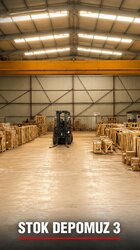
- Stock availability: Fast shipment from a regional warehouse eliminates long production and supply lead times.
For this reason, Turkiye is positioned as a regional distribution hub serving the surrounding geography; the buyer can procure the motor they need in a much shorter time and through a more predictable process.
Steps of the Export Process
A smooth export relies on completing each step in the correct order and in full. Below we list the basic stages of the process.
1. Proforma Invoice and Quotation
The first step of exporting is the proforma invoice sent to the buyer. This document includes the product description, quantity, unit and total amount, delivery terms (Incoterms: EXW, FOB, CIF, etc.), payment terms and validity period. A clear proforma enables both the buyer's budgeting and the correct planning of the customs process from the start.
2. Technical Compatibility: Voltage and Frequency
The most critical technical issue in exporting is the destination country's electrical grid standard. While Turkiye and many neighboring countries use 400V / 50Hz, some markets operate at a different voltage or 60Hz frequency. A three-phase electric motor produced for the wrong frequency either will not run in the destination country or will run inefficiently and faultily. Therefore the destination country's voltage-frequency values must be confirmed at the order stage.
3. Packaging and Marking
In long-distance, multi-handling transport, packaging is as important as the product. Motors must be protected against moisture, impact and vibration; wooden crates or pallets must comply with the ISPM 15 standard (fumigated, stamped). The marking on the crate (shipment information, weight, lifting points) is critical for customs and handling.
Customs and Documentation
A missing item in the export paperwork causes goods to wait at customs and costs to rise. For this reason, documentation discipline is the foundation of on-time delivery. The documents that typically need to be prepared in an electric motor export are as follows:
- Commercial invoice: The official document of the sale.
- Packing list: The contents, weight and dimensions of each package.
- Certificate of origin: Documents that the product is of Turkiye origin; it can affect customs duties.
- Transport document: CMR for road, bill of lading (B/L) for sea, AWB for air.
- Conformity certificates if required: Technical certificates requested by the destination country.
These documents being correct and consistent ensures customs procedures are completed quickly and the goods reach the buyer without delay.
Delivery Terms (Incoterms) and Sharing of Responsibility
In exporting, the delivery term determines the sharing of cost and risk between buyer and seller. Choosing the right Incoterms clarifies both the pricing and the limits of responsibility.
- EXW (Ex Works): The buyer takes delivery of the goods at the factory; all transport responsibility lies with the buyer.
- FOB (Free On Board): The seller is responsible until the goods are loaded onto the ship.
- CIF (Cost, Insurance, Freight): The seller covers freight and insurance up to the port of arrival.
Which Incoterms to choose depends on the buyer's logistics capacity and the agreement between the two parties. A clear delivery term prevents surprise costs and disputes.
Payment Methods and Commercial Trust
In international trade, the payment method determines both the seller's collection security and the buyer's delivery assurance. In a new commercial relationship where the parties do not know each other, payment instruments that balance trust are used. A letter of credit (L/C), through the intermediation of banks, secures both that the seller will receive payment and that the buyer will obtain the goods' documents. In more established relationships, advance or deferred wire transfer (TT) is preferred.
Payment terms must be clarified in the proforma invoice from the outset, because the payment method directly affects when shipment will begin and how documents will be delivered. A transparent, pre-agreed payment process removes one of the most common bottlenecks in exporting and lays the foundation for a long-term supply relationship.
- Letter of credit (L/C): The method preferred in new relationships, protecting both parties with bank assurance.
- Wire transfer (TT): Advance or deferred; fast and low-cost in relationships where trust is established.
- Term and guarantee: Payment term and guarantee conditions must be clearly stated in the contract.
The Key to On-Time Delivery: Stock and Planning
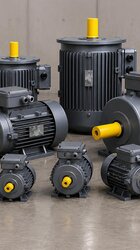
The most common problem in exporting is that the production or supply lead time exceeds the buyer's expectation. Keeping stock of standard-frame and frequently requested powers in a regional warehouse reduces delivery time from weeks to days. In terms of stock and supply, keeping frequently sold motor powers ready in advance both meets urgent needs and builds the buyer's confidence. For up-to-date electric motor prices and stock availability, the healthiest approach is to clarify your technical specifications and request a quote. For a wider product range you may also evaluate the export-grade electric motor and standard-frame motor options.
After-Sales and Spare Parts Continuity
In exporting, the relationship does not end when the goods are delivered; real trust is reinforced through after-sales support. The buyer being able to reorder the same motor in the destination country in the future, find spare parts and get a fast response to a technical issue are the most important factors that make a supplier preferable. Motors produced in standard frames and common power ratings provide a great advantage for this continuity, because replacements and spare parts can be obtained easily.
For this reason, in exporting, the aim should be to build a sustainable supply relationship rather than a one-off sale. Providing the buyer with clear technical documentation, nameplate information and a replacement guide speeds up future renewal processes. A reliable supply channel ensures the buyer's production continues uninterrupted, and this forms the foundation of a long-term business partnership.
Frequently Asked Questions
If the destination country's frequency is different, will the motor still work?
Frequency directly determines the motor's speed and performance. A motor produced for 50Hz runs at a different speed and characteristic on a 60Hz grid; this is unsuitable for most applications. Therefore the destination country's voltage and frequency values must always be stated at the order stage.
How long does shipment from Turkiye to neighboring countries take?
The exact time depends on the country, delivery term and transport mode. However, thanks to geographic proximity, road shipment to neighboring countries is usually much shorter than products arriving by sea from the Far East; this is a decisive advantage in critical deliveries.
Which delivery term should I choose for exporting?
The delivery term depends on the buyer's logistics capacity and risk-sharing preference. EXW or FOB suits a buyer who wants to manage logistics themselves, while CIF is more practical for a buyer wanting a "turnkey" solution. The right Incoterms clarifies cost and responsibility from the start.