English
 Türkçe

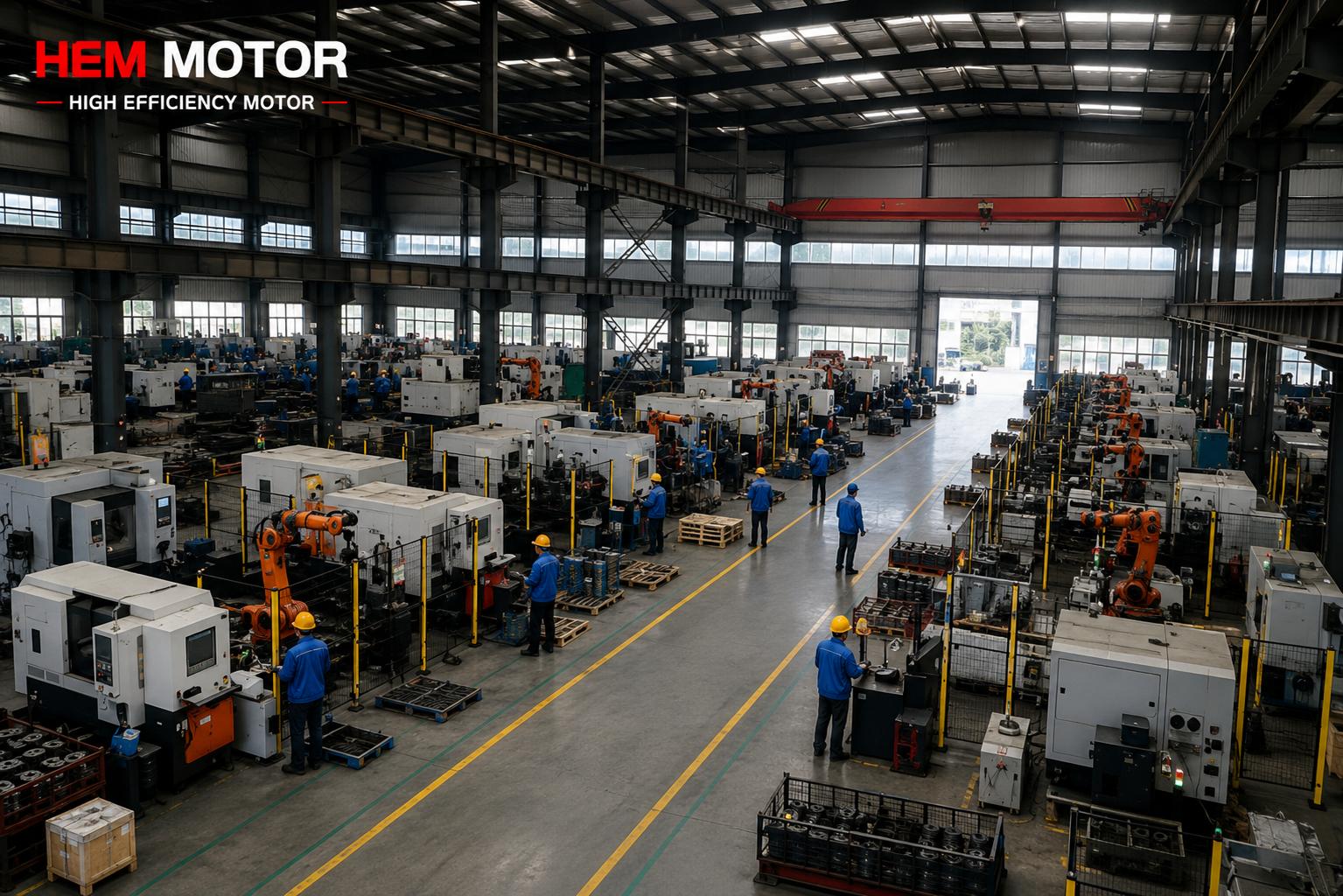

Gypsum and plasterboard production is a process loaded with dust and heat from start to finish: natural gypsum rock is ground, heated in a calcination kiln to remove part of its water, and the resulting hemihydrate is mixed with water and shaped on the plasterboard line. Throughout this chain the electric motor is decisive at every stage, from the calcination fan moving hot, dusty air, to the mixers blending fast-setting gypsum, to the board conveyors and grinding mills. Because dust density is high, the IP protection class is the centrepiece of motor selection, while insulation class and body material come to the fore in hot zones. This article looks at the main motor groups of a gypsum/plasterboard plant (calcination and kiln fans, mixers, line/conveyor drives, grinding and elevators) from a buyer's perspective and offers a practical framework for choosing the right power, speed, protection and mounting type.
What the Motor Does on a Gypsum and Plasterboard Line
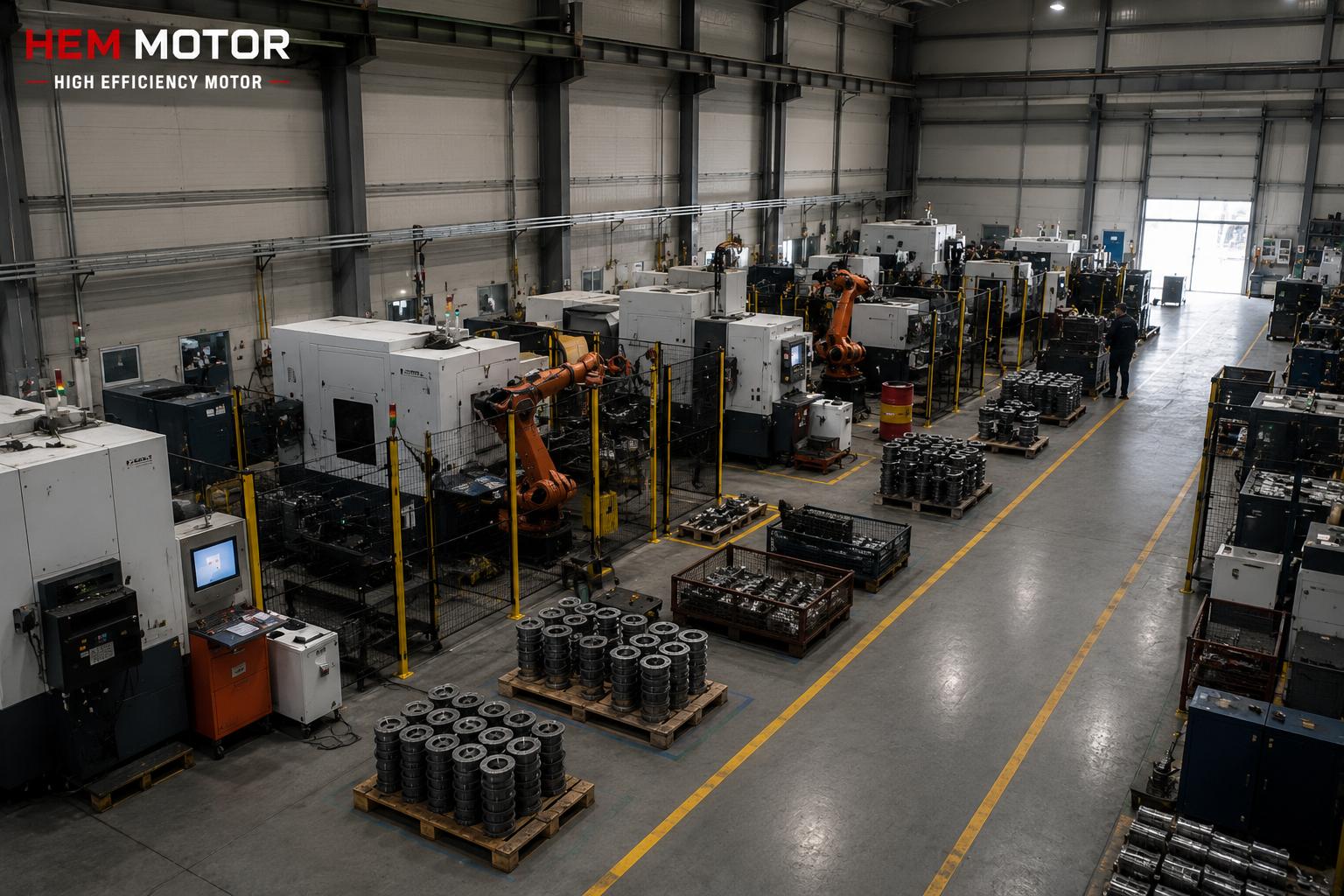
In a gypsum plant, production is roughly split into three sections: raw material preparation (crushing, grinding, drying), calcination (cooking the gypsum) and the finished-product line (powder gypsum packaging or plasterboard manufacturing). Each section requires different motor groups, but the common feature is that the environment is constantly dusty and high temperatures appear at many points. Motor selection is therefore not only a matter of power but also of correct protection against dust and heat.
Typical motor groups are: calcination and drying kiln fans, gypsum-water mixers, board-line conveyor and pulling drives, grinding mill motors, bucket elevator and screw conveyor drives, and packaging machine motors. Since each group has a different duty type and speed requirement, evaluating the load and environment of each drive separately gives a better result than equipping the line with a single motor type.
Another feature of a gypsum plant is the uninterrupted flow of the process: when the calcination kiln and mixer stop, gypsum can harden inside the line and require lengthy cleaning. The reliability of the main drive motors therefore has higher priority than the auxiliary motors. It helps to think of motor selection along three axes: mechanical load (power, torque and starting behaviour), speed stability (constant or adjustable speed) and environmental protection (dust and heat). When these three axes are evaluated together, the most suitable motor for each drive becomes clear.
Calcination and Kiln Fan: Driving Hot, Dusty Air
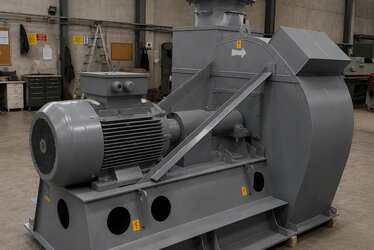
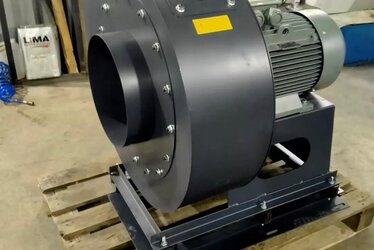
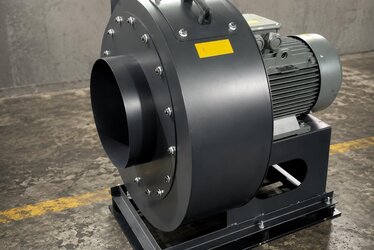
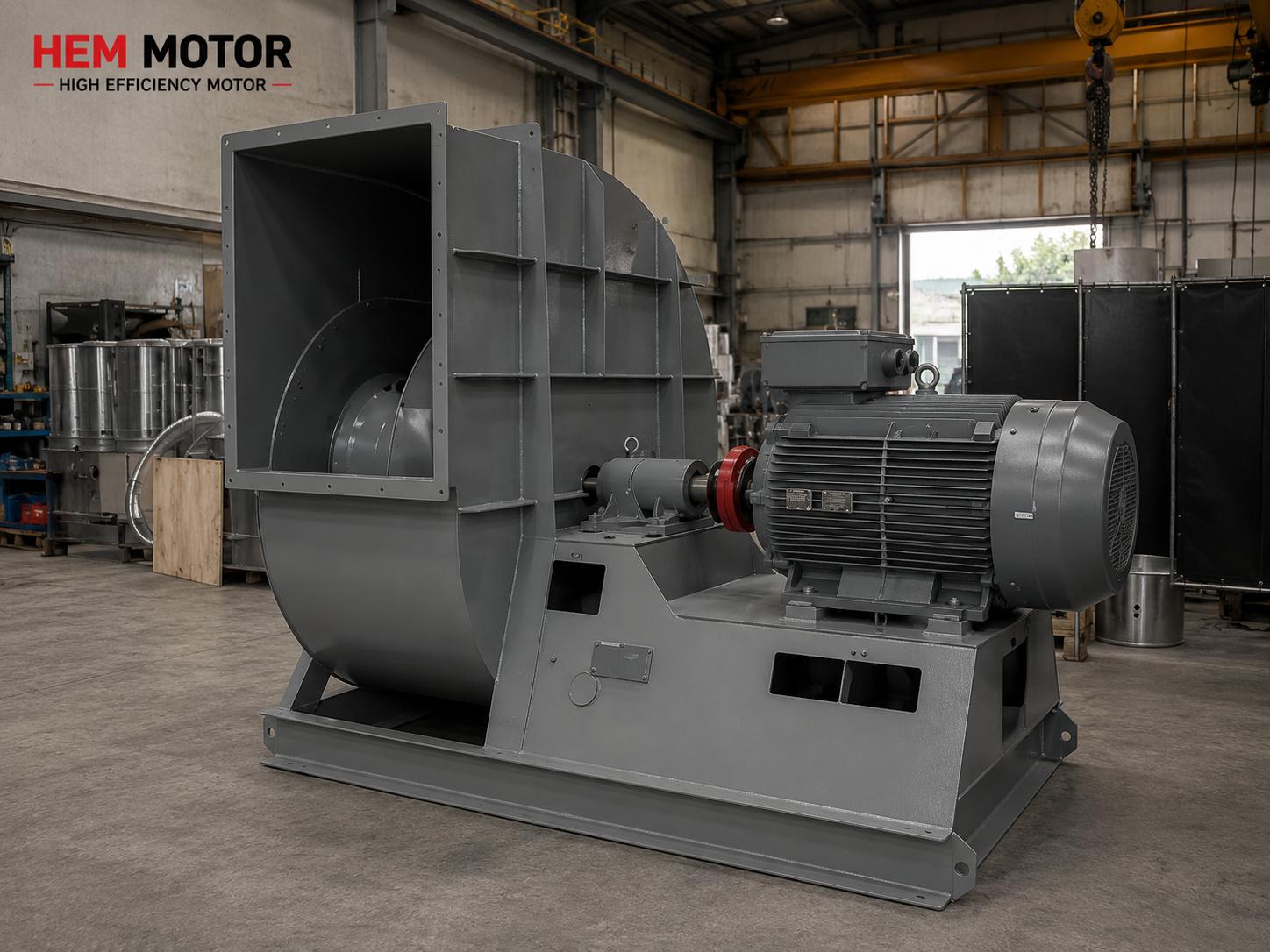
Calcination is the heat treatment in which part of the gypsum's crystal water is removed, and this process generates dense dust and hot air. The calcination fan is the critical motor circulating this hot, dusty air, usually running continuously (S1). Because hot air makes motor cooling harder, the fan motor is specified with class F (or H) insulation, a cast-iron body and a high IP class. If the fan flow must be matched to process demand, the motor is run as an asynchronous motor on a frequency drive (VFD), providing both process control and energy saving. For the right pole-speed choice on continuously high-speed fan motors, our aspirator and dust-collection fan motor selection article is a useful reference.
Gypsum-Water Mixer: Fast Set and Homogeneous Blend
The heart of the plasterboard line is the high-speed mixer that blends gypsum powder with water and additives homogeneously within seconds. Because gypsum sets very fast, a mixer stoppage means the gypsum hardening inside the machine and a serious cleaning/downtime event. The mixer motor must therefore be highly reliable, speed-stable and suitable for continuous duty. Mortar mixers on the powder-gypsum side run at lower speed with high torque; these are usually driven by a motor stepped down through a worm gear reducer or helical reducer. You can also find the high-viscosity mixing logic in our chemical, pharma and detergent factory motor selection article.
Dust and IP Protection: The Most Critical Choice in a Gypsum Plant
Gypsum dust is fine, dry and penetrates everywhere; when it enters a motor's bearing or terminal box it causes premature failure. The IP protection class is therefore the backbone of motor selection in a gypsum plant. IP65 should be preferred in high-dust grinding, screening and packaging areas, and at least IP55 in less dusty areas. To set the right thresholds, use the comparison in our IP protection class selection (IP55, IP65, IP66) article.
Insulation and Body in Hot Zones
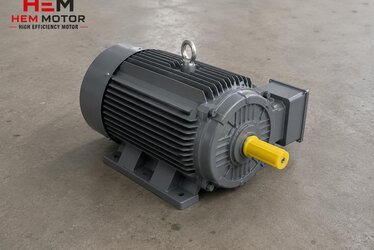
Motors near calcination and drying zones are exposed to high ambient temperature. A standard motor is rated at 40 °C ambient; if it rises above that, you may need to derate the motor's rated power or step up to a larger frame. In these zones, class F/H insulation and a cast-iron body protect motor life. For the right decision in hot, dusty conditions, our hot and dusty environment motor: insulation class (F/H) and cast-iron body selection article is a detailed guide.
Grinding Mill and Raw Material Preparation Motors
Gypsum rock is ground to a defined fineness before calcination; these grinding mills require high-power, high-starting-torque motors. Because the mill load varies, the motor's overload capacity, that is its service factor, matters; the motor should run without strain during sudden load increases. A cast-iron body, reinforced bearings and a high IP class are the standard choice on these motors. The heavy-duty load on the crusher and mill side has a character similar to stone-crushing applications; you can also find the same heavy-load logic in our marble and granite processing machinery motor supply article. The raw material line also includes feed conveyors, dosing screws and screening machines, each selected according to its own speed and torque profile.
Conveyor, Elevator and Line Drives
Plasterboard panels are conveyed continuously along the production line; conveyor and pulling drives run at constant speed without interruption. Speed stability matters here for board length cutting and drying time, so line motors are mostly configured with drives and reducers. On the raw material side, bucket elevators and screw conveyors move gypsum powder vertically and horizontally; these require high starting torque and usually run as an IE3 or efficient electric motor combined with a reducer. To set output speed and torque correctly, apply the selection logic in our monoblock geared motor purchasing article. For fast replacement after a conveyor motor failure, our conveyor belt motor emergency replacement article offers a practical checklist.
Pole Count and Output Speed
The basic rule is to combine 4- or 6-pole motors with a reducer on low-speed drives such as mixers, elevators and screws, and to use 2-pole motors where high speed is needed, such as fans and some grinding applications. You can find the effect of pole count on efficiency and torque compared in our asynchronous motor efficiency and pole count (2, 4, 6, 8 poles) article. The right pole-reducer combination directly affects both energy efficiency and mechanical life.
Efficiency, Continuous Running and Operating Cost
Gypsum and plasterboard plants are high-tonnage, continuous-production facilities; fans, mixers and mills run at full load for most of the year. This means the efficiency class feeds straight into the electricity bill. For continuous loads, choosing an IE4 efficient electric motor or IE3 pays the investment back over the operating life. At certain power and pole thresholds the efficiency class is also legally mandatory; you can find which power requires which class in our IE3 and IE4 efficiency mandate article. To improve total efficiency on geared drives, apply the gain calculation in our using an IE4 motor with a gearbox article. Motors with a higher service factor provide a safer buffer in variable-load grinding and mixing applications; see our motor service factor and overload capacity article for details.
Supply, Stock and Like-for-Like Replacement
In gypsum plants an unplanned stoppage is very costly because of hardening and long cleaning. It is therefore wise to keep a spare motor for critical drives (calcination fan, main mixer, main conveyor). If the spare will sit in storage for a long time, moisture and bearing protection must be considered. When replacing a failed motor, the fastest route is to share the nameplate data of the existing motor in full (power, speed, voltage, mounting type, frame size, shaft diameter); this allows a like-for-like motor to be supplied quickly. If the nameplate is unreadable, an equivalent is chosen from the frame dimensions and shaft diameter. For the question of whether to buy new or rewind, our rewind vs buy new article offers a clear comparison.
Motor Purchasing Checklist for a Gypsum and Plasterboard Factory
To speed up procurement and avoid receiving the wrong motor, clarify these items before ordering:
- Duty type: Specify continuous duty (S1) for fans, mixers and line drives.
- Power and speed: State kW, rated speed and required output speed (and ratio if geared) for each drive.
- Protection class: Request IP65 in dusty areas and at least IP55 in less dusty areas.
- Insulation and body: Class F/H insulation and cast-iron body near calcination/drying.
- Mounting type: Specify B5/B14 flange for geared drives and B3 for foot-mounted drives as the mounting type.
- Drive compatibility: VFD-compatible motors for flow/speed-controlled fans and line drives.
- Spare plan: A spare motor and correct storage conditions for critical drives.
You can review our main product range from our home page, and for similar sector guides see our glass and ceramics factory electric motors and rolling mill and foundry electric motors articles.
Frequently Asked Questions
What protection and insulation does a calcination fan motor need?
Because the calcination fan works with both hot and dusty air, the motor is specified with a high IP class (usually IP65), class F or H insulation and a cast-iron body. Since heat reduces the motor's cooling capacity, derating or a larger frame is considered if the ambient exceeds 40 °C. For the right decision, use the criteria in our hot and dusty environment motor selection article.
Does gypsum dust really affect the motor this much?
Yes. Gypsum dust is very fine and dry; it enters the bearing and terminal box of a poorly protected motor and causes premature failure. The IP protection class is therefore as important as power and speed in a gypsum plant. IP65 is recommended in heavily dusty areas and at least IP55 in less dusty ones; see our IP protection class selection article for thresholds.
Should I buy line and conveyor motors with a drive?
On a plasterboard line, stable and adjustable belt speed is an advantage for cut length and drying time, so motors running on a frequency drive (VFD) are common on line drives. A drive solution offers both process control and energy saving. For simple constant-speed drives a standard DOL motor may be sufficient; the decision depends on whether the process needs speed adjustment.
Get a Quote
If you want to supply the calcination fan, mixer, line/conveyor drive, grinding and elevator motors for your gypsum or plasterboard plant with the right power, speed, protection class and mounting type, our team is here to help. Share your drive list by section, your dust/temperature conditions and your speed requirements, and we will prepare a fast, accurate quote. Call us on +90 (532) 345 49 86 or reach us through our contact page.