English
 Türkçe


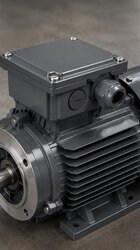
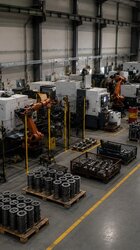
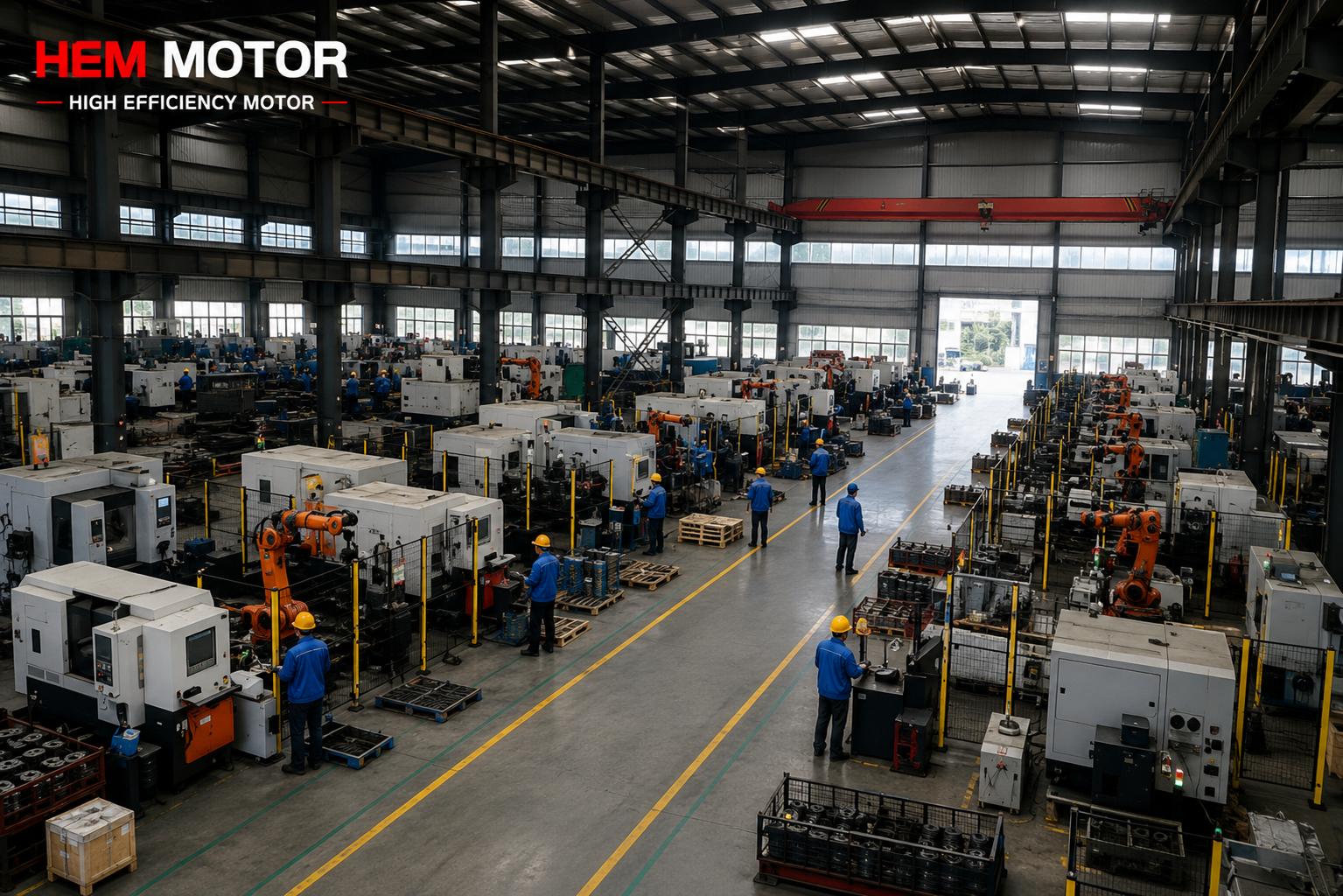

Fiberglass and composite manufacturing plants combine continuous glass fibres with resin to produce pultruded profiles, filament-wound pipes, GRP tanks and panel products. On these lines an electric motor performs several very different duties at once: maintaining a constant pulling speed, mixing high-viscosity resin homogeneously, and operating safely in an environment that contains dust and styrene vapour. Once the resin starts to cure, stopping the line usually means scrapping both product and mould, so in a fiberglass plant there is no room to compromise on duty type, speed stability or environmental protection. This article looks separately at the pultrusion puller, filament winding spindles, resin mixer, cutting/grinding and dust-collection groups, and gives a practical buyer-focused framework for choosing the right power, speed, protection class and mounting type.
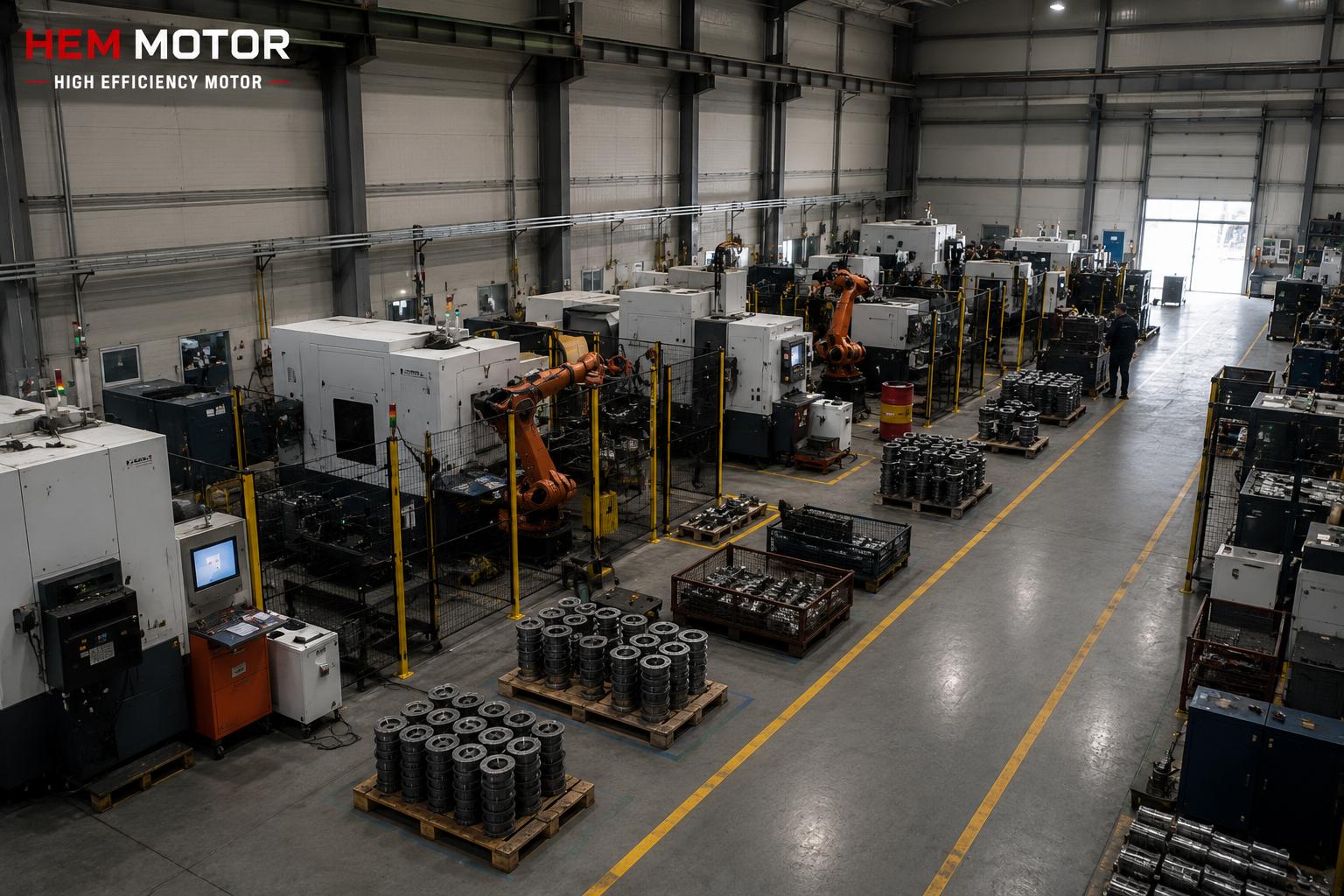
What the Motor Does on a Fiberglass and Composite Line
In a GRP/composite factory, production is usually split into three core technologies: pultrusion (continuous profile pulling), filament winding, and moulding methods such as hand lay-up or RTM. Each technology creates its own drive requirement, but the common denominator is preparing resin at the right consistency and feeding fibre under controlled tension. Selecting the motor according to the product family you will run is far more economical than later swaps and line stoppages.
Pultrusion Puller: Constant Speed and Continuity
On a pultrusion line, fibre rovings pass through a resin bath, cure inside a heated die, and are pulled at constant speed by a caterpillar or reciprocating puller. The most critical requirement here is speed stability: if the pulling speed varies, the degree of cure and the mechanical strength of the profile change. For this reason the puller motor typically runs with a worm gear reducer or helical reducer, combined with an asynchronous motor on a frequency drive (VFD), providing constant torque and high speed stability even at low rpm. Because the line is continuous, the duty type is S1; the motor must be sized for hours of uninterrupted full-load running, with generous cooling and an adequate service factor.
Filament Winding Spindles and Mandrel Drive
On a filament winding line, resin-impregnated fibre is wound onto a rotating mandrel at a defined winding angle. There are two drives: the main motor turning the mandrel and the motor moving the fibre delivery carriage back and forth. The synchronisation of these two axes defines the winding angle, so both motors are managed by drives for speed control. On large-diameter pipes and tanks the mandrel motor needs enough starting torque to overcome high inertia; an IE3 or IE4 efficient electric motor combined with a reducer is the common choice. Applying the logic of monoblock geared motor selection makes it easier to set output speed and torque correctly.
Resin Mixer: High Viscosity and Homogeneous Blend
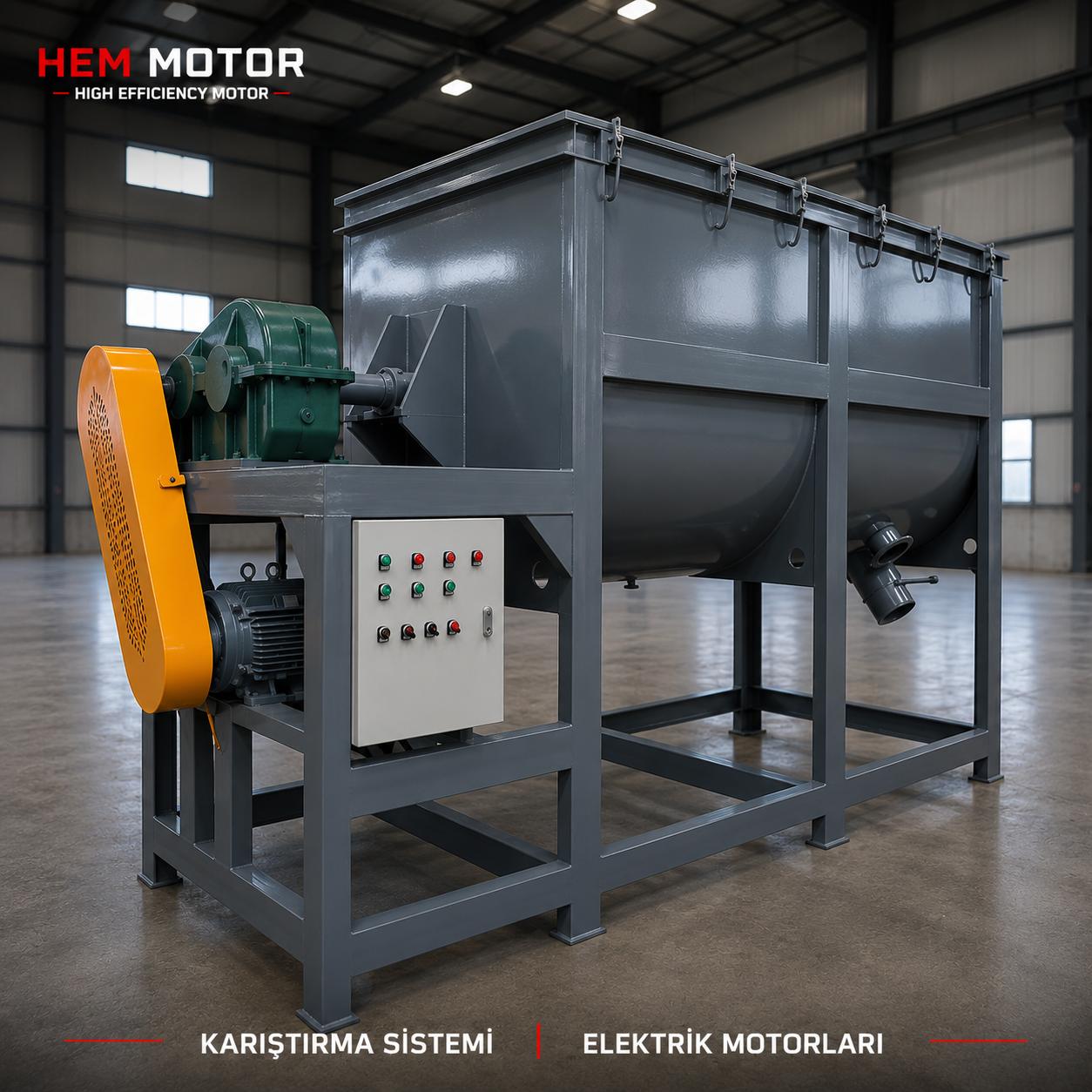
Polyester, vinylester or epoxy resins are mixed at high viscosity with fillers and catalysts. The mixer motor is one of the most heavily loaded motors here: the viscous fluid loads the blades with high resistance, and torque demand rises further at start-up if the mixture has rested. The mixer motor therefore runs at a low output speed obtained by stepping down a 1500 rpm motor through a reducer, with high starting torque. Because styrene vapour can rise from the mixing vessel, motor selection is directly linked to environmental classification, covered below. You can find the same high-viscosity mixing logic in our chemical, pharma and detergent factory motor selection guide.
Dust, Styrene Vapour and Explosive Atmosphere: Choosing the Right Protection
Fiberglass processing brings two main health and safety risks: fine glass dust generated during cutting and grinding, and styrene-type volatile organic compounds released from the resin. Both directly affect motor selection.
IP Protection Against Dust
Motors near cutting, sanding and grinding stations are exposed to dense conductive and abrasive glass dust. These motors should be at least IP55, and IP65 where dust is heavy. To choose the correct class, use the thresholds in our IP protection class selection (IP55, IP65, IP66) article. For dust-collection (extraction) fans, you need a continuously running, balanced aspirator and dust-collection fan motor.
Styrene Vapour and the Exproof Decision
Where ventilation is insufficient, styrene concentration near open resin baths, mixing vessels and lay-up areas can trigger an explosive-atmosphere classification. If the area has been ATEX-zoned, motors inside that zone must be exproof (Ex d / Ex e) certified. This decision must be made together with ventilation and measurement; our when an exproof (ATEX) motor is required and exproof vs standard asynchronous motor articles clarify the distinction. In well-ventilated areas outside the explosive zone, standard IP55/IP65 motors are sufficient.
Cutting, Grinding and Profile Finishing Stations
After leaving the line, pultruded profiles and wound products are cut to length, ground at the ends and drilled where required. The saw, grinding and drill motors at these stations run at high speed (usually 2-pole, 3000 rpm) and in an intermittent duty regime. Because glass dust is both abrasive and conductive, bearing and terminal-box protection on these motors deserves attention; dust mixing into the bearing grease causes premature failure. Good sealing and an appropriate IP class are the key to long life on cutting-line motors. The central extraction fan that collects the dust from these stations runs continuously and is one of the most critical auxiliary motors on the line.
Line Feed and Roving Let-off Drives
Controlled let-off of the fibre bobbins (roving) is important to keep tension constant in winding and pultrusion. These let-off and feed drives use low-power, precisely speed-controlled motors; at small powers, aluminium-body geared solutions are often preferred. As the bobbin weight drops, the drive dynamically adjusts motor torque to maintain tension.
Motors Near Hot Dies and the Cure Zone
Pultrusion dies and curing ovens generate high temperatures, and pulling and feeding motors working close to this zone are affected by ambient heat. High ambient temperature reduces a motor's ability to dissipate heat and shortens winding life. A standard motor is rated at 40 °C ambient; if the ambient rises above this, you may need to derate the motor's rated power or step up to a larger frame. For this reason, motors near the cure zone are specified with class F (or H where needed) insulation and a cast-iron body. For the right body and insulation decision in hot, dusty conditions, our hot and dusty environment motor: insulation class (F/H) and cast-iron body selection guide goes into detail.
Pole Count and Output Speed
The basic rule is to combine 4- or 6-pole motors with a reducer on low-speed drives such as mixers, let-off units and conveyors, and to use 2-pole motors where high speed is needed, such as cutting and fans. You can find the effect of pole count on efficiency and torque compared in our asynchronous motor efficiency and pole count (2, 4, 6, 8 poles) article. The right pole-reducer combination affects both energy efficiency and mechanical life.
Efficiency, Continuous Running and Operating Cost
Fiberglass lines mostly run two or three shifts, which means the motors draw energy for most of the year. In continuously running plants the efficiency class feeds straight into the electricity bill. For continuous loads such as pulling, winding and mixing, it therefore makes sense to choose IE3 or IE4 from the efficient electric motors family. At certain power and pole thresholds the efficiency class is also legally mandatory; you can see which power requires which class from which date in our IE3 and IE4 efficiency mandate article. To improve total efficiency on reducer-driven drives, apply the gain calculation in our using an IE4 motor with a gearbox guide.
Motor Purchasing Checklist for a Fiberglass and Composite Factory
To speed up procurement and avoid receiving the wrong motor, clarify these items before ordering:
- Duty type: Specify continuous duty (S1) for pultrusion and winding lines.
- Power and speed: State kW, rated speed and required output speed (and ratio if geared) for each drive.
- Mounting type: For motors coupled to a reducer specify B5/B14 flange, and B3 for foot-mounted drives, as the mounting type.
- Protection class: Request IP55/IP65 in dusty areas and higher protection where wet cleaning occurs.
- Area classification: Clarify ATEX requirements in zones with styrene exposure.
- Insulation and body: Class F/H insulation and cast-iron body near the cure zone.
- Drive compatibility: VFD-compatible motors for variable-speed drives, with forced cooling where needed.
Whether you are building a new line or replacing a failed motor, this distinction matters too; our rewind vs buy new article clarifies the replacement decision. You can review our main product range from our home page and our other sector guides from the glass and ceramics factory electric motors and plastic injection and crushing machinery motor selection articles.
Frequently Asked Questions
Why is constant speed so important on a pultrusion puller motor?
Because the pulling speed determines how long the profile stays inside the heated die, and therefore its degree of cure. If the speed fluctuates, curing is under- or over-done, directly affecting mechanical strength, surface quality and scrap rate. For this reason the puller drive is managed by a frequency drive, with a motor-reducer combination that delivers constant torque even at low speed.
What power and speed suit a resin mixer motor?
Power and speed are set by vessel volume, resin viscosity, filler ratio and blade geometry. High-viscosity blends require high starting torque and low output speed, usually achieved by stepping down a 1500 rpm motor through a worm gear reducer. To make the right choice, simply share your vessel dimensions and blend properties and we will define a suitable combination together.
Do I have to buy exproof motors for the whole plant?
No. The exproof requirement applies only to ATEX-zoned areas where volatiles such as styrene can reach an explosive concentration. In well-ventilated areas outside the zone, standard IE3/IP55 motors are sufficient. Defining the zone classification together with ventilation and measurement avoids unnecessary cost; see our when an exproof motor is required article for details.
Get a Quote
If you want to supply the pultrusion puller, filament winding, resin mixer, cutting and dust-collection motors for your fiberglass or composite line with the right power, speed, protection class and mounting type, our team is here to help. Share your line type, drive list and environmental conditions and we will prepare a fast, accurate quote. Call us on +90 (532) 345 49 86 or reach us through our contact page.