English
 Türkçe

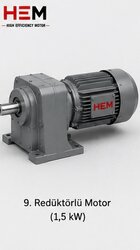
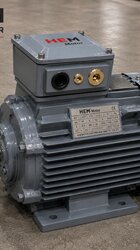
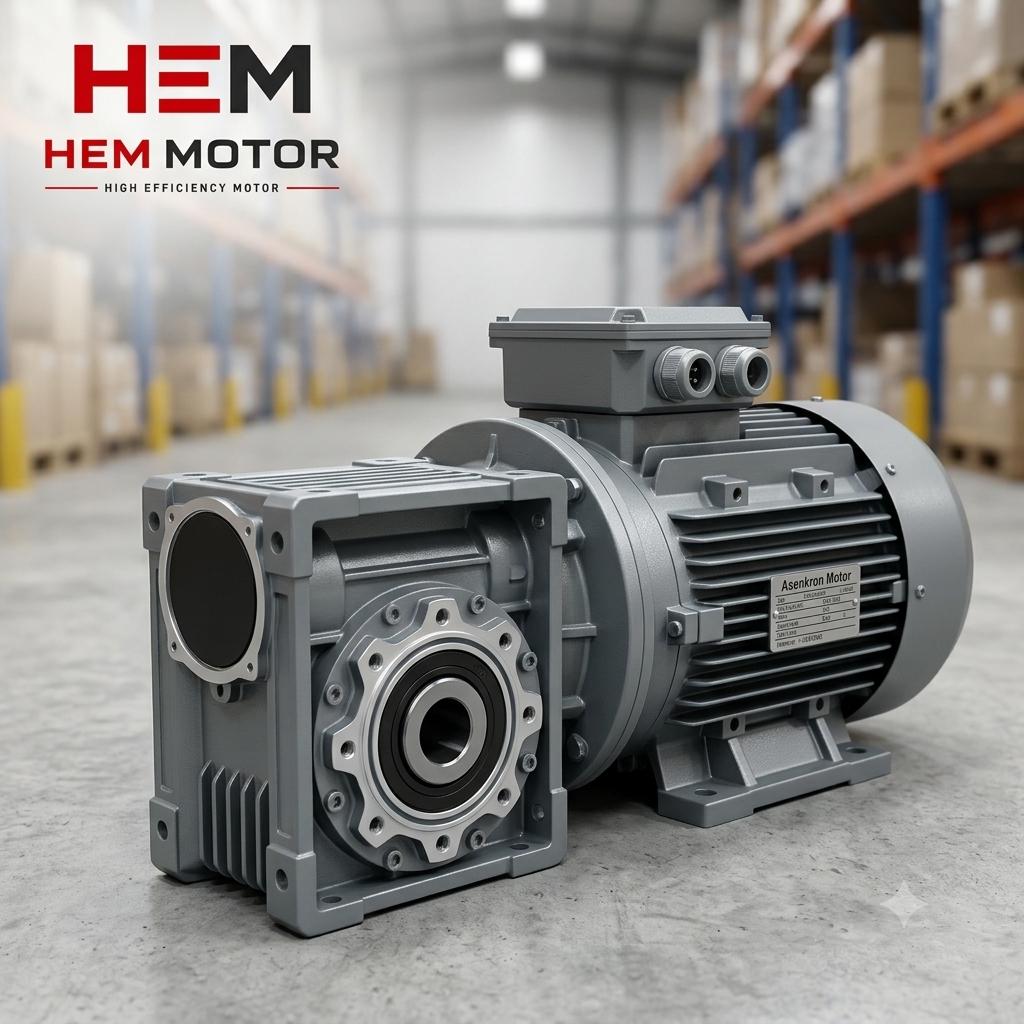

Building a geared drive with an IE5 synchronous reluctance (SynRM) motor is the most effective way to benefit from both ultra-premium efficiency and the high torque that low output speed provides. However, unlike conventional asynchronous motors, a SynRM motor cannot run directly off the mains; it always requires a suitable variable frequency drive (VFD). For this reason the motor, gearbox and drive should be treated as a single package; output speed, torque, drive compatibility and flange matching must all be calculated together before ordering. In this guide we explain step by step how output speed is calculated when matching an IE5 SynRM motor with a gearbox, which gearbox type suits which application, and what to watch for when sourcing the correct package.
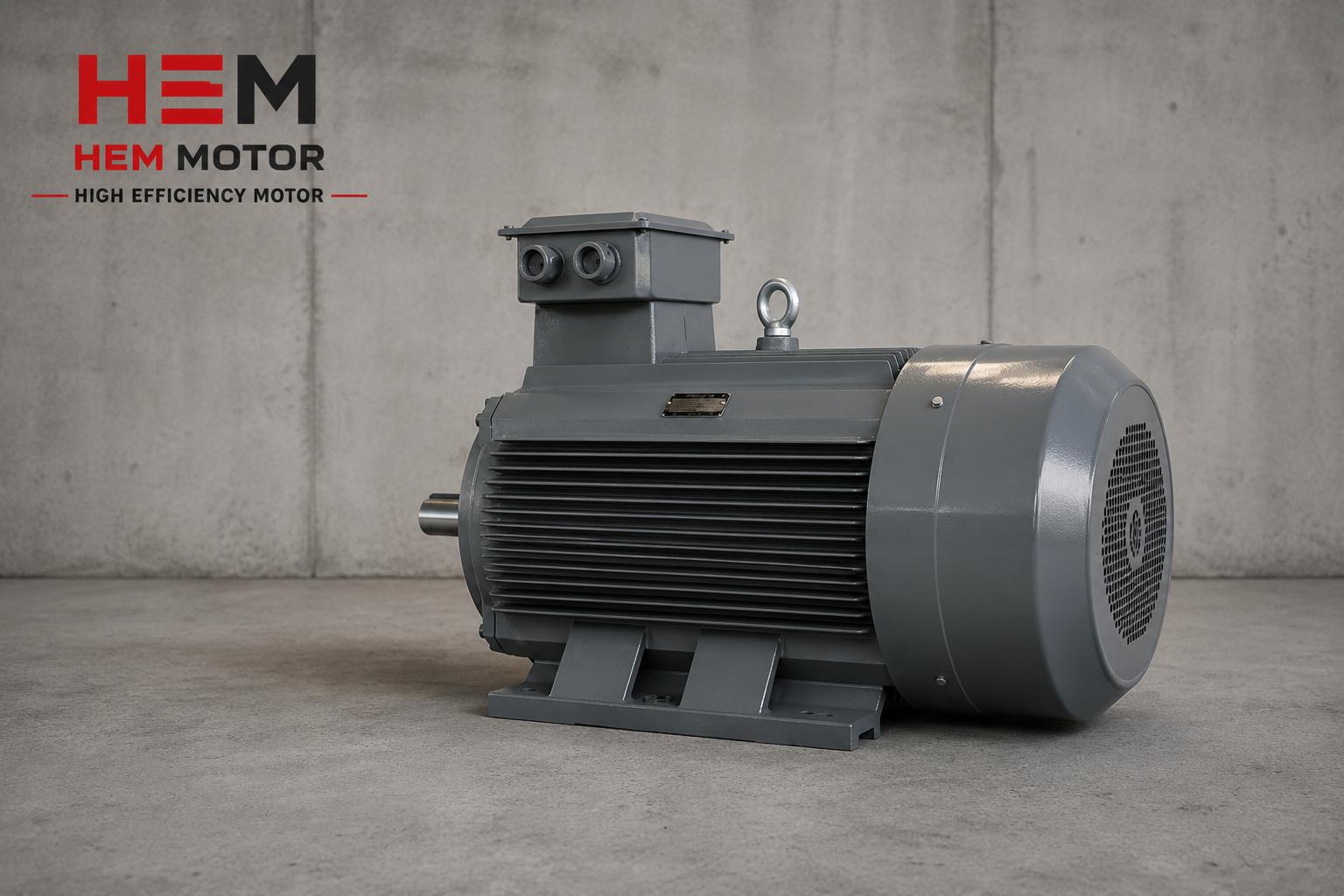
Why Should an IE5 SynRM Motor Be Considered Together With a Gearbox?
In the vast majority of industrial applications the output speed a machine needs is far below the rated speed of the motor. A conveyor drive may run at 50–90 rpm, a mixer at 30–60 rpm and a packaging drum at 10–40 rpm, while the motor's rated speed is usually 1500 or 3000 rpm. The way to close this gap is to use a gearbox. A gearbox converts high-speed, low-torque motion into low-speed, high-torque motion; as speed drops, output torque rises in proportion to the reduction ratio.
This combination is extra valuable with an IE5 SynRM motor, because the SynRM motor works together with the drive and maintains high efficiency even at partial load; thanks to its magnet-free rotor there are no rotor copper losses. For a line that runs at a constant low speed through a geared drive, this means a tangible difference in the annual energy bill. To see the core differences between SynRM and asynchronous technology in more detail, read our article on IE4 asynchronous vs synchronous reluctance.
Output Speed Calculation: Motor Speed ÷ Reduction Ratio
Finding the output speed of a geared drive is a simple proportion:
Output speed = Motor speed ÷ Reduction ratio
For example, if you connect a motor with a rated speed of 1500 rpm to a worm gearbox with a 1/30 reduction ratio, the output speed is roughly 1500 ÷ 30 = 50 rpm. Connect the same motor with a 1/50 ratio and the output speed drops to 30 rpm, while output torque rises by about 1.67 times. Our catalogue offers standard ratios for worm gearboxes such as 1/7.5, 1/10, 1/15, 1/20, 1/25, 1/30, 1/40, 1/50, 1/60, 1/80 and 1/100, which gives a wide range of output speeds.
One advantage of the SynRM motor is that, thanks to the drive, the rated speed can also be varied. So even with a fixed gearbox ratio you can fine-tune the output speed by lowering the drive frequency. This is a great convenience, especially in mixing and dosing applications where the process speed must be exactly right. To see the output speed and reduction ratio logic in monoblock products, our monoblock geared motor selection and output speed and reduction ratio articles are useful.
How Does Output Torque Change?
Output torque is roughly calculated as motor torque × reduction ratio × gearbox efficiency. In worm gearboxes efficiency drops as the ratio rises (especially above 1/50); in bevel-helical gearboxes efficiency is generally higher. At a high reduction ratio you obtain very high torque, but the efficiency loss also increases. For this reason, if the application is continuous and efficiency-priority, bevel-helical is preferred; if a compact, right-angle output is needed, worm gear is chosen. You can find the total gain of an efficient motor and gearbox combination in detail in our using an IE4 motor with a gearbox article.
The SynRM Mandatory Drive: Why Won't It Run Without a VFD?
A synchronous reluctance motor produces torque from the magnetic reluctance difference in its rotor and runs at synchronous speed. Unlike an asynchronous motor it cannot start on its own and cannot lock onto the mains frequency; it therefore always needs a frequency drive to start the motion and provide synchronous speed. The drive must run a dedicated SynRM control algorithm (usually sensorless vector control). A standard V/f drive cannot rotate a SynRM motor efficiently and stably. Our why a SynRM motor won't run without a drive article, which covers this topic in depth, also explains the package cost.
Drive parameterisation and commissioning are critical for SynRM. With an autotune procedure the drive learns the motor's electrical parameters and ensures correct control. For the details of this process, see our drive parameterisation and commissioning article. The motor's thermal behaviour also differs when run on a drive; we addressed this in our thermal behaviour and cooling article.
Gearbox Type Selection: Helical/Bevel or Worm Gear?
The gearbox type to be matched with the IE5 SynRM motor is mostly determined by the application geometry and efficiency priority.
Worm Gearbox
In worm gearboxes a worm screw drives a bronze gear; the output shaft is at 90 degrees to the input shaft. Thanks to its compact structure, quiet operation and self-locking feature at high ratios, it is common in conveyor, mixer, dosing and simple drive applications. The frame sizes from HEM30 to HEM130 in our catalogue cover a wide power range from 0.06 kW to 11 kW and offer B5/B14 flanged connection with IEC 56–160 motor frames. You can read about self-locking in our self-locking in worm gearboxes article.
Bevel-Helical (K Series) Gearbox
Bevel-helical gearboxes work with a combination of helical and bevel gears, the output shaft is at 90 degrees to the motor axis and they generally offer higher efficiency. They are preferred in heavy-duty conveyor, mixer and continuous line drives. K series gearboxes are matched with common motor powers from 0.75 kW up to 15 kW and above. To compare the two gearbox types, our K series bevel-helical vs worm gear article offers a clear decision map.
Flange and IEC Frame Matching
The basis of connecting a motor to a gearbox is the compatibility of the IEC frame size and flange type (B5/B14). The gearbox motor mounting seat must exactly match the motor flange. For example, the HEM63 worm gearbox accepts IEC 71/80/90 B5-B14 motors, while the HEM110 frame works with IEC 100/112/132 motors. The wrong flange choice delays the order and creates a mismatch during assembly. For the details of this matching, check our which motor fits a worm and NMRV gearbox and B5 vs B14 articles. For shaft diameter and key compatibility, our motor shaft diameter and key dimensions article is useful.
Typical Applications: Conveyor and Mixer
The applications where the IE5 SynRM + gearbox package pays off most are drives running at constant, low speed all day long. In a conveyor belt drive the motor runs continuously in S1 duty; here IE5 efficiency provides significant savings over the years. We covered conveyor drive selection in our conveyor belt motor replacement and heavy-duty conveyor drive motor articles. In mixer applications low speed and high torque are essential; in these applications the gearbox ratio and output torque directly affect product quality.
Duty type selection also determines package performance. To examine S1 for continuously running lines and S6 for intermittent ones, see our duty type (S1-S6) selection article. To see why the efficiency curve is superior at partial load, our IE5 efficiency curve article is enlightening.
Gearbox Frame Size and Power Matching
The gearbox frame size is selected so that it can carry both the torque to be transmitted and the power of the motor to be connected. In our catalogue worm gearboxes are sized according to graded power ranges: the HEM30 frame covers 0.06–0.18 kW, HEM40 covers 0.12–0.37 kW, HEM50 covers 0.18–0.75 kW, HEM63 covers 0.37–1.5 kW, HEM75 covers 0.75–3 kW, HEM110 covers 2.2–7.5 kW and HEM130 covers 4–11 kW. When matching the IE5 SynRM motor with the appropriate one of these frames, both the power and the output torque limit must be checked; because at low-speed output the torque rises greatly and the gearbox frame must carry this torque safely.
The output torque must not exceed the maximum allowed output torque of the gearbox frame. Otherwise the gearbox gears are stressed and their life is shortened. For this reason, after the output speed and ratio are selected, the resulting output torque must be compared with the catalogue values of the selected frame. The correct match of motor shaft diameter and key is also critical in transmitting power to the gearbox; for the right mechanical matching you can look at our shaft diameter, key and coupling article.
Mounting Position and Lubrication
The gearbox mounting position (M1–M6) directly affects the oil level and which gears the lubrication reaches. The oil level differs between horizontal and vertical mounting; therefore the position in which the gearbox will run must be stated when ordering. The wrong position leads to insufficient lubrication of the gears and wear. We addressed the relationship between mounting positions and lubrication in detail in our gearbox mounting positions article.
In an IE5 SynRM geared drive, the motor's mounting position (horizontal B3/B5 or vertical V1/V5) also affects the oil seal and sealing selection. In vertical mounting it is essential to select the oil seal correctly in the shaft-down or shaft-up position; we examined this in our vertical mounting motor selection article. We compared the purchasing and maintenance difference between a geared motor and a separate motor+gearbox in our geared motor vs separate motor + gearbox article.
Efficiency and Payback
IE5 is the highest efficiency class currently available and reduces losses by about 20% compared to IE4. In a geared drive the total efficiency is the product of motor efficiency and gearbox efficiency; therefore the gearbox type efficiency must also be taken into account. In applications with high running hours and constant load, the payback period of the IE5 package drops to reasonable levels. The SynRM motor's retention of high efficiency even at partial load provides an extra advantage in lines running at constant low speed through a geared drive; because these lines usually run below full load, and while efficiency drops in this region in standard asynchronous motors, it is preserved in SynRM.
To see the total cost of ownership between efficiency classes, you can read our IE5, IE4 and IE3 TCO comparison and IE5 vs IE4 articles. We addressed the supply and cost advantage of the SynRM motor's magnet-free rotor in our magnet-free rotor article, and whether IE5 makes sense at low power in our IE5 below 7.5 kW article. You can find our other efficient motor options in our high-efficiency motors category.
Frequently Asked Questions
Can an IE5 SynRM motor be connected directly to a gearbox with a flange?
Yes. SynRM motors are manufactured in standard IEC frame sizes and with B5/B14 flanges; this allows direct coupling to worm or bevel-helical gearboxes. What matters is the compatibility of the motor IEC frame size with the gearbox input flange. Always verify the flange type and frame size before ordering.
How do I calculate the output speed?
Output speed = motor rated speed ÷ reduction ratio. For example, with a 1500 rpm motor and a 1/50 ratio gearbox the output is roughly 30 rpm. With a SynRM motor you can additionally fine-tune this speed by changing the drive frequency, so you can set the speed to the process need even with a fixed gearbox ratio.
Can I run a SynRM motor without a drive?
No. A synchronous reluctance motor cannot start on its own and cannot lock onto the mains frequency; it always requires a frequency drive with a SynRM control algorithm. For this reason the motor, gearbox and drive must be supplied as a single package.
Get a Quote
Contact us to plan together the correct package consisting of the IE5 synchronous reluctance motor, gearbox and drive trio. We calculate output speed, torque, reduction ratio and flange compatibility together and recommend the package best suited to your application. For a fast quote call our line at +90 (532) 345 49 86 or reach us through our contact page. You can review our full product range from our home page and all our SynRM content from our IE5 ultra premium motors category.
Purchasing and Selection Checklist
- Clarify the output speed (rpm) and output torque the machine needs.
- Determine the motor rated speed (usually 1500 or 3000 rpm).
- Select the suitable ratio using output speed = motor speed ÷ reduction ratio.
- Choose bevel-helical if efficiency is a priority, worm gear for compact/right-angle output.
- Include a frequency drive with a SynRM control algorithm compatible with the motor in the package.
- Match the IEC frame size and flange type (B5/B14) to the gearbox input.
- State the duty type (S1 continuous, S6 intermittent) and ambient temperature.
- Verify shaft diameter, key and mounting position before ordering.
- Evaluate the payback period according to running hours and load profile.
- Request a quote for the motor, gearbox and drive as a single package.