English
 Türkçe


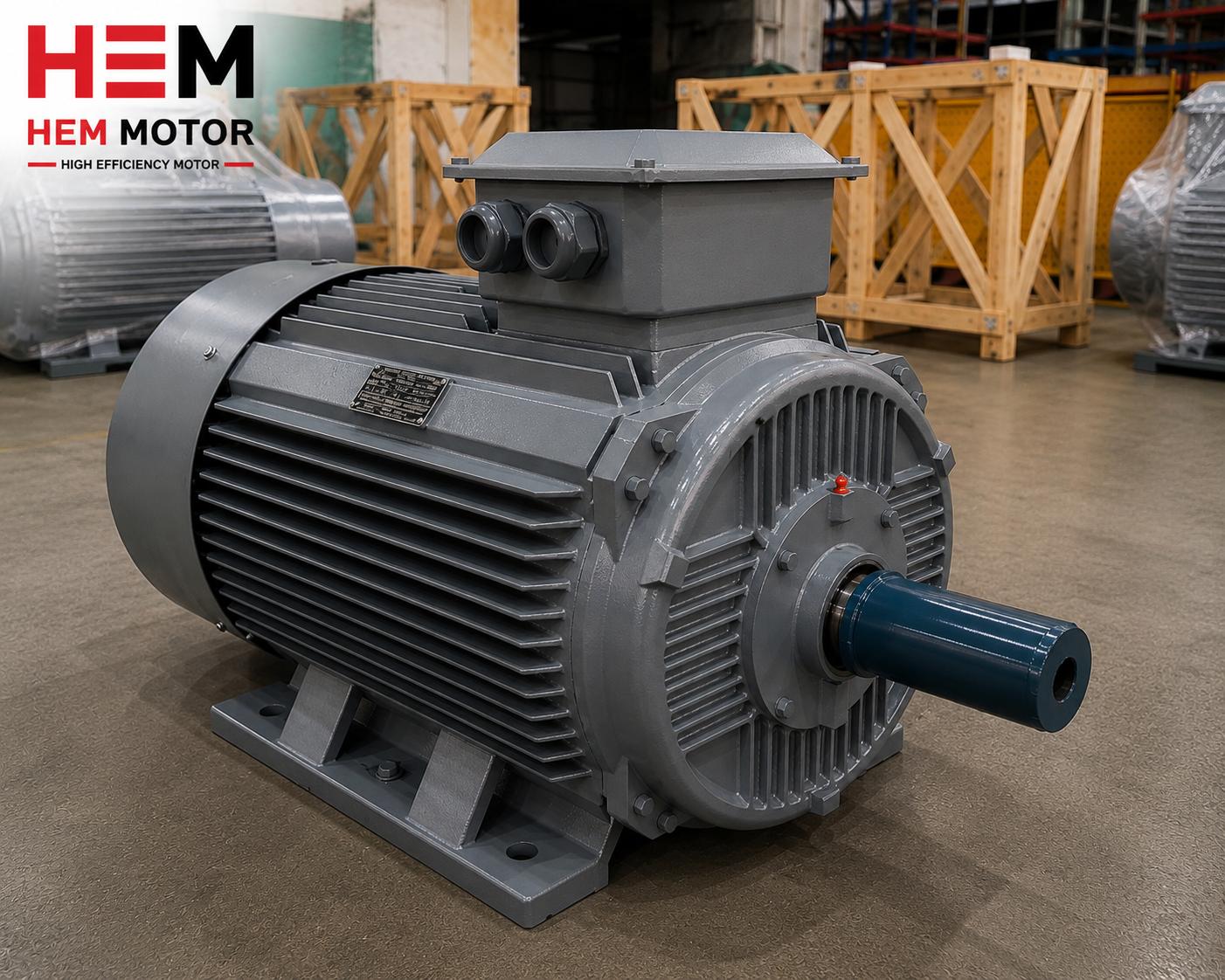

When you run an IE5 synchronous reluctance motor at very high speed continuously, for example on a turbo blower, a high-speed compressor or a test bench, the most stressed part is often not the winding or the rotor, but the bearing. As speed rises, the grease inside the bearing is flung out of the contact zone by centrifugal force, thins under temperature and becomes unable to maintain the lubricant film. Above a certain speed-diameter factor (the ndm value), grease lubrication is no longer sufficient; the bearing enters the risk of starvation, overheating and premature failure. This is where oil-mist lubrication or oil-air lubrication comes in: a system that carries a continuous, controlled and very small amount of fresh oil to the bearing. This article explains why grease falls short in IE5 high-speed applications, how oil-mist lubrication works, the bearing life and temperature effect, the central oil-mist system, and which lubrication is right for which speed/application.
Synchronous reluctance technology offers high efficiency and low rotor loss with its magnet-free rotor; but in high-speed applications, the permanence of that efficiency depends on the bearing running for a long life at that speed. Lubrication choice is therefore not a detail but a main decision that determines motor life.
Why Does Grease Fall Short at High Speed?
Grease is a mixture of a base oil and a thickener (soap); it holds the oil in the bearing contact zone and releases it slowly. At low and medium speeds this works perfectly. But as speed rises, two things happen. First, centrifugal force flings the grease out of the rolling path toward the bearing edges; the contact zone starts to run dry. Second, friction and shear heat increase at high speed; under temperature the base oil thins, oxidizes and the grease life shortens. As a result the lubricant film breaks, metal-to-metal contact begins and the bearing fatigues rapidly.
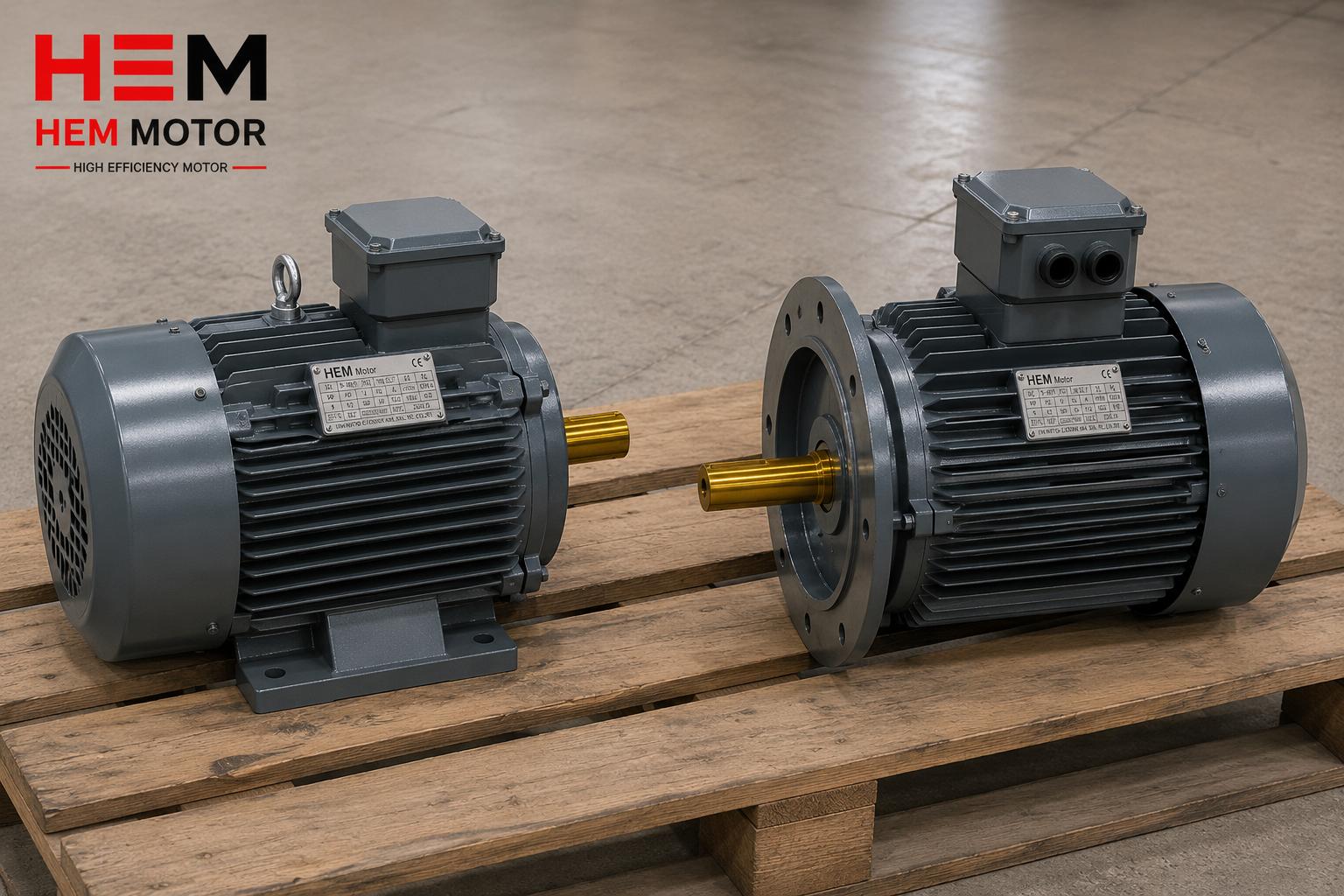
The speed limit of a bearing is usually expressed by the ndm value: bearing mean diameter (mm) times speed (rpm). Each lubrication method has an ndm ceiling. Grease lubrication reaches its limit at roughly 300,000–500,000 ndm depending on bearing type. In a high-speed IE5 application this limit can easily be exceeded; at that point an oil bath, oil-mist or oil-air lubrication is needed. Because oil-mist can operate up to very high ndm values (about 1,000,000 and above), it is the preferred solution for super high-speed applications.
Lubrication Method - Speed Limit Table
| Lubrication method | Approx. ndm ceiling | Typical use |
|---|---|---|
| Lifetime grease (sealed bearing) | ~300,000 | Standard speed, maintenance-free |
| Re-greasable bearing | ~500,000 | Medium-high speed, periodic grease |
| Oil bath | ~500,000 | High speed, gearbox/blower |
| Oil-mist | ~1,000,000+ | Very high speed, continuous run |
| Oil-air | > 1,000,000 | Extremely high speed, precise dosing |
These values vary with bearing type, preload, oil viscosity and cooling; for the exact limit, the bearing and motor manufacturer's data is always essential. But the trend is clear: as speed rises, you move from grease to oil, and from there to oil-mist.
How Does Oil-Mist Lubrication Work?
In oil-mist lubrication, compressed air breaks the oil into very fine droplets in a generator and forms an aerosol (mist). This oil-mist is carried via thin pipes to the bearing and, at a "reclassifier" nozzle at the bearing inlet, recondenses to leave a continuous, very small amount of fresh oil on the rolling surface. The system also provides a slight positive pressure to the bearing; this prevents dust and moisture from entering the bearing from outside. Because the oil is constantly renewed, accumulation, oxidation and overheating in the bearing are reduced.
- Continuous fresh oil: The bearing is never starved; the film is maintained at every revolution.
- Low oil flow: Very little oil is used, and the friction heat caused by excess oil does not occur.
- Cooling effect: The air flow and fresh oil noticeably lower the bearing temperature compared with grease lubrication.
- Sealing: Positive pressure keeps dust and moisture out; an advantage in dirty environments.
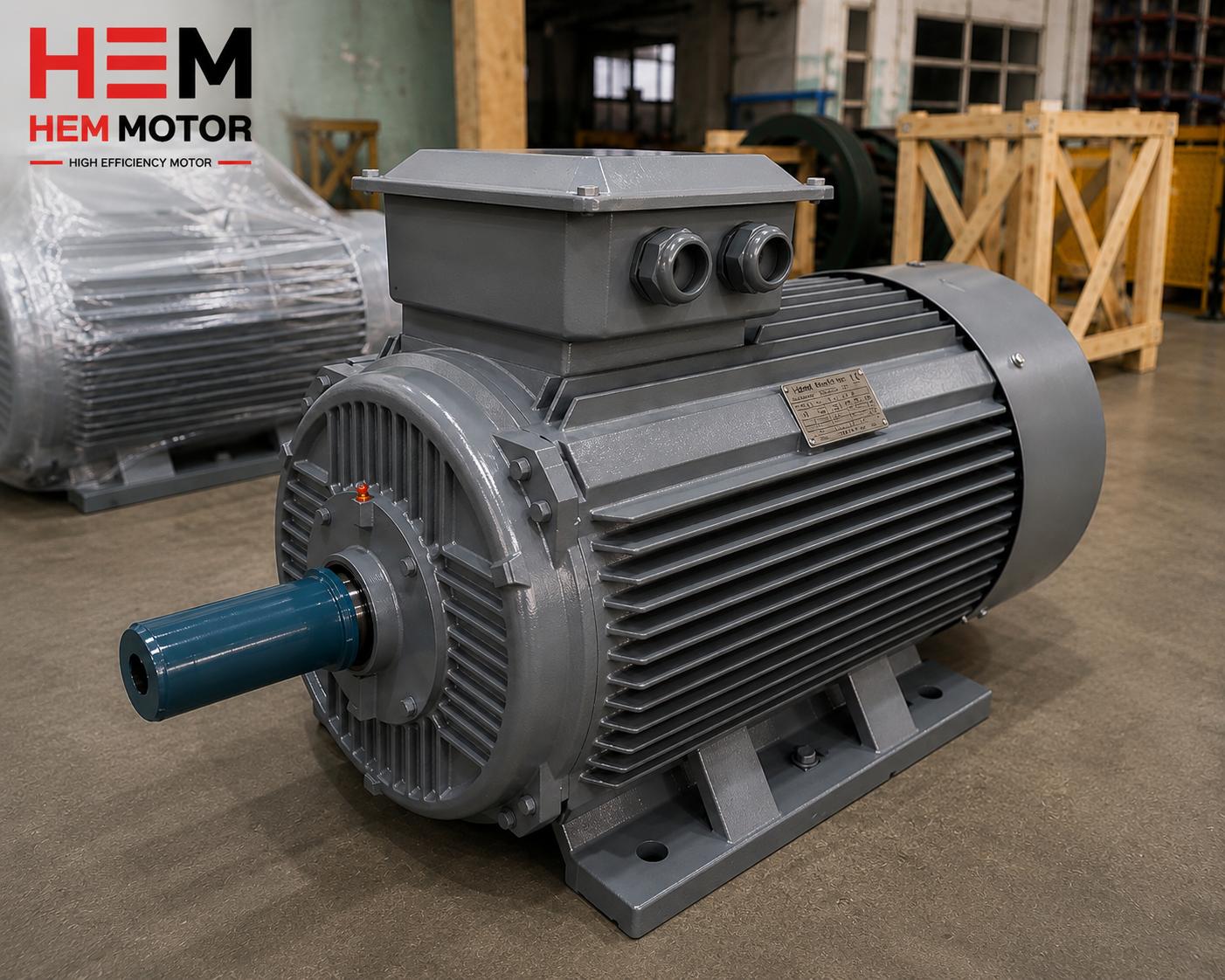
Oil-air lubrication is a more precise relative of oil-mist: the oil is not turned into an aerosol but carried to the bearing in measured droplets by an air flow. Because dosing is much more precise, it is preferred in extremely high-speed and sensitive applications. The risk of spreading oil vapor into the environment is lower than with oil-mist.
Bearing Life and Temperature Effect
Bearing life depends largely on operating temperature and the continuity of the lubricant film. As a general rule, every ~15 °C rise in operating temperature roughly halves the oil life. A bearing running with grease at high speed is under double pressure from both film loss and high temperature. Oil-mist lubrication, thanks to continuous fresh oil and cooling, lowers the temperature and extends both bearing and oil life. The high efficiency the IE5 motor offers only becomes meaningful when the bearing runs reliably at that speed.
Which Lubrication for Which Speed/Application? The Right Choice
- Standard-medium speed: Lifetime grease or a re-greasable bearing is sufficient; the simplest, maintenance-free solution.
- High speed, single machine: An oil bath or single-point oil-mist should be considered.
- Very high speed, continuous run: Oil-mist lubrication; turbo blower, high-speed compressor, test bench.
- Extremely high speed, precise dosing: An oil-air system with central distribution.
- Multi-motor plant: A central oil-mist system feeding all bearings from a single generator simplifies maintenance.
The choice is determined jointly by speed (ndm), continuous/intermittent operation, ambient dust/moisture and maintenance possibility. The wrong lubrication can wipe out the IE5's efficiency advantage with a premature bearing failure.
To go deeper into the bearing and drive side of IE5 synchronous reluctance technology, see our articles on IE5 shaft grounding and bearing current and IE5 motor life and MTBF. For grease selection and general lubrication, the guides on bearing greasing, grease type and NLGI and IE3 motor bearing greasing and maintenance form the basis. For the supply advantage of the magnet-free rotor, see our article on the IE5 magnet-free rotor supply advantage.
Frequently Asked Questions
Does every IE5 motor need oil-mist lubrication?
No. In standard and medium speed IE5 applications, lifetime grease or a re-greasable bearing is sufficient. Oil-mist lubrication is needed in very high-speed and continuous-run applications where grease exceeds its ndm limit. The decision is made according to the bearing speed factor (ndm), operating regime and temperature expectation.
What is the difference between oil-mist and oil-air lubrication?
In oil-mist, the oil is turned into an aerosol (mist) with compressed air and carried to the bearing. In oil-air, the oil is not made into an aerosol; it is carried in measured droplets by an air flow, and dosing is much more precise. Oil-air is preferred for extremely high speed and sensitive applications where spreading oil vapor into the environment is undesirable.
How much does oil-mist lubrication extend bearing life?
Giving an exact ratio depends on the application, but the mechanism is clear: continuous fresh oil and the cooling effect lower the bearing temperature, and the drop in operating temperature noticeably extends oil and bearing life. On a bearing experiencing film loss with grease at high speed, switching to oil-mist is the most effective way to prevent premature failure.
Components of the Oil-Mist System and Its Working Logic
An oil-mist lubrication system, though it looks complex at first, has clear logic and consists of a few basic components. The heart of the system is the oil-mist generator, which brings compressed air and oil together and breaks them into fine droplets. The generator works on the venturi principle: as compressed air passes through a narrowing section it accelerates, the resulting low pressure draws oil from the oil reservoir, and the air flow breaks the oil into very small droplets. This aerosol is carried to the bearings by the main distribution line. At the bearing inlet there is a reclassifier nozzle; this nozzle converts the fine mist back into larger droplets so it adheres to the rolling surface. The system also has sensors monitoring oil level, air pressure and mist density, and a control unit that alarms in case of low oil or low pressure.
This monitoring layer is the key to the reliability of the oil-mist system. Because a bearing running at very high speed can heat up and be damaged within seconds when starved of oil. The system can produce an interlock signal to stop the motor if the mist flow is cut; so a lubrication fault intervenes before it turns into a bearing fault. In a well-designed central system, one generator can feed dozens of bearings, and the line to each bearing can be adjusted individually. Oil consumption is extremely low; although the system lubricates the bearing continuously, the actual oil flow is on the order of a few drops per hour.
Oil-Mist vs Grease: Decision Factors
| Factor | Grease lubrication | Oil-mist lubrication |
|---|---|---|
| Speed range | Low-medium | Very high |
| Initial investment | Low | High (generator + line) |
| Maintenance frequency | Periodic greasing | Low, monitoring based |
| Bearing temperature | Rises at high speed | Low with cooling effect |
| Dust/moisture protection | Limited | High with positive pressure |
Which Oil and Viscosity Should Be Chosen?
Success in oil-mist lubrication also depends on the right oil choice. The oil viscosity is determined by speed and bearing size: at very high speed a lower-viscosity oil is generally preferred, because high-viscosity oil produces excessive friction heat at high speed. But if the oil is too thin the film is not thick enough and metal contact begins. The correct viscosity is chosen between these two extremes, in the range specified by the bearing manufacturer. The oil's misting (atomization) property is also important; not every industrial oil mists well. So oils specially formulated for oil-mist systems, which atomize well and emit little oil vapor, are used.
Temperature also affects the choice. At high ambient temperature or high bearing load, oxidation-resistant oils with a high viscosity index are preferred. The continuous fresh oil the oil-mist system provides extends the life of these oils because the oil is constantly renewed before accumulating and aging in the bearing.
Practical Checks in Oil Selection
- Determine viscosity according to the bearing manufacturer's speed-size table.
- Verify the oil atomizes well (misting property).
- Look for oxidation resistance and a high viscosity index at high temperature.
- Prefer an oil formulation that limits oil vapor emission to the environment.
- Set the system alarm and monitoring parameters according to the oil.
Typical Scenarios in High-Speed Applications
The applications where the IE5 synchronous reluctance motor is used at very high speed make concrete why lubrication choice is so critical. In a turbo blower application, the motor runs continuously at tens of thousands of rpm for aeration in a wastewater treatment plant; here the bearing cannot be starved for even a moment, because a stop affects the whole process. In a high-speed compressor, both the speed is high and the bearing load is variable; continuous oil-mist guarantees both cooling and film continuity. On a test bench, the motor is run for long periods at different speeds; here the precise dosing of oil-mist ensures correct lubrication in every speed band. The common point of these scenarios is that grease both exceeds the ndm limit and the cost of a stop is very high.
In these applications the bearing needs not only lubrication but also cooling. At very high speed the bearing produces heat due to mechanical friction and oil shear forces; grease cannot carry away this heat because it is stationary and not renewed. The continuous air and fresh oil flow of oil-mist constantly removes the heat, keeping the bearing at a lower and more stable temperature. This is important both for the bearing steel keeping its hardness and for the oil film viscosity staying stable.
Lubrication Method Transition Thresholds
- If speed is below the grease bearing's ndm limit and operation is not continuous: lifetime grease is sufficient.
- If speed approaches the grease limit but the bearing can be re-greased: periodic greasing can continue.
- If speed exceeds the grease limit, operation is continuous and stop cost is high: switch to oil-mist.
- If speed is extremely high and dosing precision is critical: an oil-air system is evaluated.
- If the plant has many high-speed motors: a central oil-mist system is the most efficient solution.
Maintenance and Monitoring of the Oil-Mist System
Although the advantage of the oil-mist system is continuous lubrication, this system also requires its own maintenance. The air supply being dry and clean is essential; humid or dirty air both disrupts the atomization of the oil and causes damage by carrying moisture to the bearing. So there is an air dryer and filter at the system inlet, and these are checked periodically. The oil reservoir level is monitored; the reclassifier nozzles are cleaned since they can clog over time. The mist density sensor confirms that lubrication actually reaches the bearing.
If you want to supply motors with the right bearing and lubrication solution for your high-speed IE5 synchronous reluctance applications, HEM Motor is by your side with its stocked product range and fast delivery advantage. For a solution suited to your speed, operating regime and lubrication requirements, contact us and request a quote; let high efficiency become permanent with long bearing life.