English
 Türkçe

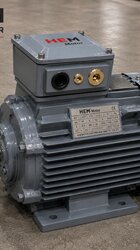
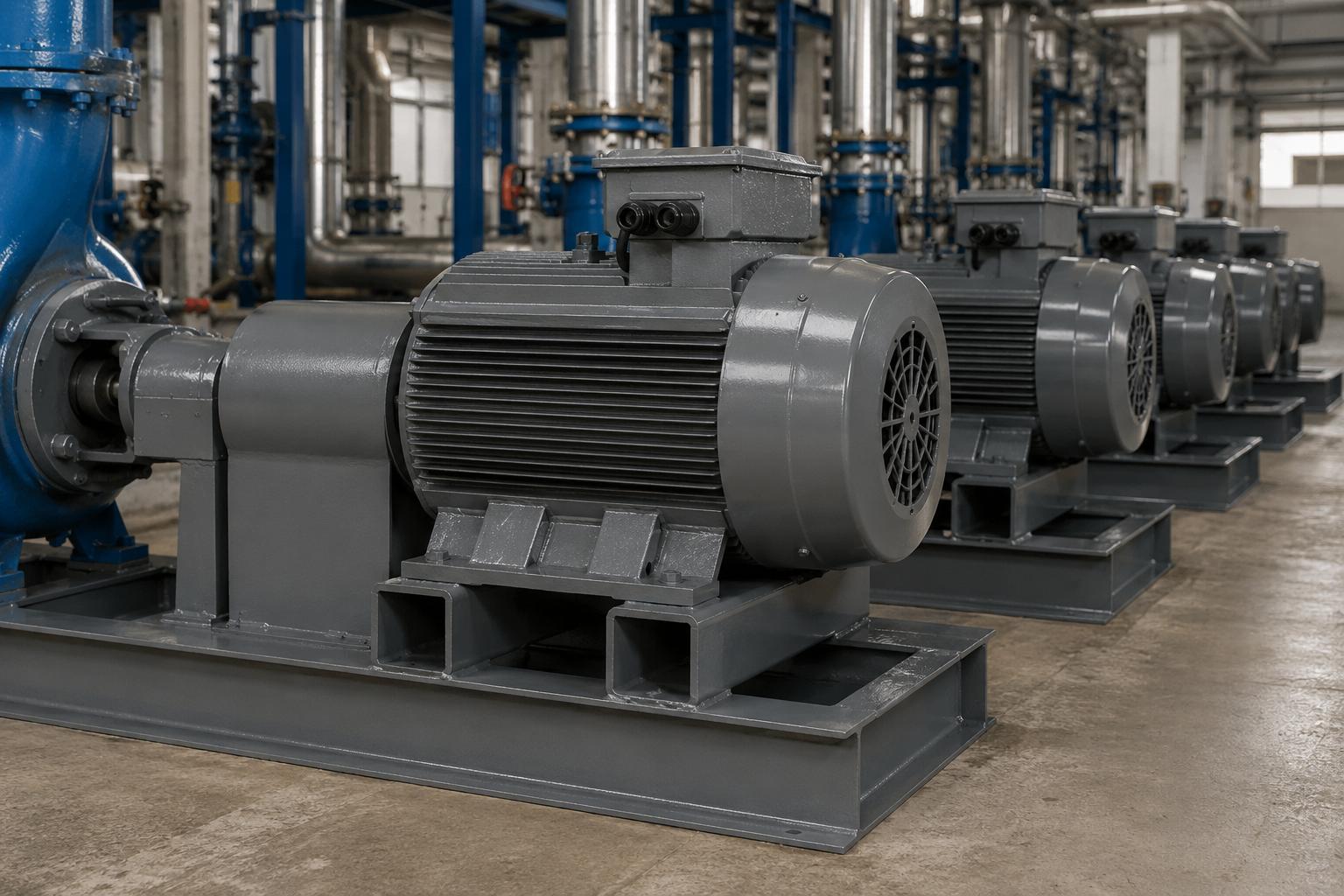

The IE5 synchronous reluctance motor sits at the summit of the ultra premium efficiency class; but the invisible hero that preserves this efficiency for years is often overlooked: the quality of winding impregnation. A motor's winding consists of copper wires and the insulation material between them. After manufacture, this winding is impregnated with a varnish or resin; in other words, the gaps between the wires are filled with insulating resin. Impregnation mechanically fixes the winding, carries heat outward, protects against moisture and chemicals, and increases electrical strength. On IE5 synchronous reluctance motors, impregnation quality directly determines insulation life and voltage withstand under drive operation. In this article we compare the three basic impregnation methods (VPI, trickle, dip) and cover, with technical tables, which method should be chosen when and its effect on moisture and chemical resistance, voltage withstand under drive operation, and insulation life.
Synchronous reluctance motors have a magnet-free rotor and almost always run with a variable frequency drive (VFD). The drive applies high-frequency pulsed voltage to the winding; these pulses create continuous stress on the winding insulation. The better the impregnation, the fewer the air voids inside the winding; and air voids are where partial discharge begins. Therefore good impregnation protects the insulation of a driven IE5 motor from premature ageing. Knowing how a motor's winding insulation is impregnated is as critical for long life as buying an efficient motor in the first place.
What Is Winding Impregnation and Why Is It Done?
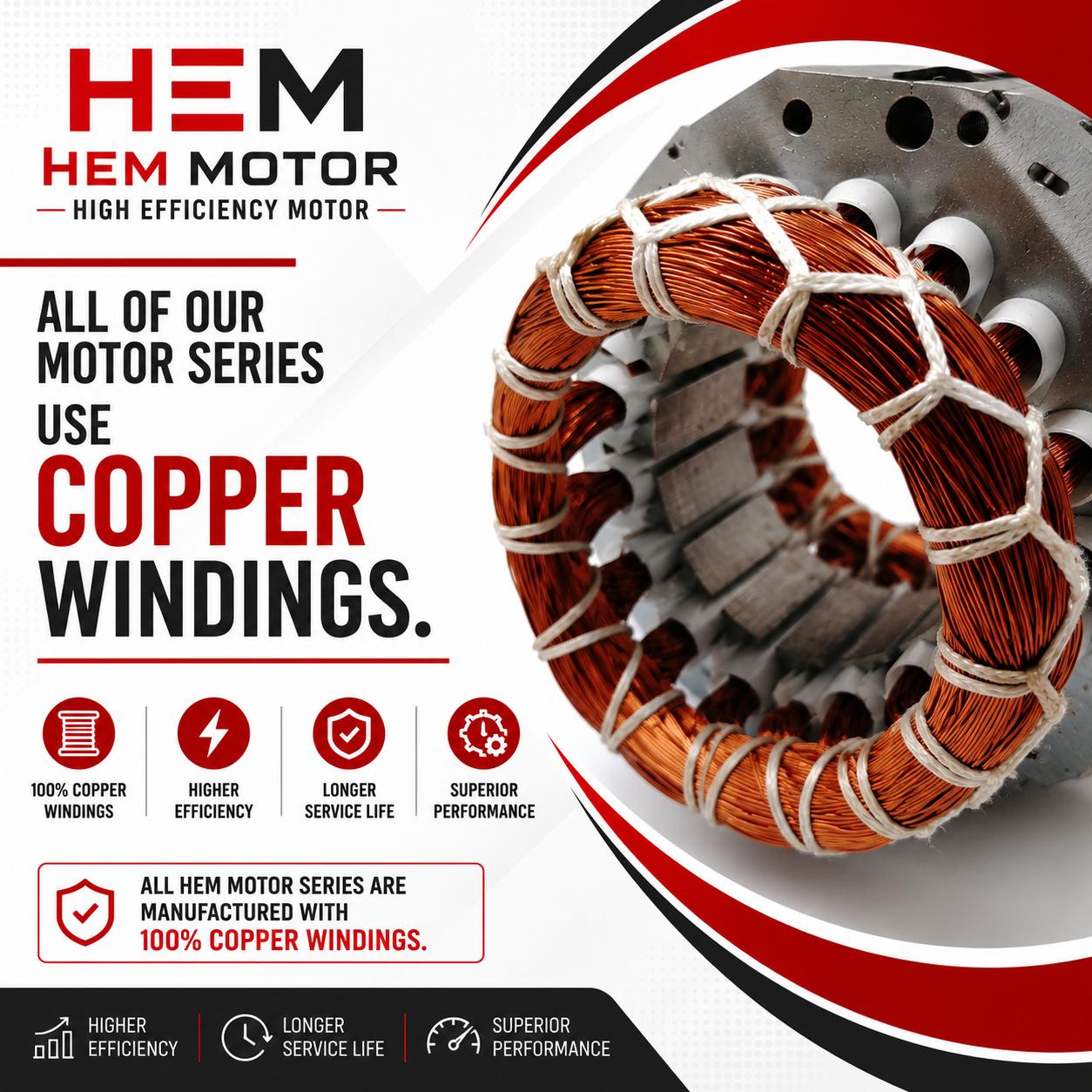
Before it enters the oven, a wound stator is mechanically loose and electrically vulnerable. The impregnation process saturates the winding with a liquid insulating resin or varnish; this resin then hardens (cures) in the oven into a solid mass. The main purposes of this process are:
- Mechanical fixing: The wires rub against one another under vibration and electromagnetic forces. Impregnation fills the gaps between wires and prevents movement; it prevents abrasion (fretting) of the insulation by rubbing.
- Heat conduction: The resin fills the air voids, improving heat conduction from the winding to the frame. Better heat removal means lower winding temperature and longer insulation life.
- Moisture and chemical protection: The filled resin prevents moisture and chemical vapours from penetrating the winding; it keeps insulation resistance high.
- Electrical strength: Air voids are where partial discharge begins. Impregnation that fills the voids increases withstand against voltage spikes under drive operation.
Three Impregnation Methods: VPI, Trickle and Dip
Winding impregnation is mainly done by three methods. Each has a different resin fill ratio, void (air gap) amount, cost and suitable application.
1. Dip (Dip Impregnation)
This is the most basic method: the wound stator is dipped into a varnish bath, withdrawn and cured in the oven. It is simple and economical; however, because the resin penetrates only by gravity, air voids can remain deep in the winding. It is common on standard industrial motors and provides adequate protection for most applications; but it can be limited for high humidity, harsh chemical environments or heavy-duty drive operation.
2. Trickle (Trickle Impregnation)
While the stator is rotated and controllably heated, resin is slowly trickled onto the winding. The heat and rotation allow the resin to spread better into the winding. It gives better fill and less waste than dipping; it is fast and energy-efficient in mass production. It is a good balance for applications requiring medium-high quality.
3. VPI (Vacuum Pressure Impregnation)
This is the top-tier method. The stator is first placed in a tank, vacuum is applied to draw the air and moisture out of the winding; then resin is admitted to the tank and pressure is applied over it. Because the vacuum opens the voids and the pressure forces the resin into them, the winding fills almost completely with resin; the void ratio is minimised. This means the highest moisture/chemical resistance, the best heat conduction and the highest voltage withstand under drive operation. VPI is preferred for IE5 applications requiring high voltage, heavy duty, humid/chemical environment and high reliability.
| Property | Dip | Trickle | VPI |
|---|---|---|---|
| Resin fill | Medium | Good | Very high |
| Void (air gap) | High | Medium | Lowest |
| Moisture / chemical resistance | Basic | Good | Highest |
| Heat conduction | Medium | Good | Best |
| Voltage withstand on drive | Limited | Good | Highest |
| Typical use | Standard motor | Mass production, medium duty | Heavy duty, humid/chemical, HV |
Resin and Varnish Types: Polyester or Epoxy?
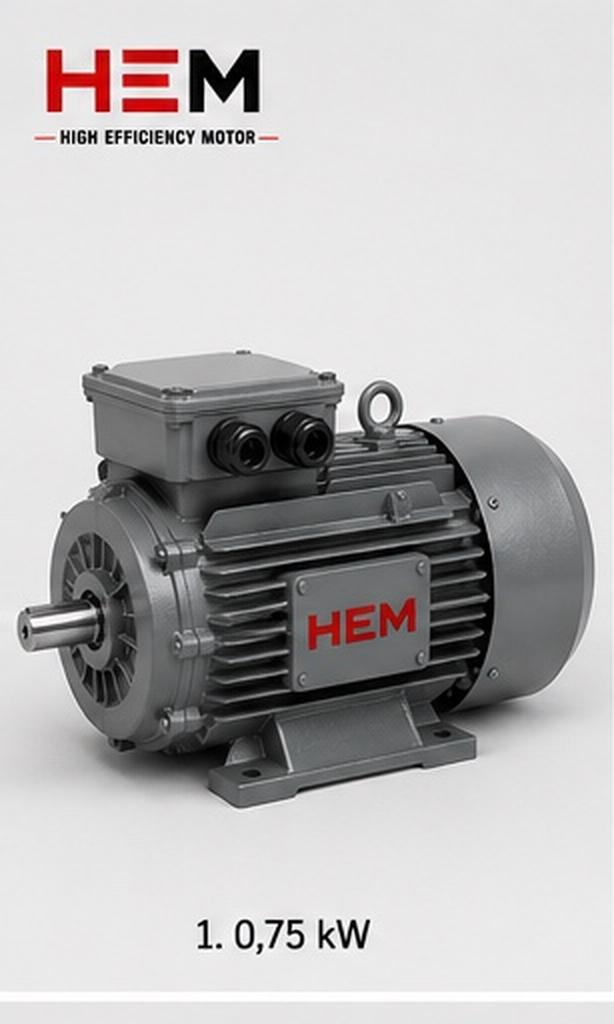
Besides the impregnation method, the chemical type of resin used also determines insulation performance. There are two main groups widely used in industry. Polyester (and modified polyester) resins are economical, fast-curing solutions that offer adequate insulation for most standard applications; they are frequently preferred on general-purpose motors. Epoxy resins, on the other hand, have superior moisture, chemical and mechanical resistance, higher adhesion and better thermal conductivity; they are preferred in heavy-duty, humid/chemical and high-reliability IE5 applications, especially together with VPI. Epoxy systems are generally compatible with a higher temperature class (Class H and above) and are more resistant to the voltage stresses of drive operation.
Resin selection should be considered together with the impregnation method: the best result comes from matching the right method (e.g. VPI) with the right resin (e.g. epoxy). On a heavy-duty IE5 motor targeting low void, the VPI + epoxy combination gives the highest withstand mechanically, electrically and chemically. If the environment is dry and the duty light, dip + polyester is an economical and sufficient solution. Therefore when ordering a motor, one should ask not only "is it impregnated" but also "with which method and which resin class".
How Is Impregnation Quality Verified?
It is hard to see impregnation quality directly by eye in the field; however there are indirect indicators. Insulation resistance (megger) measurement shows how well the winding is protected from moisture and dirt; a well-impregnated and dry winding gives high MΩ values. The polarisation index (PI) test gives an idea about the dryness and soundness of the insulation. In high-voltage and driven applications, partial discharge (PD) measurement is an indirect indicator of void content; a low PD level points to good impregnation. On the manufacturer side, quality is assured by controlling the resin fill ratio, the curing temperature and time. On a critical and expensive motor such as an IE5, the manufacturer's impregnation process and test certificates are quality marks to consider in the purchasing decision.
Insulation Life and Its Relationship with Temperature
The life of winding insulation is very sensitive to the temperature at which it runs. As a general rule, every ~10°C rise in winding temperature roughly halves insulation life (the Montsinger/Arrhenius rule). Good impregnation removes heat from the winding more efficiently and lowers the winding temperature; this directly extends life. A winding impregnated by VPI conducts heat better thanks to its low void ratio, runs at a lower temperature and is therefore longer-lived. The low-loss structure of IE5 motors already keeps the winding cool; when good impregnation is added to this, insulation life is extended significantly.
For this reason the choice of impregnation method is a decision that determines not only production quality but also the motor's total cost of ownership and trouble-free running time. A motor impregnated by the cheap dip method in a harsh environment may look cheap at the initial purchase but can prove costly through premature insulation failure.
Voltage Withstand and Partial Discharge Under Drive Operation
Because IE5 synchronous reluctance motors run with a drive, the winding insulation is continuously exposed to high-frequency voltage pulses. When the du/dt (the rate of change of voltage with time) produced by the drive is high, a disproportionate voltage is imposed on the first few turns of the winding. If there is an air void inside the winding, partial discharge begins in those voids; partial discharge gradually erodes the insulation and finally leads to breakdown. This is where impregnation quality is decisive: in a winding with a low void ratio (VPI), the probability of partial discharge starting is much lower. In heavy-duty driven IE5 applications, alongside good impregnation, the drive output filter (du/dt or sine filter) and a suitable insulation system should be evaluated together.
- Low void: Delays the onset of partial discharge, extends insulation life.
- Good heat conduction: Keeps the winding cool, slows thermal ageing.
- du/dt filter: Softens voltage spikes to reduce winding stress; complements impregnation.
Which Method When? Selection by Application
The right impregnation method depends on the environment in which the motor will run and the duty severity:
- Dry, clean, light duty: The dip method is often sufficient; economical and reliable.
- Medium duty, mass production, moderate humidity: Trickle offers a good balance; good fill, fast production.
- Heavy duty, high humidity, chemical vapour, continuous drive operation: VPI is preferred; lowest void, highest withstand.
- Tropical/coastal climate: VPI + tropicalisation together provide maximum protection against moisture and fungus.
When ordering an IE5 motor, clearly stating the environmental conditions and duty severity ensures the correct impregnation class is applied at the factory.
Frequently Asked Questions
Is VPI always better than dipping?
Technically VPI gives the lowest void ratio and the highest withstand; however not every application requires VPI. On a dry, light-duty motor, well-executed dipping or trickle is sufficient and economical. The real value of VPI emerges in IE5 applications requiring high humidity, chemical environment, continuous heavy-duty drive operation and high reliability.
How does impregnation extend insulation life?
Good impregnation fills the air voids in the winding, improving heat conduction and lowering the winding temperature. Every ~10°C drop in temperature roughly doubles insulation life. In addition, low void delays partial discharge and prevents moisture/chemical ingress. These three effects together extend life significantly.
Why is impregnation so important on a drive-fed IE5 motor?
The drive applies high-frequency voltage pulses to the winding; partial discharge begins in the air voids inside the winding and erodes the insulation. An impregnation with a low void ratio (especially VPI) reduces the probability of partial discharge, protecting the insulation under drive operation. For this reason impregnation quality is a critical selection criterion on heavy-duty driven IE5 motors.
Conclusion and Supply
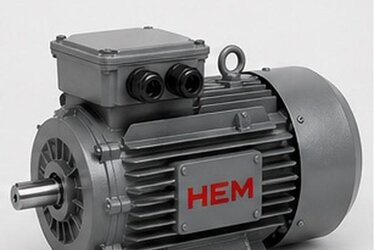
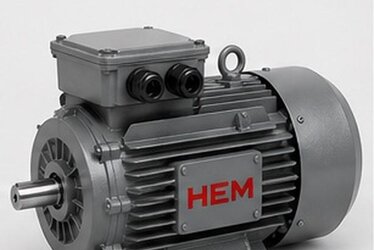
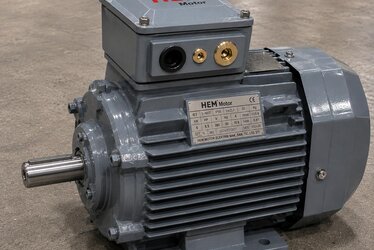
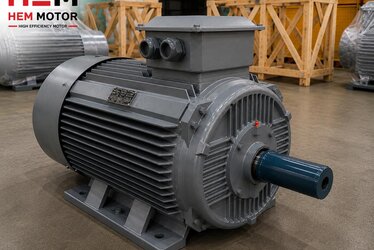
On an IE5 synchronous reluctance motor, winding impregnation is an invisible but critical quality factor that directly determines insulation life and voltage withstand under drive operation. The dip, trickle and VPI methods offer different void ratios, moisture/chemical resistance and withstand; the right choice is made according to the environment and duty severity. HEM Motor supplies its IE5 ultra premium synchronous reluctance motors with the impregnation class suited to the application, plus tropicalisation and drive-compatibility options, from stock with fast delivery. Share your operating environment and duty profile and request a quote for an insulation and impregnation configuration suited to your application.
Related content: winding and insulation class (F/H), inverter duty winding and du/dt voltage spike, output sine filter and terminal voltage spike, thermal behaviour and cooling and tropicalisation and moisture protection.