English
 Türkçe

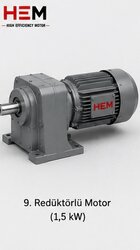
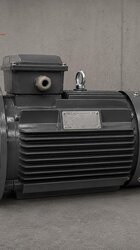

The efficiency and reliability advantages of IE5 synchronous reluctance motors are undisputed; but in applications that stop and start very frequently there is a critical parameter for selecting the right motor: the starting frequency, that is, the number of starts allowed per hour. Every start creates a heat pulse in the motor's winding and rotor. A motor started too often, entering the next start before it has cooled this heat sufficiently, gradually overheats and its life shortens. That is why motor manufacturers define a thermal Z value that sets the maximum number of allowed starts. In this article we cover, with HEM Motor engineering insight, starting frequency in IE5 synchronous reluctance motors, the thermal Z limit, heating under frequent stop-start, the advantage of soft starting with a drive, the effect of inertia and the S4 duty type.
When a motor starts, it draws a current well above the rated value to accelerate the stationary rotor. This high starting current produces heat in the winding as I²R loss. In a single start this heat is negligible; but if starts come one after another, the heat accumulates. If the motor cannot cool sufficiently between two starts, the winding temperature exceeds the insulation limit. Starting frequency is about managing this heat accumulation, and it is at the center of correct motor selection.
The Thermal Z Value and the Number of Allowed Starts
The thermal Z value (sometimes shown as Z₀) expresses the maximum number of starts a motor can make per hour, unloaded, with no inertia load. This value is stated in the motor's catalogue or technical data sheet. In a real application the number of allowed starts is reduced from the Z value by two factors: the load's inertia and the load's counter-torque. As the load inertia grows, the starting time lengthens, so the heat produced at each start rises and the number of starts possible per hour falls.
- Z (no-load): The maximum hourly starts the motor can make unloaded, with its own rotor inertia.
- Load inertia (FI): As the external load's inertia rises, the number of allowed starts falls.
- Counter-torque (FZ): The load's resistance affects starting time and heat.
- Allowed starts: Found by correcting the Z value with the inertia and load factors.
In practice, the answer to "how many times per hour can this motor be started?" begins with the Z value but becomes clear with the load's inertia and counter-torque. For duty type and starting behavior, our article on duty type (S1-S6) selection is a core reference.
Typical Starts-Per-Hour Values by Power
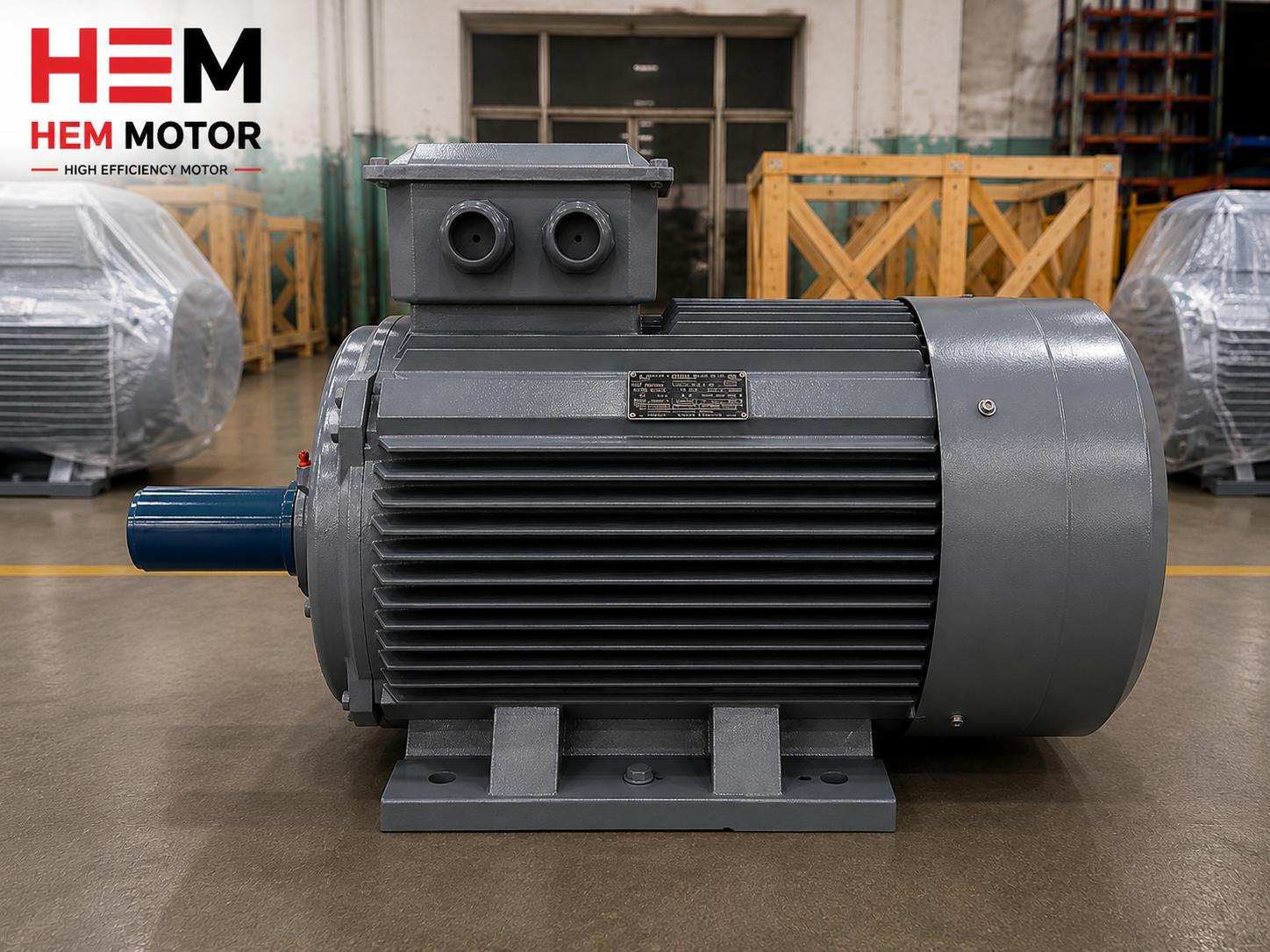
The table below shows approximate typical no-load (no inertia load) starts-per-hour (Z) values by power class. Small-power motors can be started far more frequently thanks to their low rotor inertia; in large motors the allowed number of starts falls markedly due to rotor inertia and thermal mass. Values vary with design and cooling.
| Power class | Typical Z (no-load, starts/hour) | Loaded estimate (starts/hour) | Note |
|---|---|---|---|
| 0.75-3 kW | 2000-3000 | 500-1500 | Low inertia, suited to frequent starts |
| 4-11 kW | 1000-2000 | 300-800 | Medium power |
| 15-30 kW | 500-1000 | 150-400 | Inertia effect becomes notable |
| 37-90 kW | 250-600 | 80-250 | Large rotor inertia |
| 110-250 kW | 100-300 | 30-120 | Drive essential for frequent starts |
The "loaded estimate" column is a rough estimate with a typical fan or pump inertia; with high-inertia loads (large flywheel, centrifuge) these values are pulled much lower. The correct value is always set by the motor's data sheet and the load's inertia. For the inertia and starting-torque relationship, our article on starting torque and rated torque (DOL) is useful.
Why Is Heating Under Frequent Stop-Start a Problem?
Frequent stop-start is one of the most demanding ways a motor can operate. The high current drawn at each start creates a rapid temperature rise in the winding. When the motor stops, the internal fan stops too, so cooling weakens; especially in self-fan-cooled (TEFC) motors this is an important constraint. As starts follow one another, the winding temperature rises step by step and approaches the limit of the insulation class (F or H). Once this limit is exceeded, insulation life shortens rapidly; every 10 °C of excess roughly halves insulation life. That is why in frequent stop-start applications either the start frequency must be limited or the start heat must be reduced.
The Advantage of Soft Starting with a Drive
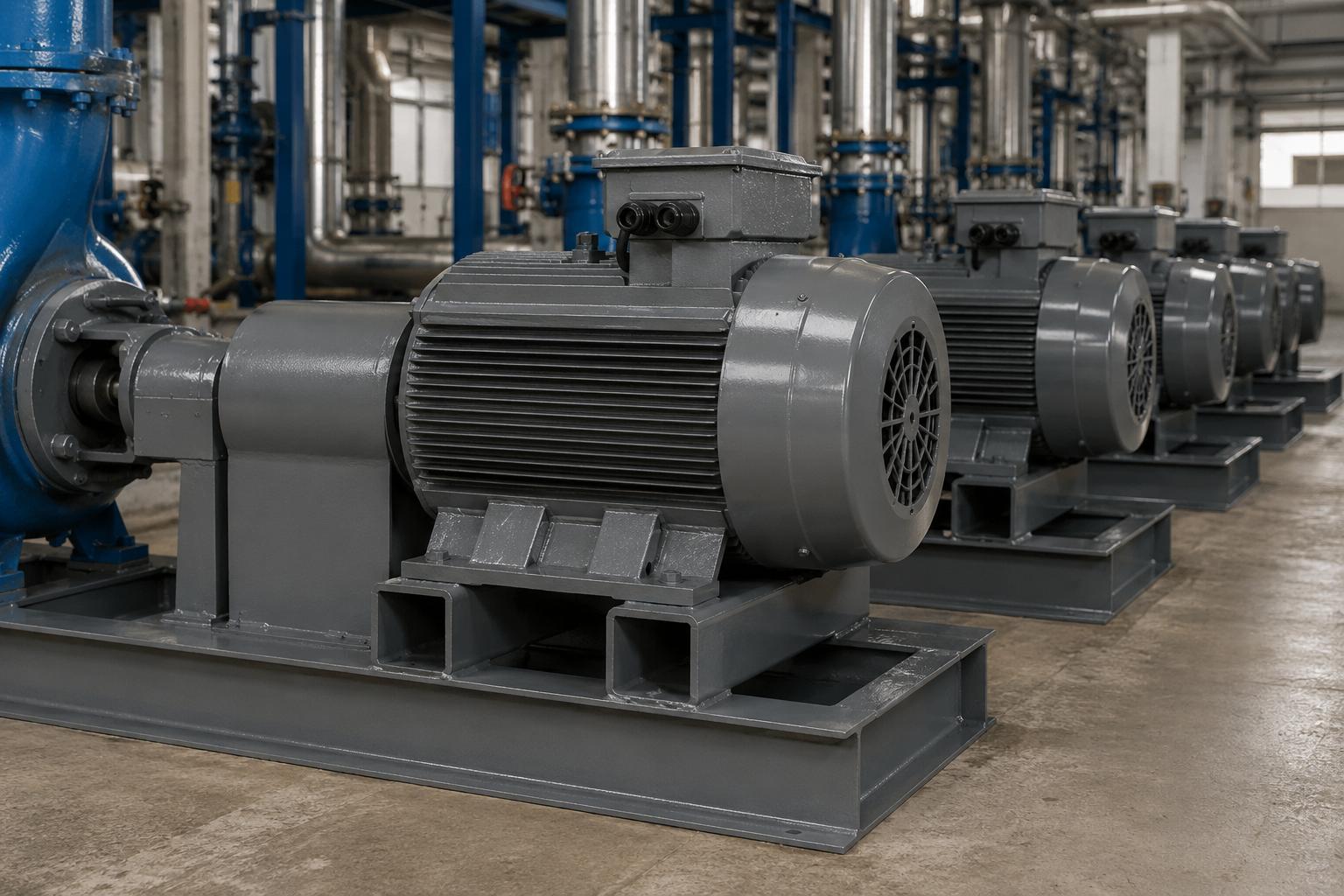
IE5 synchronous reluctance motors already run with a frequency converter (drive), because the synchronous reluctance rotor cannot start directly from the grid. This necessity actually turns into a major advantage: the drive performs the start with a controlled frequency and voltage ramp. Thus the starting current is kept near the rated current instead of the 6-7 times rated current of direct-on-line (DOL) starting. Low starting current means a dramatic reduction in the heat produced per start.
The result is a much higher allowed starting frequency. Thanks to soft starting with the drive, a motor that can make only a limited number of starts per hour with DOL can be started far more often. In addition, by adjusting the ramp time, mechanical shock is reduced and coupling and gear life is extended. To understand why an IE5 synchronous reluctance motor does not run without a drive and how to select the package, our article on why it does not run driveless, package and cost goes straight to the point. For drive parametering, see our article on VFD setting, autotune and commissioning.
The Effect of Inertia
The load's inertia (J or GD²) directly determines the starting time. High inertia means the motor draws high current for a longer time to bring the load up to rated speed. A long starting time produces more heat per start and lowers the allowed starting frequency. With high-inertia loads such as a large fan, centrifuge or flywheel, the number of starts the motor can make per hour falls well below the no-load value.
In this case two solutions stand out: either a motor from a higher power class with a wider thermal margin is selected; or the start ramp is extended with the drive to spread out the heat. When high inertia and frequent starting come together, the driven IE5 solution becomes almost mandatory. To evaluate the advanced duty type classes (braked, variable load), our article on duty types S7, S8, S9 provides guidance.
S4 Duty Type: Intermittent Operation with Starts
The most suitable duty type definition for frequent stop-start applications is S4. S4 means "periodic intermittent duty with starts" and describes a mode where the motor starts and stops under load at regular intervals, with the start heat accounted for in each cycle. In S4 duty, the motor repeats cycles consisting of a start, a period of running under load and a stopping period. In the definition of this duty type, the number of starts per hour (for example S4 40% - 90 starts/hour) and the inertia factor are explicitly stated.
Determining whether an application is really S4 is the first step in correct motor selection. If the application runs continuously, S1; if it rarely starts, a simpler definition suffices; but if it is started tens or hundreds of times per hour, the S4 definition and a suitable Z value are essential. A wrong duty-type assumption leads either to buying an unnecessarily large motor or to a motor that constantly overheats and has a shortened life.
The Starting Behavior of the Synchronous Reluctance Rotor
The rotor of a synchronous reluctance motor contains no magnets; instead it has a special slotted (flux-barrier) geometry that channels the magnetic flux. This rotor turns not by slip as in induction motors but by locking synchronously to the stator's rotating field. When started directly from the grid this locking cannot be achieved; that is why a synchronous reluctance motor is always started with a drive, increasing the frequency from zero in a controlled manner. The drive begins turning the motor slowly at low frequency, the rotor locks to the field, and then the frequency is ramped up to the rated value.
An important consequence of this starting method is that the current drawn during start is far lower and more controlled than in an induction DOL start. When an induction motor is started with DOL it draws a pulse of up to 6-7 times rated current; in a synchronous reluctance motor the drive eliminates this pulse entirely. For this reason synchronous reluctance motors are inherently more suited to frequent starting. To understand the supply and cost advantage of the magnet-free rotor, see our article on the magnet-free rotor: supply and cost advantage. For the difference between synchronous reluctance and permanent magnet motors, our article on synchronous reluctance vs PM motor is informative.
Thermal Behavior and Cooling
In frequent stop-start applications, the motor's thermal behavior is at the center of the selection. Because the rotor of a synchronous reluctance motor contains no magnets, there is no risk of magnets being damaged at high temperature; this is a thermal advantage over permanent magnet motors. However, the winding temperature must still be kept within the limits of the insulation class. Because winding heat accumulates under frequent starting, the cooling method becomes critical. In standard self-fan-cooled (TEFC) motors the fan is attached to the shaft and cooling weakens at low speed; that is why an independently driven (forced) cooling fan is preferred in IE5 motors that start very frequently or run over a wide speed range.
Using a PT100 or PTC thermistor to continuously monitor the winding temperature is a standard measure in frequent stop-start applications. These sensors send a signal to the drive or protection relay when the winding temperature approaches a dangerous level, stopping the motor and preventing overheating. For detail on the thermal behavior and cooling of IE5 motors, our article on thermal behavior, cooling and correct sizing deepens the topic.
Steps for the Right Selection
To select the right motor in a frequent stop-start IE5 synchronous reluctance application, follow these steps: first determine the real number of starts per hour; then calculate the load's inertia and counter-torque; correct the Z value on the motor's data sheet for these load conditions; choose the required cooling method (self-cooled or forced fan); finally define the duty type as S4 and set the drive's start ramp according to the load. When these steps are skipped, the motor is either selected too large or experiences constant overheating and early failure in the field.
Questions and Answers
What exactly does the thermal Z value specify?
The Z value specifies the maximum number of starts the motor can make per hour unloaded (with no external inertia load). In a real application this value is reduced by correcting for the load's inertia and counter-torque. So Z gives the upper limit; the actual allowed number of starts is lower than this depending on load conditions.
Does starting with a drive really increase the start frequency?
Yes. Because the drive starts with a controlled ramp, the starting current and therefore the heat produced per start fall dramatically. Less heat means the motor can be started more often. Since IE5 synchronous reluctance motors already run with a drive, this advantage comes naturally.
What should I do with a high-inertia load?
High inertia increases the starting time and heat. In this case either a higher power class motor with a wider thermal margin should be selected, or the start ramp should be extended with the drive to spread out the heat. Most often these two measures are applied together.
At HEM Motor we offer IE5 synchronous reluctance motors together with a suitable drive and the correct duty-type definition, from stock and with fast supply. By evaluating your application's starts per hour, load inertia and duty type together, we help you select a motor-drive package that does not overheat under frequent stop-start and lasts long. Contact us for the right selection and a quote.