English
 Türkçe


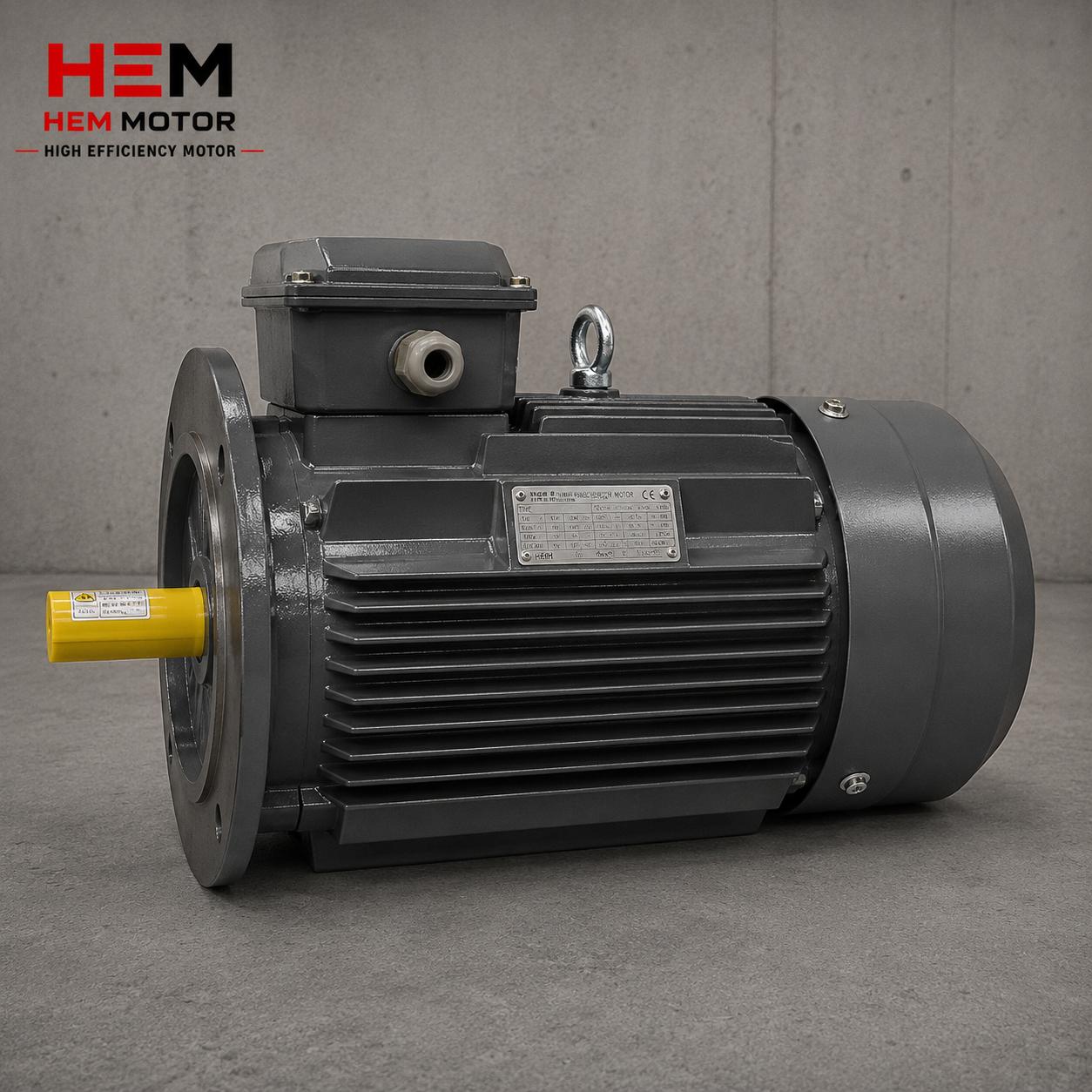

IE5 synchronous reluctance motors represent the final frontier in energy efficiency; but the only way to achieve this high efficiency in the field is to commission the motor with the right drive and the right parameters. The synchronous reluctance (SynRM) motor has neither winding nor magnet in its rotor; this structure makes it highly efficient but also means it cannot start directly on the mains. For this reason, an IE5 SynRM motor only makes sense with a suitable frequency inverter (VFD) and careful parametering. In this guide we cover VFD setup, the autotune procedure and commissioning steps in technical detail, explaining the problems caused by incomplete parametering and the efficiency advantage that correct configuration brings.
Why Can't a Synchronous Reluctance Rotor Start Directly on the Mains?
In classic induction motors the rotor has a cage (winding), and this cage provides self-starting under the influence of the rotating magnetic field. In permanent magnet motors, the rotor has magnets. In the synchronous reluctance rotor, however, there is neither winding nor magnet; the rotor consists only of specially shaped laminations that channel magnetic permeability. This structure lets the motor produce torque from the difference in magnetic reluctance.
However, this rotor has no mechanism to start on its own. When connected directly to the mains, the rotor cannot catch the rotating field and cannot synchronize; that is, the motor does not turn. For this reason an IE5 SynRM motor absolutely needs a drive (VFD) that manages starting and synchronization. The drive controls the rotor position and the magnetic field, bringing the motor gradually up to synchronous speed.
An IE5 SynRM Motor Must Be Commissioned With a Suitable VFD
To benefit from the advantage of an IE5 synchronous reluctance motor, the VFD used must support this motor type. Not every frequency inverter is suitable for driving a SynRM motor; the drive must have a SynRM control algorithm and a suitable parameter set. When matched with the right VFD, the system:
- Starts the motor smoothly and stably without vibration.
- Holds synchronous speed under load.
- Turns the high efficiency promised by the IE5 class into reality in the field.
With a wrong or incompatible drive, the motor either does not turn at all or runs unstably and loses its advantage. For this reason, the IE5 SynRM motor and a suitable VFD must be treated as a whole, not thought of as two separately selected components. Motor and drive compatibility is the foundation of the system's success.
VFD Parametering: Introducing Motor Data to the Drive
The first step of commissioning is entering the motor's nameplate data into the drive correctly. This data lets the drive recognize the motor:
- Rated power (kW): The motor's rated power.
- Rated voltage and frequency: The basic electrical values at which the motor will run.
- Rated current: Critical for protection and control.
- Rated speed and pole count: For determining synchronous speed.
- Motor type selection: Selecting the motor type as "synchronous reluctance / SynRM" in the drive.
Entering this data incompletely or incorrectly causes the drive to model the motor wrongly and the commissioning to fail. That is why parametering begins with carefully reading and confirming the nameplate values. For energy-efficient motor solutions and a quote, take a look at the electric motor prices page.
Autotune: Letting the Drive Learn the Motor
After the parameters are entered, the most critical step is the autotune (automatic tuning) procedure. During autotune the drive sends controlled signals to the motor and measures the motor's electrical and magnetic characteristics. This procedure is especially important in SynRM motors; because the motor cannot run efficiently and stably unless the drive correctly knows the rotor's magnetic permeability difference (the d and q axis inductances).
Autotune can be done in two ways:
- Stationary (static) autotune: Measurement is done without the motor turning; preferred when the load is connected.
- Rotating (dynamic) autotune: A more comprehensive measurement is done while the motor turns freely; it gives the most accurate result.
If autotune is skipped or done incompletely, the drive runs the motor with estimated values, and the result is often unstable operation, vibration or efficiency loss. That is why autotune is an indispensable step of IE5 SynRM commissioning.
Consequences of Incomplete Parametering
Incomplete or incorrect parametering leads to three typical problems in an IE5 SynRM motor:
- The motor does not turn: If the starting parameters or motor type are wrong, the drive cannot synchronize the rotor and the motor does not turn at all.
- It runs unstably: If the inductance values are wrong, the motor turns with vibration, noise and instability.
- The efficiency advantage is lost: If the parameters are entered approximately, the motor turns but the high efficiency offered by the IE5 class cannot be achieved in the field.
All three outcomes show that the value of an IE5 SynRM motor emerges only with correct commissioning. Buying the motor is not enough; it must be considered together with the right drive, the right parameters and the right autotune.
The Right System Solution With Manufacturer Assurance
IE5 synchronous reluctance motors provide a clear advantage in energy cost when correctly installed; but this advantage becomes real only when the motor and drive are selected compatibly and parametered correctly. HEM Motor offers IE5 SynRM motors with suitable drive recommendations and commissioning support, from the viewpoint of manufacturer assurance and strong stock. Providing the right product together with the right solution secures the return on the efficiency investment. For energy-efficient motor solutions, review the electric motor prices page.
Frequently Asked Questions
Why doesn't an IE5 SynRM motor run directly on the mains?
The synchronous reluctance rotor has neither winding nor magnet, so the rotor has no mechanism to start on its own. When connected directly to the mains it cannot synchronize and does not turn. For this reason starting and synchronization must be provided with a suitable VFD.
Why is autotune so important?
During autotune the drive measures the motor's electrical and magnetic characteristics, especially the d and q axis inductances. Without these values being known correctly, a SynRM motor cannot run efficiently and stably. If autotune is skipped, the motor runs with vibration or loses efficiency.
What problems does incomplete parametering cause?
Incomplete parametering produces three typical outcomes: the motor either does not turn at all, runs unstably with vibration, or turns but the IE5 class efficiency advantage cannot be achieved in the field. That is why correct parametering is essential.