English
 Türkçe

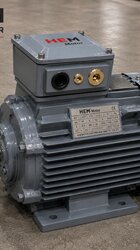
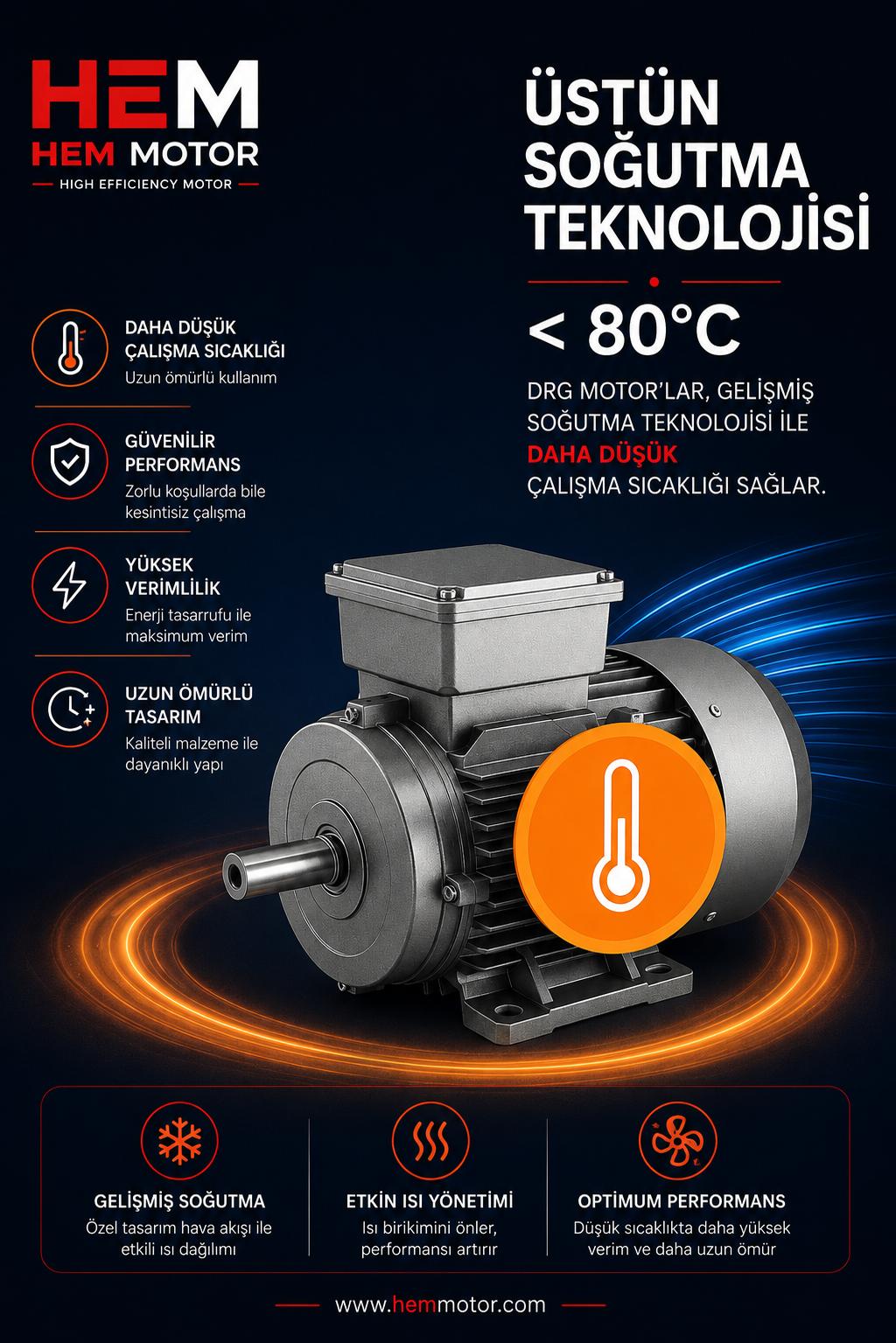

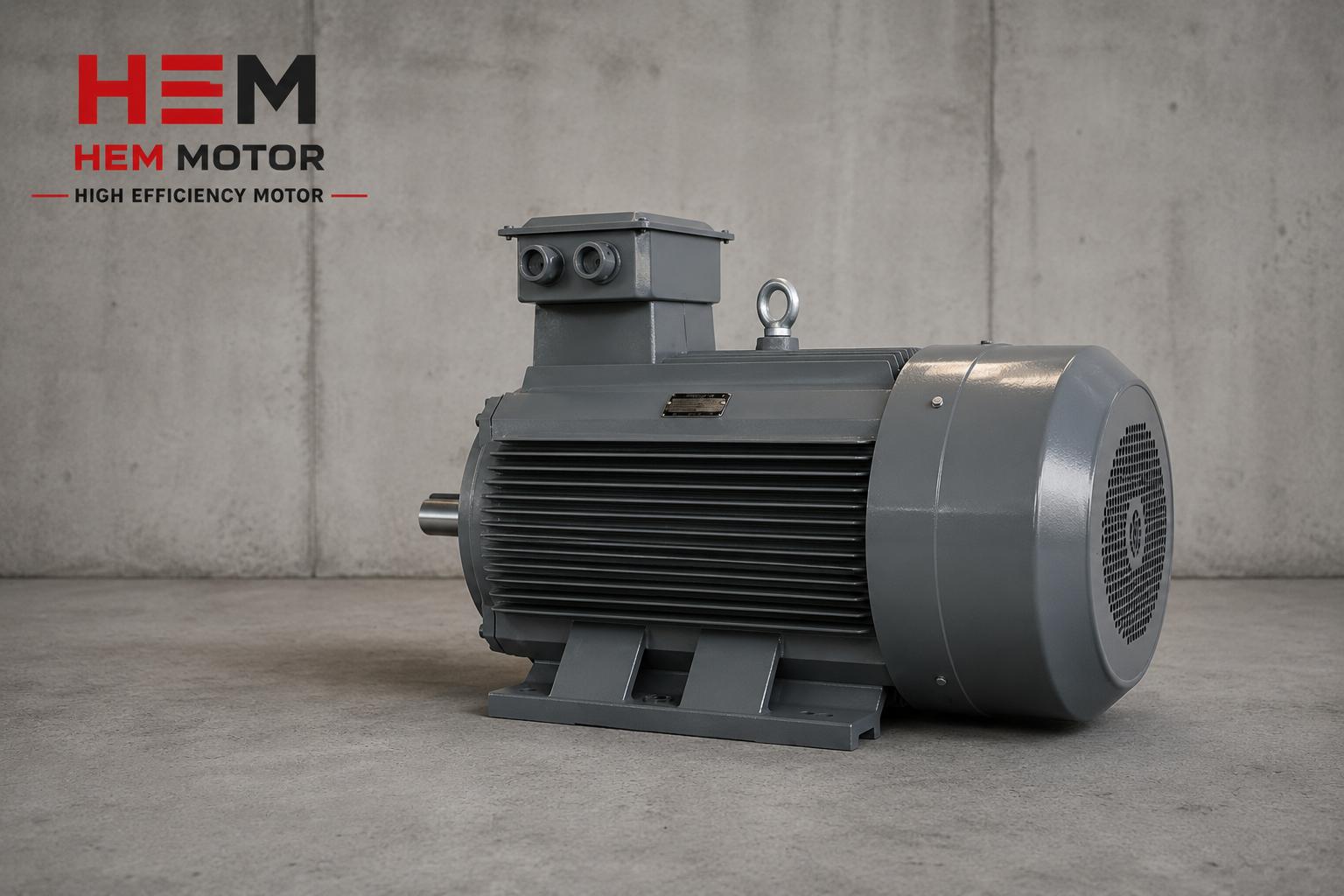
IE5 synchronous reluctance (SynRM) motors run noticeably cooler than asynchronous motors of the same rating. The main reason is the rotor design: a SynRM rotor has no cage bars, no short-circuit rings and no permanent magnets; it is built only from suitably shaped magnetic flux barriers. The rotor copper (or aluminium) loss that makes up a significant share of total losses in an induction motor is almost eliminated in a SynRM rotor. Less rotor loss means less rotor heat and lower bearing temperature. Even so, because an IE5 SynRM motor always runs on a variable frequency drive (VFD), its thermal behaviour must be judged together with the switching harmonics produced by the drive, the cooling that weakens at low speed, and correct sizing, not by rotor loss alone. This article looks at heating, cooling options and correct thermal sizing of IE5 SynRM motors from a purchasing point of view.
Where Does Heat Come From in an IE5 SynRM Motor?
In an electric motor, heat is created when losses turn into heat. Grouping these losses under five headings makes the purchasing decision clearer:
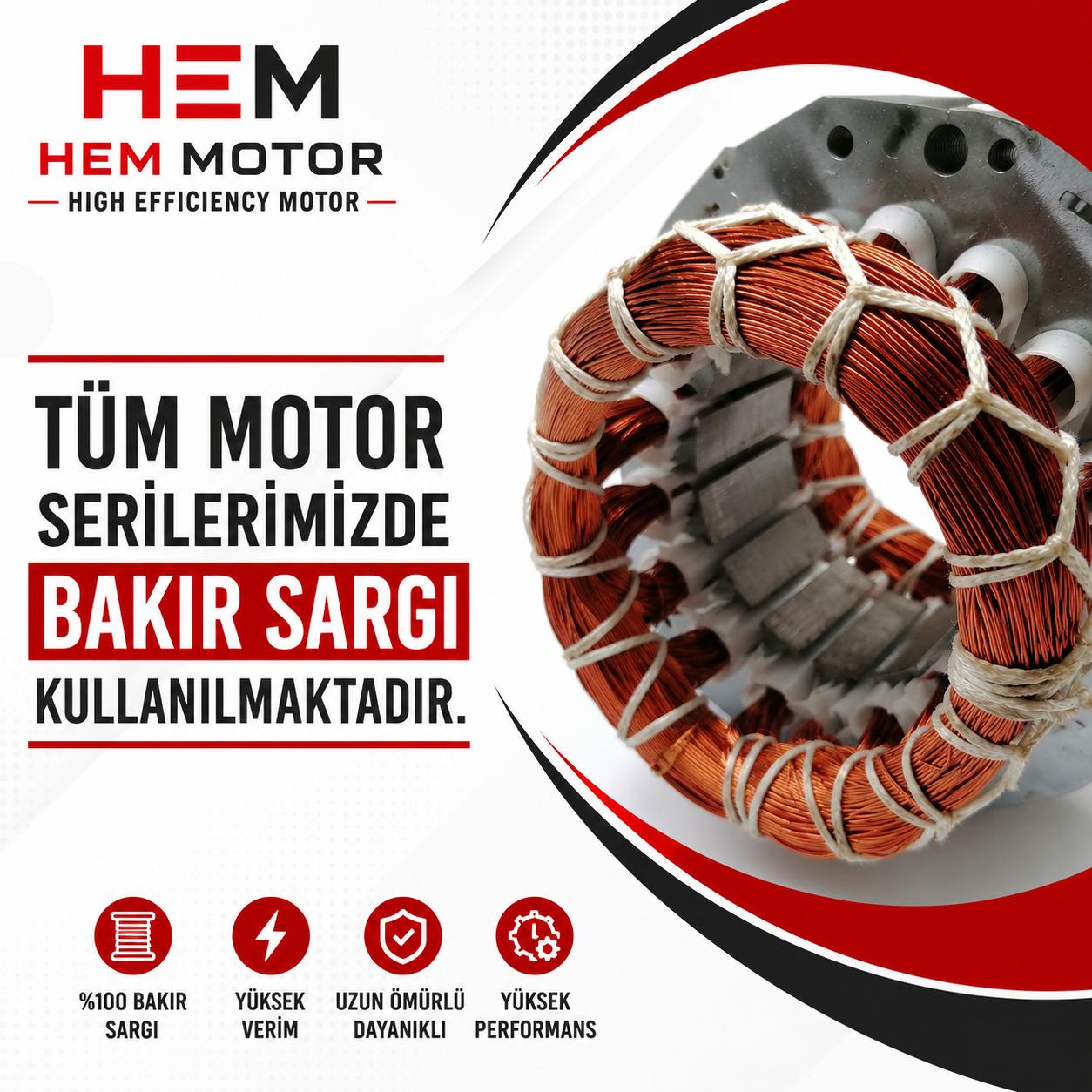
- Stator copper loss (I²R): The heat the winding current produces in the copper resistance. It exists in a SynRM motor too and is usually the dominant loss.
- Iron (core) loss: Hysteresis and eddy-current loss in the laminations; it rises with frequency and flux density.
- Rotor loss: Significant in an induction motor, but very small in a SynRM rotor because there is no conducting cage. This is the main reason IE5 SynRM motors run cool.
- Friction and windage loss: Bearing friction and the fan pushing air.
- Stray load and drive-related extra losses: The high-frequency switching components from the drive create extra heat in the laminations and winding.
The sum of these five items gives the motor's total loss, and therefore the heat it produces. The higher the efficiency, the lower the loss and the less the heat. IE5 is the highest efficiency step available; at the same power it produces less loss than IE3 or IE4. This is why an IE5 SynRM motor stands out as both more efficient and cooler-running than its rivals at equal load. We compared the effect of efficiency classes on loss and heat in our IE5, IE4 and IE3 total cost of ownership and IE4 motor efficiency losses articles.
The small rotor loss is what sets SynRM apart. We detailed this in our comparison of IE4 asynchronous vs synchronous reluctance content; a rotor that produces no heat directly improves both efficiency and thermal behaviour.
Switching and Harmonic Heat Under Drive (VFD) Operation
An IE5 SynRM motor is never connected directly to the grid; it always needs a frequency drive. The drive chops the DC bus voltage at high frequency (typically a 2 to 8 kHz switching frequency) to produce a near-sinusoidal current to the motor. This pulsed voltage creates two kinds of extra heat in the motor:
- Current harmonics: Small ripples remain in the current because of switching; these high-frequency components produce extra I²R and iron loss in the winding and laminations.
- High-frequency iron loss: The edges of the voltage pulses increase eddy-current loss in the lamination stack.
Raising the switching frequency reduces current ripple (and harmonic heat in the motor) but increases loss in the drive; lowering it does the opposite. Correct parametering finds the balance. We covered the effect of drive settings step by step in our IE5 drive parametering and commissioning article. In plants with long cables, fitting an output reactor (du/dt filter) between drive and motor limits both voltage spikes and extra heat.
IC411 Standard Cooling and the Fan's Weakness at Low Speed
In standard totally enclosed motors the cooling method is IC411: a fan mounted on the motor's own shaft pushes air over the frame fins to remove heat. This method depends on shaft speed. The faster the motor turns, the more air the fan moves. The problem is that IE5 SynRM motors are often run at low speed with constant torque in applications such as extruders, mixers and conveyors. As speed drops the shaft-mounted fan weakens, but the load torque (and therefore stator current, i.e. copper loss) stays high. The result is that the motor can overheat because its cooling falls while its heat generation does not.
You can find the detail of cooling methods and the difference between IC411 and IC416 in our electric motor cooling methods guide. In any application that needs continuous high torque at low speed, this point must be clarified before purchase.
The Solution: Forced Cooling (IC416)
IC416 uses an independent fan unit driven by a separate small motor instead of a shaft-mounted fan. This fan pushes air at constant speed regardless of how fast the main motor turns. So cooling is maintained even when the motor delivers full torque near zero speed. For applications that need constant torque over a wide speed range (especially speed ratios of 1:10 and above), an IE5 SynRM motor with IC416 forced cooling should be chosen. Stating the working speed range and the torque needed at minimum speed at the quotation stage ensures the correct cooling class is selected.
Insulation Class, Temperature Rise and Thermal Reserve
How hot a motor may get is limited by its insulation class. The standard insulation in the HEM Motor range is class F (155 °C capability), with class H (180 °C) offered when required. The design usually targets a class B temperature rise (about 80 K), which leaves a clear thermal reserve below class F insulation. This reserve acts as a safety margin against high ambient temperature, drive harmonics or short overloads.
We explained the link between temperature-rise class (delta T) and life in our temperature rise class article, and the effect of F/H insulation class on life in our winding and insulation class (F/H) content. The general rule: every 10 °C of sustained overtemperature roughly halves winding insulation life. So protecting the thermal reserve is the cheapest way to keep a motor long-lived.
Bearing Temperature and Drive-Induced Bearing Currents
The part of thermal assessment most often missed is the bearing. Because heat generation in a SynRM rotor is low, the bearing usually runs cooler than its asynchronous equivalent, which extends grease life and bearing life. But under drive operation a second factor appears: high-frequency switching can induce small voltages between shaft and frame. When this voltage discharges through the bearing, it punches through the oil film, creates micro-arcing and over time causes pitting (fluting) on the ball surfaces. The result is a bearing failure that is independent of heat but still premature.
On large-frame, long-cable IE5 SynRM motors, measures such as an insulated bearing (usually on the non-drive end), a shaft grounding ring or an output filter are considered to limit this risk. We covered the effect of an insulated bearing on life in our bearing types and life in an asynchronous motor article, and the quality signs of bearing and seat life when buying in our bearing and seat life content. When ordering a drive-fed IE5 motor, stating cable length and frame size lets the needed bearing measure be planned from the start.
Temperature Monitoring: PT100 and Thermistor
If an IE5 SynRM motor runs in a critical process, measuring winding temperature directly is the safest method. A PT100 sensor embedded in the winding gives a continuous temperature value; a PTC thermistor trips a protection relay at a set threshold. These devices usually have to be ordered up front, as they are hard to add later. You can find protection with PT100 and PTC thermistor in detail in our motor winding temperature monitoring article. In drive-fed, wide-speed-range operation, a thermal relay alone may not give enough protection; an embedded temperature sensor provides definite protection.
Constant-Torque and Constant-Power Regions: Thermal Consequences
On a drive the motor works in two different regions. Up to the rated frequency (usually 50 Hz) is the constant-torque region: here the magnetic flux is held constant and the motor can deliver rated torque at any speed. Above rated frequency the constant-power (field-weakening) region begins; flux is reduced, torque falls but power stays roughly constant. The thermally critical point is the lower end of the constant-torque region: while the motor delivers rated torque at low speed, the stator current (and copper loss) is near full, but the shaft-mounted fan is weak. Constant-torque loads such as extruders, mixers and screw conveyors run exactly in this region; this is why forced cooling often becomes mandatory in these applications.
We covered the link between the constant-torque/constant-power region and load type in our constant torque vs variable torque article, and the real gain of reducing speed on variable-torque loads such as pumps and fans in our VFD pump-fan savings (affinity law) content. Your load's torque-speed characteristic is the most important input for deciding which cooling class you will need.
Ambient Temperature, Altitude and Derating
The power on the nameplate is valid for standard conditions (40 °C ambient and 1000 m altitude). Exceeding these means the motor reaches the same winding temperature at a lower load, so usable power falls. For example, if ambient rises to 50 °C or the plant is at high altitude, the motor must run somewhat below its nominal power. The low base heating of an IE5 SynRM motor is an advantage here too; under the same conditions it needs less derating than its asynchronous equivalent. But to confirm this advantage as data, share the site's temperature and altitude at the quotation stage. You can find the derating calculation in detail in our high altitude and hot environment derating guide.
Correct Thermal Sizing: What to Watch When Buying
The low heating of an IE5 SynRM motor is an advantage, but wrong sizing can use it up. For a thermally correct selection, pay attention to:
- Working speed range: Minimum and maximum speed determine whether the shaft-mounted fan is enough.
- Torque at minimum speed: If full torque is needed at low speed, IC416 forced cooling is required.
- Ambient temperature and altitude: Above 40 °C ambient or 1000 m altitude, derating is needed.
- Duty type: Is it S1 continuous, or a duty with frequent start-stops? Duty type sets the thermal load.
- Drive cable length: Long cable means voltage spikes and extra heat; an output reactor may be needed.
We looked at part- and low-load efficiency and the effect of oversizing in our part and low load efficiency article, and why the efficiency curve is superior at part load in our IE5 SynRM efficiency curve content. To check mechanical compatibility on transition, our frame, foot and shaft compatibility and drive and installation compatibility commissioning guides will help.
You can continue through our electric motors range and the HEM Motor home page. For the gain from a high-efficiency motor plus gearbox, see IE4 motor + gearbox combination, and for the asynchronous vs SynRM decision, asynchronous vs synchronous reluctance.
Frequently Asked Questions
Does an IE5 SynRM motor really run cooler than an induction motor?
Yes. At the same power and load, the SynRM rotor has no conducting cage, so rotor loss is almost zero. This lowers rotor and bearing temperature. However, since the motor always runs on a drive, the advantage can be partly lost if switching harmonics and the cooling that weakens at low speed are not considered.
Which cooling should I choose for an IE5 motor that runs continuously at low speed?
If speed varies over a wide range and high torque is needed at low speed, the standard shaft-mounted fan (IC411) is not enough. In that case IC416 forced cooling with a separately driven fan should be chosen. State the minimum working speed and the torque needed at that speed when requesting a quote.
How do I keep the motor from overheating on a drive?
The right switching frequency, an output reactor on long cables, correct power and duty-type selection, IC416 cooling where needed, plus embedded PT100/PTC temperature protection keep heating under control. Share your operating profile and we will define the right configuration together.
Get a Quote
Share your application's speed range, power and duty type; we will size your IE5 synchronous reluctance motor with the correct cooling class and drive. For a fast quote call +90 (532) 345 49 86 or reach us via our contact page.
Purchasing Checklist
- Are power (kW) and the minimum and maximum working speeds defined?
- Is the torque needed at minimum speed, and the matching cooling class (IC411/IC416), selected?
- Are the insulation class (F/H) and target temperature rise suitable?
- Is derating needed for ambient temperature and altitude?
- Have drive-motor compatibility, cable length and output reactor needs been assessed?
- Is PT100 / PTC thermistor temperature protection added to the order?
- Are the duty type (S1, S6 etc.) and annual running hours clear?