English
 Türkçe


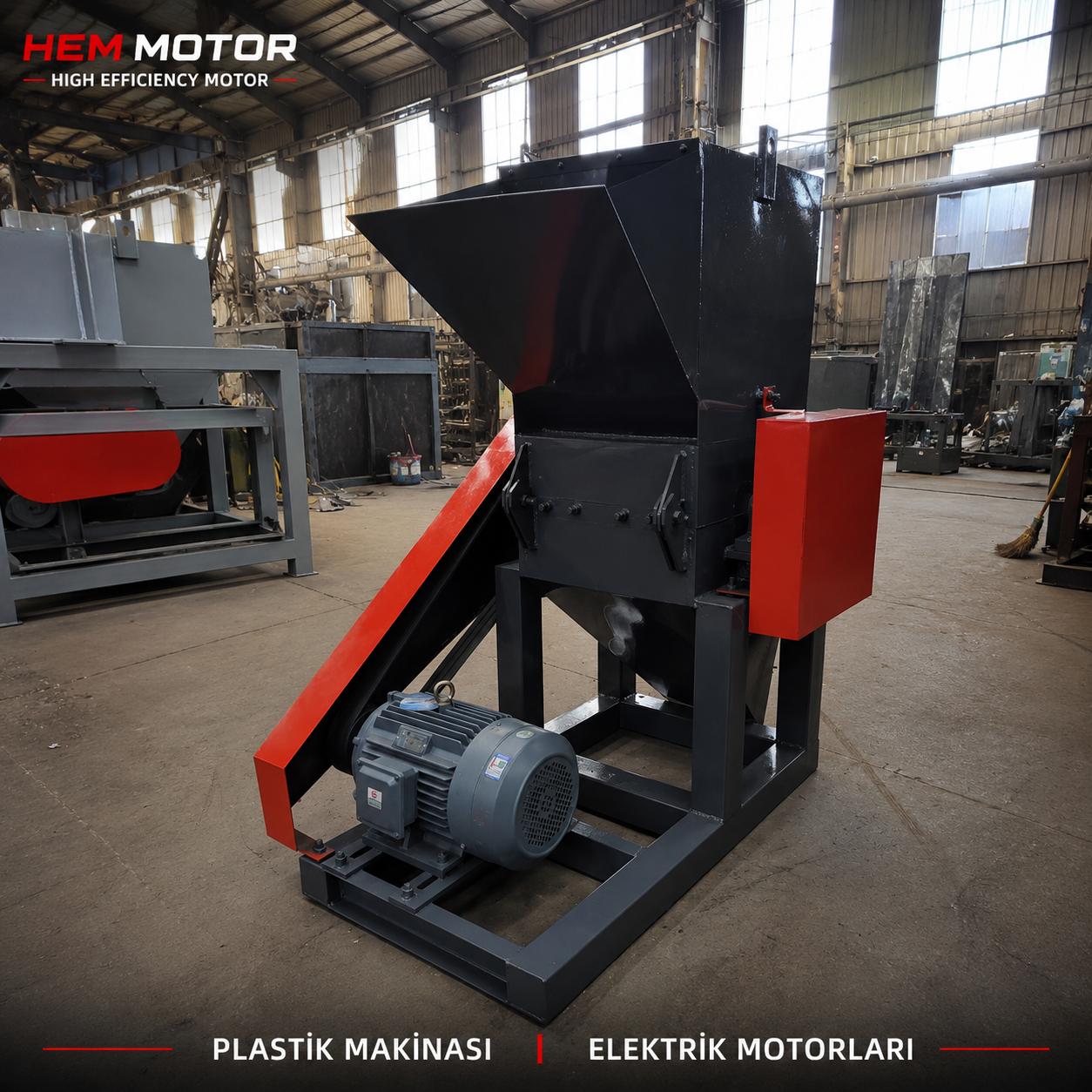
In aggregate and mining plants, washing and classifying the material is a critical step that directly determines product quality. One of the most common machines for this job is the trommel: a slightly inclined, rotating, perforated cylinder (rotary screening-washing drum). The material enters the drum, moves forward as the drum rotates, is washed by water spray, and is separated by size through the screen holes. The heart of this machine is the drive motor that rotates the drum. However, trommel motor selection is very different from selecting an ordinary industrial motor: the environment is wet, muddy and abrasive; the drive is low speed but high torque; operation is continuous and heavy duty. In this article we cover all the points to consider when selecting a trommel drive motor.
What Is a Trommel and Why Is Its Motor Special?
A trommel is a machine that both washes and classifies material by screening inside a rotating drum. It is common in aggregate washing, mining ore washing, compost screening and recycling plants. The drum must rotate slowly, because the material needs time to be washed and to pass through the screens. The typical drum speed is very low, so the motor drives it not directly but through a gear reducer.
The reason the motor is special is the combination of three conditions: continuous high torque, low output speed and an extremely harsh environment (water, mud, abrasive dust). These three conditions determine the motor's mechanical design, its protection class and its frame material. We covered general motor selection in a crusher and stone-crushing plant in our crusher and stone-crushing plant motor selection article; here we focus specifically on the rotary screening-washing drum.
Low Speed, High Torque: Geared Drive
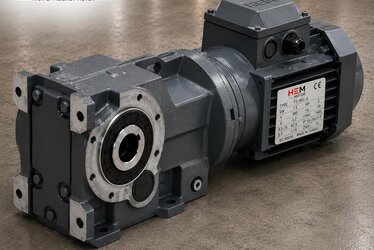
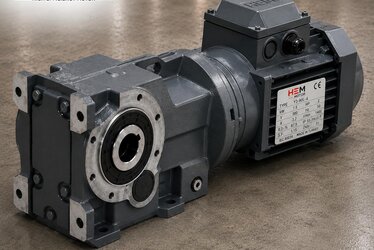
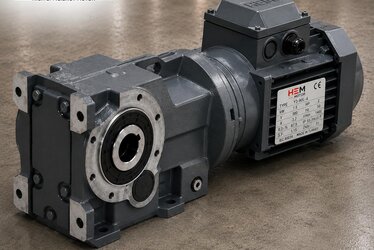
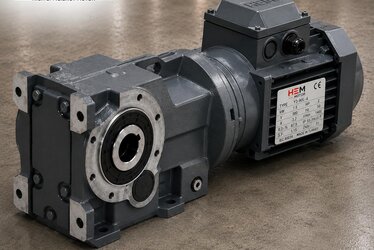
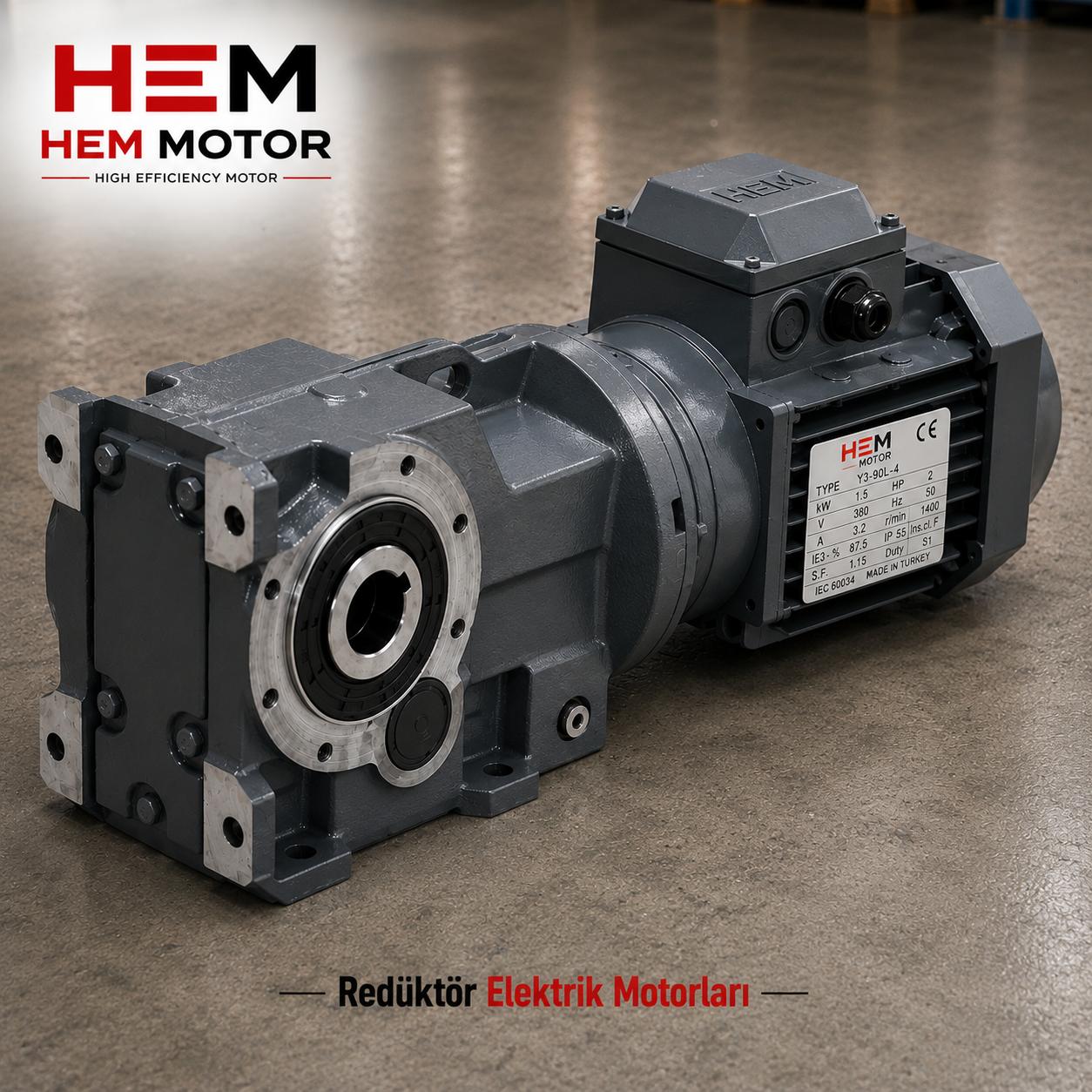
The trommel drum rotates very slowly, whereas a standard induction motor runs at around 1500 rpm. Therefore a gear reducer is placed between the motor and the drum. The reducer lowers the motor's high speed while increasing the output torque. Applications that require low speed and high torque, such as the trommel, are exactly the reason geared drives exist.
The reducer type is selected according to the application. When the output shaft is perpendicular to the input axis, bevel-helical reducers are common; we examined their operating logic in our K series bevel-helical reducer article. At lower powers and where self-locking is desired, a worm gear reducer may be preferred; we covered this in our self-locking in worm gear reducers article. We explained which motor fits the reducer in our reducer-motor matching (IEC frame/flange) article.
To correctly establish the output speed and torque relationship, the motor's rated torque calculation forms the basis; you can find this in our rated torque calculation (torque from kW and speed) article. We also compared whether to choose a geared motor or a separate motor + reducer in our geared motor vs separate motor + reducer article.
Wet and Abrasive Environment: IP66 and Corrosion Protection
In a trommel, water flows continuously; water splashing from the drum, mud and fine solid particles reach the motor and reducer. Therefore the protection class is critical. Protection at the IP66 level against dust and powerful water jets is targeted. We covered what protection classes mean in our IP protection class selection article, and combating dust in the plant in our dust sealing and IP65/IP66 protection article.
In plants where high-pressure washing is done, if there is a chance of the motor being directly exposed to wash water, higher protection should also be considered; we covered this in our IP69K protection and high-pressure washing article. A threat as important as water and mud is corrosion: a humid, mineral-laden and sometimes salty environment wears metal surfaces. Corrosion-resistant paint, protected bearings and suitable seals are therefore important.
Why Is a Cast Iron Frame Preferred?
In heavy, wet and vibrating environments such as a trommel, the motor frame must also be durable. A cast iron frame is suitable for these applications with its high mechanical strength, vibration damping ability and better corrosion behavior. We covered the difference between cast iron and aluminum frames in our cast iron vs aluminum frame article. The cast iron frame is the standard choice in trommel drives, as in other heavy-duty machines in the plant.
Continuous S1 Duty and Heating
A trommel usually runs without stopping throughout the shift; that is, it is in the continuous duty (S1) regime. This means the motor stays under load long enough to reach thermal equilibrium. In continuous heavy duty, motor heating must be well managed, because in a wet environment an invisible problem (for example a clogged cooling fan channel or a mud-covered frame) disrupts heat dissipation. We examined motor cooling and overheating in a crusher plant in our motor cooling and overheating article.
The insulation class and temperature rise of a motor running continuously at full load are important; F-class insulation and a suitable temperature rise ensure long life. We covered this in our insulation class and temperature rise article. PTC/PT100 is recommended to monitor the winding temperature directly; we explained this in our winding temperature monitoring article.
Starting and Torque Management
The trommel drum may have to start while full of material; this requires high torque at the moment of starting. Setting a full drum into motion from standstill is much harder than an empty drum. Therefore the motor-reducer group must be selected according to the worst-case (fully loaded) starting torque. A soft starter or star-delta starting can be considered to manage the starting current and mechanical stress; we covered starting methods in a crusher plant in our starting a crusher motor article.
As the drum rotates, the material distribution can change and sudden load fluctuations can occur. This pulsating and variable load requires the motor's speed-torque curve to be suitable; a motor without sufficient breakdown torque can be overloaded and stall under a sudden load. We examined the speed-torque curve and breakdown torque in our speed-torque curve and breakdown torque article.
Vibration, Alignment and Mechanical Robustness
A trommel is a heavy and rotating machine; an unbalanced material load and worn screening surfaces can produce vibration. This vibration is transmitted to both the motor and the reducer and wears the bearings over the long term. Correct alignment of the connection between the motor and the reducer and mounting it on a solid base are critical. We covered coupling selection and shaft alignment in the motor-machine connection in our coupling selection and shaft alignment article, and foundation and base mounting in our bolt, nut and foundation/base mounting article. A good installation both reduces vibration and prevents loosening in a wet environment.
Compatibility With the Plant's Other Washing and Screening Motors
A trommel does not operate alone; it is part of a washing-screening line. In aggregate washing there are other machines such as the sand screw, and their motor selection carries similar wet-environment challenges; we covered this in our aggregate washing sand screw motor article. We covered motors on the screening and feeder side in our screen and feeder motors article, and the slurry pump motors used to discharge muddy water in our mine dewatering and slurry pump motor article.
Across the whole line, bearing life is also critical; shock, dust and moisture stress the bearings. We covered this in our bearing life: shock, dust and lubrication article. We compiled the general principles of motor protection across the site (dust, moisture, shock) in our stone quarry and mine site motor protection article.
Power Selection: Accounting for Drum Load and Washing Resistance
When determining the power of the trommel drive motor, not only the weight of the drum itself but also the material load inside it, the water weight and the friction resistance during screening must be considered together. As the drum rotates, material is carried up by lifters and falls; this movement creates a continuous torque demand. In addition, the wash water and adhering mud weigh down the rotating mass. Therefore power selection should be generous and sized for the worst-case (fully loaded, heavily muddy) load.
In low-speed applications, the rated torque calculation is the basis of correct power selection; you can find the torque from kW and speed in our rated torque calculation article. Because the trommel runs in continuous heavy duty, the motor must have a thermal margin able to withstand heating at continuous full load. We covered the similar high torque-heavy duty need in mine and ore mills in our mine and ore mill motors article.
Maintenance, Bearings and Long Life
The wet, muddy and abrasive environment makes maintenance of the trommel motor more critical than for an ordinary motor. The ingress of water and fine solid particles into the bearing region is the most common cause shortening bearing life. Therefore a suitable seal and lubrication arrangement, regular grease replenishment and periodic inspection are essential. We covered the bearing greasing and lubrication interval in our bearing greasing and lubrication article.
In a motor running in continuous heavy duty, regular maintenance prevents unexpected downtime. A trommel failure can stop the entire washing-screening line and lead to production loss; therefore selecting a high-quality, long-life motor is a downtime insurance. We examined the general maintenance schedule in our maintenance and periodic check schedule article, and reducing failure and downtime cost across the site in our motor failure and downtime cost article. Keeping a spare for motors at critical points is the safest way to bring the line back up quickly on wet and demanding sites.
Energy Efficiency and Saving in Continuous Operation
Because a trommel runs continuously for long hours, the motor's efficiency class directly determines the lifecycle energy cost. An IE3 efficient motor does the same job with less electricity than a low-efficiency equivalent, and this difference accumulates markedly in a continuously running application. We covered the annual gain of an efficient motor at continuous load in our energy saving at continuous load article, and the TCO comparison between efficiency classes in our IE5, IE4 and IE3 TCO comparison article. In a geared drive, the reducer's efficiency also affects the total system efficiency; a good motor-reducer match optimizes both torque and efficiency.
Frequently Asked Questions
Why must a trommel motor be geared?
Because the trommel drum must rotate at a very low speed but produce high torque. A standard induction motor runs at high speed; to lower this speed and increase the torque, a reducer is placed between the motor and the drum. In this application, which requires low speed and high torque, direct motor drive is not suitable; geared drive is the standard solution.
What protection class is needed for a trommel motor?
Since the environment continuously contains water, mud and abrasive dust, the IP66 level against dust and powerful water jets is targeted. If there is direct exposure to wash water or high-pressure cleaning, higher protection should be considered. Corrosion-resistant paint and suitable seals are also required.
In which duty type does a trommel drive motor operate?
A trommel usually runs without stopping throughout the shift; this is the continuous duty (S1) regime. The motor stays at full load long enough to reach thermal equilibrium. Therefore a motor suitable for continuous heavy duty, with F-class insulation, well cooled and with monitorable winding temperature should be preferred. Keeping the cooling surfaces free of mud and the fan cowl unclogged in the wet environment is also important to keep heating within the limit during continuous operation.
Get a Quote
For the trommel (rotary screening-washing drum) drive in your aggregate or mining washing plant, let us select together a motor suitable for the wet environment, with IP66 protection, a cast iron frame and matched with the right reducer. We evaluate your output speed, torque, protection class and corrosion needs according to your application. For a fast quote call our line at +90 (532) 345 49 86 or reach us through our contact page. You can review our full product range from our home page and crusher-mining applications from our crusher and stone-crushing motors category.
Purchasing and Selection Checklist
- Determine the drum output speed and the required torque; select the appropriate reducer ratio.
- Choose a bevel-helical or worm gear reducer according to the mounting geometry.
- Request a protection class of IP66 (higher if needed).
- Specify a cast iron frame and corrosion-resistant paint.
- Verify continuous duty (S1) and F-class insulation with the heating margin.
- Add PTC/PT100 thermal protection embedded in the winding.
- Ensure the bearings are protected against dust and moisture.
- Check speed and protection compatibility with the line's other washing-screening motors.