English
 Türkçe


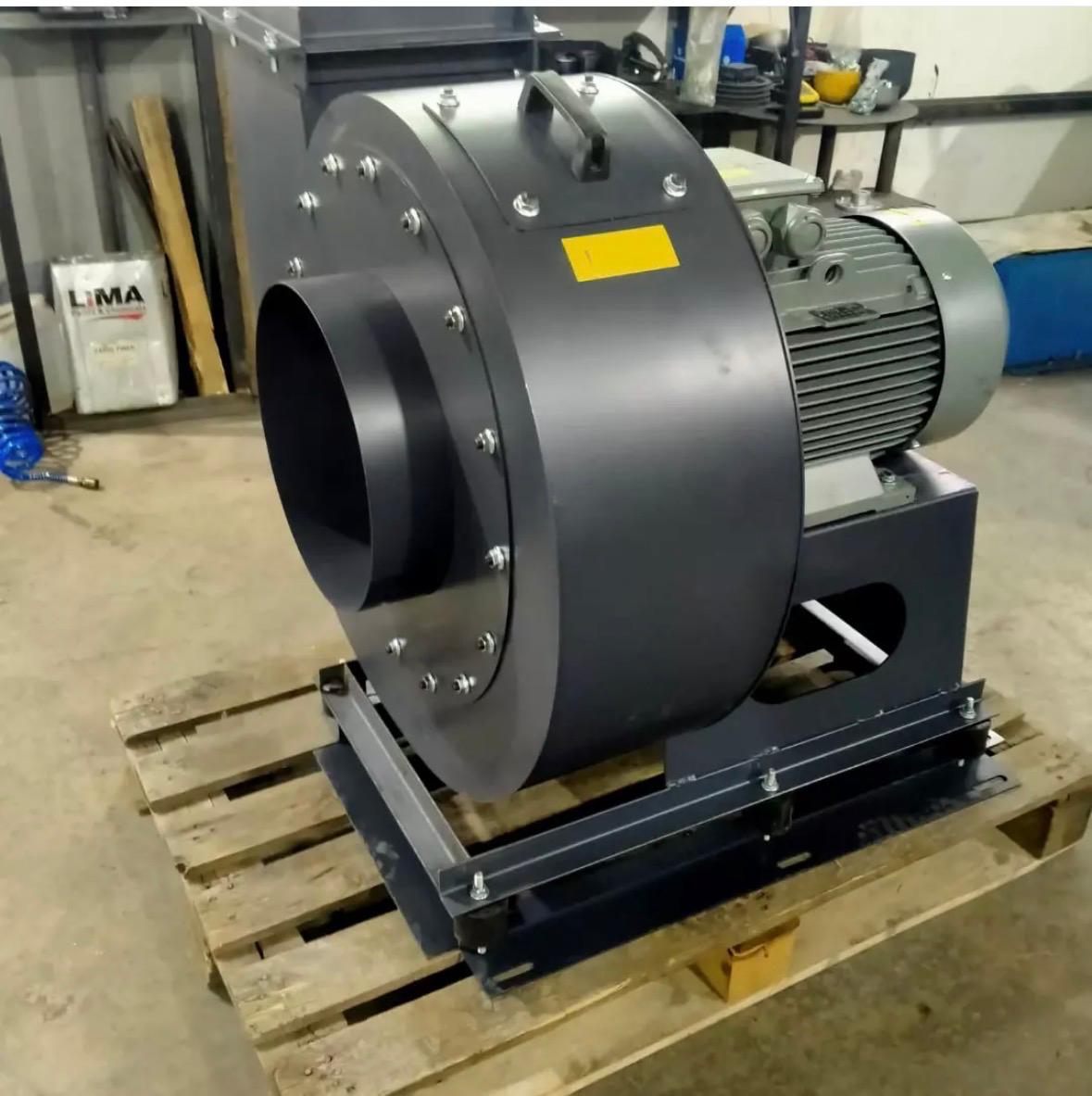

Ice factories and cold chain facilities are among the most demanding industrial environments for electric motors. Continuously running ammonia refrigeration compressors, tank agitators turning below freezing, ice conveyors operating on wet and icy floors; all demand reliable motors under high humidity, low temperature, condensation and uninterrupted duty. A poorly selected motor means winding burnout, bearing damage, condensation-driven insulation loss and unplanned downtime. In this guide we cover compressor, agitator and conveyor motor selection for ice factory and cold chain applications in depth, from kW, pole/speed, IP protection class, F/H insulation, body type, reducers and variable frequency drives, and explain how to source correctly from manufacturer stock with fast delivery.
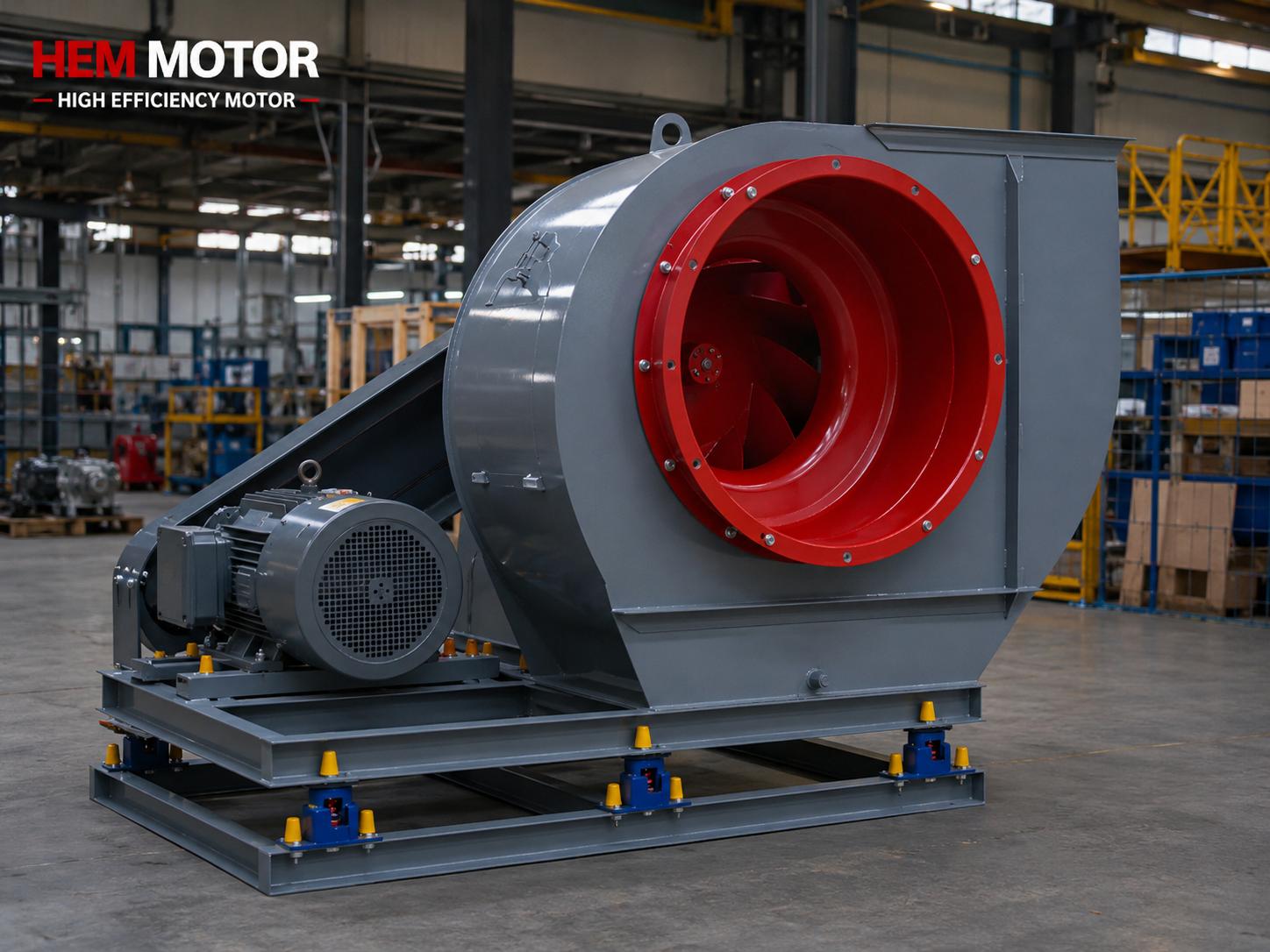
Core Challenges of Motor Selection in the Cold Chain
Three factors separate cold chain motor selection from ordinary industrial use: persistent humidity and condensation, low ambient temperature and long continuous running. The relative humidity around cooling rooms, ice pools and blast tunnels is constantly high; when the motor stops, condensation forms in the winding and bearing zone. This water film lowers insulation resistance and increases short-circuit risk on restart. For this reason, ice factory motors require at least IP55 protection, anti-condensation measures and the correct insulation class as non-negotiable requirements. Our article on electric motor IP protection class selection details which class is needed in humid environments.
The second challenge is the motor duty profile. A refrigeration compressor practically never stops; this is a typical S1 continuous duty application. The agitator and conveyor may run continuously or intermittently depending on the plant. Defining the duty type correctly is critical for thermally sizing the motor. Our duty type S1-S6 selection guide explains this distinction with examples. For the holistic motor needs of cold storage equipment, our cold air storage fan and compressor motors article is a complementary resource.
Ammonia / Refrigeration Compressor Motor
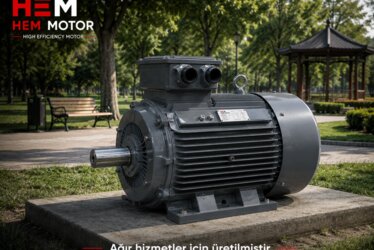
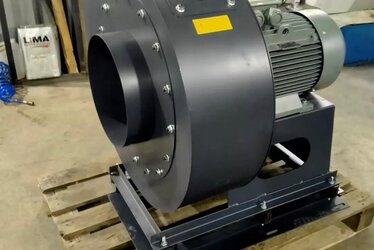
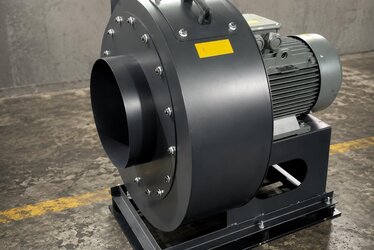
The heart of an ice factory is the refrigeration compressor. Industrial ammonia (NH3) systems use screw or piston compressors, and the driving motor is usually a high-power, S1 continuous duty asynchronous motor. The power range can extend from around 7.5 kW up to 355 kW depending on the application. Compressor motors are mostly selected as 4-pole (about 1450 rpm), but a 2-pole high-speed design (about 2900 rpm) may also be preferred depending on system design. For calculating motor power correctly, our motor power calculation for pump, fan and conveyor kW article is a practical starting point.
On high-power compressor motors, direct-on-line starting stresses the grid; therefore star-delta or softstarter soft starting is preferred. This limits both the inrush current and the sudden torque on the compressor mechanism. Our asynchronous motor star-delta and softstarter article compares starting methods. When renewing an existing compressor motor, the compressor motor replacement and matching guide ensures correct matching, while for the compressed air side the compressed air screw compressor motor power selection should be reviewed.
Insulation and Efficiency in Compressor Motors
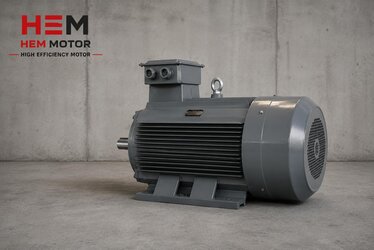
A continuously running compressor motor produces continuous heat. While standard F class insulation is sufficient for most applications, high ambient temperature or heavy cycling calls for H class insulation to provide extra thermal margin. On the efficiency side, IE3 Premium can be the baseline; but on a compressor running more than 8000 hours a year, the energy savings of IE4 Super Premium or IE5 Ultra Premium motors pay back quickly. Our IE4 threshold for pump, fan and compressor article shows at which running hours moving to IE4 makes sense. A cast iron body is recommended for heavy-duty compressor applications in terms of vibration and heat resistance.
Tank Agitator / Stirrer Motor
In ice factories and cold chain food plants, brine (salt water) pools, refrigerant tanks and process mixers are driven by agitator motors. The agitator application is a classic example of geared drive requiring low speed and high torque. The direct motor speed (1450 or 960 rpm) is usually too high for mixing; therefore the motor is matched with a reducer and the output speed is lowered to suit the application.
Worm gear reducers are common in compact agitator drives; in the HEM30-HEM130 body range, with reduction ratios between 1/7.5 and 1/100 and a self-locking feature, they prevent shaft back-drive on vertical mixers. Our worm gear reducers product page lists ratio and body options. For large tank mixers requiring higher efficiency and a wider torque range, helical worm gear reducers are preferred. For mixing applications with a circulation and transfer pump character, our centrifugal pump motor selection: flow and head article completes the hydraulic side.
Mounting and Sealing in Agitator Motors
Vertical tank mixers are mostly connected to the reducer with a B5 large flange or B14 small flange mount; horizontal arrangements use B3 foot or B35 foot+flange combinations. For mounting type selection, our efficient electric motors product family covers body and flange options. Since shaft-side sealing is critical in brine and humid environments, oil seal and bearing protection must be emphasized; our cast iron motor oil seal and sealing protection article covers this in depth. If salt environment corrosion is a concern, the cast iron motor coastal and marine salt protection summarizes extra measures.
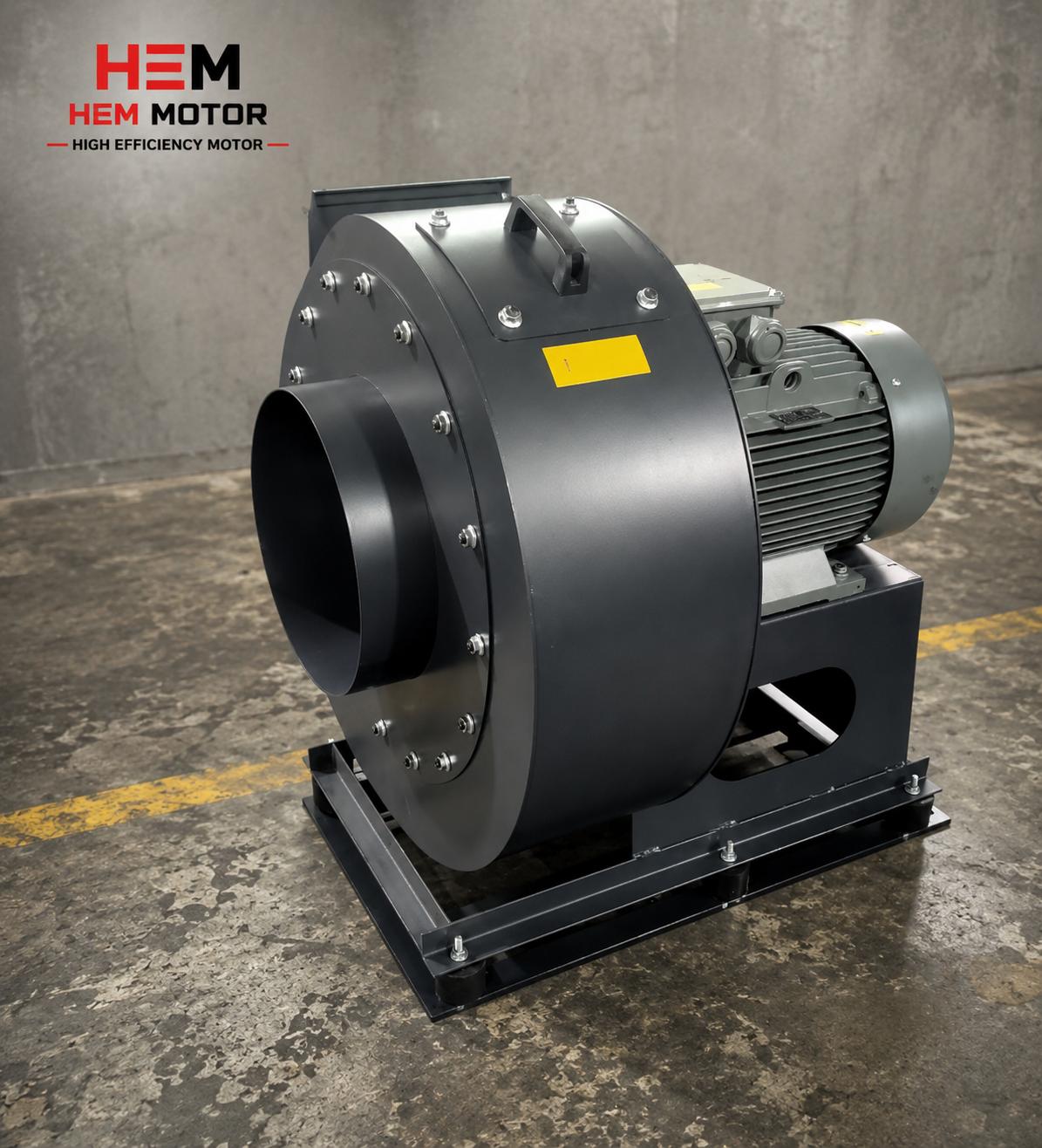
Ice Conveyor and Material Handling Motors
Moving the produced ice to storage, crusher or packaging line is done with belt and screw conveyors. Ice conveyor motors demand low speed and high torque and are almost always geared. Helical bevel reducers (K series) are frequently used in belt drives with their 90-degree right-angle output and high efficiency; a worm gear reducer is sufficient for compact solutions. Since the conveyor motor is expected to run continuously in a wet and icy environment, IP55, and IP56 if necessary, with F/H insulation should be selected.
Conveyor motor power is calculated based on belt length, incline, transported mass and speed. For conveyor motor kW calculation, our motor power calculation guide is again a reference. A backup plan is important so the line does not stop in case of failure; our conveyor belt motor emergency replacement and swap article explains the fast supply strategy. For all cooling tower and chiller side fans, our cooling tower and chiller fan motors IP article should be evaluated.
Condensation, Moisture and Storage Protection
The most common damage in cold chain motors is condensation-driven insulation loss. While the motor sits in the cold, the internal air moisture accumulates as water on the winding surface. Ways to prevent this: keep the internal volume above the ambient dew point with a space heater while the motor is stopped; use sealed/closed bearings; block external moisture ingress with the proper IP class. Motors held in stock for a long time before commissioning should have their insulation resistance measured and be dried if necessary. Our electric motor storage, long-term moisture and bearings article covers this subject in detail.
On the protection hardware side, a thermistor (PTC), thermal overload relay and phase protection relay should be considered standard on cold chain motors. On lines with food contact, hygiene and cleaning conditions also affect motor selection; the dairy, meat and beverage plant electric motor hygiene article explains the higher IP and surface requirements for washdown environments. For protection equipment planning before purchase, our electric motor protection devices purchase article offers a checklist.
Variable Speed with VFD (Frequency Drive)
Since the cooling load changes throughout the day, variable speed via a variable frequency drive (VFD) on compressors and circulation pumps provides significant energy savings. With a VFD, the speed is reduced at low load, lowering both energy use and mechanical wear. However, motors running on a drive should be specified with drive-compatible reinforced winding and insulation, and forced cooling should be considered against insufficient cooling at low speed. Adjusting conveyor speed to the product flow is also easily achieved with a VFD.
Purchasing and Selection Checklist
- Define the application: ammonia/refrigeration compressor, tank agitator or ice conveyor.
- Power (kW) and pole/speed: 2/4 pole for compressor, geared low speed for agitator and conveyor.
- Duty type: S1 continuous for compressor; S1 or intermittent S6 for agitator/conveyor.
- Protection class: at least IP55 in humid environments; IP56 and above in washdown/wet zones.
- Insulation: standard F; H class for high temperature and heavy cycling.
- Anti-condensation: space heater, sealed bearings, proper storage.
- Mounting type: B3, B5, B14, B35 or B34 depending on reducer connection.
- Reducer: worm, helical worm or helical bevel for agitator/conveyor; ratio 1/7.5-1/100.
- Starting: star-delta or softstarter at high power.
- VFD need: drive-compatible winding/insulation for variable load.
- Efficiency: IE4/IE5 instead of IE3 for long running hours.
- Protection hardware: thermistor, thermal and phase protection relays.
- Supply: manufacturer stock, lead time and spare motor plan.
To get an accurate quote, conveying complete requirement information speeds up the process; our information to provide when requesting an electric motor quote article lists which data you should share.
Frequently Asked Questions
Which protection class is needed for an ice factory compressor motor?
At least IP55 protection is recommended for the high-humidity, condensation-prone cold chain environment. In zones with direct water splash or washdown, IP56 and above should be preferred. In addition, using a space heater and sealed bearings to prevent condensation while the motor is stopped significantly extends insulation life.
Why is a tank agitator motor selected with a reducer?
Mixing applications require low speed and high torque. The motor's direct speed of 1450 or 960 rpm is too high for most mixers. A worm or helical worm reducer lowers the speed by a ratio of 1/7.5-1/100 to deliver the required mixing speed and torque; the self-locking feature of the worm gear prevents shaft back-drive on vertical mixers.
What should be done against condensation in a cold chain motor?
While the motor sits in the cold, internal moisture accumulates as water on the winding. To prevent this, keep the internal volume above the dew point with a space heater, select closed/sealed bearings and the proper IP class, and on motors held for a long time, measure the insulation resistance before commissioning and dry if necessary.
Get a Quote
We supply compressor, agitator and conveyor motors for your ice factory or cold chain facility from manufacturer stock with fast delivery. For a complete solution including IP protection, F/H insulation, reducer ratio, mounting type and VFD compatibility, reach us via our contact page or call our line at +90 (532) 345 49 86. You can also explore the full product family from our home page; get a quote for the right motor and lead time.