English
 Türkçe


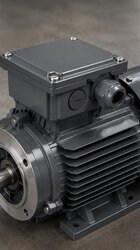
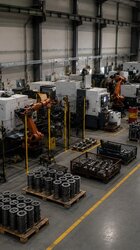
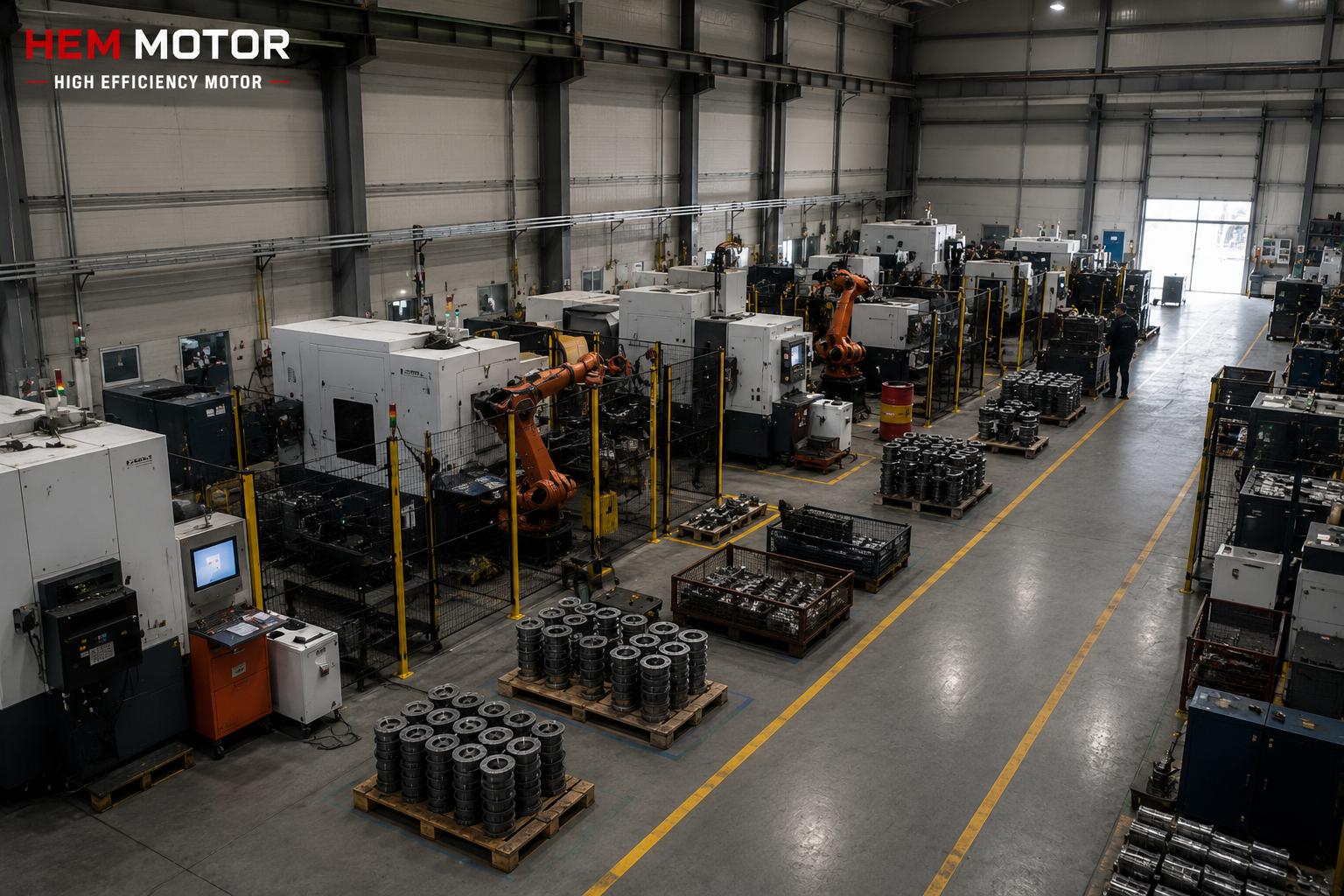

Coffee roasting plants and brewery-malt production lines are special operations where high temperature and continuous drive come together. From the coffee roasting drum turning at hundreds of degrees, to the cooling and extraction fans removing chaff and smoke; from the mash mixer in a brewery homogenizing the dense mash to malt handling and milling equipment, every stage turns with an electric motor. High temperature and continuous operation bring the insulation class and duty type to the foreground in motor selection. In this article we cover motor selection for coffee roasting and brewery-malt plants step by step: roasting drum drive, cooling/extraction fan, mash mixer, high temperature and F/H insulation. As HEM Motor, we supply the right motor quickly from stock.
Motorized Equipment on the Coffee Roasting and Brewery-Malt Line
On the coffee side: roasting drum drive, cooling tray mixer, cooling and extraction (chaff) fan, handling elevators and grinder (mill). On the brewery-malt side: malt mill, mash and lauter mixer, wort transfer pumps, fermentation tank pumps, CIP pumps and cooling fans. Each equipment has a different load profile; roasting and mixing need high torque, fans need high speed, pumps need medium load. As a sector reference, our tea and tobacco processing plant motors article covers a similar drying/sieving/extraction dynamic.
Roasting Drum Motor
The roasting drum roasts coffee beans by turning them with hot air. The drum must turn slowly and smoothly (usually 30-60 rpm) and move a full load at start; this means high starting torque and a reducer. A 1400 rpm motor is reduced to low speed with a helical-bevel reducer. Since the drum works near heat, the motor insulation class matters; F is standard and H is preferred under continuous high ambient temperature. For hot and continuous load, our insulation class and cast iron in hot/dusty environments article is directly relevant.
Cooling and Extraction (Chaff) Fan Motor
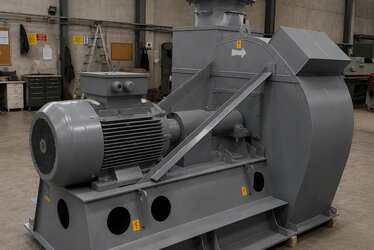
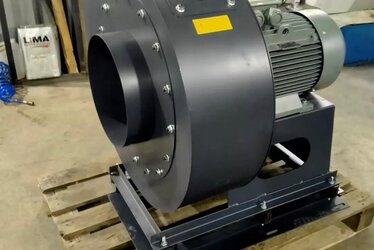
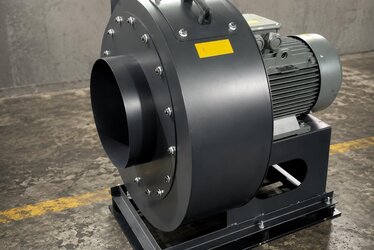
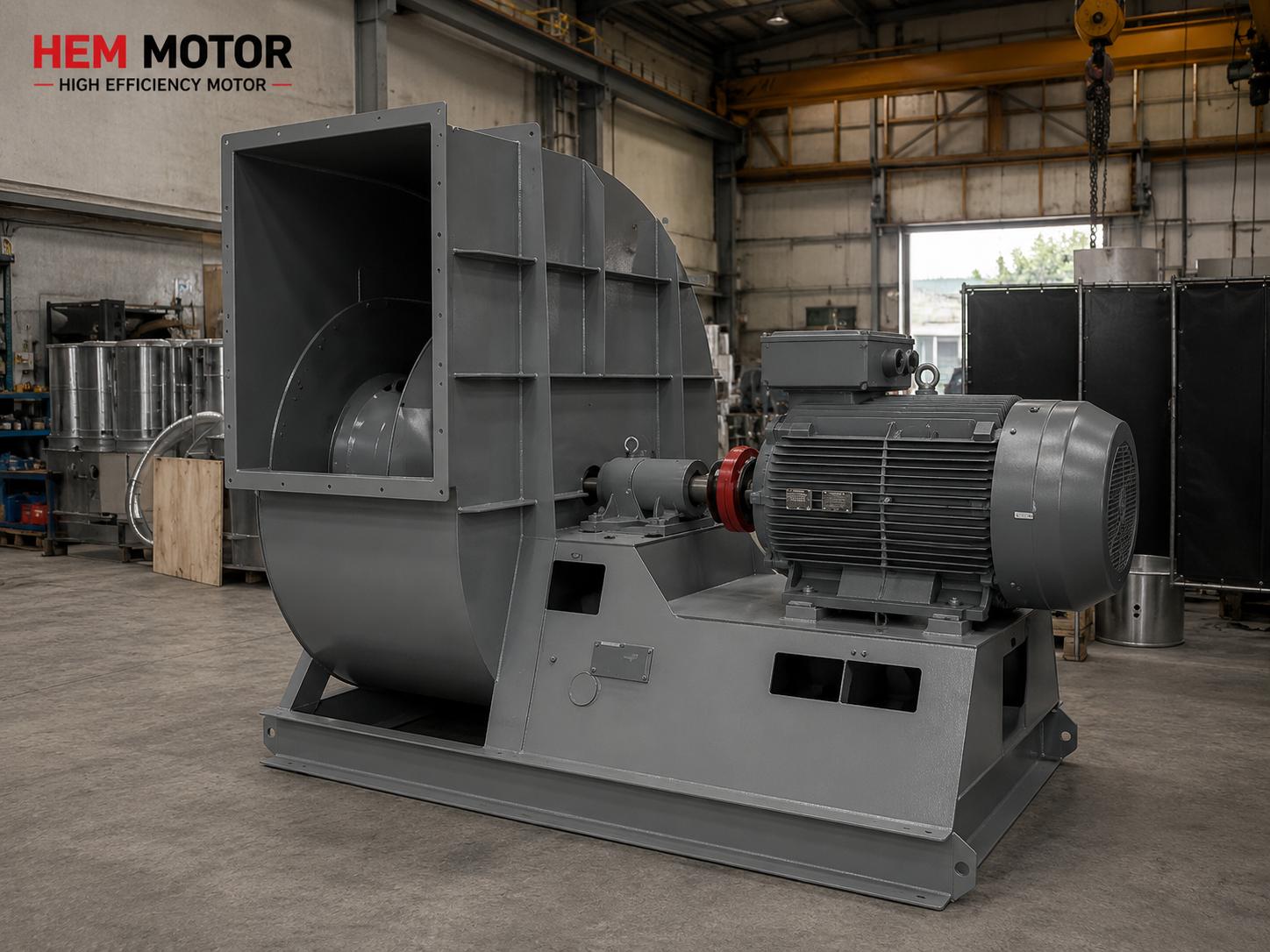
Roasted coffee must be cooled quickly and the chaff extracted. Cooling and extraction fans run at high speed (mostly 2-pole / 3000 rpm) and on continuous duty. industrial fan motors are produced for this application with IP55 and F insulation. For power selection by fan type, see centrifugal and axial fan motor selection and for dust extraction, our aspirator and dust collection fan motor article.
Mash Mixer and Malt Mill Motor
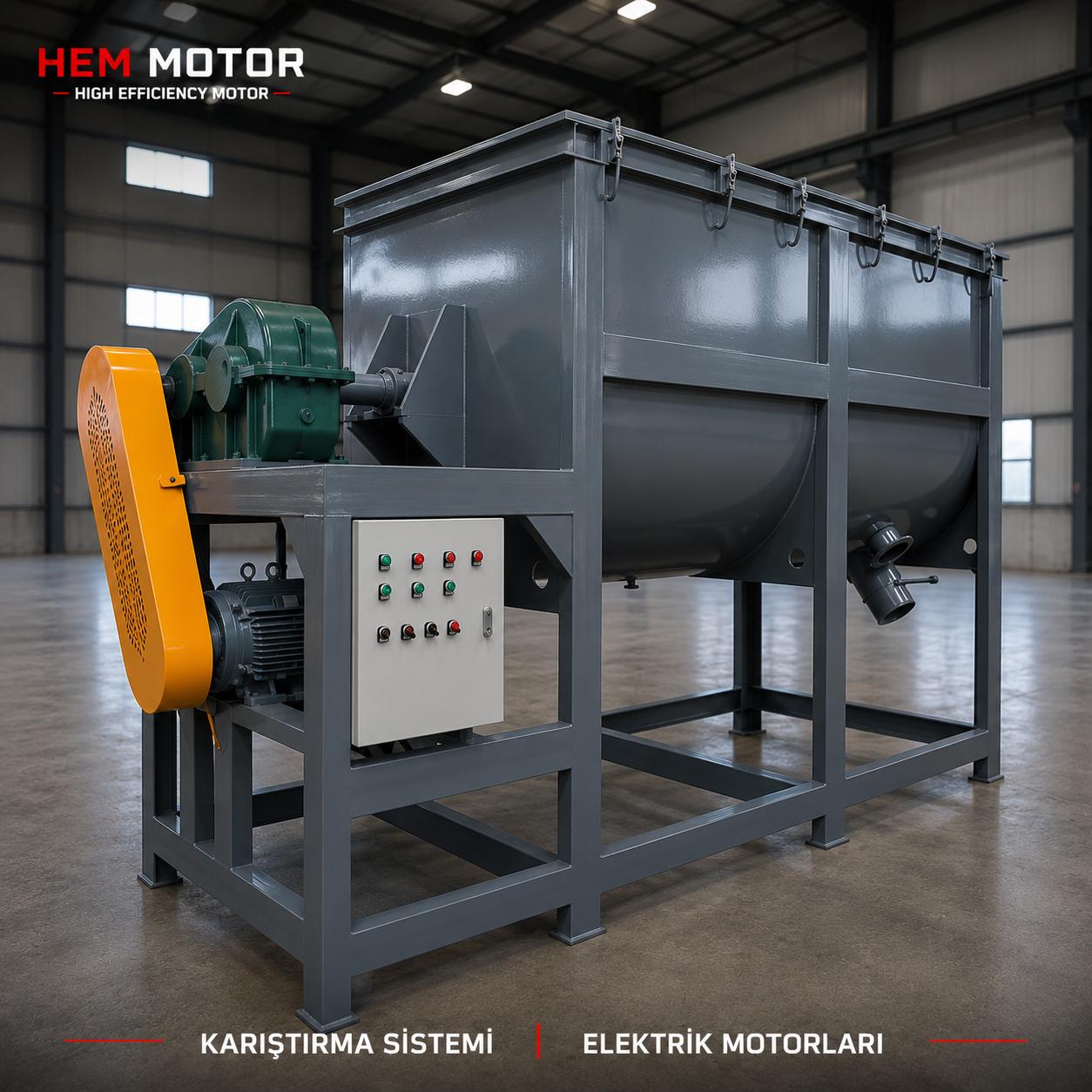
In brewing, the mash mixer homogeneously stirs hot water and malt; it is a dense, viscous mass needing high torque. Therefore the mixer runs at low speed with a geared motor. The malt mill crushes dry malt; medium-high torque and a 4-pole motor are typical. For reducer selection, our matching a motor to a worm gear reducer article explains IEC compatibility. For wort transfer and CIP pumps, the pump electric motors range is suitable; for pump power, see centrifugal pump motor selection.
High Temperature and Insulation Class (F/H)
Roasting and mashing processes produce high ambient temperatures. The motor winding insulation class must be selected according to ambient temperature and winding temperature rise. Class F withstands 155 °C and Class H 180 °C winding temperature. Under high ambient temperature or continuous full load, Class H ensures long life. For the effect of insulation class on life, our insulation class in hot environments article is detailed. At high altitude or very hot environments, power derating must also be considered.
Duty Type S1 and Continuous Operation
Roasting and brewery plants run continuously through long shifts. Selecting motors with S1 continuous duty prevents overheating in a hot environment. For duty types, see our S1-S6 duty type article. For a motor running continuously in a hot environment, temperature monitoring (PT100/thermistor) and thermal protection are recommended; our motor protection: thermal, relay and fuse article is a guide.
Speed, Pole and Power Selection
- 2-pole / 3000 rpm: Cooling and extraction fans, high-speed pumps.
- 4-pole / 1500 rpm: Malt mill, transfer pumps, general drive (most common).
- 4-pole + reducer or 6-pole: Roasting drum, mash mixer, slow mixers.
Power typically ranges from 1.5 kW to 15 kW for fans and pumps and 2.2 kW to 22 kW for the roasting drum and mixers. For pole selection see 2, 4, 6 pole selection and, for lines needing speed control, our VFD with asynchronous motor article is useful.
Efficiency and Energy
In continuously running fans and pumps, the efficiency class is reflected directly in the bill. IE4 high-efficiency electric motors provide long-term savings. We explained which application needs IE4 in pumps and fans in the IE4 threshold in pumps, fans and compressors.
Purchasing and Selection Checklist
- Are the reducer type, ratio and output speed defined for the roasting drum and mash mixer?
- Is insulation class F (H under continuous high temperature) selected?
- Are cooling/extraction fans sized at the right speed and power?
- Is S1 continuous duty confirmed?
- Are temperature monitoring (PT100/thermistor) and thermal protection planned?
- Is pump power selected by flow/head?
- Is the IE4 efficiency class evaluated on continuously running fans/pumps?
- Are stock and lead time confirmed?
Mounting Type and Mechanical Matching
Since the roasting drum and mixers in a coffee and brewery plant run geared, the motor usually connects to the reducer with a B5 or B14 flange. Fans are mostly B3 foot or B5, and pumps B5/B35. If the mounting type does not fit the machine, installation is delayed; flange and shaft compatibility should be clarified before ordering. For flange types see our B5 flange electric motors page and for the general product range our efficient electric motors category.
Cooling, Dust Accumulation and Maintenance
In coffee roasting, chaff and fine dust can stick to the motor cooling fins and weaken cooling. A motor already strained in a hot environment heats up further when the fins are clogged. Therefore regular cleaning and the correct IP protection (at least IP55) are needed. On continuously running motors, bearing lubrication and temperature monitoring also extend life. A periodic maintenance plan significantly reduces early failure in a hot environment.
Emergency Substitution, Stock and Energy Efficiency
If the roasting drum or cooling fan motor fails, production stops and the hot process goes out of control; therefore spare motors in critical powers and nameplate records are important. Correct nameplate matching prevents wrong delivery. On continuously running fans and pumps, the IE3/IE4 efficiency class lowers the electricity bill and ensures compliance with the efficiency regulations in force. As HEM Motor, we keep high-insulation, continuous-duty motors ready in stock.
Bearings, Bearing Life and Hot Environment
In a roasting and brewery plant, motors run continuously in a hot environment; this strains bearing life. At high temperature, the bearing grease thins and its life shortens, so lubrication suited to hot environments and heavy-duty bearings are important. In fans, high speed makes bearing balance and vibration critical. On motors running continuously through the season, a bearing check and lubrication schedule reduce unexpected failures. Oil seal tightness prevents dust and moisture from entering the motor.
Terminal Box, Grounding and Commissioning
In a coffee-dust and humid brewery environment, terminal box tightness is achieved with a suitable cable gland and gasket. Grounding is essential for safety. In three-phase motors, the correct phase sequence determines the rotation direction in the roasting drum and fan; the wrong direction causes problems in the process. During commissioning, insulation resistance measurement and first-start checks should be done. On VFD-driven motors, a shielded cable and grounding reduce the risk of bearing currents.
Correct Sizing, Derating and Load Ratio
High ambient temperature lowers the power the motor can deliver, so power derating must be taken into account in a hot environment. At ambient temperatures above 40 °C or at high altitude, the rated power of the motor decreases; a derating factor is applied for the right selection. An oversized motor lowers efficiency at low load ratio, and a too-small motor means continuous overload. The ideal load ratio is the 75-90% band of the rated power; correct sizing in a hot environment prevents early failure.
Supply Process, Lead Time and Stock Planning
Since the roasting drum and mash mixer in coffee roasting and brewery-malt plants require special geared solutions, supply must be planned in advance. The spare motor needs of critical equipment (roasting drum, cooling fan, mash mixer, main pumps) should be identified and the most used powers kept in stock. A roasting or fan motor failure stops production and takes the hot process out of control. Delivery from manufacturer stock is much faster than a production order. For an accurate quote, the equipment list, insulation class request, existing nameplate data and delivery address should be shared. The motor should be protected during shipping, damage checked on delivery, and insulation measured before commissioning.
Auxiliary Equipment and Handling Motors
In a coffee and brewery plant, alongside the main process there are auxiliary motors such as sack unloading, handling elevators, packaging line, CIP pumps and wastewater pumps. Although these motors are small in power, they are important for line continuity. For handling and elevators, conveyor belt electric motors and geared solutions are suitable. In a hot and dusty environment, suitable IP protection and S1 duty type should be observed on auxiliary equipment motors too. On pumps, the right power should be selected by flow and head.
Frequently Asked Questions
Why is H insulation recommended over F on the roasting drum motor?
Roasting produces high ambient temperature; the motor works near heat. Class F withstands 155 °C and Class H 180 °C winding temperature. Under high ambient temperature or continuous full load, Class H extends winding life and reduces early failure.
Which motor-reducer combination suits the mash mixer?
The mash is dense and viscous; mixing must be slow and powerful. A 1400 rpm motor is reduced to low output speed with a worm gear or helical-bevel reducer, and torque is multiplied. Pay attention to IEC frame/flange compatibility in the reducer-motor match.
Why is the duty type important on the cooling fan motor?
Cooling and extraction fans run continuously throughout the shift. A non-S1 motor heats up under continuous load and may burn out. Therefore fan motors must be selected with S1 continuous duty.
Supply with HEM Motor
For coffee roasting and brewery-malt plants we ship high-insulation, continuous-duty and geared motors quickly from stock. For a general food/beverage motor inventory, our dairy, meat and beverage plant motors article and, for a quote, our information to provide when requesting a quote article guide you. For the difference between stock and production order, see stock delivery vs production order.
Get a Quote
Share your plant machine list, the nameplate data of your existing motors (kW, speed, frame, mounting type) and your delivery address; we will supply the most suitable motor from manufacturer stock with fast delivery. For an up-to-date, clear quote instead of a fixed price, contact us at +90 (532) 345 49 86 or through our contact page. As HEM Motor, with our identity as both manufacturer and seller, we ship the right motor in the shortest time.