English
 Türkçe

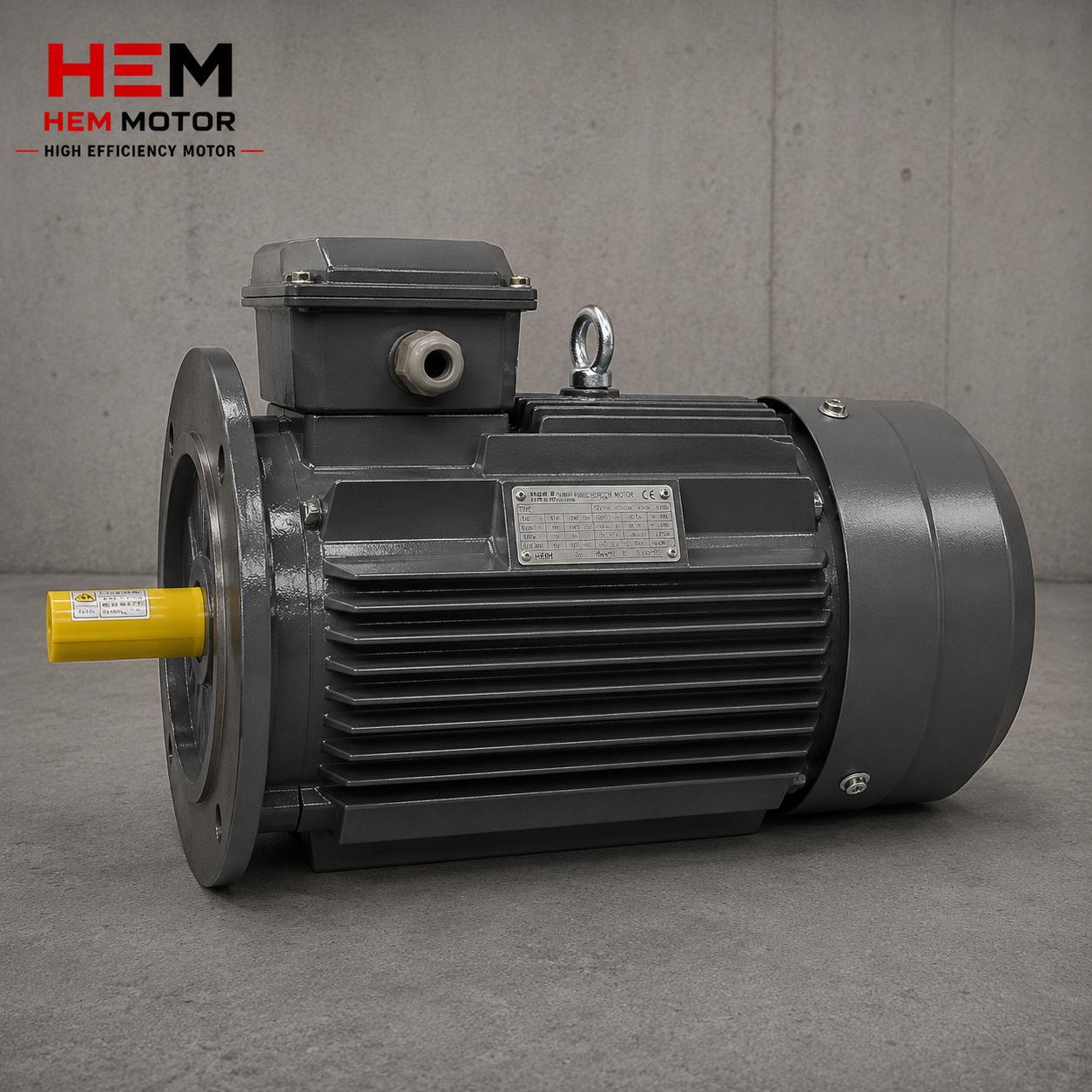

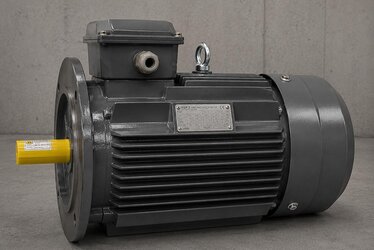
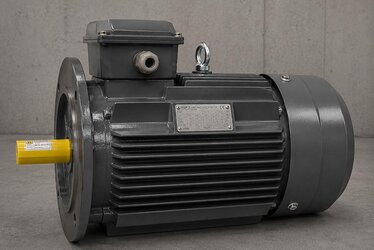
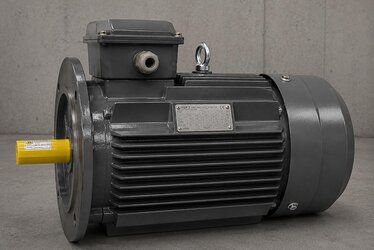
IE5 Ultra Premium is the highest efficiency class defined in the IEC 60034-30-2 standard and represents the current peak of energy performance achievable in electric motors. Arriving after the IE3 Premium and IE4 Super Premium generations, IE5 is engineered to push motor losses roughly 20 percent lower than IE4. This guide comprehensively covers the synchronous reluctance (SynRM) technology that underpins the IE5 class, the logic of the magnet-free rotor, why a drive is always required, the efficiency and cost differences between IE3/IE4/IE5, which applications genuinely justify a move to IE5, and the correct selection and ordering process. Our aim is to provide technical teams and plant managers who make purchasing decisions with an application-oriented, impartial reference written from a manufacturer's authority. Throughout the article we link to expert content that deepens each subtopic; this page is designed to be the central hub of the IE5 world.
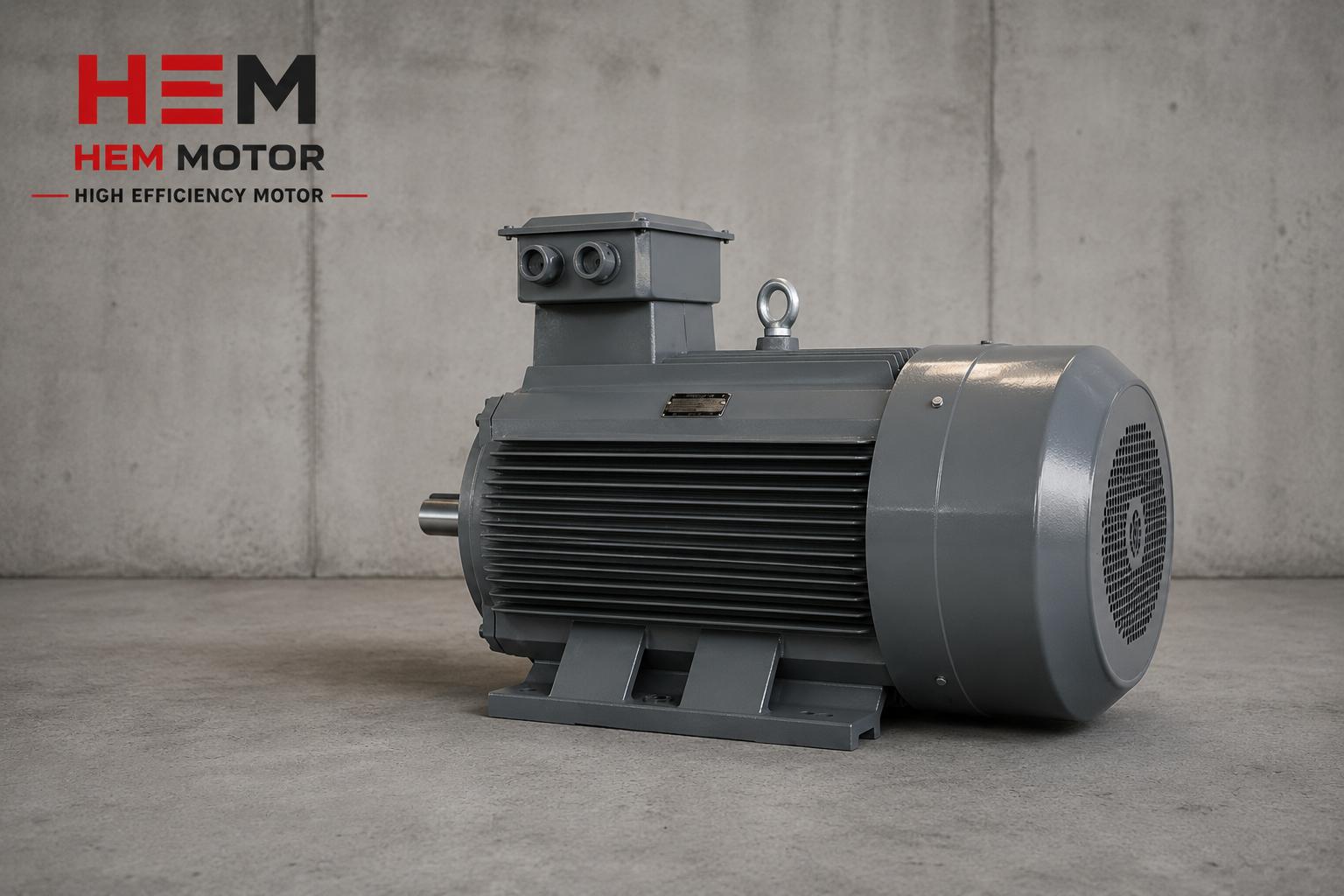
What Is the IE5 Efficiency Class? The Meaning of Ultra Premium
Efficiency classes for electric motors are defined by the IEC 60034-30 series of standards. The scale running from IE1 to IE4 for conventional asynchronous (induction) motors was extended with IEC 60034-30-2 to include the IE5 Ultra Premium level. IE5 targets a reduction of motor losses of roughly 20 percent compared with the IE4 Super Premium class. The critical point here is this: this reduction in losses is far more meaningful than the few tenths of a point increase in efficiency, because in a continuously running motor every loss is waste converted directly into heat and electricity bills.
Reaching the IE5 level with a classic squirrel-cage asynchronous motor is practically very difficult. For this reason the vast majority of IE5 motors are built using a different electromechanical principle, synchronous reluctance (SynRM) technology. Our content on the future efficiency class, which examines the foundations of the SynRM architecture and why it is positioned as the standard of the future, is a natural continuation of this page. You can find the strategic framework for why and how to migrate to the IE5 class in our IE5 Ultra Premium transition guide.
A simple example helps grasp the practical meaning of efficiency class. A motor that is 92 percent efficient turns 8 percent of the electricity it draws into heat as loss; raise the efficiency to 94 percent and the loss drops to 6 percent. What looks like only a two-point improvement actually means eliminating a quarter of the losses. This is exactly the logic of IE5: in the high-efficiency region, every extra point produces a disproportionately large gain on the loss side. When a motor spends most of the year running, this gain flows directly into operating expenses, and the energy paid over a motor's service life often far exceeds its purchase price. That is why, in modern energy management, motor selection should be treated as a long-term investment decision rather than a purchasing line item.
How Does Synchronous Reluctance (SynRM) Technology Work?
The synchronous reluctance motor takes its name from "reluctance," the difference in magnetic resistance at the heart of its operating principle. In a classic asynchronous motor, current is induced in the rotor, and this induction creates losses. In a SynRM rotor there is no winding, cage or magnet; the rotor is shaped with internal flux barriers so that magnetic flux flows easily in certain directions and with difficulty in others. When the stator creates a rotating magnetic field, the rotor turns to align with the path of lowest magnetic resistance, and thus torque is produced at synchronous speed.
The beauty of this principle is its simplicity. Because there is no current-carrying element in the rotor, the rotor copper losses that are unavoidable in an asynchronous motor are almost entirely eliminated. While a significant part of the total loss in an asynchronous motor occurs in the rotor, largely zeroing out this item in a SynRM is the fundamental source of the efficiency increase. The rotor is also mechanically simple and robust; it consists only of silicon-steel laminations, with no magnet to crack or adhesive to degrade at high temperature, which makes it durable against high speeds and thermal stress.
Advantages of the Magnet-Free Rotor
The absence of permanent magnets in the SynRM rotor delivers clear advantages both technically and commercially. The near-elimination of Joule (copper/induction) loss in the rotor lets the motor run cooler and raises efficiency. The absence of rare-earth magnets (neodymium, dysprosium) makes the supply chain largely independent of price volatility and geopolitical risk. Our article on the supply advantage of the magnet-free rotor explains the strategic side of this decision, while we examined the environmental and economic end-of-life value of the magnet-free structure in our recycling and sustainability content.
The Difference Between SynRM and Permanent Magnet (PM) Motors
There are two common routes to the IE5 target: pure synchronous reluctance (SynRM) and the permanent magnet synchronous motor (PMSM), or their hybrid, PM-assisted SynRM. PM motors offer high torque density but carry magnet cost and demagnetization risk; pure SynRM offers lower cost and a more robust supply profile. We covered the technical and commercial comparison of the two architectures in detail in our article on the difference between SynRM and PM motors. We answered the question of whether more torque is produced in the same frame size compared with asynchronous motors in our torque density comparison content.
Why Does an IE5 Motor Not Run Without a Drive?
The operating logic of the SynRM motor does not allow it to start on its own when connected directly to the grid. For the rotor to synchronize with the stator field, the frequency and voltage must be ramped in a controlled manner. For this reason IE5 synchronous reluctance motors are always supplied and operated as a package with a frequency converter (VFD/drive). The drive handles critical tasks such as starting, torque control, speed adjustment and maintaining the optimum magnetic operating point according to the motor's mathematical model.
While the presence of a drive may seem like a requirement, it actually brings one of IE5's biggest advantages: variable speed control. A fixed-speed asynchronous motor fed directly from the grid runs at full speed regardless of need; throttling excess flow with a valve or damper simply wastes energy. In an IE5 + drive package, the motor runs at the speed the process actually requires. In applications such as pumps and fans, where the relationship between speed and power consumption is cubic, even a small drop in speed produces a dramatic reduction in energy use. So the drive is both a technical necessity that runs the IE5 and an independent source of savings.
For this reason it is best to think of IE5 not as a "motor" but as a "motor + drive package." We detailed why the package is an inseparable whole and its cost items in our article why it does not run without a drive, package and cost. We explained autotune and parameter settings for correctly identifying the motor to the drive step by step in our drive parameterization and commissioning content. You can find the DC bus voltage with which the drive feeds the motor and the input voltage selection under DC bus voltage and supply, and compatibility with different VFD brands in our drive brand compatibility article.
Comparing IE3, IE4 and IE5: Efficiency, Cost and Investment
The basis of the right decision is to read the three classes not only from the nameplate efficiency but from total cost of ownership (TCO). IE3 Premium and IE4 Super Premium motors are offered in the HEM Motor catalogue between 0.55 kW and 355 kW with cast-iron housing, IP55 protection and class F insulation, and can run directly on the grid. IE5, due to the drive requirement, increases the initial investment; however, in continuously running applications the energy savings close and exceed this gap.
It is useful to briefly summarize the points that separate the three classes in practice. IE3 Premium is still the legal minimum efficiency level in many applications, runs directly on the grid and has the lowest initial investment; it makes sense for moderately loaded drives that do not require speed control. IE4 Super Premium represents the upper level achievable in asynchronous architecture and offers lower operating cost through additional efficiency; its ability to run directly on the grid makes it attractive for applications that do not want a drive investment. IE5 Ultra Premium changes the picture: lowest loss, coolest operation and the speed-control advantage that comes with the drive are combined, but this performance requires a drive investment. Among these three options, the right choice becomes clear when working hours, load profile and the need for speed control are evaluated together.
Efficiency Curve and Part-Load Behavior
The area where the IE5 class is strongest is its behavior not at full load but in the part-load region where it most often operates in real life. SynRM largely retains its efficiency even at low loads, which significantly increases annual savings in variable-load applications such as pumps and fans. We explained the graphical logic of why the efficiency curve is superior at part load in our efficiency curve and part load content.
IE5 or IE4? The Payback Logic
The question "does moving up one class justify the investment?" depends on operating hours, electricity unit cost and load profile. Our IE5 or IE4 article, which addresses this decision with a numerical framework, shows the critical variables of the payback calculation. For those who want to compare the three classes end to end by total cost, our IE5/IE4/IE3 TCO comparison reveals which class is actually cheaper. We examined why an IE5 motor is economical in the long run despite its high initial price from a buyer's decision perspective in our is IE5 expensive content. You can use our energy savings calculator to compute your own scenario.
In Which Application Does IE5 Really Make Sense?
The economic superiority of IE5 is directly proportional to how much and how continuously the motor runs. Applications that turn for thousands of hours a year, with fixed or variable load, are ideal candidates for IE5. By contrast, a gate motor that runs only a few minutes a day or a standby pump that rarely operates does not consume enough energy to pay back an IE5 investment. The right approach is to classify the motors in the plant by operating hours and identify the continuously running drives that account for most of the energy consumption as priority IE5 candidates. In many plants only a small fraction of the motors consume most of the total energy; moving these critical motors to IE5 delivers the highest savings without replacing the whole fleet.
Pump, Fan and Compressor Applications
Pump, fan and compressor systems that run under continuous load are the areas where the IE5 + drive package pays back fastest. We made the annual gain analysis concrete for these applications in our pump, fan, compressor savings article. We addressed blower and pump selection in water and wastewater treatment plants together with IEC 60034-30-2 efficiency compliance in our water and wastewater treatment plant selection content.
Logic by Power Range: Small, Medium and High Power
The payback balance changes with power. We discussed whether IE5 makes sense at small powers below 7.5 kW in our below 7.5 kW small power article. We examined how the savings threshold becomes clear at high power in our above 132 kW investment content, and the largest power point in our 355 kW ultra premium motor article. For those wishing to renew an existing motor, our replacement via retrofit guide lists the panel and payback steps. You can find the broad framework on which applications justify the transition in our transition guide.
Correct IE5 Selection and Ordering Process
Correct selection in an IE5 package requires matching the motor frame size, power, speed, drive model and panel components compatibly. As in the high-efficiency series logic of the HEM Motor catalogue, IE5 motors are also planned within a wide power range, B3/B5/B35 mounting types and IP55 protection class. The essential information needed for a correct IE5 order is: the type of driven load (pump, fan, compressor, conveyor, etc.), the required power and speed, the mounting type, the required protection class, the ambient temperature and conditions of the operating environment, the supply voltage, and any existing panel infrastructure. When this information is gathered completely, the motor and drive are sized as a single compatible package and there are no surprises in the field.
One point to watch in drive selection is whether the drive actually supports SynRM motors. Not every frequency converter offers a synchronous reluctance control mode; therefore the compatibility of motor and drive must be verified at the ordering stage. As HEM Motor, by supplying the motor and drive together we eliminate this compatibility risk and offer a package ready for commissioning.
Frame-Power Table and Nameplate Reading
For correct frame and drive matching, the IEC frame-power table must be taken as reference; we tabulated this matching with ordering logic in our frame-power table (IEC) article. To derive the correct order from the nameplate of a motor on hand, our nameplate and label reading content explains the meaning of plate values in drive matching. We addressed the difference of rated current and power factor from asynchronous, which is decisive in panel sizing, in our rated current and power factor article.
Geared Drive and Output Speed
In many applications the motor is used not directly but together with a gearbox. We explained how the output speed is planned in an IE5 + drive package and the correct package supply in our geared drive and output speed content. You can also make use of our selection wizard to determine the right motor and speed.
Commissioning, Installation Compatibility and Operating Behavior
The correct field operation of the IE5 package depends on commissioning quality. We collected elements such as installation compatibility, cabling, grounding and drive distance as a checklist in our installation compatibility and commissioning article. We examined heating behavior and correct sizing in drive operation in our thermal behavior and cooling content.
Dynamic Load, Torque Response and Quiet Operation
Maintaining speed stability under impulsive and suddenly changing loads is possible with the right drive selection; we addressed this in our torque response under sudden load change article. We evaluated the quiet operation advantage of SynRM motors and the sound level expectations in our noise and sound level (dB) content.
Maintenance, Fault Management and Long Life
The magnet-free, cooler-running rotor structure reduces maintenance burden and fault probability. We detailed maintenance and fault management in our maintenance and fault management article, and the fault-free operating time and MTBF expectation in our operating life and MTBF content. You can reach all the expert content of the IE5 family from the IE5 electric motors category and the product options from the IE5 electric motor product page.
Frequently Asked Questions
Does an IE5 motor run without a drive?
No. IE5 synchronous reluctance motors need the frequency and voltage to be ramped in a controlled way so the rotor can synchronize with the stator field; therefore they always operate as a package together with a frequency converter (VFD/drive). Connecting an IE5 motor directly to the grid is not a correct practice and the motor cannot start.
How large is the efficiency difference between IE5 and IE4 in practice?
The IE5 Ultra Premium class targets a reduction of motor losses of roughly 20 percent compared with IE4 Super Premium. Although the increase in nameplate efficiency may look like a small fraction of a point, this drop in losses means significant savings in the electricity bill and heat load in continuously running applications. The payback period varies depending on operating hours, load profile and electricity unit cost.
Does an IE5 motor make sense for every application?
No. The economic advantage of IE5 appears at high and continuous operating hours. In applications that run little per year or engage in very short cycles, the additional investment required by the mandatory drive may not pay back. Continuously loaded, high-power applications such as pumps, fans and compressors are the most suitable candidates for IE5; the load profile and operating hours must always be evaluated for the right decision.
Get a Quote for Your IE5 Motor and Drive Package
Let us plan the right IE5 motor, drive and panel package together according to your application. The HEM Motor expert team is by your side on frame-power matching, drive selection, installation compatibility and payback analysis. Reach us right away at +90 (532) 345 49 86 or request a quote through our contact page. When choosing the right class, do not forget to use our energy savings calculator and our selection wizard, and to visit our home page for more content.