English
 Türkçe

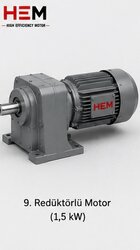
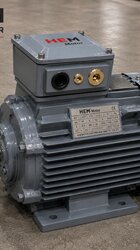
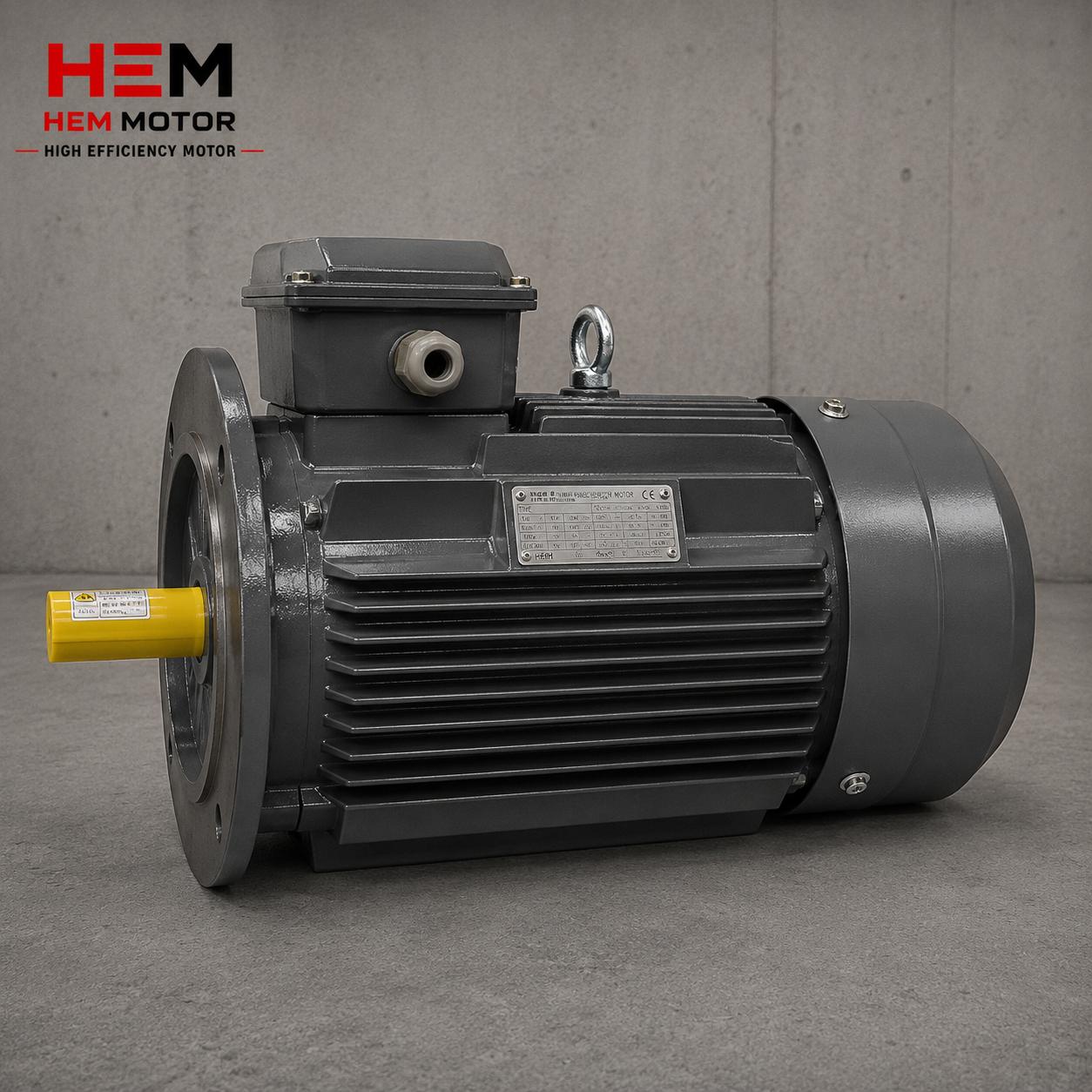

The IE5 synchronous reluctance (SynRM) motor is the most common representative of the ultra-premium efficiency class in the field, and unlike a classic asynchronous motor it can never be run directly from the grid without a drive. For this reason, reading the nameplate of an IE5 SynRM motor when ordering requires far more than a simple kW check: the power, speed, rated current, voltage, drive/package code and frame data on the plate must match exactly the variable frequency drive (VFD) the motor will be paired with. A single misread field means the wrong drive, an incompatible parameter set, or a package that cannot be commissioned. In this guide we go through every field on the IE5 SynRM nameplate one by one and show step by step how to place a correct, drive-matched order.
Why Is Plate Reading Different for an IE5 Synchronous Reluctance Motor?
On a standard asynchronous motor the plate is almost self-sufficient; you connect the motor to the grid and run it. On a SynRM motor the rotor has no magnets and no cage; it locks onto the rotating field produced by the drive and turns at synchronous speed. Without a drive it cannot produce starting torque. The IE5 SynRM plate therefore carries package information that describes which drive and which parameters the motor will run with. We covered this logic in detail in our article on why an IE5 synchronous reluctance motor does not run without a drive; here our focus is directly on reading the label fields and ordering.
You can find the rotor structure that distinguishes SynRM from permanent magnet (PM) motors in our IE5 synchronous reluctance vs PM motor difference content, and the asynchronous versus SynRM distinction within the same efficiency class in our IE4 asynchronous vs synchronous reluctance article.
The Rated Power (kW) Field on the Plate
The rated power is usually written in kW at the top of the plate. IE5 SynRM motors typically range from 0.75 kW to 355 kW. The key point is that this power is the mechanical output power at the shaft, not the electrical input power the drive draws from the grid. The kW value also determines the minimum power class of the drive to be paired. For example, a 7.5 kW SynRM motor is matched with at least a 7.5 kW (often one size up) drive. You can verify the frame-power relationship from the IEC table in our IE5 synchronous reluctance frame-power table article.
Rated Speed and Synchronous Speed
Because the SynRM motor runs synchronously, the speed on the plate is not a slip-dependent value like on asynchronous motors (e.g. 1450 rpm) but the exact synchronous speed: 1500 rpm at 4 poles, 3000 rpm at 2 poles, 1000 rpm at 6 poles. We explained slip and actual speed on asynchronous motors in our asynchronous motor slip and actual speed article. SynRM has no such difference; whatever the drive frequency is, that is the output speed. This is an advantage in applications such as pumps and fans that require precise constant speed.
Rated Current and Power Factor
The rated current of a SynRM motor may differ from an asynchronous motor of the same power because the power factor and drive topology are different. The rated current (A) on the plate directly determines the drive output current and therefore the drive selection. The continuous output current of the drive must be equal to or greater than the motor rated current. We detailed the difference of SynRM power factor from asynchronous and its effect on panel selection in our IE5 synchronous reluctance rated current and power factor article. The current value also affects cable cross-section and protection selection; you can perform this calculation with the method in our rated current cable, fuse and contactor selection article.
Voltage, Frequency and DC Bus Information
The voltage field on the SynRM plate shows the output voltage the drive applies to the motor and the frequency range. Since it is not fed directly from the grid, the classic 230/400V star-delta logic works differently here; the drive supply voltage (input) and the motor voltage (drive output) must be considered separately. We covered the drive DC bus voltage and correct input voltage selection in our IE5 synchronous reluctance drive DC bus voltage article. The frequency range defines the speed band in which the motor will operate and is the basis for drive parameterization.
IE5 Efficiency Code and Efficiency Value
The efficiency class is given on the plate as IE5 together with a percentage efficiency value (e.g. 92.4%). IE5 means roughly one step lower losses than IE4. You can find the effect of these steps on total cost of ownership in our IE5, IE4 and IE3 TCO comparison article, and why SynRM is superior at part load in our IE5 synchronous reluctance efficiency curve content. The efficiency value uses a dot as decimal separator in English text (e.g. 92.4).
Drive/Package Code: The Heart of the SynRM Plate
The most critical field of the IE5 SynRM motor is the drive/package code. This code shows which drive family and which software parameter set the motor was tested and delivered with. The correct package code makes the autotune and parameterization steps during commissioning smooth. We covered the drive parameterization, autotune and commissioning process in our IE5 synchronous reluctance drive parameterization article, and the drive and installation compatibility checklist in our IE5 motor drive and installation compatibility content. Always state this code when ordering; giving only kW and speed is not enough.
Frame Size, IP and Insulation Class
The frame size on the plate (a value between IEC 56-355, e.g. 132M) determines the mechanical dimensions and replaceability of the motor. If you are making a one-to-one replacement of an existing motor, the frame size, foot hole, shaft diameter and flange dimensions must match. The IP protection class (usually IP55) shows suitability for the environment, and the insulation class (F) shows the temperature endurance of the winding. We examined IP class selection in our IP protection class selection article and the effect of insulation class on life in our winding and insulation class F/H content. For the thermal behavior of SynRM in drive operation, see our thermal behavior and cooling article.
Duty Type, Mounting Code and Weight
The plate also contains the duty type (usually S1 continuous duty), mounting code (IM B3, B5, B35) and weight. The mounting code shows whether the motor is foot-mounted or flange-mounted and defines how it connects to the machine; we explained reading this code in our IM mounting code reading article. The weight information is needed for crane lifting and mounting planning; our lifting eyebolt and safe handling article guides you here. You can find duty type selection in our duty type S1-S6 selection content.
Plate Reading for Geared Drives
If you are going to use the IE5 SynRM motor with a gearbox, the motor speed and frame-flange data must match the gearbox input. The wide and precise speed band of SynRM allows flexible adjustment of the output speed with a gearbox. We detailed this matching in our IE5 synchronous reluctance geared drive article and IEC frame and flange matching to gearboxes in our worm gear reducer motor matching content. Because the synchronous speed is exactly known, the output speed calculation with the gearbox ratio gives a precise result, without the slip uncertainty of an asynchronous motor.
Speed Band and Drive Frequency Range on the Plate
The IE5 SynRM motor runs not at a fixed speed but in a speed band determined by the drive. The lower and upper limits of this band (for example 25-75 Hz or an extended field-weakening region) are given on the plate or in the technical document. This information shows in which speed range the motor will produce nominal torque and from which point the power enters the constant-power, falling-torque region. A wide speed band provides large savings in variable-torque loads such as pumps and fans; in loads requiring constant torque such as conveyors and extruders, continuous torque capacity at low speed is important. We covered this distinction in our constant/variable torque in variable-speed application article and external cooling for continuous torque at low speed in our external forced cooling fan content. Entering the frequency band on the plate correctly into the drive parameters is a precondition for stable operation at commissioning.
The Role of the Plate in the IE5 Transition Decision
If you are considering replacing an existing asynchronous motor with an IE5 SynRM, the plate of the old motor is the starting point of the comparison: from it you calculate the efficiency difference and payback period you will obtain when moving to IE5 at the same kW, speed and frame. We covered the IE5 vs IE4 decision in our IE5 vs IE4 efficiency difference and payback and the savings threshold at high power in our IE5 investment above 132 kW articles. You can find the annual gain at continuous load in pumps, fans and compressors in our IE5 pump, fan and compressor savings content. All these decisions start with a correctly read plate.
Frequently Asked Questions
Can I run an IE5 SynRM motor with a different brand of drive?
It may be technically possible but is not recommended. The SynRM motor requires the drive to manage rotor position correctly; the drive tested with the package code on the plate is delivered with the correct parameter set. On a different drive, autotune and parameterization must be done again carefully; otherwise starting problems, instability or efficiency loss may occur. Always verify package compatibility before ordering.
The plate says IE5 but there is no drive code, what should I do?
A SynRM motor without a drive code leaves the drive-motor match uncertain at commissioning. In this case the safest approach is to contact us with the serial number and power/speed/current data and determine the suitable drive package together. We explained the importance of plate-order matching in our match exactly by nameplate article.
Will an IE5 SynRM replace my existing IE3 asynchronous motor one-to-one?
Mechanically it will fit if the same frame size, foot and flange dimensions match; however electrically you must add a drive, you cannot connect it directly to the grid. You can find the retrofit steps and panel change in our replacing the old motor with IE5 + drive article.
Get a Quote
Consult our team to read your IE5 synchronous reluctance motor plate and order it as a correctly drive-matched package. With a photo of the plate or the serial number we quickly determine the most suitable motor-drive package. You can reach us at +90 (532) 345 49 86 or send your quote request through our contact page. You can review our full product range from our homepage and which applications make IE5 worthwhile from our IE5 ultra premium motor transition guide.
Purchasing and Ordering Checklist
- Was the rated power (kW) read and matched with the drive power class?
- Were the rated speed (synchronous speed) and pole count verified?
- Was the rated current (A) compared with the drive output current?
- Was the drive/package code stated in the order?
- Were the voltage, frequency and supply information (input/output) clarified?
- Are the frame size, IP and insulation class suitable for the environment?
- Do the mounting code (B3/B5/B35) and weight fit the installation plan?
- If it is a replacement, do the mechanical dimensions match the existing motor?