English
 Türkçe

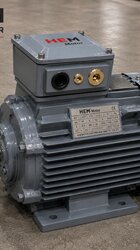
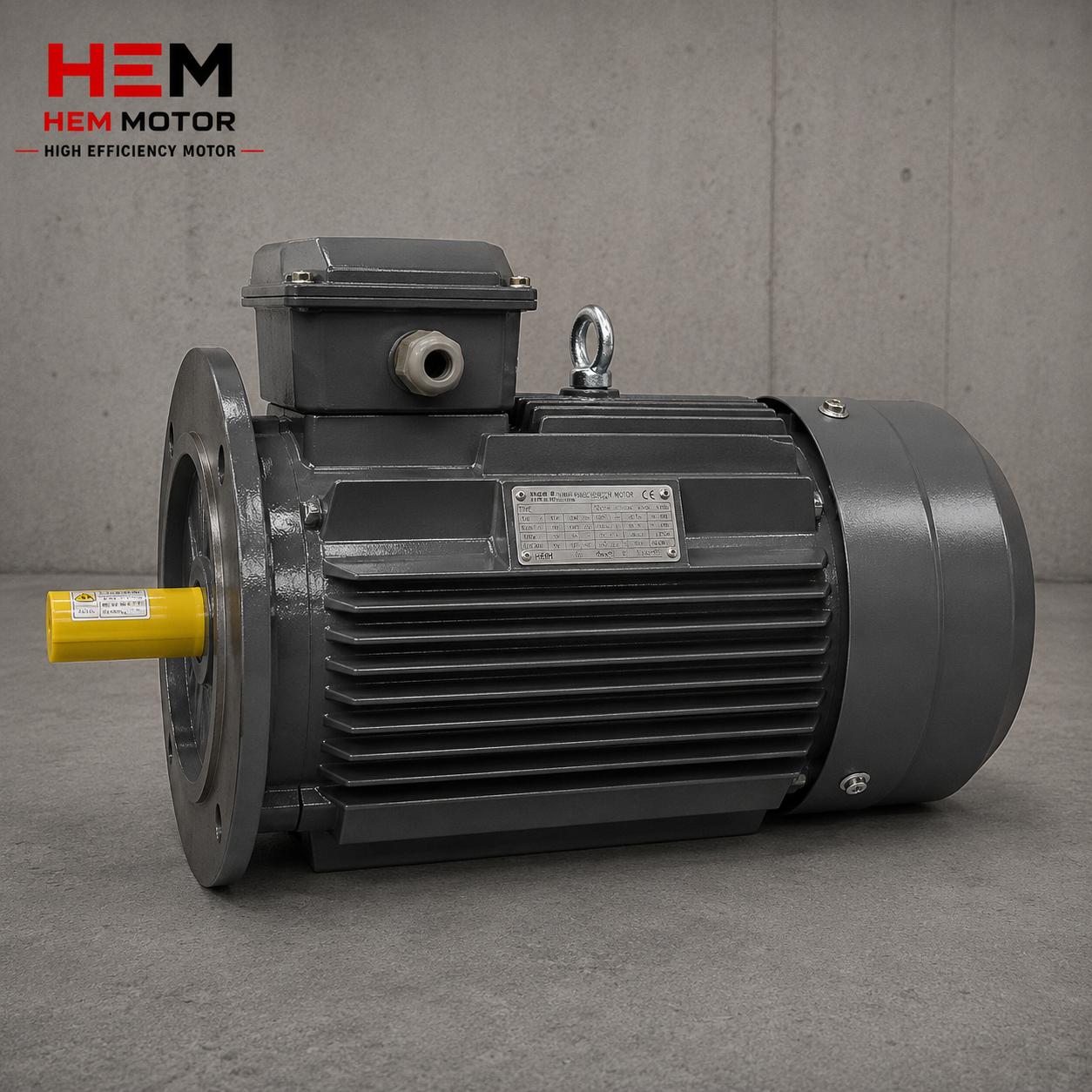

An IE5 synchronous reluctance (SynRM) motor delivers its ultra-premium efficiency only when driven by a correctly matched variable frequency drive (VFD); therefore the DC bus voltage of the drive and the mains supply voltage feeding it are decisive parameters for healthy operation of the whole system. A drive sized for the wrong input voltage causes anything from a motor that will not turn to sudden failure. This guide explains, from a buyer's point of view, the DC bus voltage of the drive that powers an IE5 SynRM motor, how a three-phase 400 V mains becomes a DC bus, correct input voltage and drive selection, panel design, and the need for a braking resistor and harmonic filter/reactor. The aim is not theory but ordering the right product with the right supply the first time. Clarifying these points at the quotation stage means both motor and drive arrive correctly.
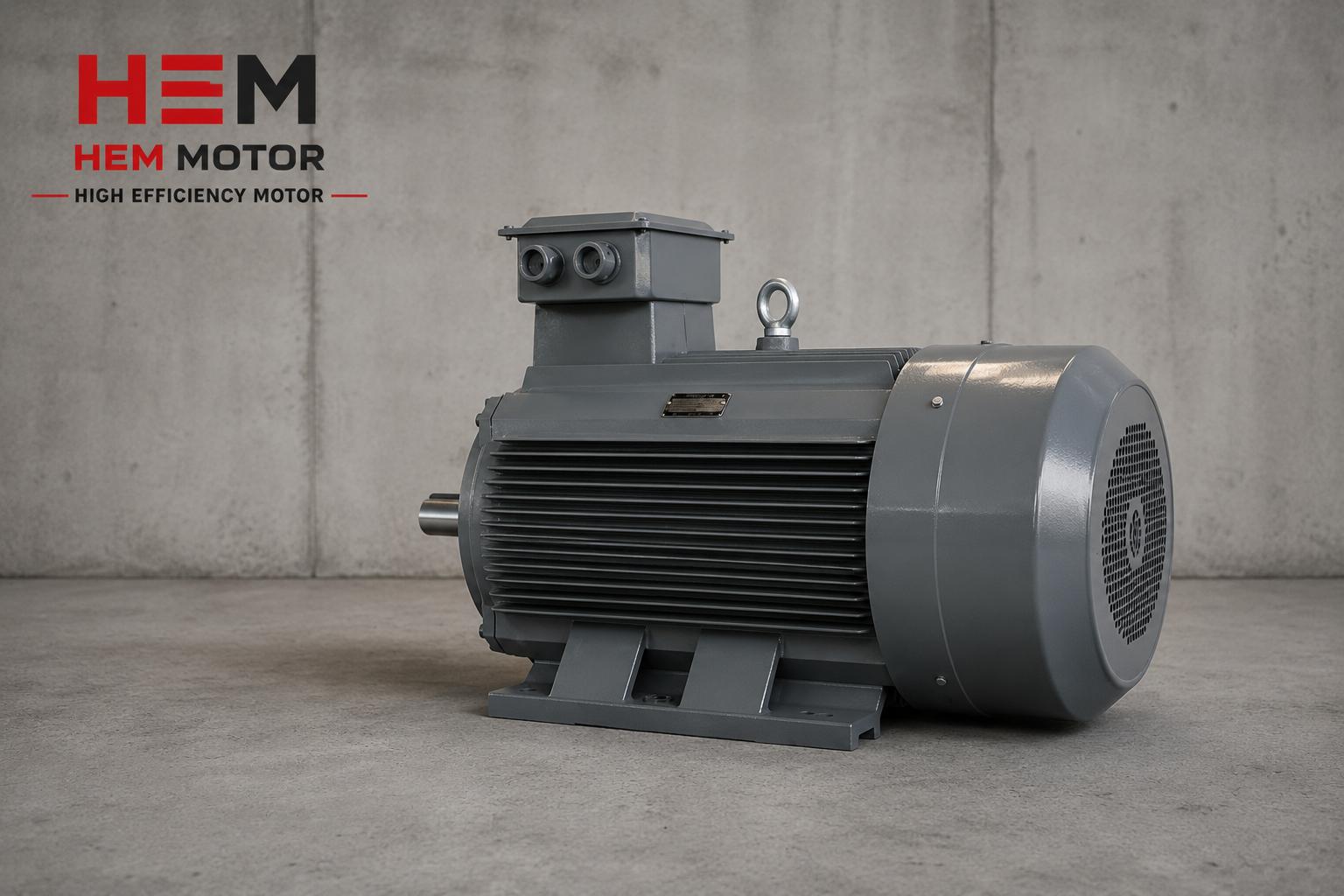
Why an IE5 Synchronous Reluctance Motor Is Understood Through Its Drive and DC Bus
While a standard asynchronous motor connects directly to the mains (DOL) and runs, an IE5 SynRM motor cannot start on its own because of its magnet-free reluctance rotor; it must always be driven by a frequency drive. The drive's input stage rectifies the incoming AC voltage into a DC bus, and the output stage (inverter) converts that DC bus back into AC at variable frequency and voltage to feed the motor. So the voltage the motor sees is not the mains directly but the PWM voltage produced from the DC bus. Understanding this architecture is the basis of correct drive and supply selection. Our article on why an IE5 motor cannot run without a drive completes this package logic.
The power factor and rated current difference of a SynRM motor versus an asynchronous one also affects drive and panel sizing; we covered this in our article on IE5 SynRM rated current and power factor. To see the fundamental differences, our IE4 asynchronous vs synchronous reluctance comparison is also useful.
From Mains Supply Voltage to DC Bus Voltage: How Does 3x400 V Become ~565 V DC?
The most common mains supply in Turkish industry is a three-phase 400 V system (400 V line-to-line, 230 V phase-to-neutral). When the drive's input bridge diodes rectify this three-phase voltage, the resulting DC bus voltage is close to the peak value of the line voltage. The calculation is simple: the peak of 400 V RMS is 400 x 1.41 = about 565 V. So in a 400 V class drive the DC bus voltage is nominally around 565 V DC. When the mains rises to 415 V this climbs to about 585 V, and during braking or high mains it can rise further; this is exactly why the braking resistor and voltage limits matter.
This DC bus level also determines the maximum output voltage that can appear at the motor terminals. A drive fed from 400 V mains produces a 400 V class output; the motor must therefore be ordered for the correct 400 V (or 230/400 V) winding connection. We explained the motor terminal bridging and voltage selection in detail in our article on 230/400V terminal star-delta voltage selection. You can also review supply tolerance in our 380/400/415V voltage tolerance article.
400 V Class or 690 V Class Drive?
At small and medium power (broadly most of the 0.55–355 kW band) a 400 V class drive and motor are standard. At very high power or long cable runs, a 690 V system may be chosen to reduce current; the DC bus then rises to 690 x 1.41 = about 975 V, and both motor and drive must be 690 V class. We covered the advantages of 690 V supply in our 690V asynchronous motor connection selection article. Measuring the plant's actual mains voltage before ordering prevents a wrong-class drive being supplied.
Input Voltage and Drive Selection: Correct Sizing
When selecting the drive for an IE5 SynRM motor, three things must be clear: supply voltage (3x400 V or 690 V), the motor's rated current, and the load type of the application (constant torque or variable torque). Because a SynRM motor's power factor can be lower than an asynchronous one's, the drive output current must be selected to the motor's rated current, not just to kW. The drive must support the motor brand's SynRM control algorithm (with autotune); otherwise the motor will not run efficiently. We gathered the parametering, autotune and commissioning steps in our IE5 drive parametering and commissioning article.
Drive sizing differs between variable torque (pump, fan) and constant torque (conveyor, extruder) applications. In constant-torque, continuous low-speed operation the motor cooling must not be overlooked; we addressed this in our IE5 thermal behavior and cooling article. To determine the torque type of your application, our constant torque vs variable torque article guides you.
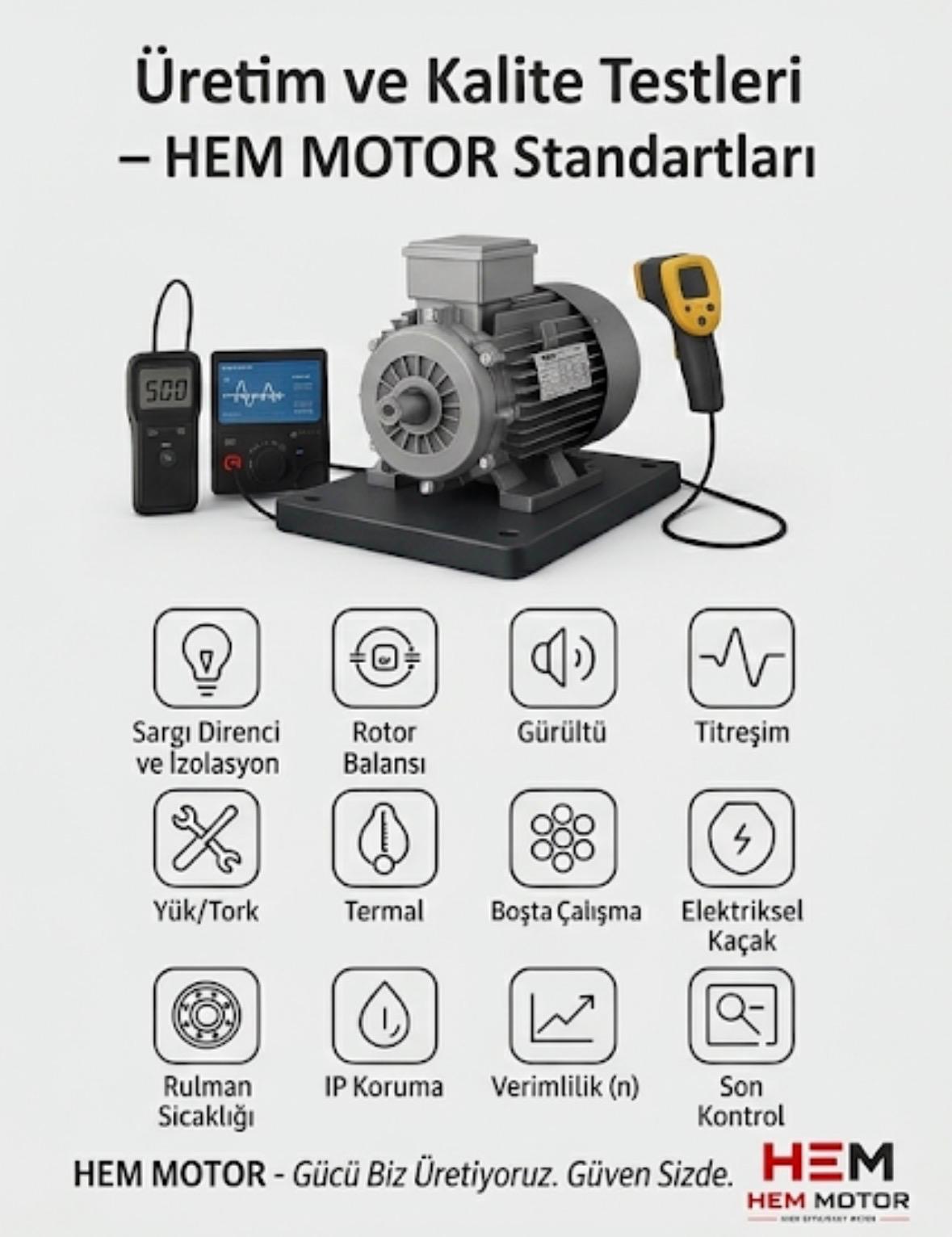
Panel Selection: Drive, Protection and Layout
In an IE5 + drive package, the panel is as important as the motor itself. The panel houses the drive, input breaker/fuse, contactor, line reactor and, where required, a braking resistor and harmonic filter. Drives dissipate heat while running; panel ventilation or air conditioning must be sized to the drive power. Because the DC bus voltage is around 565 V, internal insulation clearances and terminal selection must suit this voltage. A shielded motor cable is recommended for both EMC compliance and to reduce bearing current risk.
In a drive-fed system the motor can experience VFD-induced extra heating and bearing current risk; we explained this in our VFD harmonic heating and bearing current protection article. To order the terminal box orientation and cable entry correctly on the panel side, our terminal box orientation and cable entry side article is helpful.
Braking Resistor: When Is It Needed?
When the motor decelerates or the load drives the motor (for example, lowering in a hoist application), the motor acts like a generator and pumps energy back into the DC bus. The DC bus voltage then rises; the drive dissipates this excess energy as heat through a braking resistor to protect the bus. In applications with frequent start-stop, high inertia, or loads that drive the motor, a braking resistor is usually required. In continuous, single-direction pump/fan applications it is often not needed. Without a braking resistor, aggressive deceleration will cause the drive to trip on overvoltage.
Harmonic Filter and Line Reactor
The drive's input stage draws pulsed current from the mains and generates harmonics. These harmonics degrade power quality and can lead to reactive/harmonic penalties. Adding a line (AC) reactor or DC bus reactor at the drive input softens the current pulse and reduces harmonics; stricter conditions may require a passive/active harmonic filter. In plants with many drives, harmonic management is critical to protect the efficiency gain you expect. We covered the effect of harmonics on efficiency and power quality in detail in our harmonics and power quality efficiency loss article.
Protecting the IE5 Investment With Correct Supply
An IE5 motor is chosen because it is the highest efficiency class; but a wrong drive, an inadequate panel or poor supply will eat that gain. A correct DC bus class, a fitted line reactor, and use of a braking resistor and harmonic filter when needed ensure the IE5 investment truly pays back. We gathered the overall logic of moving to IE5 and drive-installation compatibility in our drive and installation compatibility commissioning checklist article. You can find the steps for replacing an old motor with an IE5 + drive in our IE5 retrofit article. Our IE5 or IE4 article clarifies the investment decision.
For correct power and frame, our IE5 frame-power table and drive matching guide helps with package ordering. You can review all our options from our IE5 electric motors blog category and the main HEM Motor home page.
Common Supply Mistakes in an IE5 Drive Package
Knowing the most common supply mistakes in a drive package powering an IE5 synchronous reluctance motor prevents loss of time and money on site. The first mistake is selecting the drive only by motor power (kW) and overlooking the motor''s rated current; because a SynRM motor''s power factor can differ from an asynchronous one''s, a different current can apply at the same kW, and the drive output must be selected accordingly. The second mistake is assuming the mains voltage; 400 V is taken as given without measuring the plant''s actual voltage, but in some industrial zones the voltage runs close to 415 V, which affects the DC bus voltage and the drive''s voltage limits. The third mistake is not accounting for the motor cable length; on long cables, voltage drop and wave reflection can damage the motor, so a dv/dt filter or sine filter may be needed over long distances.
The way to avoid these mistakes is to clarify the plant''s mains voltage, the motor''s nameplate current and the cable distance before ordering. Our reading the motor nameplate article guides correct nameplate reading. We covered lead time and shipping planning when replacing an old motor with an IE5 + drive in our premium motor supply and lead time article, and the high-power investment threshold in our IE5 above 132 kW investment payback article.
The Relationship Between DC Bus Voltage and Motor Insulation
Because the drive produces motor voltage by chopping the DC bus with fast switching (PWM), the motor''s winding insulation is exposed to higher voltage spikes than with a standard mains supply. The higher the DC bus voltage, the higher the peak of these spikes. So motors that will run with a drive should use reinforced winding insulation and a suitable insulation class (F or H). We explained the effect of insulation class on life in our winding and insulation class (F/H) article. Measuring the motor''s insulation resistance with a megger at stock intake is also good practice; we addressed this in our insulation resistance and megger test article. To compare IE5 with IE4/IE3 total cost of ownership, our IE5, IE4 and IE3 TCO comparison article is useful.
Supply Details to Clarify Before a Quote
The way to get an accurate quote for an IE5 synchronous reluctance motor and drive package is to clarify supply-related details before ordering. Knowing your plant''s mains voltage (three-phase 400 V, 415 V, or 690 V at high power), the mains stability and possible fluctuations lets us correctly set the drive''s voltage class and tolerance. Likewise the application''s load type (constant or variable torque), operating profile (continuous or frequent start-stop) and the cable distance between motor and panel are needed to size the package correctly. Giving these details upfront ensures both motor and drive arrive correct the first time. We covered the investment-supply balance on a high-power 355 kW IE5 motor in our 355 kW ultra premium motor article, and whether IE5 makes sense at low power in our IE5 below 7.5 kW article.
Cabling and Grounding in a Drive System
In an IE5 drive package, cable selection must be made not only by current but also by EMC and bearing-current risk. A shielded motor cable suppresses the high-frequency noise the drive produces and provides a clean grounding path between the motor body and the drive. Correct grounding is critical for both safety and preventing early bearing failure caused by bearing currents. We explained grounding and electrical safety on cast iron motors in our grounding and electrical safety article. We gathered geared drive and correct package supply for a drive-fed synchronous reluctance motor in our IE5 geared drive article.
Frequently Asked Questions
Exactly how many volts is the IE5 drive DC bus on a 400 V mains?
On a three-phase 400 V mains, the rectified DC bus voltage is about 565 V DC (400 x 1.41). If the mains rises to 415 V it climbs to around 585 V; during braking or on a high mains the drive switches in the braking resistor so the voltage does not rise further. Therefore ordering a 400 V class drive and motor is the correct choice for the standard Turkish mains. For an exact figure we recommend measuring your plant's actual mains voltage.
Can I connect my IE5 motor directly to the mains without a drive?
No. The IE5 synchronous reluctance motor cannot start directly because of its magnet-free reluctance rotor and must always be driven by a suitable frequency drive. The drive magnetizes the motor in a controlled way and brings it into synchronism. A drive-less connection will not turn the motor. For this reason IE5 must always be planned as a package (motor + compatible drive), with the drive selected to support the motor's SynRM control.
Are a line reactor and harmonic filter mandatory at the drive input?
A line (AC) reactor is recommended in most installations; it softens the current pulse, protects the drive and reduces harmonics. A harmonic filter depends on the number of drives in the plant, mains conditions and harmonic limits. A simple reactor may suffice for a single small drive, while a plant with many drives may need advanced filtering to avoid reactive/harmonic penalties and efficiency loss. We can determine the right solution together based on your application.
Get a Quote
To plan your IE5 synchronous reluctance motor together with the correct drive, the right DC bus class and a suitable panel, get in touch with us. Tell us your mains voltage, motor power and application (constant/variable torque, frequent start-stop); we will clarify the matching motor-drive package, braking resistor and reactor needs and provide a quote. Phone: +90 (532) 345 49 86. For details and a fast quote, use our contact page.
Purchasing and Selection Checklist
- Has the plant's actual mains voltage been measured (3x400 V / 415 V / 690 V)?
- Is the drive selected in the class matching the measured voltage (400 V / 690 V)?
- Does the motor winding voltage (230/400 V or 400/690 V) match the drive output?
- Is the drive output current sized to the motor's rated current (not just kW)?
- Does the drive support the motor's SynRM control algorithm and autotune?
- Is the application frequent start-stop or driven by the load? Is a braking resistor added?
- Is a line reactor planned at the input, and a harmonic filter if required?
- Is panel ventilation/air conditioning adequate for the drive heat load?
- Is a shielded motor cable selected and the terminal box orientation suited to the panel side?
- For continuous low-speed running, has motor cooling been reviewed?