English
 Türkçe

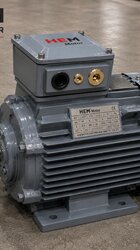
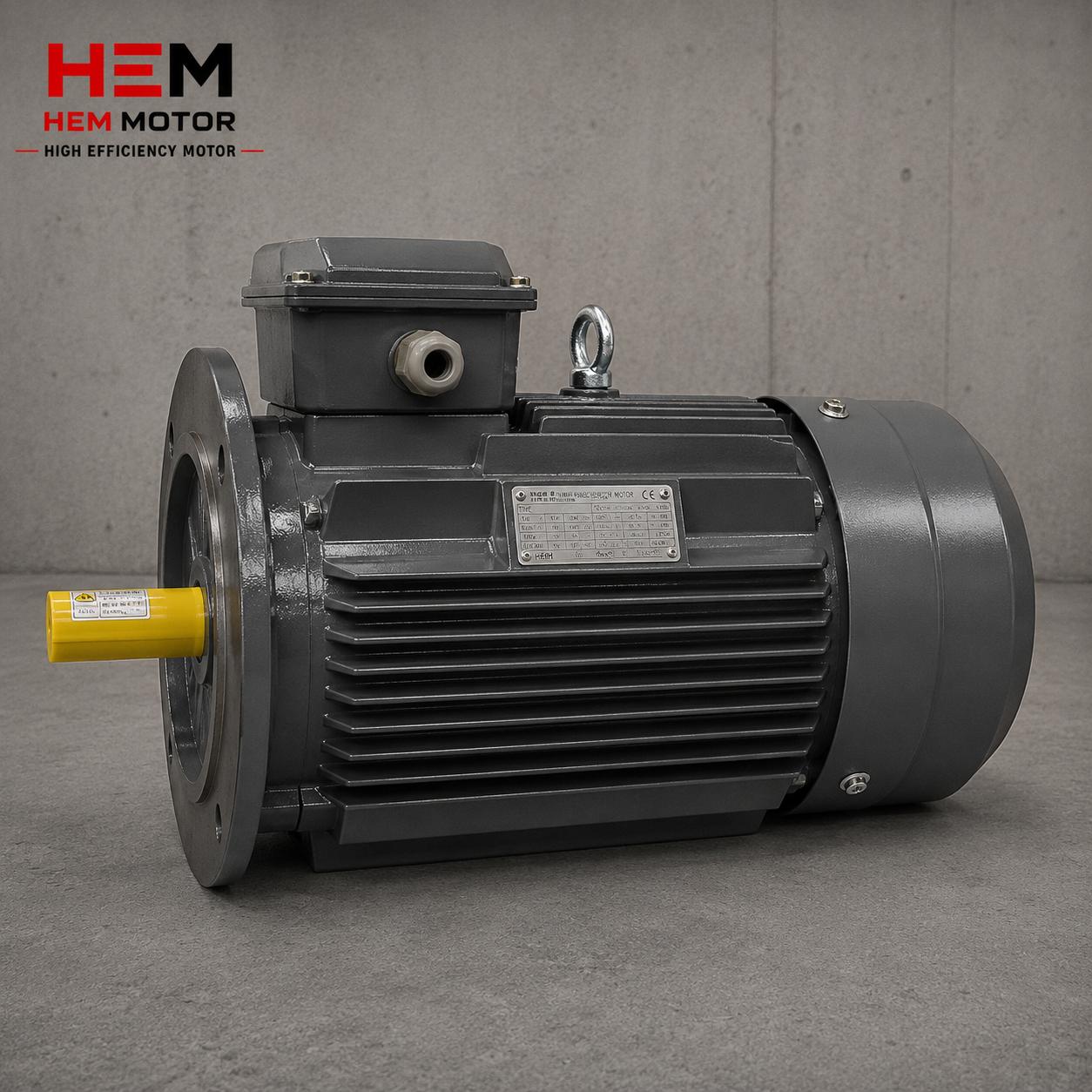

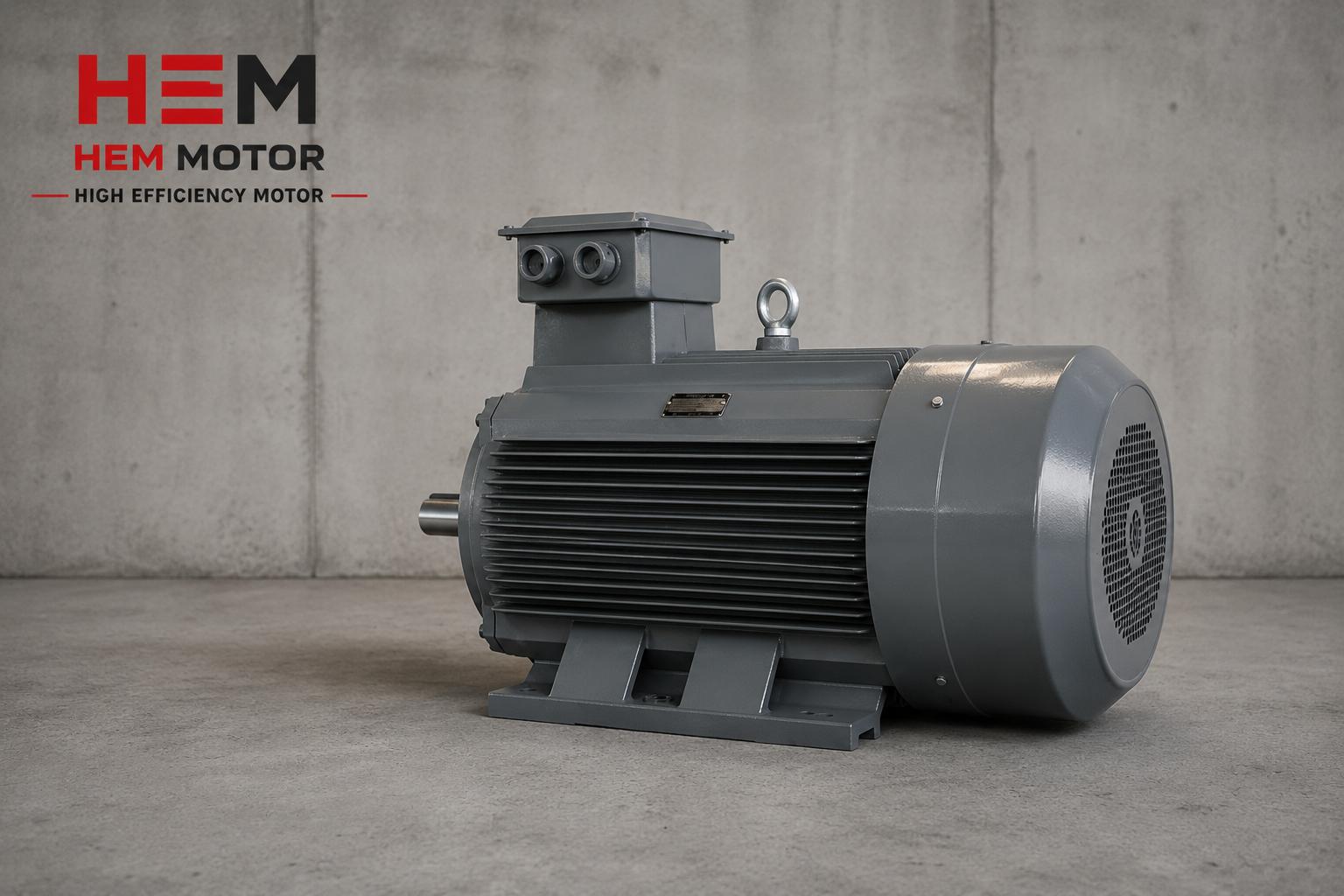
When you place an IE5 synchronous reluctance (SynRM) motor next to an asynchronous motor of the same power, they look mechanically similar; however, their electrical behaviour differs significantly, especially in terms of rated current and power factor (cosφ). This difference directly affects how the motor is sized on the panel side, how the cable cross-section, fuse, contactor and drive are selected. A SynRM motor is not connected directly to the grid (DOL) like an asynchronous motor; it runs with a variable frequency drive (VFD). For this reason, the habit of “sizing the contactor from the current printed on the motor nameplate” becomes misleading here. In this article we explain step by step how and why the rated current and power factor of an IE5 SynRM motor differ from an asynchronous one, how to size the panel correctly, and why compensation must be handled differently.
What Is a Synchronous Reluctance Motor and Why Does It Need a Drive?
A synchronous reluctance motor uses a rotor with neither windings nor permanent magnets, made of specially shaped laminations that shape the path (reluctance) the magnetic flux follows. The rotor turns in synchronism with the rotating magnetic field; that is, there is no slip as in an asynchronous motor. Because this structure largely eliminates copper and iron losses in the rotor, the motor can reach the IE5 ultra premium efficiency class. However, synchronous operation means the rotor cannot start directly from the grid on its own: the rotating field must be built up gradually. The component that does this is the frequency drive. We covered the basics of this in our article on why an IE5 synchronous reluctance motor does not run without a drive.
The most important point that distinguishes SynRM technology from permanent magnet (PM) motors is the absence of magnets in the rotor. This provides advantages in supply and cost; we compared the topic in our articles on the difference between SynRM and PM motors and the supply advantage of the magnet-free rotor. To see asynchronous and SynRM options within the same efficiency class, the article IE4 asynchronous vs synchronous reluctance is also a good starting point.
Rated Current: Why Does SynRM Draw Different Current Than Asynchronous?
In an asynchronous motor, the rated current includes, together with the active power (kW) the motor produces, the reactive (magnetising) current drawn from the grid to magnetise the rotor. The power factor of an asynchronous motor is typically in the 0.80–0.86 band at full load; this means the apparent power (kVA) is noticeably larger than the active power, and therefore the current is also high.
The situation is different in a SynRM motor because it is fed not directly from the grid but from the drive. The current at the drive output is shaped by the motor’s actual torque and speed demand. Because the SynRM motor eliminates rotor losses compared with the asynchronous design, at the same shaft power it can exhibit slightly lower total losses and accordingly similar or somewhat lower motor current. But the critical point here is this: the current drawn from the grid is determined not by the motor but by the input stage of the drive. The current on the motor nameplate is the motor current at the drive output; the current on the panel input side is the drive input current, and these two are not always the same.
We explained cable, fuse and contactor selection based on rated current for an asynchronous motor in our article IE3 motor rated current: cable, fuse and contactor selection. On the SynRM side, you must make this calculation based on the drive input current.
The Drive Input Current and Output Current Are Not the Same
A frequency drive first rectifies the alternating current it takes from the grid, then regenerates it according to the motor’s demand. At low speed the motor is fed at low frequency; in this case the voltage and current at the drive output change with the motor’s instantaneous torque. On the input side, the drive draws the current needed to supply the active power it produces plus its own losses. As a general rule, the drive input current is planned close to or slightly below the rated current of the motor it feeds; however, the exact value is taken from the drive catalogue. Therefore, in panel sizing, the input current value given by the drive manufacturer must always be the basis.
Power Factor: The Drive Now Determines the Grid cosφ
In a classic plant with asynchronous motors, the power factor seen from the grid is the power factor of the motors. At partial load the power factor of an asynchronous motor drops considerably, which leads to a reactive energy penalty. We addressed this behaviour in our article asynchronous motor power factor (cos phi) and correction. We examined the effect of the reactive penalty in high-efficiency motors in high-efficiency motors power factor and reactive penalty.
The situation changes fundamentally in a SynRM motor. The motor’s own power factor (due to the rotor’s magnetising demand) can be even lower than that of an asynchronous motor on its own. However, the grid does not see this motor directly. There is a drive in between, and the diode bridge or active front end in the input stage of modern frequency drives generally exhibits a high displacement power factor when viewed from the grid. So in the SynRM + drive package, the cosφ seen from the grid depends on the drive input topology; the motor’s low cosφ is not reflected to the grid. The practical result: in a SynRM plant you plan reactive compensation not according to the motor but according to the drive input behaviour.
Harmonics: A New Power Quality Dimension
Even if the displacement power factor is good in drive operation, diode-bridge drives inject harmonic current into the grid. These harmonics lower the total (true) power factor and can cause additional heating in the cable. Therefore, in a SynRM plant, instead of a classic capacitor bank, a harmonic filter or reactor should be considered when needed. We explained the effect of harmonics on efficiency in our article high-efficiency motor harmonics and power quality. The reason classic compensation capacitors must be selected carefully in a drive environment falls within the same framework.
Panel Sizing: Cable, Fuse, Contactor and Drive
When sizing a SynRM + drive panel, you have to work the order in reverse. First the shaft power and speed demand of the motor are determined, then a suitable drive is selected, and finally the panel components are sized according to the drive input values.
- Drive selection: The rated current of the drive must be equal to or above the rated current of the SynRM motor it feeds. In an application demanding high torque at low speed, since the drive will continuously feed the motor at low frequency, it may be chosen one size larger thermally. We covered drive parametering and autotune in SynRM drive parametering and commissioning.
- Input cable and fuse: Selected according to the drive input current, not the motor nameplate current. The input fuse type recommended by the drive manufacturer (gG or aR) must be used.
- Output cable: The cable between the drive output and the motor is selected according to the motor rated current; for long cables, shielded VFD cable and, if needed, a du/dt reactor are considered.
- Contactor/breaker: In a SynRM motor, the contactor is usually located not between the motor and the drive but on the drive input side. We explained the logic of motor protection breaker selection for the main input in our article motor protection circuit breaker (MPCB) selection and setting.
If you will use the SynRM motor in a direct-drive application by reducing it to a low output speed with a gearbox, the article SynRM with geared drive clarifies package selection. You can find the motor’s thermal behaviour in drive operation in SynRM thermal behaviour and cooling.
SynRM Current Behaviour at Low Speed and Partial Load
To understand the current behaviour of the SynRM motor, you need to see the flexibility that drive operation brings. While an asynchronous motor runs at fixed frequency (50 Hz) its speed is fixed; even if its load decreases, it continues to draw magnetising current. The SynRM motor, on the other hand, being fed from the drive, when the load decreases the drive lowers both the frequency and the current applied to the motor. This makes a significant difference, especially at partial load: in variable-load applications such as a pump or fan, the SynRM + drive pair draws noticeably less current than an asynchronous motor. We examined the variable-speed gain in pumps and fans in high-efficiency motor + frequency drive and in terms of the affinity law in energy savings in pumps and fans with a VFD.
This is also important for sizing: you size the panel not according to the motor’s instantaneous peak current but according to the drive’s continuous input current. The drive does not produce a high inrush current (LRA) at start-up like an asynchronous motor; it ramps the current in a controlled way. This reduces the load of the starting current on the cable and protection components. We explained why the starting current is high in the asynchronous side and how it is reduced in starting current (LRA) in an asynchronous motor.
The Link Between Drive Topology and Grid Power Factor
Because in a SynRM plant the power factor seen from the grid is determined by the drive input stage, you need to know the drive’s input structure. The most common structure is a six-pulse diode bridge; this provides a high displacement power factor but injects significant harmonic current into the grid. More advanced structures use an input reactor, a twelve-pulse bridge or an active front end (AFE); these reduce the harmonic content and improve the true power factor.
If there are multiple drives in the plant, their combined harmonic effect can cause additional heating in the grid transformer and cables. Therefore, in many multi-drive plants it is correct to perform a central harmonic analysis and, when needed, plan an active or passive filter. Classic fixed capacitor banks, on the other hand, may resonate with harmonics in a drive environment, so the existing compensation panel must definitely be reviewed. We detailed the effect of power quality on real savings in high-efficiency motor harmonics and power quality.
Commissioning: Verifying Current and Power Factor in the Field
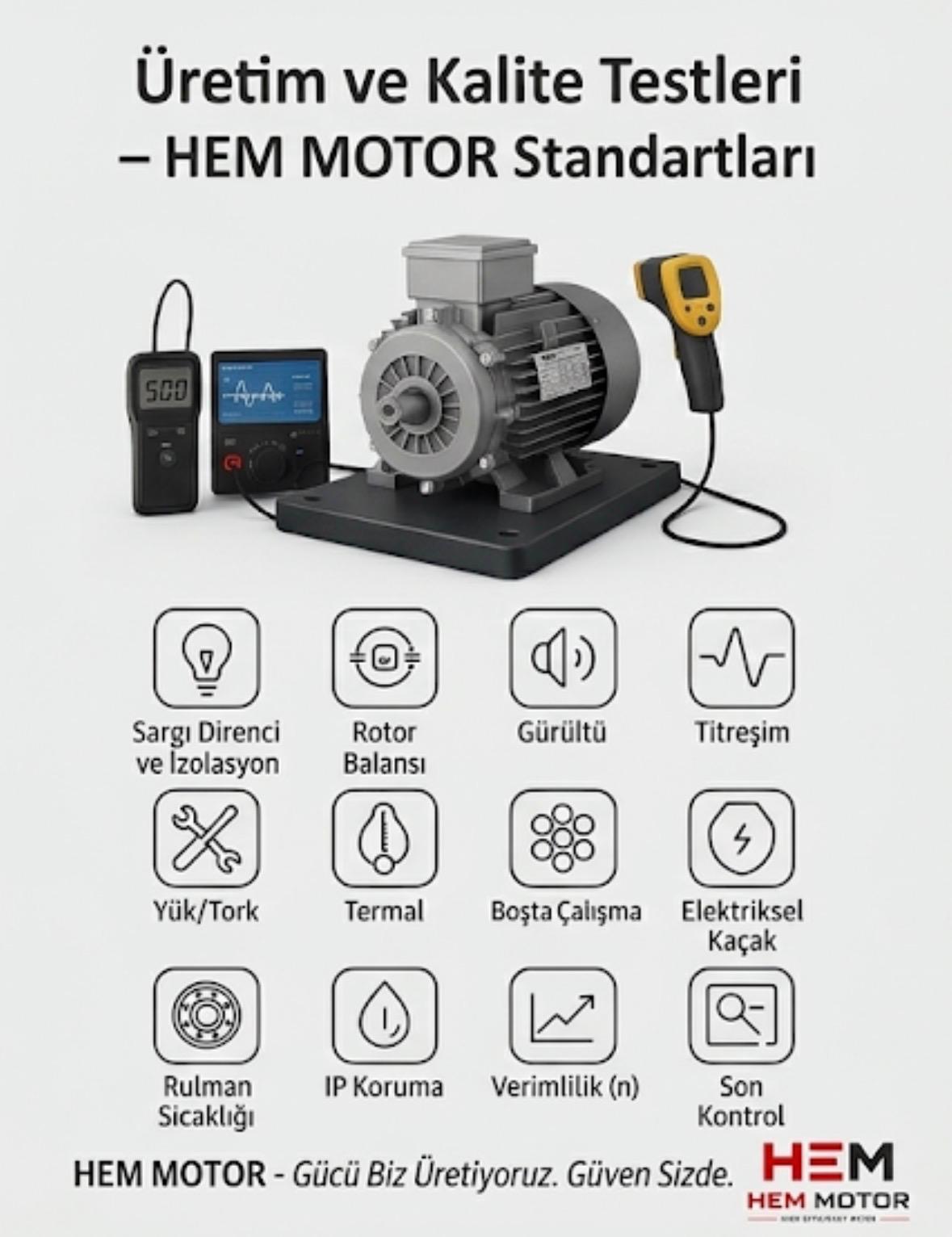
When commissioning a SynRM motor, an autotune step is performed so that the drive recognises the motor. In this step the drive measures the motor’s electrical parameters and adjusts the control algorithm accordingly; if not done correctly, the motor does not run efficiently and the current may be higher than expected. During commissioning, the grid input current, drive output current and input power factor must be measured separately. These measurements confirm that the panel is sized correctly and that the compensation strategy is in place. You can find drive parametering and autotune steps in SynRM drive parametering and commissioning and the retrofit steps of replacing an old motor with a drive in replacing an old motor with IE5 + drive.
SynRM or Asynchronous? The Investment Decision
The SynRM motor has the extra cost of a drive; therefore it pays back quickly not in every application but when running hours and power are high. Evaluate whether the difference between IE5 and IE4 justifies the investment in our articles IE5 vs IE4 and, in terms of total cost, IE5, IE4 and IE3 TCO comparison. To see why the SynRM efficiency curve is superior at partial load, the article SynRM efficiency curve: why superior at partial load is a useful guide. For our overall product range and the path to the right model, review our electric motor types and purchasing map and our home page.
Frequently Asked Questions
Can I select the contactor based on the current on the SynRM motor nameplate?
No. A SynRM motor runs with a drive, and the current on the motor nameplate is the motor current at the drive output. The panel input components (contactor, fuse, input cable) must be selected according to the drive input current. This value is given in the drive catalogue and is often different from the motor nameplate current.
Is a reactive compensation capacitor needed in a SynRM plant?
In most cases a classic capacitor bank is not needed, because the power factor seen from the grid is now determined by the drive input stage and generally provides a high displacement power factor. However, the true power factor may drop due to harmonics; in that case a harmonic filter or input reactor is evaluated instead of a capacitor. Existing fixed capacitor banks must be handled carefully in a drive environment.
If the SynRM motor power factor is lower than asynchronous, does it harm the grid?
Even if the motor’s own power factor is low, the grid does not see this motor directly; there is a drive in between. The value reflected to the grid is the drive input behaviour. Therefore the motor’s low cosφ does not create a problem on the grid side; the quantities to monitor are the harmonic content and the drive input power factor.
Get a Quote
Contact us to match your IE5 synchronous reluctance motor with the right drive, size the panel according to the input current, and clarify the compensation strategy. Share the power, speed and operating profile of your application; let us recommend the motor + drive package that suits you. To get a quote right away, call us on +90 (532) 345 49 86 or reach us through our contact page.
Purchasing and Panel Selection Checklist
- Is the application shaft power (kW) and speed/torque profile clarified?
- Is the SynRM motor rated current (nameplate) matched with the drive output value?
- Are the panel input components sized according to the drive input current?
- Does the input fuse type (gG/aR) comply with the drive manufacturer’s recommendation?
- Is the cable between drive and motor selected as shielded VFD cable, with a du/dt reactor considered for long runs?
- Has the need for a harmonic filter/reactor instead of reactive compensation been evaluated?
- Has the behaviour of any existing fixed capacitor bank in a drive environment been checked?
- Is the drive thermal capacity suitable for low-speed/high-torque operation?
- Are autotune and rotation direction checks planned during commissioning?