English
 Türkçe


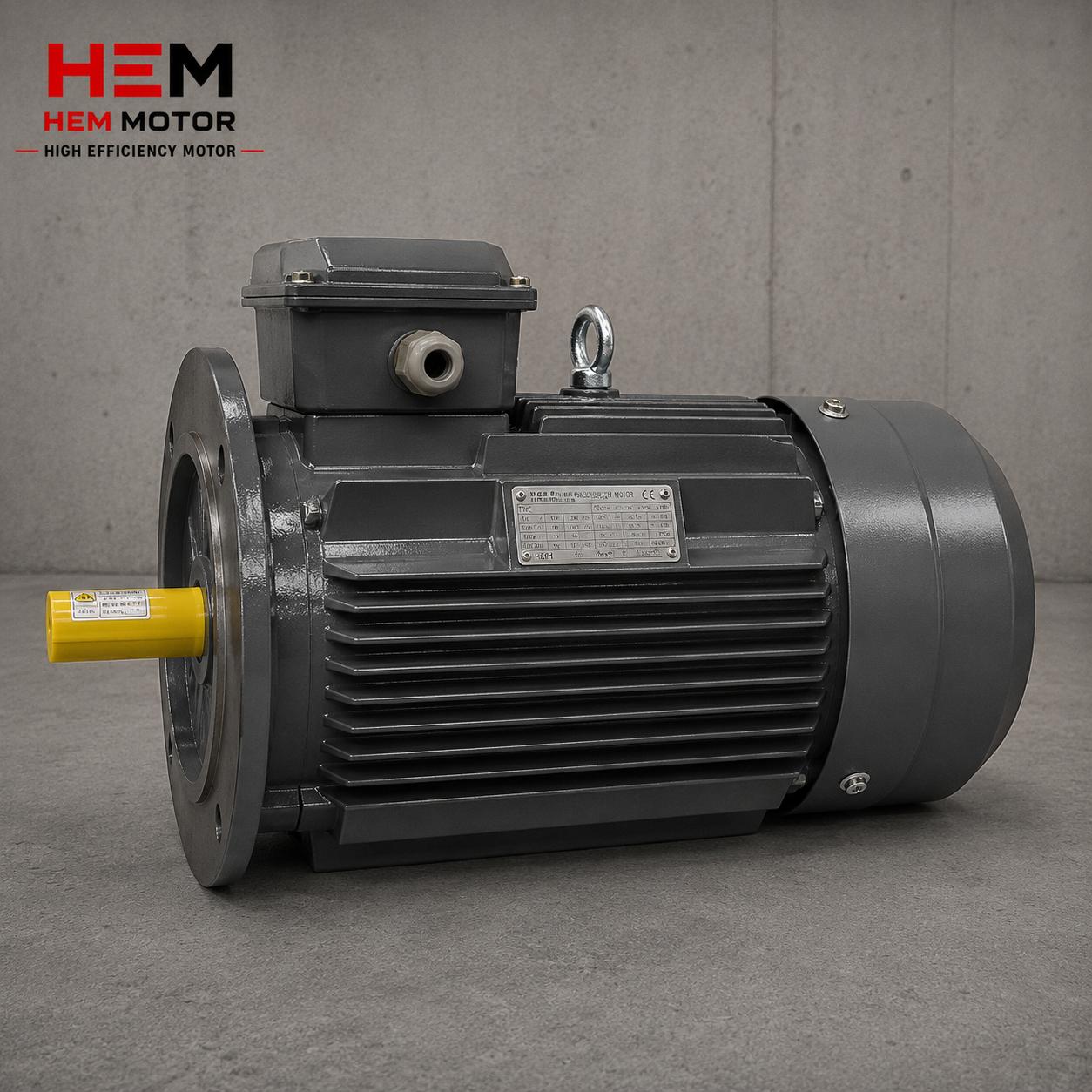

What actually turns a machine is not power, but torque. A common shorthand in engineering is to refer to motors only by their kilowatt value; yet two motors marked "22 kW" in a catalogue can come in completely different frame sizes and completely different torque densities. What pulls the conveyor, turns the pump and compresses the compressor is the turning force the motor delivers at the shaft end, that is, torque. This is exactly where an IE5 synchronous reluctance (SynRM) motor offers an interesting advantage over its classic asynchronous counterpart: in the same IEC frame, higher torque density alongside top efficiency. In this article we clarify the concepts of rated torque and torque density, explain why IE5 SynRM technology can produce more torque in the same frame, and discuss how this advantage must be weighed against drive dependency.
Selecting the right motor often requires going beyond the question of "how many kW are needed". If the same job can be done with a smaller, lighter and more efficient frame, this means both ease of installation and long-term energy savings. While SynRM technology offers this opportunity, the drive dependency and system cost it brings must also be evaluated in a balanced way.
The Fundamental Difference Between Power and Torque
Power (kW) is the work done per unit time and depends on the product of torque and rotational speed. Torque (Nm) is the turning force produced at the shaft end. You can obtain the same power with high torque at low speed or with low torque at high speed. That is why a machine's real need is often expressed as "this much torque at this speed". A conveyor lifting a load, a mixer turning a viscous fluid, or a press compressing material is directly related to torque.
Even if two motors have the same kW value, one may deliver low torque at high speed and the other high torque at low speed. If your application requires a certain torque at a certain speed, the motor must be selected according to this operating point. Rated torque, found by dividing the motor's rated power by its rated speed, is the torque the motor can continuously deliver safely; this value forms the basis of machine selection.
What Is Torque Density and Why Does It Matter?
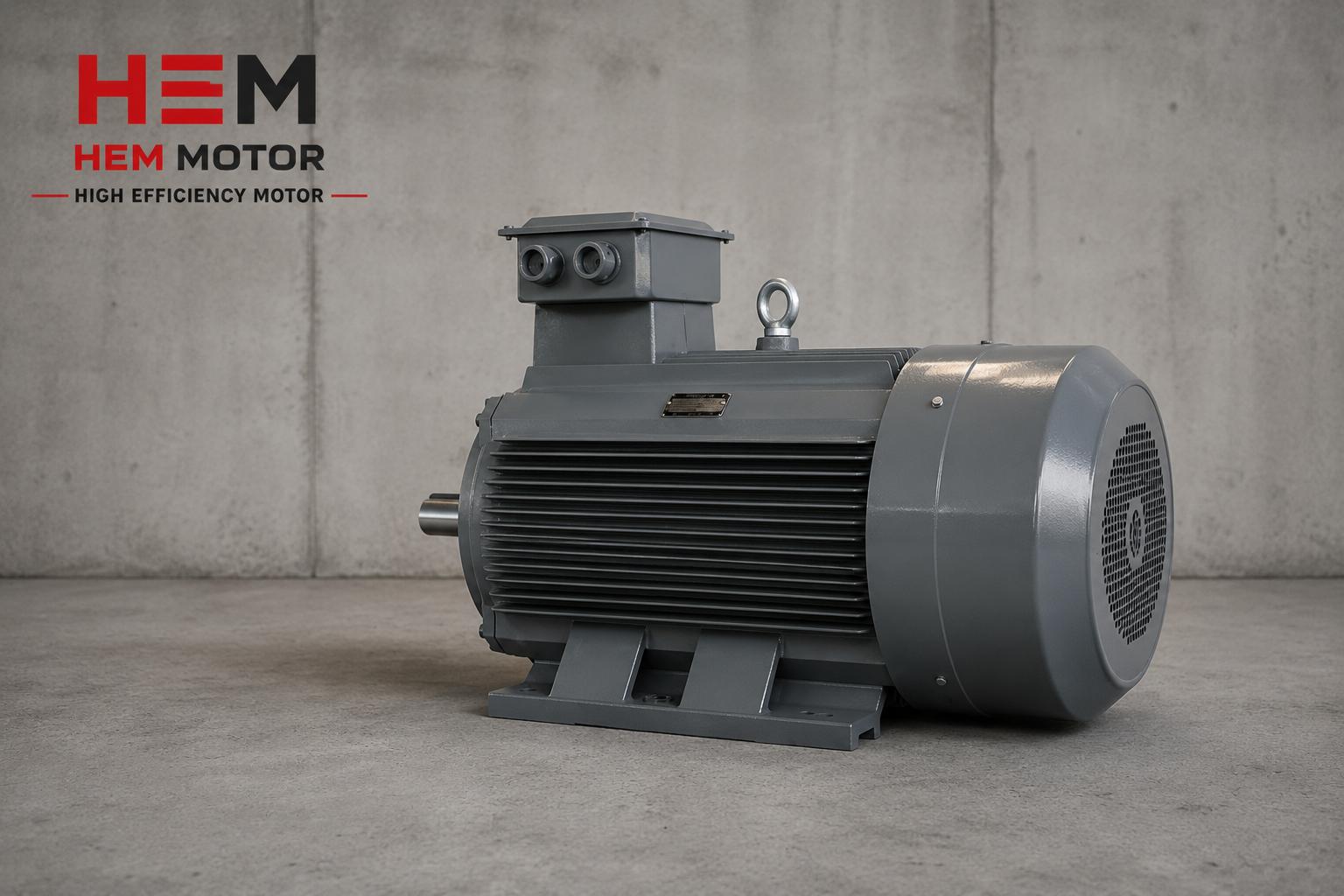
Torque density is the amount of torque a motor produces per unit volume or per unit weight. High torque density means being able to do the same job with a smaller and lighter frame. This provides a major advantage in compact machine designs, portable equipment and applications where frame size is critical.
In traditional asynchronous motors, torque is produced by currents induced in the rotor bars, and this process inevitably leads to rotor losses. In a SynRM motor, the rotor is designed with a special flux-guided geometry and contains no conductor bars or windings. This greatly reduces rotor losses; fewer losses translate into more shaft torque in the same frame and higher efficiency.
How Does the SynRM Rotor Produce Torque?
The synchronous reluctance principle is based on the tendency of the magnetic field to follow the path of least reluctance (magnetic resistance). In the SynRM rotor, a marked difference is created between the axis along which magnetic flux passes easily (the d-axis) and the axis along which it passes with difficulty (the q-axis). The stator's rotating field forces the rotor into this alignment, and this alignment effort produces torque. Because no current is induced in the rotor, the rotor operates almost loss-free; this keeps the motor cooler and lets it deliver more torque at the same size.
The Meaning of the IE5 Efficiency Class
Efficiency classes (IE1, IE2, IE3, IE4, IE5) indicate how little loss the motor incurs when converting electrical energy into mechanical energy. IE5 is the highest ultra-premium efficiency class currently available and reduces losses noticeably further than IE4. SynRM motors have a natural advantage in reaching the IE5 class thanks to their low rotor losses.
High efficiency not only lowers the energy bill; it also brings less motor heating, therefore longer insulation life and more reliable operation. To see in detail what the IE5 and IE4 classes mean and how they reflect on your application, you can review our what IE4 and IE5 energy efficiency classes mean content. For the general advantages of high-efficiency motors, our IE4 high-efficiency electric motors page will also be a useful guide.
More Torque in the Same Frame: Is It Real?
Yes, but in the right context. The low rotor losses of the SynRM motor allow more mechanical output to be obtained in the same IEC frame size. In an asynchronous motor, rotor heating limits the continuous torque that can be produced, because heat threatens the insulation beyond a certain point. Since this rotor heat is largely eliminated in a SynRM motor, the same frame can deliver more torque within the same temperature limit.
In practice this means: you can meet a certain torque requirement with a SynRM motor one frame smaller than its asynchronous counterpart, thereby saving space, weight and energy. In compact machines or applications where weight is critical, this gain can be decisive.
Factors That Limit the Gain
- Drive requirement: SynRM motors cannot run directly off the mains; they must be driven by a suitable frequency drive (VFD).
- System cost: Motor + drive must be evaluated together; the motor price alone can be misleading.
- Control algorithm: SynRM's torque performance depends on the correct parameterisation of the drive.
- Application suitability: In some applications with constant speed and a simple load profile, asynchronous may still be practical.
Evaluating Drive Dependency Correctly
The most important prerequisite of SynRM technology is that it operates with a frequency drive. Although this may look like a disadvantage, in modern industry most applications already need variable speed control, soft starting and energy optimisation. When the flexibility of operating with a drive combines with SynRM's high efficiency and torque density advantage, total system performance rises considerably. You can also review how to establish drive-motor compatibility in our VFD frequency drive with asynchronous motor content; the same principles apply to SynRM.
When deciding, you should look not at the motor's price alone, but at the total life-cycle cost of the motor, drive, energy consumption and frame size. Often the SynRM solution, even if it slightly raises the initial investment, proves advantageous in the medium term with its energy savings and compact structure.
Engineering Support for the Right Choice
When choosing between IE5 SynRM and asynchronous, you must evaluate your application's torque-speed profile, operating regime, need to save space and energy targets together. With our broad motor stock and technical know-how, we can compare both high-efficiency SynRM solutions and suitable asynchronous motors to recommend the most correct solution for you. Share your machine's real torque requirement, speed range and frame constraints; let us determine the motor that will do the same job most efficiently for you. You can explore our product range and more technical content on our homepage.
Comparative Evaluation of SynRM and Asynchronous Motors
To compare the two technologies correctly, one must look not at a single feature but at the application as a whole. The traditional asynchronous motor is a solution industry has trusted for years, thanks to its simplicity, durability and ability to run directly off the mains. By contrast, the IE5 synchronous reluctance motor offers higher efficiency and higher torque density because rotor losses are almost eliminated; however, a frequency drive is essential for these advantages to materialise.
The main differences to consider when deciding are:
- Rotor structure: The asynchronous has conductor bars and induced currents; the SynRM rotor is flux-guided and almost loss-free.
- Efficiency: SynRM is noticeably more efficient than asynchronous, especially at partial load.
- Heating: Thanks to low rotor losses, SynRM runs cooler, which extends insulation life.
- Drive requirement: The asynchronous can run directly off the mains; SynRM always needs a drive.
- Frame size: For the same torque, SynRM can often be selected one frame smaller.
These differences show that there is no absolute answer to which technology is correct; the answer depends on the application. In applications that run continuously, require variable speed and have high energy cost, the efficiency and compactness advantage of SynRM stands out. By contrast, in applications with constant speed that are simple and run infrequently, where using a drive adds extra complexity, the asynchronous motor can still be a practical and economical choice.
Partial-Load Efficiency and Real Operating Conditions
The efficiency values stated in catalogues are usually measured at full load; yet most industrial applications spend a significant part of their time below full load. A pump or fan rarely runs continuously at full capacity; as demand changes, the load changes too. It is precisely in these real operating conditions that the advantage of the synchronous reluctance motor becomes even more pronounced. While the efficiency of asynchronous motors tends to fall at partial load, SynRM motors largely maintain their efficiency across a wide load range.
This directly affects total energy savings in applications that run at variable load throughout the year. To assess a motor's real saving potential, one must know its load profile, that is, how long it runs at which load. In an application running continuously at low or medium load, the superiority of SynRM in partial-load efficiency can create a notable difference in the annual energy bill. That is why, when selecting a motor, not only the rated efficiency but also the efficiency at the application's real operating points must be considered.
A SynRM system operating with a frequency drive adapts quickly to variable load demand; by running the motor at exactly the speed needed, it prevents wasted energy. In pump and fan applications subject to the cube law of speed, this means a very large saving. In conclusion, in the right application SynRM technology offers not only high torque density but also a strong efficiency advantage under real operating conditions.
Frequently Asked Questions
Does an IE5 SynRM motor really deliver more torque than asynchronous?
When compared in the same IEC frame size, because the SynRM motor's rotor losses are very low, it can deliver more continuous torque within the same temperature limit. This offers the possibility of meeting a certain torque requirement with a motor one frame smaller. However, this gain depends on the motor necessarily being driven by a suitable frequency drive with the right parameters.
Can I connect a SynRM motor directly to the mains?
No. Synchronous reluctance motors cannot start directly off the mains like asynchronous motors; they must be driven by a suitable frequency drive (VFD). The drive provides the flux and torque control appropriate for the motor's rotor geometry. Therefore, when evaluating SynRM, you must plan the motor and drive together as a system.
In which applications does SynRM make more sense, and in which does asynchronous?
In applications requiring variable speed, a high-efficiency target, frequent operation and gains in space/weight, SynRM is usually advantageous; drive-fed systems such as pumps, fans and compressors are typical examples. In some applications with constant speed, a simple load profile and no need for a drive, the classic asynchronous motor can still be practical and economical. The right decision is made by analysing the application's operating profile.