English
 Türkçe

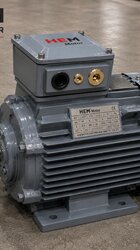
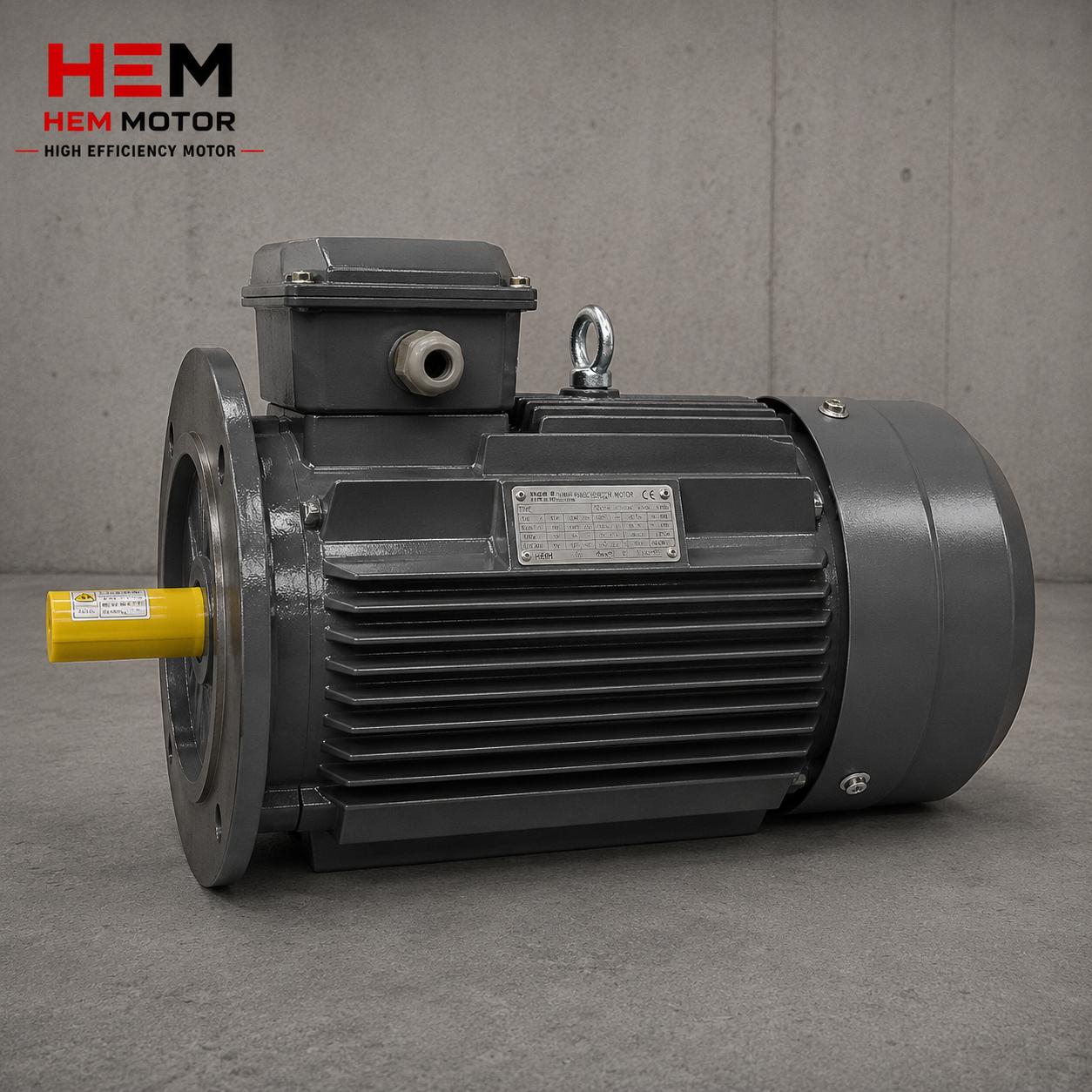

When buying an electric motor, most people look at the efficiency figure on the nameplate. An IE3, IE4 or IE5 marking seems to tell the motor's entire story. Yet as a company that has supplied motors to industrial sites for decades, we know that a motor's true value shows not in the percentage on the label, but in how many years it runs without failure. The moment a conveyor that moves thousands of products per hour suddenly stops, nobody cares about the 96.8% efficiency printed in the catalogue; the only thing that matters at that instant is when the motor will start turning again. This is exactly where IE5 synchronous reluctance motor (SynRM) technology stands out, not only with its promise of energy savings, but with the longevity and reliability advantage it offers.
In this article we examine why IE5 class synchronous reluctance motors last longer, how their magnet-free and winding-free rotor design improves failure statistics, and why a motor's real performance should be measured by evaluating MTBF (mean time between failures), bearing life and drive life together. Our goal is to help you base your investment decision not only on efficiency class, but on total operating reliability.
A Motor's True Value: Failure-Free Years, Not Nameplate Efficiency
In industrial facilities, the cost of an electric motor consists of three components: the purchase price, the energy it consumes over its lifetime, and the cost of downtime. In most applications, the purchase price represents only a few percent of the total cost of ownership. Energy consumption is a large item, and here the efficiency class has a direct impact. But the most critical item, often overlooked by engineers, is the loss caused by unplanned downtime. A single hour of stopped production can, in some plants, cost more than the entire purchase price of the motor.
That is why the real question when evaluating a motor is: "For how many years will this motor serve me without ever stopping?" IE5 SynRM motors answer this question powerfully, thanks to both their high efficiency and their simple mechanical structure. If you want to look more closely at the differences between efficiency classes and what they mean, you can review our guide explaining what the IE4 and IE5 energy efficiency classes mean for motors.
Lifespan and reliability are the "invisible" properties of a motor. They are not printed in large letters in the catalogue, yet they directly determine a plant's annual maintenance budget, production continuity and ultimately profitability. The most fundamental factor extending a motor's failure-free runtime is having few components that can fail. This is precisely where the simplicity of the SynRM rotor comes into play.
Magnet-Free, Winding-Free Rotor: Fewer Failure Points
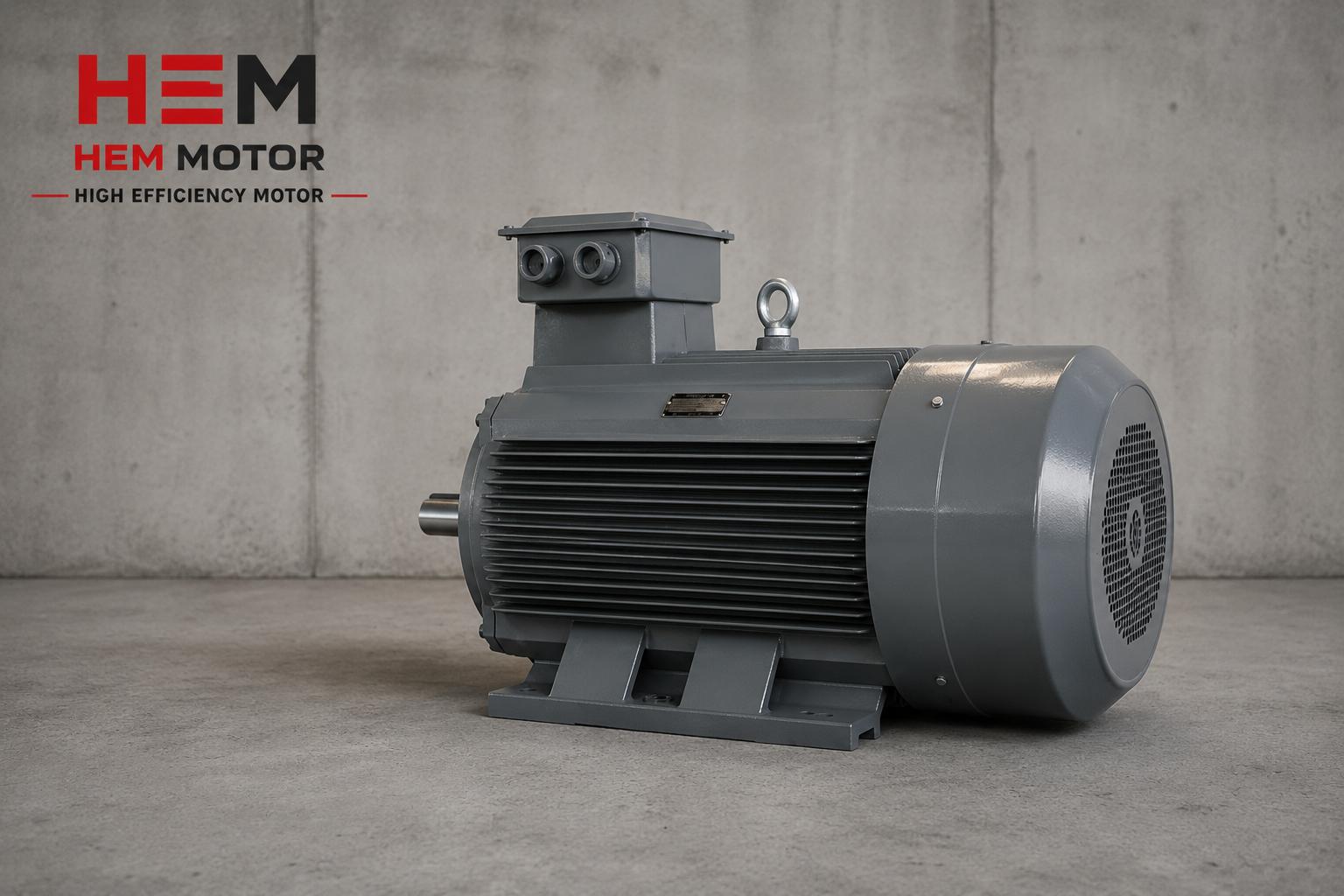
In the vast majority of conventional motors, the rotor contains either copper/aluminium windings (induction motors) or permanent magnets (permanent magnet synchronous motors). Each of these components is a potential weak point carrying a risk of failure over the motor's lifetime. In a synchronous reluctance motor, the rotor consists simply of specially shaped laminated steel sheets (reluctance barriers). There are neither magnets nor windings on the rotor.
The concrete longevity advantages this structure produces can be listed as follows:
- There is no risk of magnet demagnetization. In permanent magnet motors, overload, high temperature or reverse currents can permanently weaken the magnetic properties of the magnets. Since there are no magnets in a SynRM motor, this failure mode disappears entirely.
- No rotor winding failure occurs. In induction motors, rotor bars can crack, break or loosen; this is a common problem especially in frequent-starting applications. Because the SynRM rotor has no conductive windings, this mechanism does not exist.
- Less heat is generated because there are no electrical losses in the rotor. This means both the rotor and the bearings near it operate at lower temperatures.
- It is mechanically more balanced and robust. The risk of glued or embedded magnets flying off at high speeds is not a concern with a SynRM rotor.
There is a fundamental rule in engineering: the fewer components a system has, the more reliable it is. Removing the magnet and winding from the rotor directly prunes branches from the motor's failure tree. Fewer failure points statistically mean a longer average failure-free runtime. If you are curious about the technical details of the IE5 class and why it is a step ahead of IE4, our article comparing IE5 versus IE4 efficiency difference and investment payback will be a helpful guide.
Why Does Lower Rotor Temperature Extend Lifespan?
Temperature is the number one enemy of electric motors. There is an exponential relationship between insulation life and temperature: according to the widely accepted rule, every 10 °C rise in winding temperature roughly halves the insulation life. Likewise, the life of the grease inside bearings is extremely sensitive to temperature. Therefore, how cool a motor runs directly determines how many years it will last.
In induction motors, the rotor produces a significant amount of heat due to the induction currents flowing through it. Part of this heat is carried through the shaft to the bearings and causes the bearing grease to degrade faster. Since the electrical losses in a SynRM rotor are nearly zero, the rotor stays much cooler. This lower rotor temperature has a chain of positive effects:
- The bearing near the shaft runs at a lower temperature, grease life extends, and lubrication intervals widen.
- Because the overall motor temperature drops, the winding insulation ages far more slowly.
- In the same frame size, the motor runs in greater thermal comfort, providing a safe margin under continuous high load.
- The need for cooling fans and ventilation may decrease, which limits mechanical wear.
In practice, this means an IE5 SynRM motor operates with a lower internal temperature profile than a conventional equivalent under the same operating conditions. A cooler motor is a longer-lasting motor. It is therefore fair to say that choosing a high-efficiency motor lightens not only the electricity bill but also the maintenance schedule.
What Is MTBF and How Does It Measure Motor Reliability?
MTBF (Mean Time Between Failures) is a fundamental reliability indicator expressing the average operating time between two failures of a repairable piece of equipment. It is usually given in hours, and the higher the value, the more reliable the equipment is considered to be. As a motor's MTBF value rises, the probability that the plant will encounter unplanned downtime decreases.
However, an important warning is needed here: MTBF alone is not enough to evaluate a motor, because a motor system is not made up solely of the electromagnetic part. The vast majority of real-world failures stem not from the motor's magnetic design, but from mechanical and auxiliary components. Therefore, when assessing a motor's reliability, three components must be considered together:
- The motor's own MTBF value: The electrical/magnetic reliability of the rotor, stator and insulation system. The SynRM structure is advantageous here because it largely eliminates rotor-related failures.
- Bearing life: Statistically, a very large portion of motor failures originate from bearings. Bearing life depends on load, speed, temperature and lubrication quality.
- Drive (VFD) life: Since SynRM motors operate with a variable frequency drive, the reliability of the system is also limited by the drive's life. The capacitors and power electronics in the drive also have a life curve.
Selecting a motor by looking only at its nameplate MTBF is like looking only at the visible part of the iceberg. The correct approach is to evaluate the motor's operating environment, load profile and drive matching holistically. If you want to learn how to optimize efficiency and life together in pump and fan applications running with a variable frequency drive, our article on high-efficiency motor VFD pump and fan savings offers a practical perspective.
Bearing Life: The Decisive Factor of Motor Life
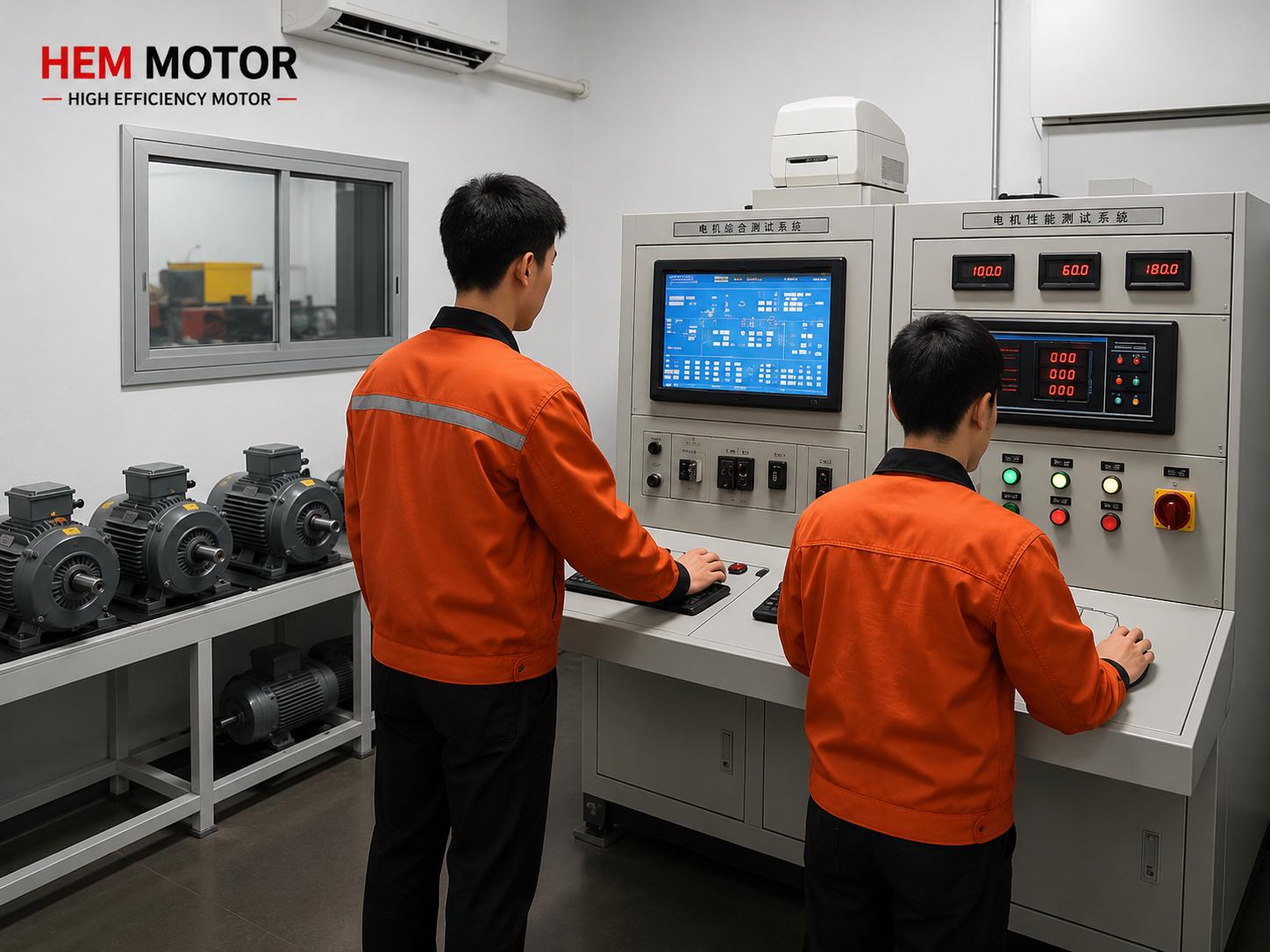
Field data clearly show that a very significant portion of electric motor failures originate from bearings. Even events such as stator winding burnout or rotor failure are often the consequence of vibration, misalignment or overheating caused first by a bearing problem. Therefore, when we talk about a motor's real lifespan, we are largely talking about bearing life.
The main factors affecting bearing life are:
- Operating temperature: Grease life shortens rapidly with temperature. The SynRM rotor staying cool reduces the heat reflected onto the bearing near the shaft, extending grease life.
- Lubrication quality and interval: Correct grease selection and timely lubrication multiply bearing life.
- Vibration and alignment: Misalignment in coupling and pulley connections imposes additional load on the bearing.
- Bearing currents: In motors running with a variable frequency drive, high-frequency voltage pulses can discharge through the bearing and cause electro-erosion. Insulated bearings or grounding brushes are therefore critical for bearing life in drive-fed systems.
In IE5 SynRM motors, the low rotor-related heat load and the balanced structure are important advantages supporting bearing life. When the right drive matching and bearing-current measures are added, the motor's total operating life is substantially extended. Thinking not only about the motor but about the entire system feeding it is the real secret of longevity.
Drive (VFD) Life and System Reliability
By their very nature, synchronous reluctance motors cannot start directly from the grid without a variable frequency drive (VFD). This means we must include the drive in the equation when evaluating system reliability. The good news is that modern variable frequency drives are mature, durable products; however, they too have a life curve, and that curve depends largely on operating temperature.
Points to watch in order to extend drive life:
- Cabinet temperature control: The life of the electrolytic capacitors in the drive shortens exponentially with temperature, just like motor insulation. A well-ventilated cabinet markedly extends drive life.
- Dust and moisture protection: The appropriate IP protection class and filter maintenance protect the power electronics.
- Correct sizing: Matching the drive correctly to the motor power and load type prevents unnecessary thermal stress.
One advantage of SynRM motors is that, compared to permanent magnet motors, the drive control algorithms and fault conditions can be managed more safely; for example, there is no back-EMF problem caused by magnets during a drive fault. This contributes to the system as a whole in terms of both safety and maintenance. Choosing the right motor-drive combination means planning not just for today, but for the next decade.
Choosing the Right Motor: Evaluate Efficiency and Life Together
When selecting a motor for a facility, reducing the decision to efficiency class alone or purchase price alone is a mistake that proves costly in the long run. The correct approach is to see the total value the motor will provide over its lifetime. IE5 synchronous reluctance motors offer a unique balance in this respect: while delivering energy savings in the highest efficiency class, their magnet-free and winding-free rotor structure brings extraordinary mechanical simplicity and long life.
When making a motor investment, we recommend asking yourself these questions: How many hours per day and under what load profile will this motor run? What is the hourly cost to me of an unplanned stop? Is my existing drive infrastructure compatible with this motor? Is my maintenance team ready for this technology? The answers to these questions help you determine the right efficiency class and the right motor type together. If you want to explore our wide range of motors and our technical support service, you can discover them through our homepage and contact us for the solution best suited to your application.
With the high-efficiency motors in our stock and our expert engineering support, we offer not just a motor but the assurance of production that runs failure-free for years. When you match the right motor with the right drive and the right maintenance plan, the efficiency figure on the nameplate turns into real profitability.
Frequently Asked Questions
Does an IE5 synchronous reluctance motor really last longer than an induction motor?
In practice, yes, because the two most important factors that shorten lifespan are temperature and the number of components that can fail. The SynRM rotor has no magnets or windings, which largely eliminates rotor-related failures, and since there are no electrical losses in the rotor, the motor runs cooler. The lower temperature extends the life of both the winding insulation and the bearing grease. When matched with the right drive and maintenance, IE5 SynRM motors offer markedly longer failure-free runtime than equivalent induction motors.
Is selecting a motor with a high MTBF value enough on its own?
No. Although MTBF is an important indicator of a motor's electromagnetic reliability, the majority of real-world failures stem from bearings and auxiliary components. To evaluate a motor realistically, MTBF must be considered together with bearing life and the life of the variable frequency drive. The weakest link of the system determines the total operating life; therefore it is best to evaluate the motor as a whole, together with its drive and operating environment.
Does the fact that SynRM motors require a variable frequency drive reduce reliability?
The drive adds another component to the equation, so in theory it means one more failure point; however, modern variable frequency drives are quite durable and, with cabinet temperature control, dust/moisture protection and correct sizing, they run trouble-free for many years. Moreover, since SynRM motors have no magnet-related back-EMF problem, fault conditions are managed more safely. When properly installed, the total reliability of the motor-drive system is higher than that of conventional solutions.