English
 Türkçe


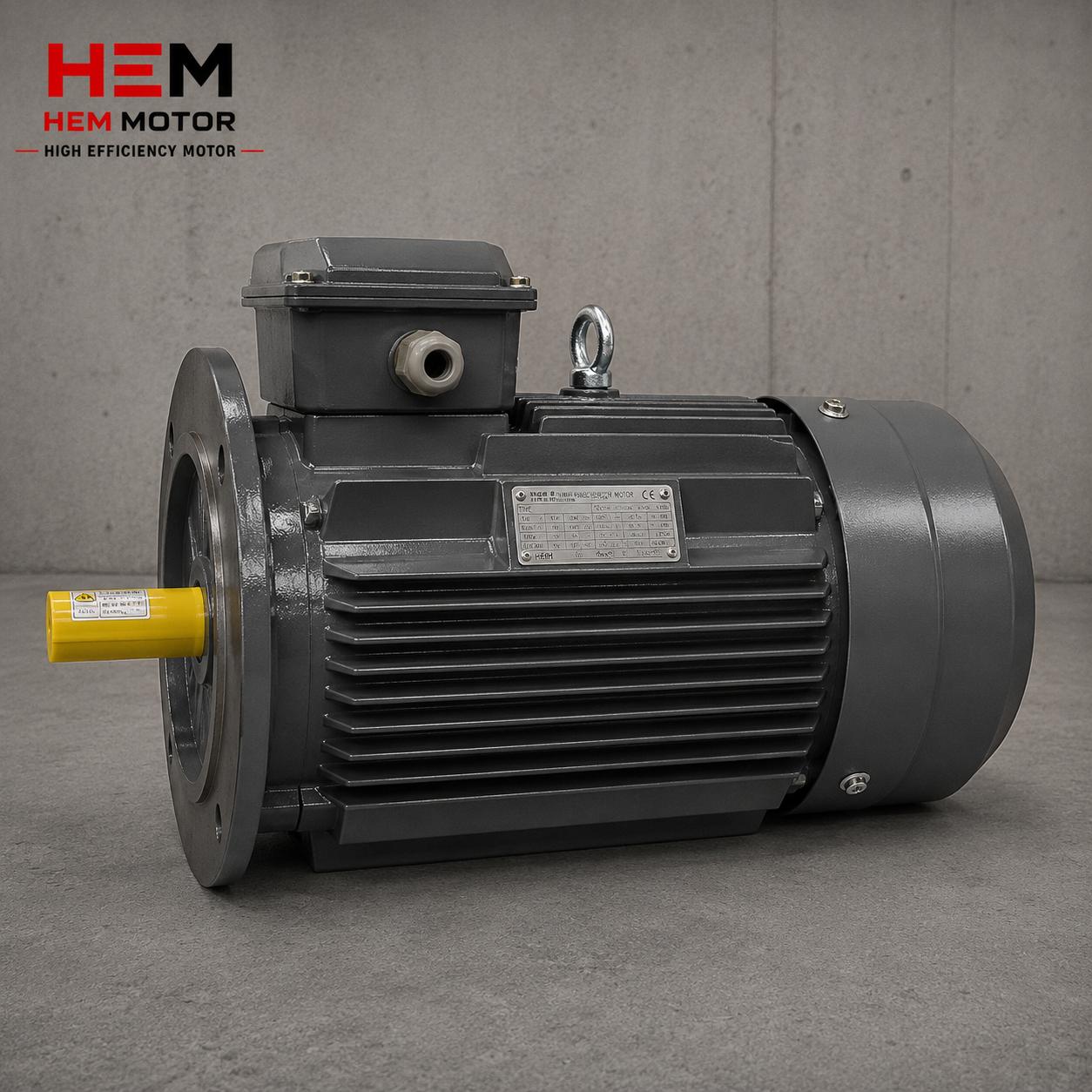

IE5 synchronous reluctance (SynRM) motors stand out in continuous-load applications such as pumps, fans and compressors thanks to their magnet-free rotor construction and high efficiency. However, these motors always run together with a variable frequency drive (VFD), and how the drive "sees" the motor directly determines the achievable torque, speed accuracy and positioning performance. This is where two fundamental control philosophies appear: sensorless (open-loop) vector control and encoder-based (closed-loop) feedback. In this article we explain, in engineering terms but with the clarity needed for a purchasing decision, what the encoder option does on IE5 SynRM motors, when it is genuinely required, and what to watch for when ordering.
The Core Difference Between Sensorless (Open-Loop) and Encoder-Based (Closed-Loop) Control
To control the speed and torque of a synchronous reluctance motor, the drive must know the instantaneous rotor position. Unlike asynchronous motors, the rotor of a SynRM motor turns in synchronism with the magnetic field created by the stator; therefore rotor position is critical for correct torque production. This position information is obtained in one of two ways.
In sensorless (open-loop) vector control, the drive measures the current and voltage applied to the motor and estimates the rotor position mathematically using a motor model. There is no physical feedback element. This method is economical, wiring is simple, and it is sufficient for the vast majority of applications where the torque-speed relationship is smooth, such as pumps, fans and compressors.
In encoder-based (closed-loop) control, an encoder is mounted on the motor shaft, and the actual rotor position/speed is measured continuously and fed back to the drive. The drive no longer estimates; it sees the real value. This makes a major difference especially at very low speeds, in holding torque at zero speed and in precise positioning.
Why Does Position Sensing Get Harder at Low Speed on a SynRM Motor?
Sensorless position estimation relies on the back-EMF generated by the motor and on current signatures. As speed drops, these signals weaken; near zero speed the estimation accuracy decreases. In many applications this is not a problem because the machine already runs close to rated speed. But in tasks such as conveyor start-up, lifting/hoisting or positioning axes, the motor must produce full torque at very low speed and hold its position at standstill. The encoder fills exactly this gap.
Incremental and Absolute Encoders: Which One for What?
The first distinction you encounter when choosing the encoder option is whether it will be incremental or absolute. The two work differently, and depending on the application one is far more suitable than the other.
Incremental Encoder
An incremental encoder produces pulses as the shaft turns; the drive counts these pulses to calculate speed and relative change in position. Resolution is usually expressed in pulses per revolution (PPR); typical values are 1024, 2048 or 4096 PPR. Its advantage is that it is economical and more than sufficient for speed feedback. Its drawback is that absolute position is lost on power loss; the system may need a homing (referencing) step when re-energized. It is ideal for speed regulation, closed-loop torque control and general precise speed holding.
Absolute Encoder
An absolute encoder assigns a unique code to every shaft angle; that is, even if power is cut and restored, the drive instantly knows exactly where the shaft is. There are single-turn and multi-turn versions. In applications requiring positioning, indexing, synchronized axis motion and a referenceless start after power-up, an absolute encoder is essential. It costs more than an incremental encoder, but the reliability and positional certainty it provides pay off well in these applications.
Practical Gains Provided by Closed-Loop Feedback
An encoder-based SynRM motor offers advantages that do not appear in the catalog but are felt in the field:
- Full torque at zero and very low speed: Holding position against load at standstill increases safety and precision on lifting and positioning axes.
- Precise speed holding: Because real speed is measured continuously even when load fluctuates, the drive keeps speed within a very small error band. This is critical in winding, extrusion and line synchronization.
- Fast and stable torque response: On sudden load change the drive reacts faster and without jolts because it relies on real position rather than an estimate.
- Repeatable positioning: Especially with an absolute encoder, indexing and stop points are achieved with high repeatability.
Encoder Mounting and Ordering as an Option
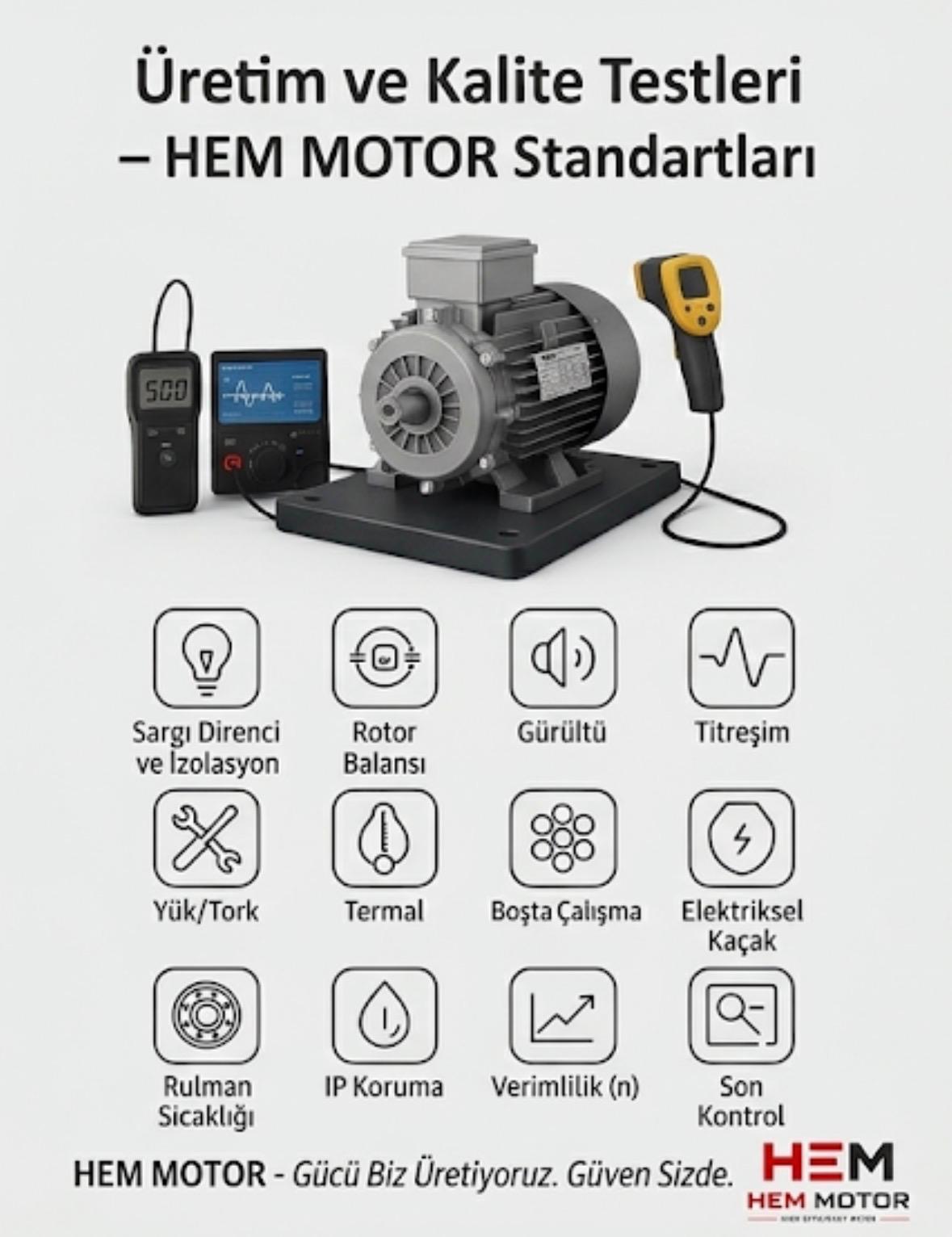
The encoder is mounted on the rear (fan-side) shaft or a dedicated shaft end of the motor and usually sits under a protective cover. Points to consider when ordering are:
- Encoder type and resolution: Whether it is incremental or absolute, and how many PPR or how many bits of resolution are needed, must be clarified in advance.
- Communication interface with the drive: The encoder output (for example HTL/TTL incremental or SSI/EnDat/BiSS absolute interfaces) must be compatible with the VFD to be used. Since the SynRM motor and drive are usually sized together as a package, this compatibility is established from the start.
- Mechanical mounting and overall length: The encoder cover can add some length to the motor; in tight mounting spaces this dimension must be confirmed in advance.
- Protection class and environment: In dusty/humid environments the encoder and its cover are expected to have suitable protection.
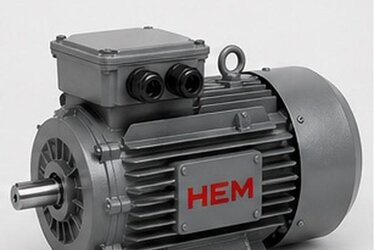
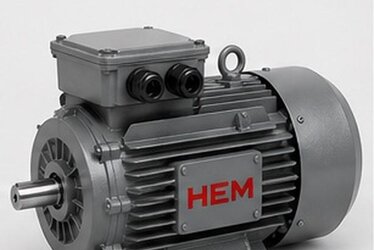
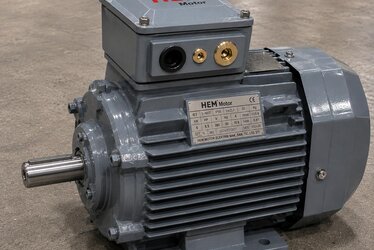
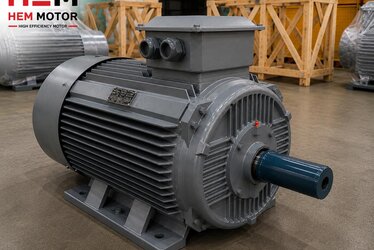
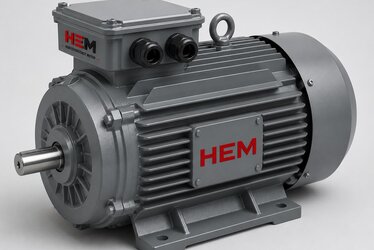
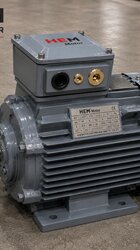
In high-efficiency products such as SynRM motors in the HEM Motor range, mounting types are offered as foot (B3), flange (B5) and combined (B35); the encoder option is defined according to the needs of the application. To build the right package, motor power, speed, frame and encoder requirement must be evaluated together.
In Which Application Is an Encoder Truly Necessary?
It is not necessary to add an encoder to every IE5 SynRM motor; on the contrary, in most pump, fan and compressor applications sensorless control is both economical and sufficient. The typical cases in which you should move to encoder-based closed loop are:
- Lifting, elevator and crane-type applications requiring continuous full torque at very low speed.
- Positioning and indexing axes that must hold position at standstill.
- Synchronous process applications such as winding, extruders, paper and textile lines, where speed error directly affects product quality.
- Machines where speed stability under sudden load shocks is critical.
Conversely, if the load profile is smooth and the speed is generally close to rated, sensorless control runs trouble-free in the field for many years and keeps both motor and panel cost low. This decision rests on understanding how SynRM technology works; our article on IE5 and synchronous reluctance motors and our IE5 ultra premium motor complete guide help you see the whole process.
Drive and Installation Compatibility
To get the full benefit of an encoder-based SynRM motor, the drive must be parameterized correctly and the encoder cable shielded properly. Because encoder signals are low-level, they are sensitive to electromagnetic interference (EMI); shielded cable, proper grounding and a route separate from the power cable are important. During commissioning it must be verified that the drive works in agreement with the encoder direction and resolution. You can find why SynRM motors cannot run without a drive and the package logic in our drive-motor package and cost article, and the commissioning steps in our drive and installation compatibility guide.
If you want to dig deeper into the difference in torque response between encoder and encoderless control, our content on torque response under sudden load change and part-load efficiency curve completes the topic. To see the core difference between asynchronous and SynRM, our IE4 asynchronous vs synchronous reluctance article is also useful. To read the nameplate correctly see our IE5 nameplate reading guide, for the general product range the HEM Motor home page, and the IE5 ultra premium transition guide.
Frequently Asked Questions
Must every IE5 synchronous reluctance motor have an encoder?
No. The vast majority of applications such as pumps, fans and compressors run perfectly well with sensorless (open-loop) vector control. An encoder is added only in applications requiring full torque at very low speed, position holding at standstill, or high-precision positioning. An unnecessary encoder increases both cost and mounting complexity.
Should I choose an incremental or an absolute encoder?
If you only need precise speed feedback, an incremental encoder is sufficient and economical. If you need referenceless operation after a power cut, repeatable positioning or indexing, an absolute encoder should be preferred. The application's need for position memory is the deciding factor.
Can an encoder be added later, or must I specify it when ordering?
Specifying the encoder at the ordering stage is best, because the shaft end, rear cover and mounting arrangement are prepared for the encoder. In addition, the encoder interface must be selected to be compatible with the drive. Although later addition is possible on some models, requesting it as a factory option is far safer in terms of mounting quality and compatibility.
Get a Quote
To determine the most suitable IE5 synchronous reluctance motor and encoder option together for your application, and to build the package with the right drive matching, consult the HEM Motor expert team. Share your speed, torque, positioning precision and environmental conditions; we will offer you the best solution. To get a quote right away, call +90 (532) 345 49 86 or reach us via our contact page.
Purchasing Checklist
- Clarify whether the application requires full torque at very low speed or position holding at standstill.
- Decide on incremental/absolute encoder based on whether precise speed or precise positioning is needed.
- Determine the encoder resolution (PPR or bits) according to the application.
- Confirm that the encoder interface (HTL/TTL, SSI/EnDat/BiSS) is compatible with the VFD to be used.
- Check the encoder cover's effect on total motor length and the available mounting space.
- Plan shielded cable, proper grounding and a route separate from the power cable.
- Write the mounting type (B3/B5/B35), power, speed and frame requirement together with the encoder option into the order.