English
 Türkçe

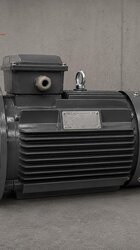

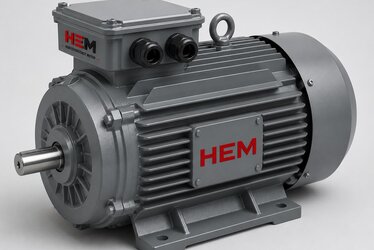
In an era where energy costs take up a larger share of operating budgets every year, the efficiency class of electric motors is no longer a luxury but a strategic decision that feeds directly into the profit-and-loss calculation. A significant portion of the electricity consumed in industry is drawn by motors, and even small differences in their efficiency reach considerable sums on an annual basis. This is exactly where the IE5 Ultra Premium class enters the picture: it is the highest efficiency level defined by the IEC 60034-30-2 standard, and it represents a new threshold in motor technology by pushing losses roughly 20% below the previous level, IE4.
In this complete guide we examine, step by step, the synchronous reluctance technology underlying IE5 motors, the real differences between the IE3, IE4 and IE5 classes, and the applications where moving to IE5 is genuinely worthwhile. Our goal is to establish the technical foundation that lets you choose the right efficiency class and to help you correctly evaluate the payback period of your investment.
What Are IE Efficiency Classes and Why Do They Matter?
IE (International Efficiency) classes are an international system, defined by the IEC 60034-30 family of standards, that rates the energy efficiency of electric motors. The higher the class number, the higher the motor's efficiency — meaning it draws less electricity from the grid to perform the same mechanical work. The difference is made up of losses: copper losses, iron losses, friction and windage losses, and load losses. A high efficiency class means these losses have been reduced.
- IE1 (Standard Efficiency): The lowest level, now legally restricted from new sale in most applications.
- IE2 (High Efficiency): Long accepted as standard but today considered insufficient across many power ranges.
- IE3 (Premium Efficiency): The common class now considered the mandatory minimum in many regions.
- IE4 (Super Premium Efficiency): The upper class preferred for high-runtime applications.
- IE5 (Ultra Premium Efficiency): The highest level, defined by IEC 60034-30-2, pushing losses roughly 20% below IE4.
The key point is that the difference between classes should be read through "loss reduction" rather than the efficiency percentage. When moving from IE3 to IE4 or from IE4 to IE5, the efficiency may rise by only a few points; but the percentage reduction in losses is much greater, and it is precisely this loss that shows up on the energy bill.
The Heart of IE5: Synchronous Reluctance (SynRM) Technology
Reaching IE5 efficiency is often economically impossible with the classic asynchronous (induction) motor architecture. For this reason, most IE5 motors rely on synchronous reluctance (SynRM) technology. In these motors the rotor contains neither windings nor permanent magnets; the rotor consists of specially shaped steel laminations that channel magnetic flux along particular paths. The motor produces torque from the tendency of the stator's magnetic field to pull the rotor toward the position of minimum reluctance (magnetic resistance).
The Core Advantages of SynRM
- Near-zero rotor losses: Because there is no current-carrying winding in the rotor, no copper loss occurs there; this is the biggest factor in the efficiency gain and keeps the rotor running cooler.
- No magnet dependency: Unlike permanent-magnet (PM) motors, it contains no rare-earth elements — a significant advantage for supply security and cost.
- Low rotor temperature: A cooler rotor extends bearing life and improves thermal reliability.
The Critical Condition: SynRM Always Runs With a Drive
By their nature, SynRM motors cannot start on their own; they must be operated with a frequency converter (drive/VFD). The drive monitors the rotor position to perform the correct switching and maintain synchronous operation. So when you buy an IE5 motor, you must plan for buying a "motor + drive" system. Manufacturers usually optimize the motor and drive together, delivering the highest performance in terms of package system efficiency (IES class) as well.
IE3 / IE4 / IE5 Real Comparison
The only way to understand whether moving from one efficiency class to another makes sense is to account for the motor's annual operating hours and load. On a motor that runs only a few hundred hours a year, the extra cost paid for IE5 may never come back, whereas on a continuously running pump the same investment amortizes itself quickly.
Three Variables to Examine When Deciding
- Annual operating hours: On motors running over 4000 hours, a higher efficiency class pays back much faster.
- Load profile: Is it running at continuous full load or partial load? Because SynRM motors maintain high efficiency even at partial load, they stand out in variable-load applications.
- Unit energy cost: As the electricity price rises, the payback period of a higher efficiency class shortens.
The general rule is this: moving to IE5 is genuinely worthwhile only in high-runtime, energy-intensive applications. Continuously running fans, pumps, compressors and conveyors are the strongest candidates for IE5. By contrast, for motors that run infrequently, for short periods, or in a standby role, IE3 is often the most sensible economic choice.
Return on Investment and Total Cost of Ownership
The vast majority of the money a motor spends over its lifetime is not the purchase price but the energy it consumes. For this reason, choosing a motor based only on the sticker price is misleading; the correct measure is the total cost of ownership (TCO) — the sum of purchase, energy and maintenance costs. Even though an IE5 motor has a higher initial cost, its lifetime cost can be lower under intensive use because it consumes far less energy. For a correct calculation, the motor's annual operating hours, average load and local energy price should be combined to derive the payback period.
In terms of stock and supply planning, it is critical in IE5 systems that the motor and drive are supplied as a compatible pair; therefore, when planning the project, the motor power, drive model and communication protocol should be clarified together. For up-to-date electric motor prices and delivery times, the best approach is to define your technical needs and request a quote. When evaluating different efficiency classes, comparing the IE3 premium efficiency motor and synchronous reluctance motor options together helps you position your investment correctly.
Correctly Interpreting the Difference Between IE5 and IE4
Even many technical people view efficiency classes merely as a table value and underestimate the difference between them. Yet the critical point is the reduction in the loss heat the motor produces. Moving from IE4 to IE5 eliminates roughly one fifth of total losses; this means both lower energy consumption and a lower operating temperature. A cooler-running motor gives a longer life to the insulation material, subjects the bearings to less thermal stress, and extends maintenance intervals. So the return on IE5 shows up not only in the electricity bill but also in the total life and reliability of the motor.
Another important advantage is that synchronous reluctance motors can maintain high efficiency even at partial load. While in classic asynchronous motors the power factor (cosφ) and efficiency drop noticeably as the load decreases, the SynRM structure, together with its drive, stays stable across a wide load range. This characteristic makes IE5 especially attractive in pump and fan applications where demand changes throughout the day, because in the real world most motors spend a significant portion of their time below full load.
Application Examples: Where Does IE5 Shine?
- Continuously running water pumps: Applications running 16-24 hours a day, such as municipal water supply, pressurization stations and irrigation systems, are where IE5 provides the fastest payback.
- Ventilation and exhaust fans: Large fans in industrial facilities offer significant energy savings thanks to speed control with a drive and IE5 efficiency.
- Compressors: In heavily used screw compressors, the efficiency difference forms a noticeable line item in the annual energy budget.
- Conveyor systems: In continuously running conveyors that are the heart of a production line, IE5 provides an advantage in both energy and thermal reliability.
By contrast, in cranes, elevator drives, standby pumps or machines that engage infrequently, the extra cost of IE5 usually does not return within a reasonable time. In these applications IE3 or IE4 is a more balanced choice. The right decision is always made by looking at the application's real operating profile.
A Practical Checklist for the Right Choice
When deciding whether to move to IE5, follow these steps: determine the motor's annual operating hours realistically; measure or estimate the average load percentage; read the current motor's efficiency class from its nameplate; check whether a drive is already in use (if so, moving to SynRM is easier); and keep your unit energy cost up to date. With these five pieces of information in hand, you can realistically calculate the payback period of IE5 and reach a clear decision on whether the investment makes sense for your operation.
Frequently Asked Questions
Can I run an IE5 motor without a drive?
No. The synchronous reluctance motors that reach IE5 efficiency cannot start on their own by design and must run with a frequency converter (drive). For this reason, you should always plan an IE5 investment as a system that includes the motor and drive together.
Does it make sense to move to IE5 in every application?
No. The extra cost of IE5 amortizes only in high-runtime, energy-intensive applications. For motors that run few hours per year or serve in a standby role, the IE3 class is usually a more economical and sufficient choice.
Do IE5 synchronous reluctance motors contain permanent magnets?
Classic SynRM rotors contain no permanent magnets; they rely on shaped steel laminations that channel the magnetic flux. This eliminates dependence on rare-earth magnets, providing an advantage in supply security and cost.