English
 Türkçe


The right electric motor quote starts not at a desk but in the field. A customer simply saying "I need a 5.5 kW motor" is often incomplete information; the real need is hidden in the existing motor nameplate, the mounting conditions, the current it draws, and the operating environment. A pre-sales site survey and assessment collects this information with field measurement and eliminates the risk of the wrong product, wrong dimensions, and later returns. In this article we cover the field survey needed for an accurate quote through the steps of existing motor identification, measurement, environment evaluation, and needs analysis. Unlike quote reading or project/dealership processes, this content focuses directly on the site survey and assessment.
Why a Site Survey? The Basis of an Accurate Quote
Incomplete information taken by phone or email is the source of most wrong deliveries: a motor with the wrong frame size, mismatched shaft diameter, different mounting type, or one that does not meet the real load. A site survey removes these uncertainties and saves time/cost for both customer and supplier. A quote prepared with correct information reduces the likelihood of a second visit, returns, and mounting problems. We also stressed the importance of preventing wrong motor delivery through nameplate matching in prevent wrong motor delivery: nameplate matching.
How Does the Survey Process Work?
A good site survey is not a random visit but a planned process. The general flow goes like this: first, in a preliminary discussion with the customer, the general framework of the need (which machine, which problem, replacement or a new line) is understood. Then the site is visited; the existing motor and drive system are examined on-site, measurements are taken, and environment conditions are recorded. At this stage, photos and notes form the basis of the next steps. After the field data is collected, an evaluation is made at the office: the collected data is compared with catalog and technical tables, and the most suitable product is determined. In the final step, a correct and complete quote is prepared and presented to the customer. This disciplined flow means "selling with data" instead of "selling by guess" and largely removes the risk of wrong delivery. A survey is an invaluable investment especially in facilities with multiple motors or where a critical line is involved.
1. Identifying the Existing Motor: Nameplate and Dimensions
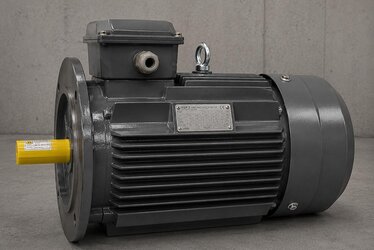
The first step of the survey is the full identification of the existing motor to be replaced or used as reference. If the nameplate is readable, the following is recorded:
- Power (kW/HP), speed (rpm), and number of poles
- Voltage and connection (230/400V, star/delta), rated current
- Frame size (IEC frame), mounting type (B3/B5/B35 etc.)
- Efficiency class (IE3/IE4), protection class (IP55 etc.), insulation class
- Shaft diameter, shaft length, and key dimensions
If the nameplate is worn off, identification by measurement is needed. We detailed the shaft-frame relationship in IE3 motor shaft and frame table and nameplate reading in reading the IE3 motor nameplate. We covered direct replacement of an old brand in old brand motor direct replacement.
2. Field Measurement: Load and Current
The nameplate power does not always reflect the load the motor actually draws. The existing motor may be oversized (chosen too large) or insufficient. For this reason, the current drawn is measured with a clamp meter during operation and compared with the nameplate rated current. This way:
- The real load level (how much the motor is loaded) is understood,
- A correctly rated replacement can be proposed instead of an unnecessarily large motor,
- If there is continuous overload, stepping up to a higher power is justified.
To evaluate current, cable cross-section, and protection selection together, see rated current, cable, fuse, and contactor selection. The supply voltage should also be measured; in a facility outside voltage tolerance, motor selection must be made accordingly (voltage tolerance and grid fluctuation).
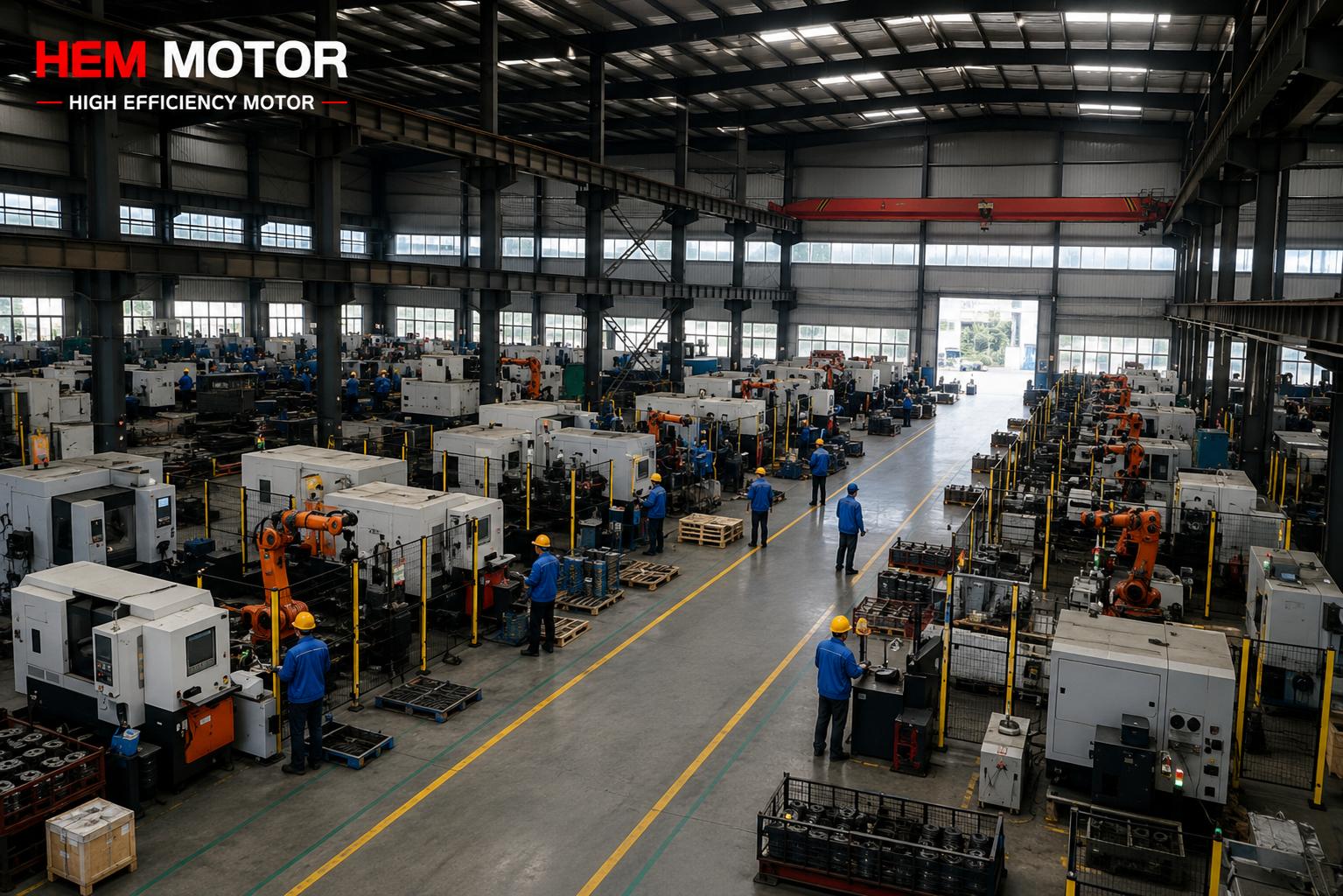
A point often overlooked in field measurement is observing not only the motor's instantaneous load but also its operating regime. A motor may run at full load at certain hours of the day and unloaded at others; or it may serve a frequent start-stop application. Where possible, taking measurements at different moments of the motor's operation reveals the real load profile. This profile is decisive for both the correct power and the correct duty-type selection. For example, in an application that strains briefly at peak load but mostly runs at light load, assuming continuous full load leads to an unnecessarily large motor. Conversely, if an apparently light but continuous heavy-duty application is given an insufficient motor, early failure is inevitable. Correct observation makes it possible to find the balance without falling to either extreme.
3. Evaluating Mounting and Environment Conditions
The right motor means not only the right power but also the right mounting and environment suitability. The survey records:
- Mounting type and position: Foot (B3), flange (B5/B14), or combined (B35); horizontal/vertical operation. We covered mounting type selection in B5 vs B14 mounting type selection and vertical mounting in vertical mounting V1/V5.
- Environment conditions: Dust, moisture, water, chemicals, temperature. The IP protection class is determined accordingly; see IP protection class selection.
- Duty type: Continuous, frequent start-stop, or intermittent? Our article on duty type (S1-S6) selection is a useful guide.
- Explosive/hazardous area: Exproof/ATEX if needed; see when an exproof (ATEX) motor is required.
- Drive connection: Coupling, belt-pulley, reducer; shaft and key fit (shaft diameter, key dimensions, coupling-pulley).
4. Replacement Compatibility and Needs Analysis
With the collected data, two paths are possible: replacing the existing motor like-for-like, or improving the application and proposing the right product (e.g. upgrading the efficiency class to IE3/IE4, reducing an oversized motor to the correct power, matching the protection class to the environment). The needs analysis is advanced step by step; we covered this process generally in electric motor selection guide: from need to order. In geared applications, whether to choose a separate motor or a monoblock is also decided at this stage (monoblock geared motor selection).
5. From Survey to Accurate Quote
Once the field data is complete, the quote is prepared clearly and fully: the right power, speed, mounting, protection, and efficiency class; with a starting and protection equipment recommendation if needed. We explained what information to provide when requesting a quote in information to provide when requesting a quote and the line items in a proforma quote in reading a proforma quote. When fast dispatch from stock is needed, our stock dispatch and fast delivery process comes into play.
Common Mistakes During the Survey
The value of a site survey lies in collecting correct and complete data. The most common mistakes encountered in the field and their consequences:
- Looking only at the nameplate power: Because the nameplate says 5.5 kW, it is assumed the motor really runs at that load. Yet the motor may be oversized; this cannot be known without measuring the current.
- Skipping shaft and mounting dimensions: Only kW/speed is taken, the shaft diameter and mounting type (B3/B5/B35) are not measured; the result is a motor with the right power but the wrong connection.
- Leaving the environment condition unrecorded: If a moist/dusty environment is treated with standard IP protection, the motor fails early.
- Not asking the duty type: An S1 motor is proposed for a frequent start-stop application; the motor overheats.
- Not measuring the voltage: If the grid is outside tolerance, even a motor selected to match the nameplate causes problems in the field.
The common result of these mistakes is wrong delivery, returns, and a second visit. A correct survey removes these costs from the start. We collected the most common mistakes when buying an electric motor in general in mistakes when buying an electric motor.
Recording and Documenting Survey Data
For the collected field data to be usable later, orderly recording is essential. A good survey record includes: a photo of the existing motor nameplate, the measured shaft diameter and mounting dimensions, the current and voltage values measured, environment condition notes (moisture/dust/temperature), the drive connection type, and photos. This record both safeguards the accuracy of the quote and creates a reference for when the same facility needs a new motor in the future. In large facilities with multiple motors, building a motor inventory is also valuable for periodic maintenance and quick replacement. We explained reading nameplate data correctly in reading the IE3 motor nameplate.
The Value a Survey Brings to the Customer
A site survey protects not only the supplier but also the customer. A correctly identified need provides these benefits: savings on both initial investment and energy cost by avoiding the purchase of an unnecessarily large motor; long motor life thanks to the right mounting and protection class; the elimination of time lost to wrong delivery and returns; and, where appropriate, long-term energy savings by upgrading the efficiency class to IE3/IE4. In short, a survey means not "a cheap motor" but "the right total cost." For the efficiency class decision, our article on staying with IE3 or moving to IE4 is a useful guide.
Frequently Asked Questions
Is a site survey necessary for every sale?
No; for a standard replacement where the nameplate data is complete and the mounting/environment conditions are clear, a remote quote may suffice. However, if the nameplate is worn off, the existing motor load is uncertain, the mounting type/dimensions are doubtful, or the environment conditions are demanding (dust, moisture, explosive area), a site survey greatly reduces the risk of the wrong product.
How do you determine the motor power if the nameplate is unreadable?
The frame size (IEC frame), shaft diameter, and mounting dimensions are measured and compared with catalog tables; the current drawn during operation and the speed measurement support the power estimate. These measurements are evaluated together to determine the most likely kW/speed/frame combination and propose the correct replacement.
What measuring instruments are used in the survey?
Typically a clamp meter (current), multimeter (voltage), caliper/tape measure (shaft diameter, frame, and mounting dimensions), and where needed a tachometer (speed) and a non-contact thermometer. With this data, both the current condition and the correct replacement are clearly documented.
Contact Us for a Site Survey and Accurate Quote
At HEM Motor, we identify your need correctly with a pre-sales site survey and assessment, and offer the most suitable IE3 electric motor for your application from stock with a complete quote. For the right product, the right dimensions, and fast delivery, send us your survey request. For products and other guides, visit our homepage.
Get a Quote: Call us at +90 (532) 345 49 86 or reach us through our contact page.
Site Survey Checklist
- Have the existing motor nameplate details been recorded in full?
- If the nameplate is unreadable, have the frame, shaft, and mounting dimensions been taken?
- Have the current drawn during operation and the supply voltage been measured?
- Have the mounting type and position (B3/B5/B35, horizontal/vertical) been determined?
- Have the environment conditions (dust, moisture, temperature, explosive area) been evaluated?
- Have the duty type (continuous/intermittent) and drive connection been identified?
- Has the decision been made between like-for-like replacement and an improved proposal?
- Has all the data been transferred into a correct and complete quote?