English
 Türkçe


When an electric motor on a production line fails unexpectedly, the problem is not just the cost of the motor; the real cost is the line stopping. A downtime lasting hours, sometimes days, returns to the business as missed production, late orders and contract penalties. Precisely for this reason, forward-looking industrial businesses set up a supply assurance that can replace their critical motors within hours of a failure. In this article we cover the contracted consignment critical spare motor stock agreement made with industrial customers: how critical motors are identified, how the consignment/reserved stock model works, how replacement is accelerated at the moment of failure, and how this model eliminates downtime cost. This is not a product but a supply assurance and commercial process.
The Real Cost of Downtime
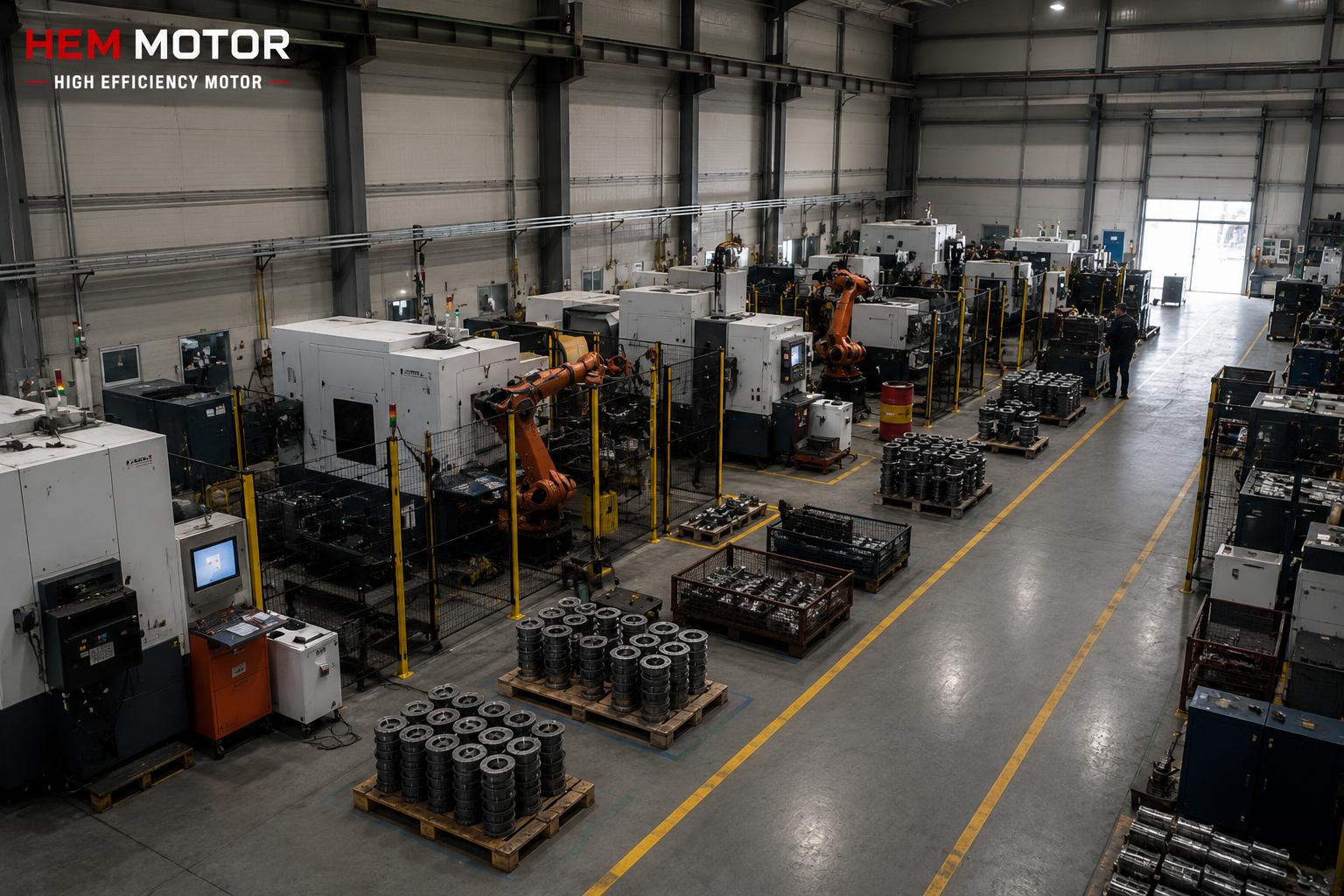
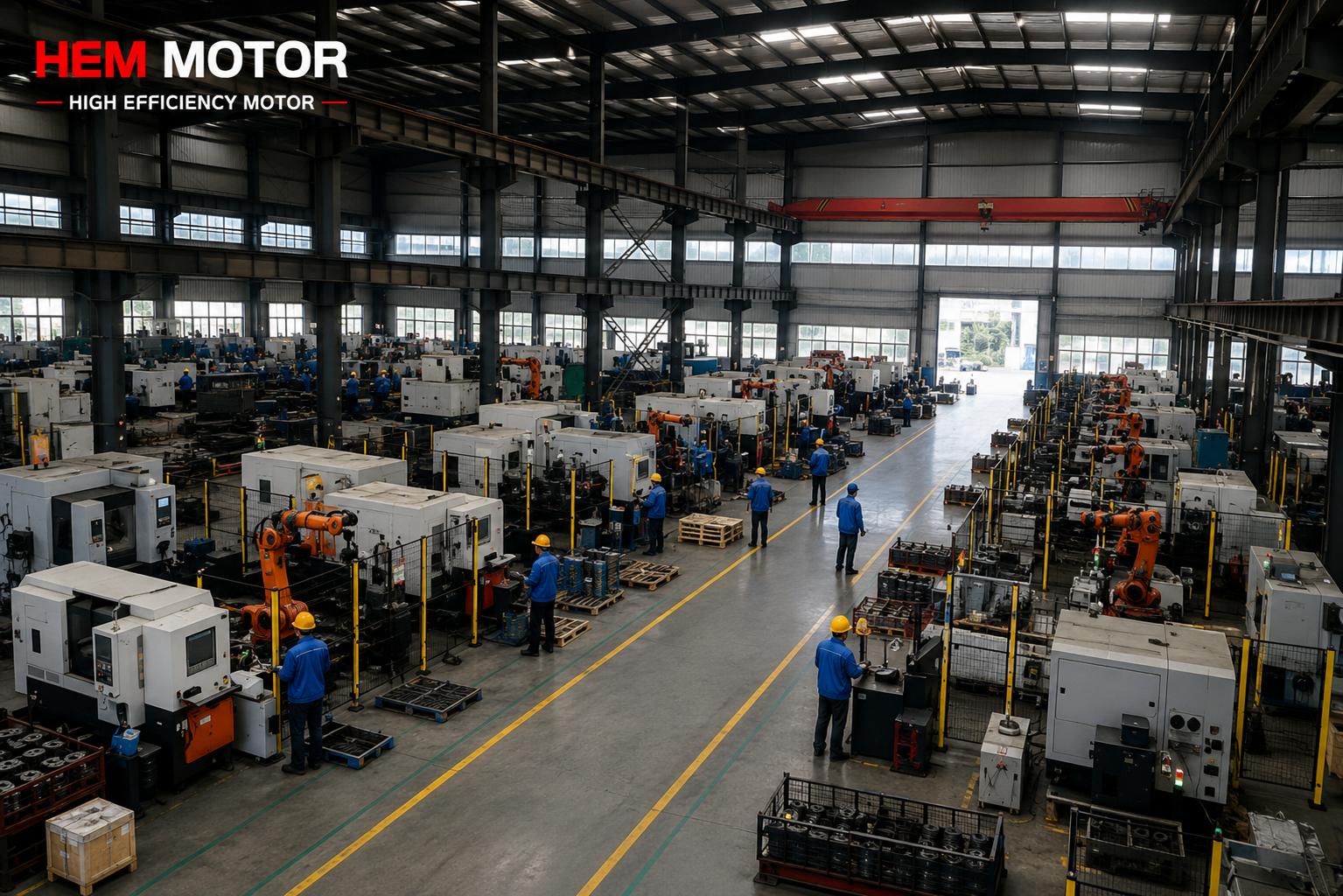
The visible cost of a motor failure is the price of the new motor. But the real cost is often many times higher: a stopped production line, idle personnel, late deliveries and shaken customer trust. Especially in facilities running continuous processes (food, chemicals, paper, textiles, cement, mining), a motor stoppage means the whole chain stops. That is why for critical motors the answer to "what do we do if there is a failure" must be ready in advance and by contract. We cover the basis of critical spare motor planning in our critical spare motor list and stock planning article.
Step 1: Criticality Analysis — Which Motors Should Be Backed Up?
Keeping all motors in a facility in stock is neither possible nor sensible. The first step of the agreement is to determine which motors are truly critical. In the criticality analysis these questions are asked:
- If this motor stops, does the line stop? Motors running from a single point without a backup are the most critical.
- How long does it take to supply a replacement? If it is special manufacture, high power or a rare configuration, the lead time grows; the risk grows.
- What is the downtime cost? If the hourly production loss is high, that motor should be backed up as a priority.
- What is the failure probability? Motors in harsh environments, under heavy load and running continuously have a higher failure risk.
As a result of this analysis, the facility's "critical motor inventory" emerges. Because the long lead time of high-power motors increases the risk, these motors are especially a priority; our high-power motor supply above 90 kW article details this topic.
Step 2: What Is the Consignment / Reserved Stock Model?
After critical motors are identified, two basic models are used to keep them ready at the moment of failure:
Consignment Stock
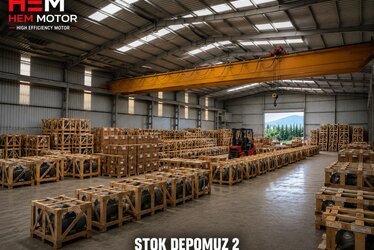
The identified critical motors are physically kept, allocated to the customer, at the customer's site or in the supplier's warehouse. The commercial process runs only when the customer uses the motor (puts it into service at the moment of failure). This model ensures the motor is physically ready and at hand.
Reserved (Allocated) Stock
The critical motors are reserved in the supplier's warehouse in the customer's name; they are not sold to another customer. At the moment of failure this motor is dispatched as a priority and quickly. This model is practical for facilities that want to secure a wide range of motors without occupying a site warehouse.
In both models the goal is the same: instead of searching for the motor, placing an order and waiting for the lead time when a failure occurs, the replacement is guaranteed in advance. We cover the dispatch-from-stock and fast delivery commitment in our dispatch from stock and fast delivery article.
Step 3: Framework Contract and Terms
The consignment/reserved stock agreement is set up with a framework contract. This contract typically defines:
- Covered motor list: The power, speed, frame, mounting and efficiency class details of the motors determined by the criticality analysis.
- Replacement time commitment: Within what time the motor will be delivered/commissioned after the failure notice.
- Stock replenishment: How long it takes to replace a motor once it is used.
- Pricing mechanism: Commercial terms (no fixed figure is given in this article; it is determined separately for each facility).
- Responsibilities: Storage conditions, periodic inspection, warranty and commissioning support.
This structure is common in high-risk sectors such as mining; our mining motor supply contracts article covers a similar redundancy and critical stock assurance model. For project-based and bulk supply processes, see our project-based bulk electric motor supply article.
Step 4: Replacement Within Hours at the Moment of Failure
The real value of the agreement appears at the moment of failure. When a motor fails, the process runs as follows:
- The customer reports the failure; since the critical motor defined in the contract is already allocated, the search/order stage is skipped.
- The allocated motor is dispatched as a priority or, if on site consignment, put into service immediately.
- Commissioning and installation support is provided if needed.
- A new critical spare is placed instead of the used motor within the replenishment time in the contract.
Thus a supply process lasting days drops to hours. For correct replacement, an exact match with the motor's nameplate information is important; we cover this topic in our mounting type selection article and what to watch in equivalent motor selection in purchasing processes. For a commissioning checklist, our step-by-step motor selection guide is also useful.
Step 5: Which Motors Should the Stock Consist Of?
The critical spare stock is configured according to the facility's real inventory. Usually motors that run continuously, have no backup and have long lead times are a priority. The efficiency class is also important: IE3/IE4 motors are preferred to comply with new regulations. To choose the efficient and correct spare motor, our efficient electric motors, IE4 electric motors and IE3 electric motors pages offer suitable options. In geared drives, worm gear reducers can also be taken into the stock scope as spares.
Imported or From Domestic Stock? The Difference in Supply Assurance
An important part of the critical spare strategy is where the replacement will come from. While the lead time of an imported motor can be long and unpredictable, fast dispatch from domestic stock greatly reduces the downtime risk. We cover this comparison in our imported motor vs from domestic stock article and the lead-time difference between stock and production order in our delivery from stock vs production order article. The consignment/reserved stock model exists precisely to eliminate this lead-time uncertainty.
Storage Conditions and Periodic Inspection
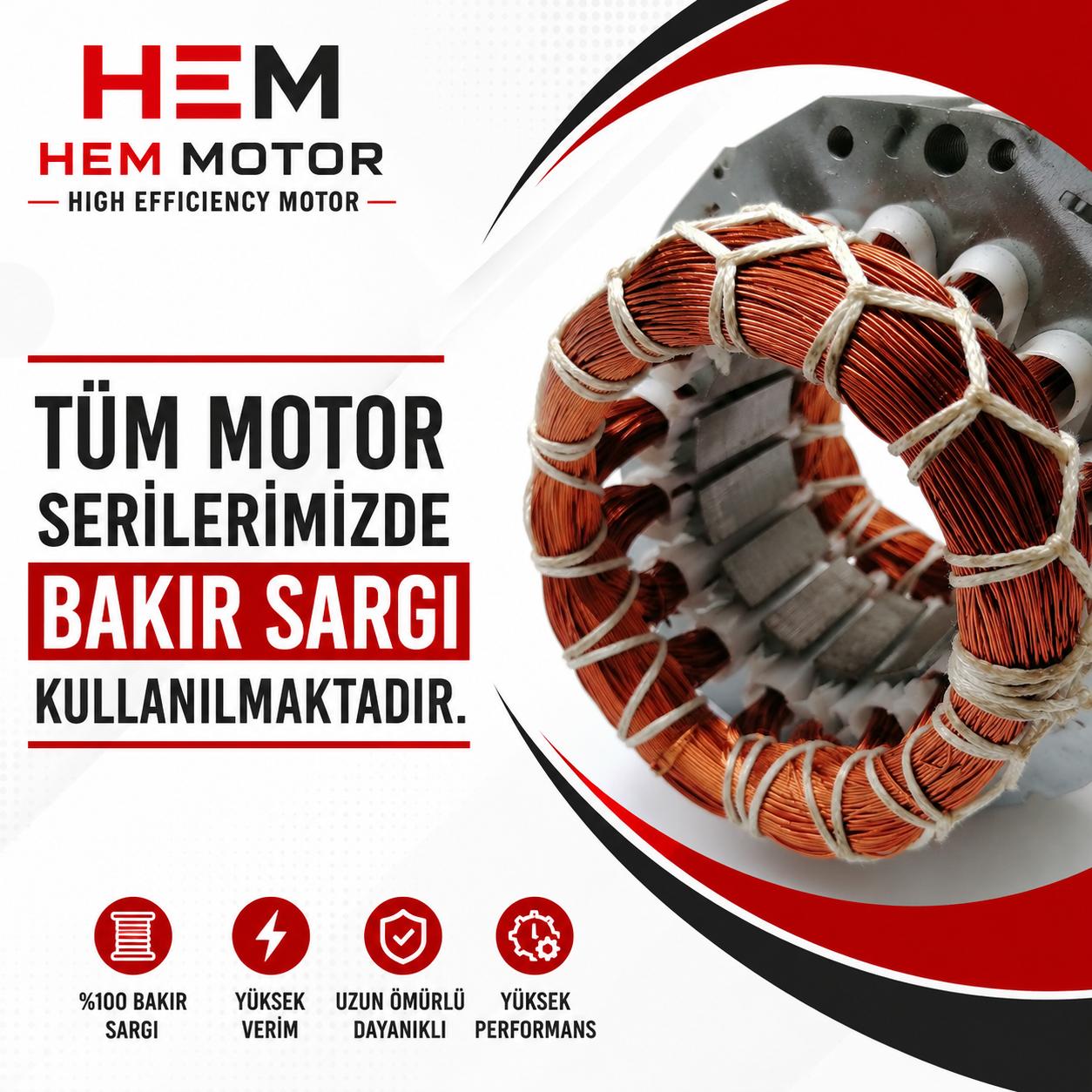
A motor waiting in consignment or reserved stock must be stored under the right conditions so it can be put into service smoothly at the moment of failure. In motors kept for a long time, moisture, bearings and winding insulation are critical issues. A motor waiting in a humid environment can have reduced insulation resistance; in stationary bearings the grease can settle by gravity and create insufficient lubrication. So a critical spare stock agreement should cover not only keeping the motor ready but also keeping it in a usable state.
- Moisture control: Storage in a dry, enclosed environment; use of a winding (anti-condensation) heater if needed.
- Bearing maintenance: Periodic shaft rotation or greasing in motors waiting a long time.
- Insulation check: A megger (insulation resistance) test before commissioning.
- Label and packaging: Correct identification and damage-free storage of the motor.
We detail these topics in our electric motor storage and long-term keeping article. You can find the acceptance inspection to be done before commissioning in our incoming and acceptance inspection article. A well-stored spare motor saves seconds at the moment of failure; a poorly stored motor can create a second problem at the exact moment of need.
Commercial and Financial Advantages of the Agreement
A consignment/reserved critical spare motor agreement is not only a technical assurance but also a financial advantage. The business operates with the supplier's assurance instead of buying all critical motors outright and locking up its warehouse. This frees up working capital and reduces stock carrying cost. At the same time, a rushed and expensive purchase at the moment of failure is avoided, because the replacement is already secured by contract.
Since the framework contract clarifies price and lead-time terms in advance, negotiation and uncertainty during a crisis are eliminated. This predictability is valuable for both production planning and budgeting. We cover similar commercial logic in project-based and bulk supply in our project-based bulk supply article, and pre-sales field analysis in our pre-sales site survey article.
Who Is It Suitable For?
- Continuous process facilities: Food, chemicals, paper, textiles, cement, mining — sectors where downtime is most expensive.
- OEM and series producers: Machine manufacturers for whom production continuity is critical; our OEM motor supply agreements article covers this model.
- Facilities with remote/difficult logistics: Locations where it is hard for a replacement to arrive quickly.
- Facilities using high-power motors: Special motors with long lead times.
Frequently Asked Questions
What is a consignment critical spare motor stock agreement?
This agreement is a framework contract in which the facility's critical motors are kept ready by the supplier, allocated to the customer (on site or in the warehouse). The goal is that when a motor fails, instead of searching, placing an order and waiting for the lead time, the replacement is guaranteed in advance and put into service within hours. Thus downtime duration and cost are largely eliminated.
Do I need to back up all my motors?
No. Keeping all motors in stock is unnecessary and costly. First, a criticality analysis determines which motors are truly critical (those that stop the line when they fail, have long supply times, high downtime cost). Consignment/reserved stock covers only these critical motors; thus assurance is provided while unnecessary stock burden is avoided.
How long does replacement take at the moment of failure?
The time is committed in the framework contract. If the motor is already on site in consignment stock, commissioning can be done immediately; in reserved stock, priority and fast dispatch is provided. A replacement that can take days in a standard supply process is reduced to hours with this model. The exact time is determined together according to the facility's location and contract terms.
Get a Quote
Let us analyze your facility's critical motors together and set up a consignment/reserved critical spare motor stock agreement tailored to you; let us prevent downtime with replacement within hours at the moment of failure. For a framework contract and supply assurance, reach us at +90 (532) 345 49 86 or via our contact page. You can reach all our products and services from our home page.
Critical Spare Stock Checklist
- Has the facility's critical motor inventory (motors that stop the line when they fail) been listed?
- Has the supply time and downtime cost of each critical motor been evaluated?
- Has the consignment vs reserved stock model been chosen suitably for the facility?
- Has the replacement-time commitment been defined in the framework contract?
- Have the stock replenishment time and storage conditions been determined?
- Is the efficiency class (IE3/IE4) of the spare motors compliant with regulations?
- Is an exact nameplate/mounting match ensured in the replacement?