English
 Türkçe




When buying an electric motor most buyers look only at power, speed, and price; yet the real matter that determines the years after the motor arrives on site is the warranty coverage and the service network. Once the motor is commissioned, how fast support is provided in case of failure, how quickly the spare part is supplied, and what the warranty covers directly affect your production. As HEM Motor, with our identity as both manufacturer and supplier, we believe that half of selling the right motor is after-sales support. This guide explains the 7 critical questions you should ask about warranty and service network before buying an electric motor, so you do not fall into the long-term cost of a purchase that looks cheap but is unsupported.
Question 1: What Exactly Does the Warranty Cover?
As important as the length of the warranty is what it covers. A good motor warranty should cover manufacturing and material defects, winding failures, and bearing problems originating from fabrication. However, incorrect installation, overloading, voltage fluctuation, or usage-related damage is generally outside the warranty. Learning the clear limits of the coverage before buying prevents disputes that may arise later.
We addressed in detail what the warranty covers and does not cover in our what an electric motor warranty covers article. The point to pay special attention to is that for the motor to remain under warranty it must be correctly commissioned and operated with appropriate protection equipment. Therefore the warranty is a right protected by correct use, not just at the moment of purchase.
Concrete questions to ask when evaluating warranty coverage are: Is winding burnout within coverage during the warranty period? Is bearing replacement under warranty? During the warranty process, when the motor is sent to service, who bears the shipping and labor? Is a replacement motor provided during the warranty process? Clarifying the answers to these questions before purchase eliminates uncertainties that may arise later. A motor that looks cheap but has narrow warranty coverage can cost much more than expected at the first failure.
Question 2: Where Is the Service Network and How Fast?
When a motor fails, where the nearest service point is and how quickly it can intervene determine the fate of your production. A widespread supply and support network across Turkiye means a solution within hours in case of failure; a distant or insufficient service network means days of stoppage. Before buying, you should ask in which regions and at what speed the supplier provides support.
As HEM Motor, we provide fast supply and shipment across Turkiye. On regional delivery and support, our same-day delivery in Izmir and the Aegean region and motor shipment to facilities in Anatolia articles show the place of shipment speed in the purchase decision. The strength of the service network is a feature of the supplier, not the motor; therefore choosing the right supplier is as important as choosing the right motor.
Question 3: Are Spare Parts and a Replacement Motor in Stock?
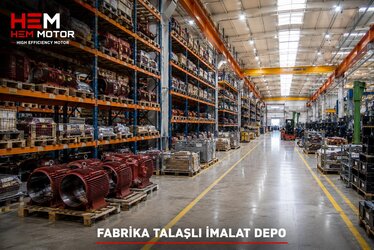
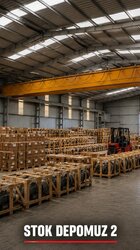
The biggest cause of delay in case of failure is the spare part or replacement motor not being in stock. When a critical motor fails, a replacement motor of the same power and speed arriving from stock within hours minimizes the production stoppage. Therefore it is essential to ask about the supplier stock depth and capacity to provide one-to-one replacement.
Keeping motors of critical powers in stock is like insurance for businesses. We explained which powers should be kept in stock in our critical spare motor list article, and the difference between stock delivery and production order in our stock delivery or production order article. To make a one-to-one match when finding a replacement motor, our nameplate matching article also guides you.
Question 4: Is Commissioning Support Provided?
For a motor to remain under warranty and to be long-lasting depends on its correct commissioning. A motor commissioned with wrong connection, wrong rotation direction, or missing protection can fail quickly, and this damage falls outside the warranty. A good supplier provides guidance on commissioning and field support when needed.
We explained step by step what to pay attention to in commissioning in our motor commissioning and first startup checklist article. For commissioning details such as rotation direction and phase sequence, our motor rotation direction and phase sequence article is complementary. Correct commissioning both protects the warranty and prevents early failures.
Question 5: Are Protection Devices Supplied Together?
The lifespan of a motor depends on the devices that protect it. A thermal relay, motor protection switch, phase protection relay, and temperature sensors (PT100, PTC) protect the motor from overload, phase loss, and overheating. A motor operated without these devices is open to failures that may fall outside the warranty coverage. A good supplier recommends which protection devices are required together with the motor.
We addressed the protection devices to request together when buying in our electric motor protection devices article, and winding temperature monitoring in our protection with PT100 and PTC thermistor article. Protection devices are the assurance of the motor running healthily throughout the warranty period.
Question 6: Is There an Equivalent and Domestic Stock Advantage?
When buying an imported motor, warranty and service are often tied to long processes; waiting for a spare part in case of failure can take weeks. Domestic production and stock delivery provide a clear advantage in terms of both warranty and service. Being able to quickly supply a one-to-one equivalent motor from local stock secures your production continuity.
We compared the delivery time, warranty, and service difference between an imported motor and stock delivery in our imported motor or domestic from stock article. We explained equivalent selection when replacing an old brand motor one-to-one in our replacing an old brand motor one-to-one article. Domestic stock and equivalent capacity are the strongest pillar of after-sales support. A locally held equivalent motor turns a multi-week wait into a same-day or next-day solution, which directly protects your production continuity.
Question 7: Is the Supplier a Long-Term Business Partner?
A motor should be seen not as a one-off purchase but as part of a long-term supply relationship. For OEM machine manufacturers doing serial production and multi-motor facilities, it is critical that the supplier provides continuity and ties warranty and service to a contract. A good supplier is not so much a single-motor seller as a partner that will meet your facility motor needs for many years.
We addressed supply agreements for OEM manufacturers in our motor supply agreements for OEM machine manufacturers article, and supply contracts in critical sectors such as mining in our mining motor supply contracts article. Our reducing cost in wholesale electric motor purchase article explains cost-reduction methods in wholesale purchasing. Our high-efficiency electric motors and IE3 premium motors are offered with a wide range of power and speed options, with warranty and service assurance.
Considering Warranty and Service Together With Total Cost
The real cost of a motor is much more than its purchase price. Energy consumption, maintenance, possible downtime, and spare part supply make up the actual cost over the motor lifespan. The warranty and service network are a decisive part of this total cost of ownership (TCO). A strong warranty and fast service network significantly reduce the downtime cost and repair expense in case of failure.
Looking only at the nameplate price when deciding between two motors is misleading. A motor that looks more expensive but has broad warranty, fast service, and strong domestic stock can be much more economical in the long run. Because a stoppage lasting days in case of failure can cause a loss many times the motor price. We explained how to calculate the total cost of ownership in high-efficiency motors in our TCO calculation article. We evaluated the risks of a second-hand motor without warranty and service in our second-hand or new stock motor article. Choosing the right supplier means buying not just the motor but the support behind it.
Giving Correct Information When Requesting a Quote Speeds Up Service
The speed of the warranty and service process depends largely on the accuracy of the information you provide at the time of purchase. When you fully communicate the motor nameplate information, mounting type, application detail, and operating conditions, both the right motor arrives and, in case of a future failure, a one-to-one replacement is supplied much faster. Missing information increases both the risk of the wrong motor and the risk of delay in the service process.
We addressed the information to provide when requesting a quote in our 8 pieces of information to provide when requesting a quote article, and the damage risks that may occur during shipping in our damage risks in electric motor shipping article. Sharing correct information makes both the purchase and the warranty process smooth.
Frequently Asked Questions
How long is an electric motor warranty?
The warranty period varies by manufacturer and motor type; what matters is the coverage as well as the period. A good warranty covers manufacturing and material defects, winding and fabrication-related bearing problems. However, for the motor to remain under warranty it must be correctly commissioned and operated with appropriate protection equipment and at nameplate values. We recommend learning both the period and the coverage clearly before buying.
How quickly can I find a replacement when a motor fails?
This depends entirely on the supplier stock depth and service network. If motors of critical powers are kept in stock, a one-to-one replacement can be supplied within hours; if not in stock, the production or import process can take days or even weeks. Therefore asking about the supplier stock capacity and replacement speed before buying makes a big difference in case of failure.
Does incorrect use void the warranty?
Yes. Overloading, incorrect installation, voltage fluctuation, missing protection equipment, or operating outside nameplate values is generally outside the warranty. Commissioning the motor correctly, operating it with appropriate protection equipment, and loading it in accordance with nameplate values protects your warranty. For this reason supplying protection devices together with the motor secures both the motor and the warranty.
Get a Quote
Let us offer not only the right motor but a supply solution backed by a strong warranty and a fast service network. Share the power, speed, and application you need; let us explain together the warranty coverage, stock status, commissioning support, and one-to-one replacement assurance. Call us at +90 (532) 345 49 86 or reach us through our contact page; let us answer all your questions before purchase and stand by you after sale as well.