When an electric motor is bought one at a time it is a product; when bought in bulk it is a procurement strategy. For a business that buys dozens — perhaps hundreds — of motors a year (an OEM, a machine manufacturer, a maintenance department, a contracting firm or a dealer), what determines the total motor cost is not the sticker price of a single motor. The real cost is determined by the sum of interconnected decisions: stock security, delivery performance, product standardisation, energy efficiency and supplier management. A well-structured bulk purchasing strategy lets you procure the same motors at the same quality for a far lower total cost.

As HEM Motor — manufacturing electric motors since 1979 and offering fast delivery with a strong stock structure across Turkey — we have managed bulk motor supply for hundreds of businesses, from OEMs to dealers, for decades. In this article we share 8 concrete, field-tested methods distilled from that experience. Each one makes a difference on its own; applied together, they structurally lower your motor procurement cost.

1. Buy from the Manufacturer: Every Link in Between Is Your Cost

This is the first and most effective rule in bulk buying. A motor adds a margin to its price at every commercial link it passes through on the way from manufacturer to end user. Through importer, main distributor, regional dealer, the price of the same motor grows step by step; what is more, your technical questions are answered a little more slowly and a little more incompletely at each link. When you work directly with the manufacturer, you not only escape intermediary margins; you deal with engineers who command the product's design and can reflect your special requests (shaft dimension, terminal box orientation, special winding, mounting type) directly onto the production line. Because HEM Motor is both manufacturer and seller, there is no intermediary between the factory and your purchasing department in your bulk orders.

2. Choose a Supplier with Stock Guarantee: The Most Expensive Motor Is the One You Do Not Have

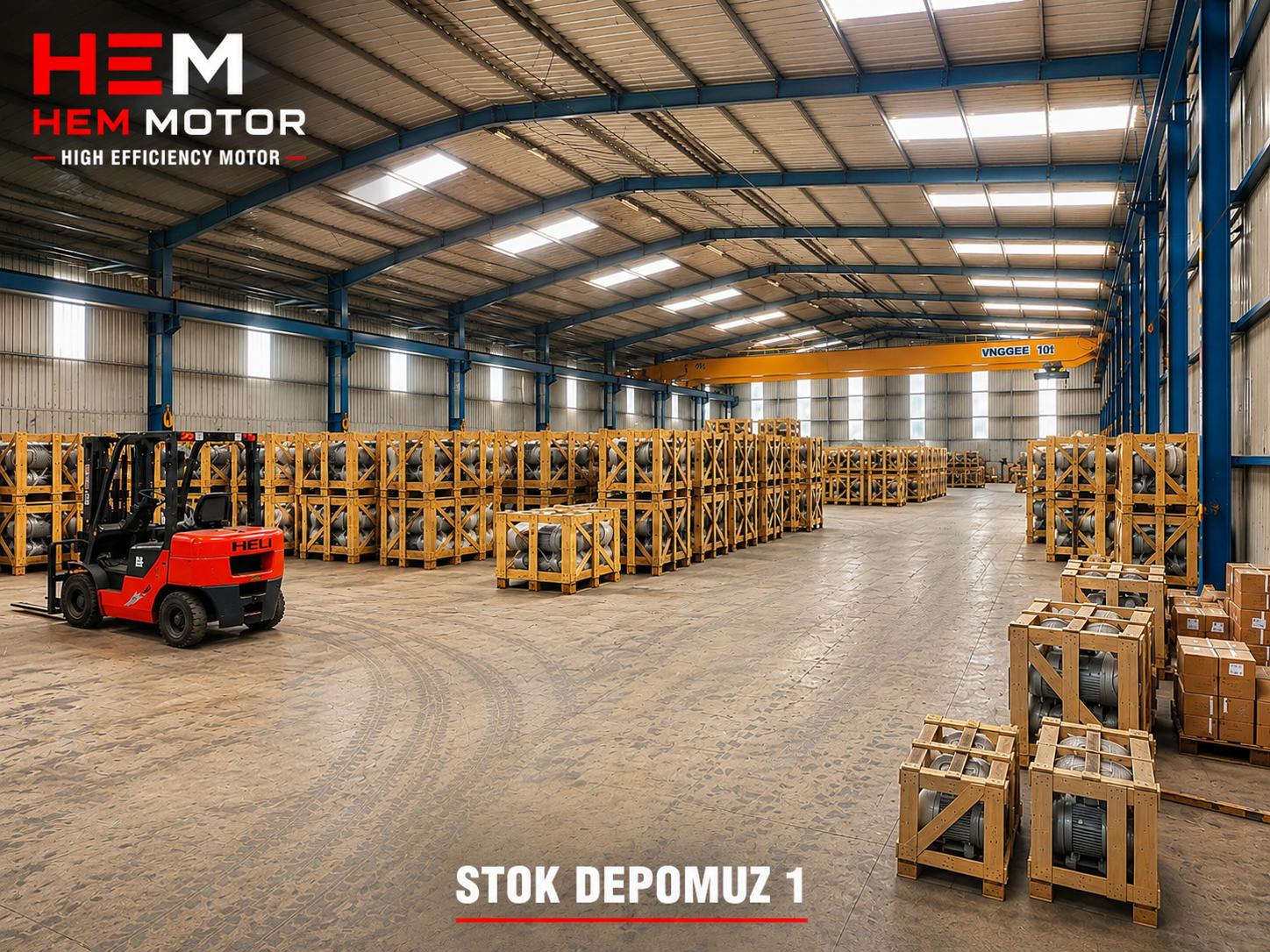
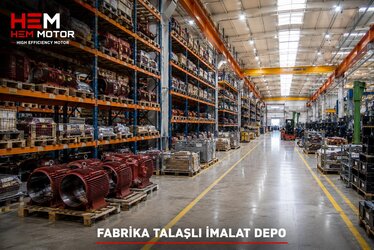
The second issue, as critical as price negotiation in bulk buying, is stock security. If your production line or project is waiting for a motor, the most attractive price in the catalogue means nothing; the hourly cost of downtime dissolves all price advantage within minutes. When choosing your supplier, ask these questions: Does it hold physical stock in Turkey for standard power and frame types? Is the stock depth on a scale that meets your annual consumption? Can it reserve stock for your demand? HEM Motor keeps the standard items of its production programme — running from 0.55 kW to 355 kW — ready in its stocks in Turkey, and it eliminates the "out of stock" answer by making periodic stock reservations for its contracted customers.

Elektrik motoru toptan alımında stok ve depo yönetimi

3. Make a Framework Agreement with a Single Supplier

Collecting quotes from three firms for every motor need may look competitive on paper, but in practice it is an expensive method: each time a technical specification is written, quotes are compared, the new supplier's product is tested and the spares of different brands are stocked separately. The picture changes when you make a framework agreement with a single strong supplier based on your estimated annual quantities: unit prices are set up front according to annual volume, the negotiation and paperwork process disappears with every order, you gain priority-customer status for delivery, and billing-payment runs from a single hand. The time your purchasing team spends on motor procurement — which is also a cost — drops dramatically. To manage single-supplier risk, it is enough to add stock-commitment and delivery-time clauses to your agreement; a supplier with a manufacturer identity can give these commitments comfortably.

4. Plan the Delivery: Not All at Once, but According to Your Demand Calendar

Bulk buying does not have to mean all the motors piling into your warehouse on the same day. Locking your annual quantity with a single contract and splitting deliveries into batches according to your production or project calendar gives you a two-way gain: on one side you keep the price advantage of bulk buying, on the other you free yourself from the capital, storage space and counting burden tied up by motors lying in your warehouse for months. HEM Motor's strong stock structure makes this model possible: your motors wait ready in our warehouse in your name, and the batches you call off reach your site with fast delivery. Especially for project-based contracting firms and manufacturers with seasonal production, this model directly relieves cash flow.

The unseen side of delivery planning is performance tracking. If you do not measure whether the supplier you buy in bulk from keeps its delivery promise, the cost of delays is quietly charged to you: assembly teams waiting, postponed commissioning, machines delivered late to your customer. A simple track is enough: record the committed and actual delivery dates for each order, report the on-time delivery rate on a quarterly basis, and carry this rate into the renewal talks of your framework agreement. The difference of working with a manufacturer that has a strong stock structure appears exactly here: a delivery promise fed from stock is structurally more reliable than a delivery promise tied to the production queue.

5. Standardise the Efficiency Class: A Mixed Fleet Is a Hidden Cost

One of the traps businesses that buy in bulk often fall into is buying a different efficiency class and a different motor series each time, according to the price of the day. The result: a mixed fleet running from IE1 to IE4 in the same plant, a separate spare requirement for each series, models the maintenance team does not recognise and an energy profile that cannot be calculated. Standardising the efficiency class across the fleet — setting a clear policy such as IE4 for continuous applications and IE3 for intermittent ones — both makes your energy budget predictable and simplifies spare and maintenance management. We showed step by step which class makes sense for which application in our article answering the IE3 vs IE4 question with a payback calculation; we recommend doing this calculation on a fleet scale before bulk buying.

Elektrik motoru filosunda verim sınıfı standardizasyonu

6. Look at Total Cost of Ownership (TCO), Not the Sticker Price

The overwhelming majority of an electric motor's lifetime cost — typically over 95% — is the electrical energy it consumes; the purchase price and maintenance share the remaining small slice. For this reason, choosing the lowest sticker price in bulk buying often means choosing the highest total cost. The correct comparison is made over TCO (total cost of ownership): purchase price + lifetime energy cost + maintenance and spare cost + downtime risk. In applications with high annual operating hours, an efficiency difference of a few points pays back the price gap between motors in the first years; moreover, this gain is multiplied by the quantity on a fleet scale. If renewing old motors is in question, our article working out the real consumption calculation of replacing an old motor with IE4 offers a concrete application of the TCO approach.

7. Tie Spare Parts and Service Continuity into the Contract

The motors you buy in bulk will run in the field for years; over that time you will need parts such as bearings, fans and terminal-box covers, and technical support. In your supplier choice, get clear answers to these questions: Are spare parts in stock in Turkey? Will the parts of the series you buy today still be available five to ten years later? Through whom, and at what speed, does the warranty process run? While part waiting times can run into weeks for imported products, working with a domestic manufacturer solves this risk at its root: because HEM Motor produces or stocks the parts of every motor it sells itself, spare-part and service continuity is committed by contract. Combined with fleet standardisation, spare management becomes even cheaper: motors of the same series are managed with a shared spare pool, and a single spare motor insures multiple points for critical applications.

8. Do the Technical Verification Together with the Manufacturer: The Wrong Motor Is the Most Expensive Motor

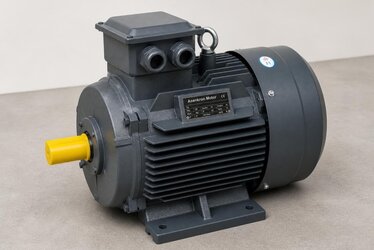
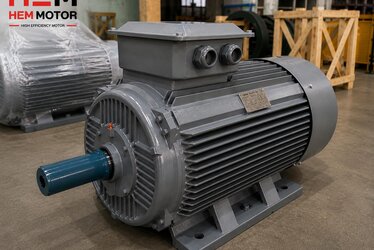
A selection error made in bulk buying is also multiplied by the quantity. Fifty motors selected with excessive power are fifty separate cost items running inefficiently under low load for years; a batch selected with the wrong mounting type means fifty separate mechanical modifications in the field. That is why pre-order technical verification — load profile, power selection, speed, mounting type (B3/B5/B35), protection class, drive compatibility — is the highest-return step of bulk buying. For industrial environments, IP55 protection class, F insulation class and a cast iron body should be the minimum specification. At HEM Motor you do this verification together with the manufacturer's engineers: from general-purpose industrial type motors to AC electric motors, all series are confirmed according to your application before shipment. You can review the entire product range on our products page.

Toptan elektrik motoru teslimatı ve lojistik planlama

Preparing Before Bulk Buying: 6 Data Points to Bring Your Supplier

To get the full benefit from the eight methods above, you need to come to the table prepared. Arriving at the first meeting with your supplier with these six data points both speeds up the quotation process and clearly increases your negotiating power:

  • Annual quantity estimate: A quantity table broken down by power, drawn from the purchasing records of the past two to three years. Even a rough estimate is the basis of volume-based pricing.
  • Power and speed distribution: How many units of which powers (for example 1.5 kW, 5.5 kW, 22 kW) and which speeds (2, 4, 6 poles) you use.
  • Mounting types: The distribution of B3 foot-mounted, B5 flange and B35 combined types; the wrong mounting type is the most frequent cause of returns.
  • Operating profiles: Which motors run continuously and which intermittently; the basic input to your efficiency-class standardisation policy.
  • Criticality list: Applications whose failure stops production; for these points, stock reservation and a spare-motor plan are structured separately.
  • Delivery calendar: Estimated call-off periods according to your production plan or project phases; the skeleton of the batch-delivery model.

Preparing this table is a few hours' work; in return it eliminates the uncertainties, urgent-purchase mark-ups and wrong-product risks that would otherwise repeat with every order throughout the year. As HEM Motor, we also carry out this inventory work together with customers who request it: we examine your existing fleet and turn the standardisation and annual supply recommendation into a concrete report.

Combine the 8 Methods: Bulk Buying Is Not a One-Off Negotiation but a Continuity Relationship

The common denominator of these eight methods is this: in bulk buying, cost falls not at the moment of the order but in the design of the supply relationship. By buying from the manufacturer you zero out the intermediary margin; with a stock guarantee you lower the downtime risk, with a framework agreement the transaction cost, with delivery planning the capital cost, with standardisation the maintenance and spare cost, with the TCO approach the energy cost, and with technical verification the error cost. Although each item looks like a few-percent improvement on its own, applied together they create a permanent and measurable drop in your total motor procurement cost. For businesses seeking a dealership or a long-term supply partnership, HEM Motor's manufacturer assurance, ongoing since 1979, offers this entire design under a single roof.

The last point not to forget is this: this design is not unique to large industrial enterprises. A machine manufacturer that buys twenty to thirty motors a year, and a prospective dealer selling in its region, benefit from the same principles. What matters is not scale but approach: planning the need in advance, choosing the supplier not by the price tag but by stock, delivery and engineering capacity, and moving the relationship from a one-off purchase to measurable commitments. Businesses that adopt this approach turn motor supply from a cost item into a competitive advantage. The relationship built with the right supplier produces a value beyond price over the years: an engineering partner who knows your plant, a stock plan that foresees your need, and a manufacturer always reachable at the end of the phone.

Frequently Asked Questions

Is there a minimum order quantity in bulk buying, and from what quantity does the price advantage start?

We have no rigid minimum quantity requirement; bulk-buying advantages are determined gradually according to your total annual volume. As with one-off large batch orders, volume-based pricing is applied in framework agreements spread over the year. When you share your estimated annual motor need (with power distribution and quantities), we prepare a quote that includes a price specific to your volume and a stock reservation; agreements that start small and grow during the year are also possible.

How does the stock guarantee work; will the motor really be ready when I need it?

For our framework-agreement customers, the foreseen annual quantities are written into our production and stock plan; in standard power and frame types, your motors are kept ready in our warehouses in Turkey. Call-off shipment is planned from stock the same day or the next business day. For special-design products, the delivery date is committed at the moment of ordering and taken into the production plan. The aim is clear: not a single day where your line or project waits for a motor.

We have an existing motor fleet made up of different brands; how is the transition to a single supplier managed?

You do not have to change the whole fleet at once for the transition. As a first step, we draw up your existing inventory together (brand, power, frame, mounting type, age) and determine the HEM Motor equivalents; thanks to standard IEC frame dimensions, a one-to-one swap is in most cases done without modification. As new purchases and failure replacements proceed from a single series, the fleet standardises itself; within a few years your spare pool simplifies, your maintenance team masters a single series, and your bulk-buying advantages grow.

Get a Quote

Take the first step to turn your annual motor need from a one-off purchase into a planned supply partnership: send us your power distribution, your estimated quantities and your delivery calendar; let us present our quote — including a price specific to your volume, a stock reservation and a delivery plan — within the same week. You can reach us by phone at +90 (532) 345 49 86 or send your request through our contact us page. With HEM Motor assurance, in bulk buying talk not about cost but about your motors.