English
 Türkçe



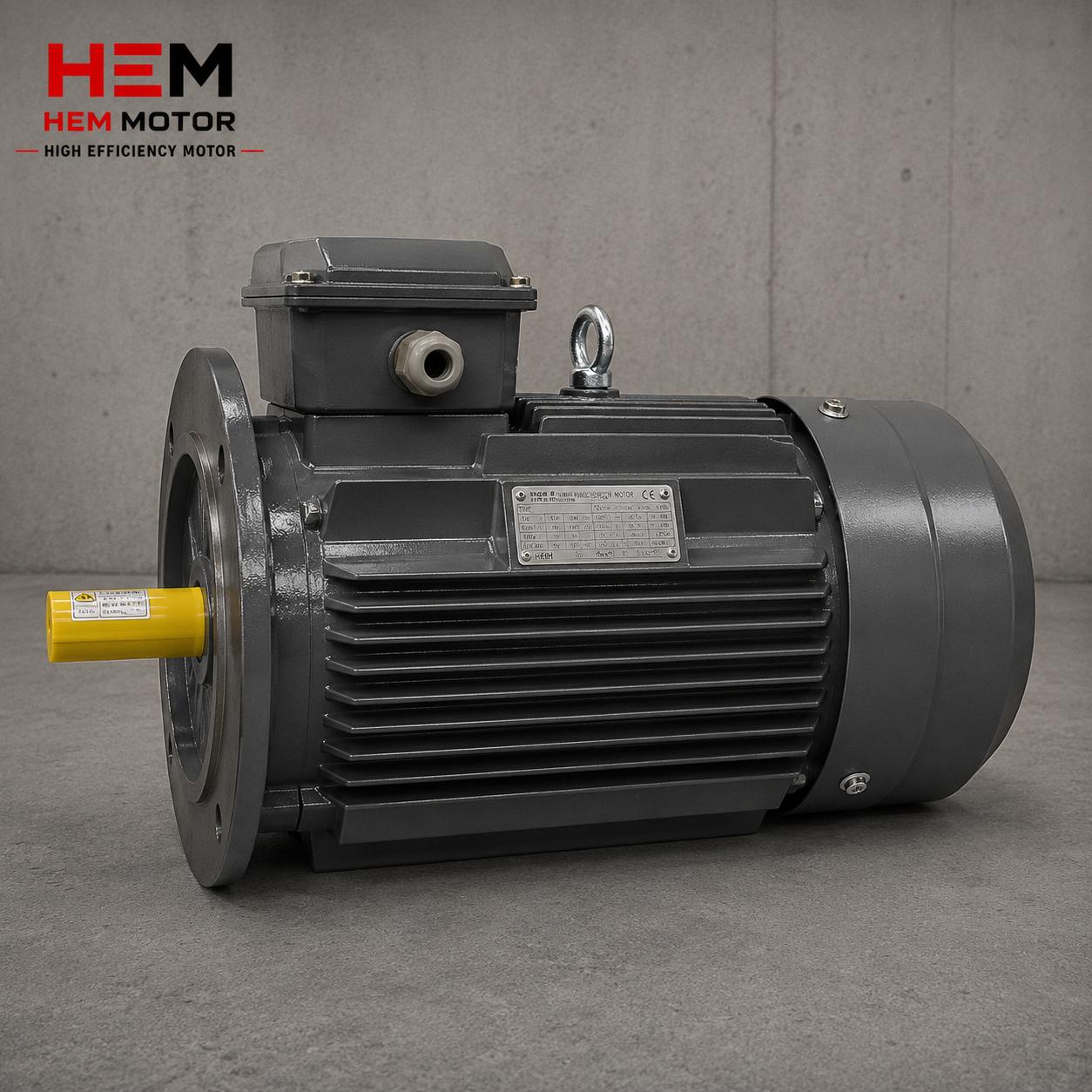

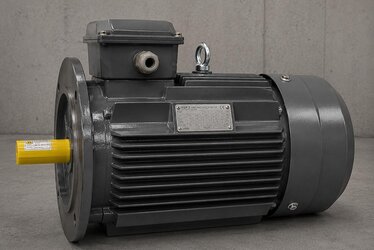
For a contracting, EPC or engineering firm, project-based electric motor supply is an entirely different process from buying a single motor. Here, tens or sometimes hundreds of motors are sourced in different powers, speeds, mounting types and efficiency classes, with staged delivery aligned to the project's construction and erection schedule. Poorly managed motor supply causes on-site erection delays, missing items and overruns. This guide explains the full process of project-based bulk motor supply step by step for contractors and engineering firms, from preparing the bill of materials (BOM) to single-source supply, stock reservation, staged delivery and commissioning support.
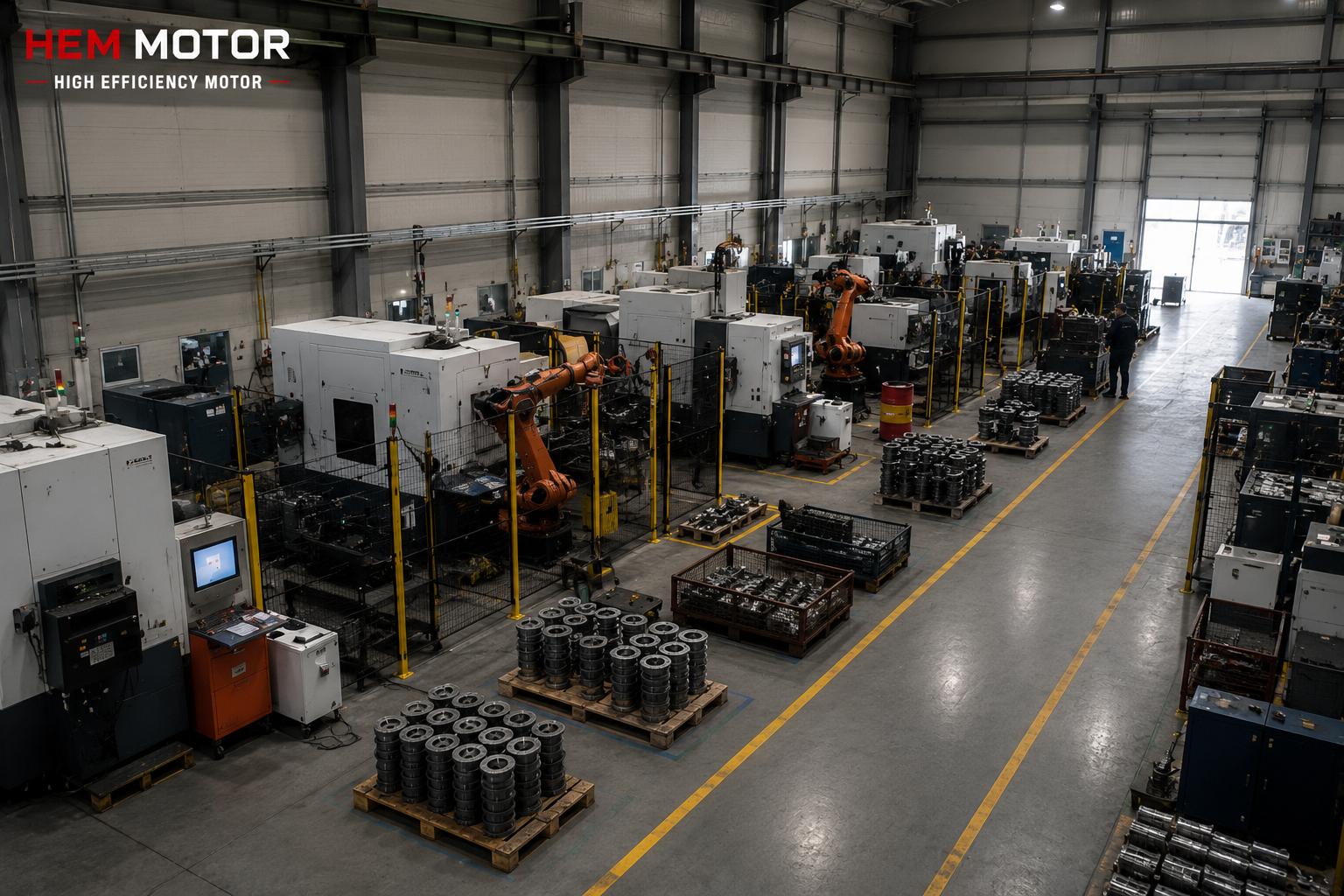
Why Project-Based Supply Is Different
A single motor purchase has one technical specification and one delivery. Project-based supply involves multiple pieces of equipment, interdependent delivery dates, a common technical standard and usually a supply chain running through a single point of contact. The biggest risk for an engineering firm is motors from different suppliers built to different standards and deliveries that cannot be synchronized with the project. A single-source, standard-unified approach gives a critical advantage in both lead time and quality. We covered ways to cut cost in bulk buying in cost reduction in wholesale purchasing.
Step 1: Bill of Materials (BOM) and Technical Agreement
The foundation of the process is a complete bill of materials. For each motor, power (kW), speed/poles, efficiency class (IE3/IE4/IE5), mounting type (B3/B5/B35), frame material, protection rating (IP), insulation class, duty type and required accessories must be clearly defined. When building the BOM, make sure each line corresponds to an application (pump, fan, conveyor, compressor, etc.).
In the technical-agreement stage, motor specifications are verified one-to-one with the supplier; where an equivalent is needed, matching is done via IEC connection dimensions. If a brand change is involved in legacy projects, use the method in direct replacement of an old brand motor. To set the right power in the BOM see motor power calculation and for mounting type reading the IM mounting code. To block wrong items from the start, apply the nameplate matching check to the BOM.
Step 2: Single-Source Supply and Standard Unity
When a project sources its pump motor from one supplier, fan motor from another and conveyor motor from a third, efficiency classes, insulation standards, terminal-box orientations and accessories can all differ. This causes on-site compatibility issues and spare-part confusion. Single-source supply ensures all motors arrive to a common technical standard, under a common warranty and service framework. To fix the efficiency-class standard across the project, base it on the IE3/IE4 mandate; for total-cost comparison review the TCO comparison.
Step 3: Stock Reservation and Staged Delivery
A project schedule rarely needs all motors on site at once. Construction, mechanical erection and commissioning need motors at different times. So in bulk supply, motors should be set aside by stock reservation and shipped with staged delivery aligned to the project schedule. This reduces unnecessary on-site storage, damage and moisture risk; each motor arrives when needed.
Balancing from-stock delivery against production orders is a critical project decision; we detailed it in from stock or production order. Which critical powers to keep in reserve is covered in critical spare motor list. For correct storage of motors arriving on site, apply the storage and moisture management guide.
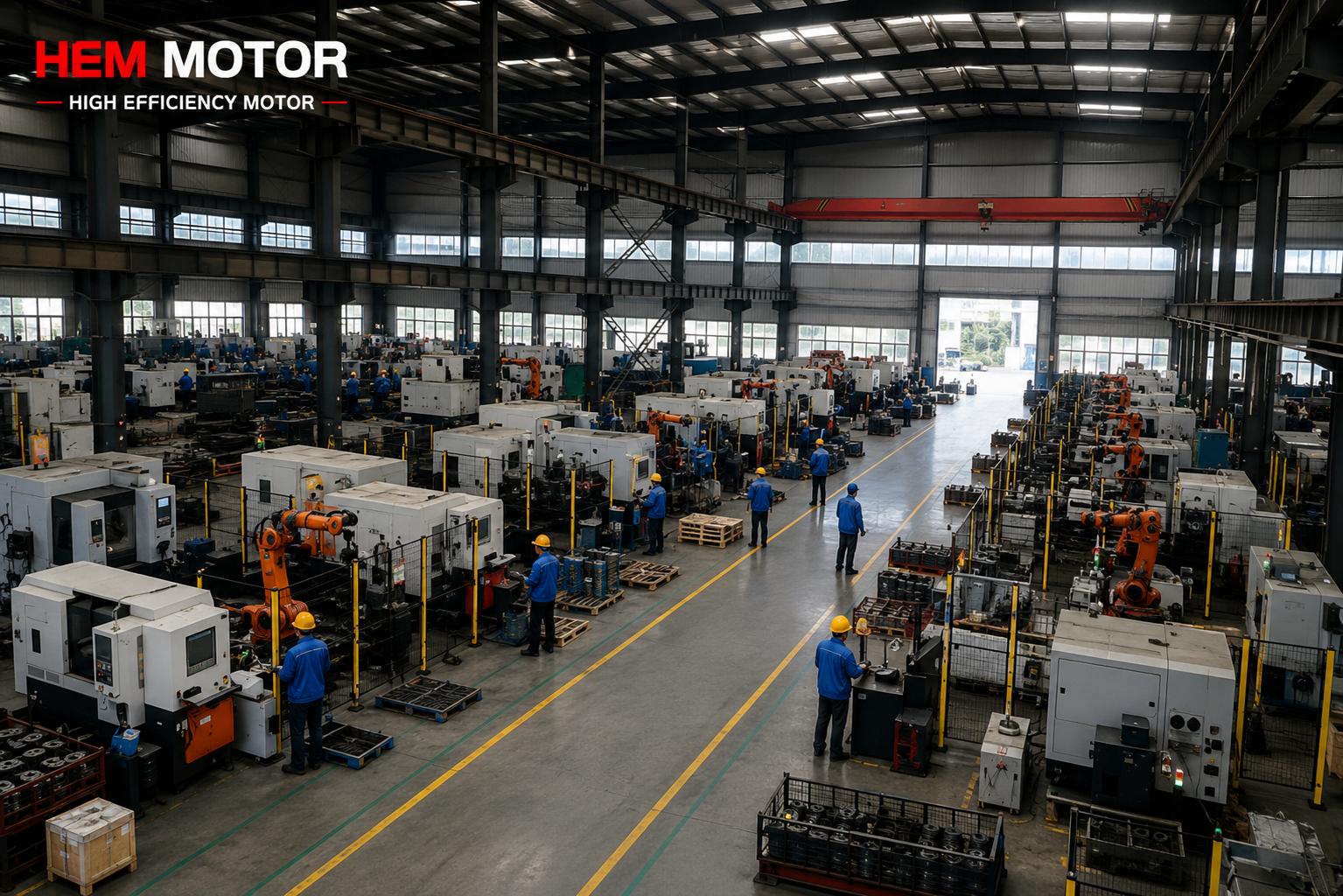
Step 4: Lead-Time Management and Large-Power Logistics
On large motors (90 kW and above), weight, transport and commissioning need separate planning. The lead time, transport method and on-site lifting/unloading equipment for these motors must be planned in advance. We covered planning for supply above 90 kW in large-power supply above 90 kW. For lifting and handling motors on site, lifting eyebolt and safe handling offers a practical checklist. Manage transport damage risk with the shipping damage check list.
Step 5: Delivery, Acceptance Inspection and Stock Entry
At every delivery, motor packaging, nameplate and physical condition must be checked, and basic acceptance tests such as insulation (megger), rotation direction and vibration performed. This step screens out faulty motors before erection begins and prevents lead-time loss. For a detailed acceptance procedure apply incoming acceptance inspection.
Step 6: Commissioning Support
In bulk supply, the job does not end when motors arrive on site. First start-up, rotation-direction check, terminal connection and protection settings must be done correctly on site. For an engineering firm, commissioning support is the final link in delivering the project on time. For start-up steps see commissioning and first start-up, for rotation rotation direction and phase sequence, for star-delta star-delta diagram.
Sector Applications and OEM Agreements
Project-based supply appears across a wide field, from HVAC and mechanical projects to water-treatment plants, production lines and OEM machine building. For bulk HVAC fan motors see HVAC fan motor supply, for water treatment water-treatment plant motors, for serial machine building OEM motor supply agreements. For contracted supply requiring redundancy in critical plants, supply contracts offers a framework.
Warranty, Service and Spares Across the Project
When tens of motors are commissioned in a project, having a common warranty and service framework for all of them greatly eases the operating period. With motors from different suppliers, each having its own warranty duration, service contact and spare-part source, a single failure causes lost time. Under single-source supply, warranty scope, service network and critical spare stock are managed from one point. To clarify warranty scope see what the warranty covers and service-network questions in warranty and service network: 7 questions. Planning the plant's critical spare-motor stock at this stage prevents future line stoppages.
The Effect of Efficiency Class and Regulatory Compliance on the Project
In project-based supply, the efficiency-class decision affects not only energy cost but also regulatory compliance. In Turkey and the EU, IE3 is mandatory for direct-on-line motors in the 0.75–1000 kW range, and IE4 applies in certain power bands. Fixing the efficiency class from the start ensures both regulatory compliance and a single standard across all motors. If old standard motors are replaced with IE4, see the payback and incentive calculation in replacing an old motor with IE4 and, for energy-audit preparation, energy efficiency audit and motor inventory. The IE3-vs-IE4 decision is clarified by the transition decision guide.
On-Site Commissioning and Training
The final stage of bulk supply is connecting motors to machines and starting them for the first time. Here, rotation-direction check, terminal bridging (star/delta), voltage selection and protection settings must be done correctly. In projects where many motors are commissioned in the same period, conveying connection and check steps to the site team with a standard checklist lowers the error rate. For voltage and terminal selection share terminal and voltage selection, for cable connection cable connection and lug selection, and for foundation mounting bolt, nut and base mounting with your site team.
Supply Contract and Risk Management
In large projects, supply is usually secured by a framework contract. The contract covers the technical specification, staged-delivery schedule, lead-time commitment, price-validity conditions, warranty scope and critical spare-part availability. This framework reduces the supply uncertainties that can arise mid-project. Especially in critical plants (water, energy, mining, continuous production), an unexpected motor failure can stop the whole line, so redundancy and critical-stock assurance sit at the center of the contract. We covered the contracted-supply model in supply contracts and the imported-vs-domestic decision in imported motor vs domestic from stock. Keeping critical powers in reserve is clarified by critical spare motor list.
Example Process: Step-by-Step Supply in a Plant Project
In a typical plant project, the process runs like this: First the engineering firm draws up the equipment list and builds the BOM by setting motor power, speed, mounting type and accessories for each machine. Then a technical agreement is made with the supplier; items needing equivalents are matched via IEC connection dimensions and the efficiency class is fixed across the project. The supplier sets motors aside by stock reservation. Per the construction and erection schedule, motors are dispatched to site in staged batches; each batch undergoes acceptance inspection (megger, rotation, vibration). For large motors, transport and lifting equipment are planned in advance. In the final stage, motors are started with commissioning support and the plant's critical spare-motor stock is determined. This flow starts with setting power correctly; for that, supply plan above 90 kW and right-sizing form the basis.
Frequently Asked Questions
Why is single-source advantageous in bulk motor supply?
Because a single supplier ensures all motors arrive to a common technical standard under a common warranty and service framework; coordinates deliveries to the project schedule; and manages equivalent selection, stock reservation and staged shipment from one point. Motors from different suppliers create standard, terminal-orientation and accessory differences that cause on-site compatibility issues and spare-part confusion. Single-source supply reduces these risks and strengthens lead-time control.
How is staged delivery planned?
First the project erection schedule is drawn up, identifying which equipment is needed on site in which week. Motors are then set aside by stock reservation, and each delivery batch is shipped shortly before its erection stage. This reduces unnecessary on-site storage, moisture and damage risk. For large motors, transport and lifting equipment are also planned to this schedule.
What is the most common mistake when preparing a BOM?
The most common mistake is defining motor lines by kW only and omitting speed/poles, mounting type, IP and accessories. An incompletely defined line leads to a motor at the wrong speed or mounting type. Every BOM line should fully include power, speed/poles, IE class, mounting type, frame material, IP, insulation, duty type and accessories.
Get a Quote
For bulk electric motor and gearbox supply for your contracting, EPC or engineering project, let us review your bill of materials together and offer a single-source solution with staged delivery and commissioning support. Call +90 (532) 345 49 86 now or send your project details via our contact page.
Project Supply Checklist
- Complete BOM: does each line include kW, speed/poles, IE, mounting, IP, duty type, accessories?
- Technical agreement and equivalent matching done?
- Efficiency-class standard fixed across the project?
- Single-source supply and common warranty/service framework set up?
- Stock reservation made?
- Does the staged-delivery schedule match the erection plan?
- Transport and lifting planned for large motors?
- Acceptance inspection (megger, rotation, vibration) applied at each delivery?
- Commissioning support planned?
For more content see our blog, and for our product range our home page.