English
 Türkçe

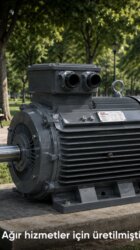
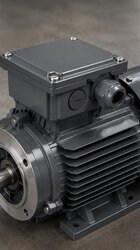
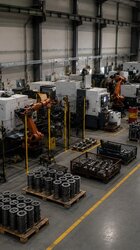
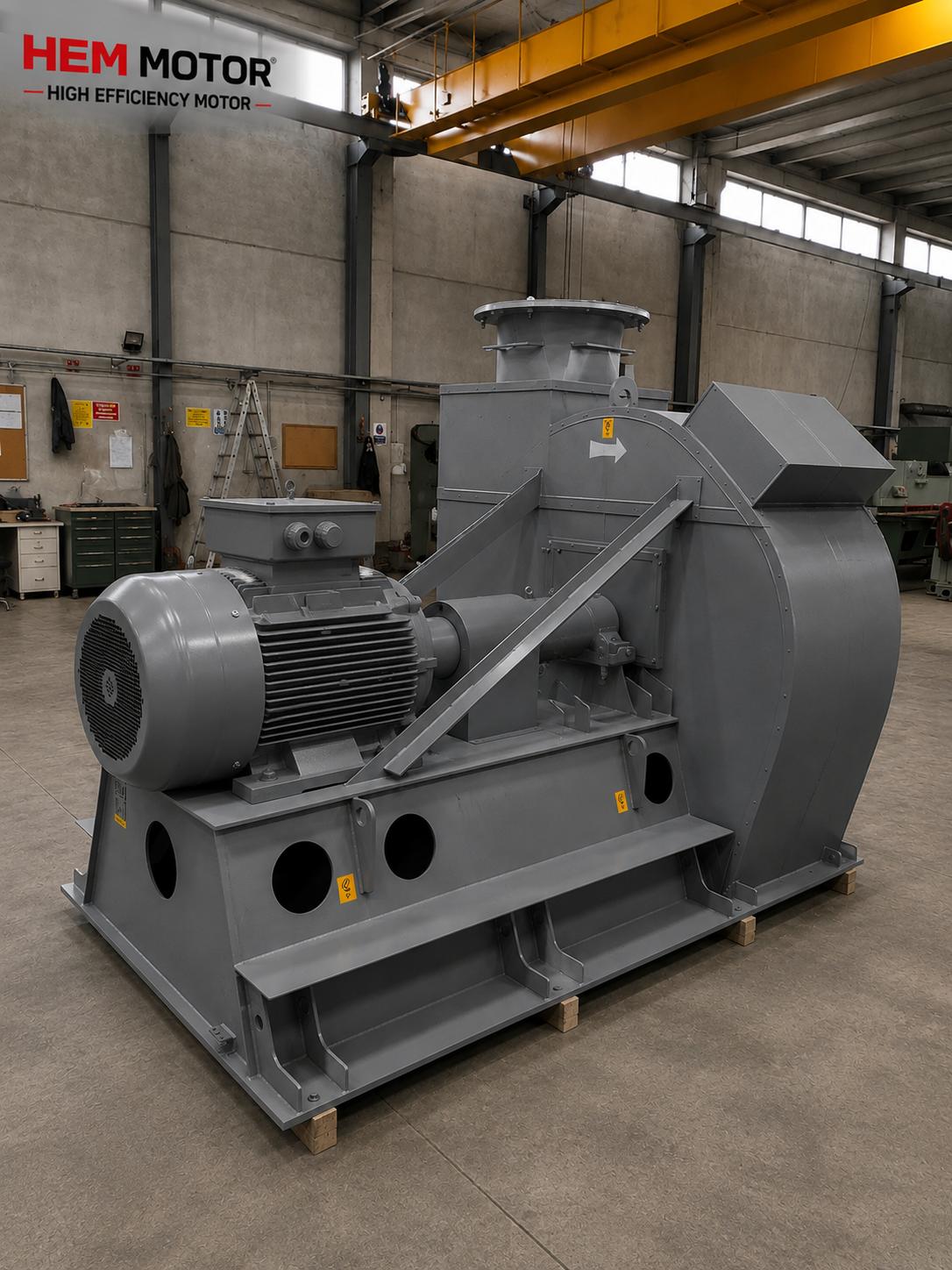

Crane and hoist systems are lifting machines that raise, carry and safely stop a load; motor selection is therefore not only a matter of power but also of safety. A lifting motor must have high torque to move the load at start-up and must hold the load safely with a brake when stopped. Crane applications have an intermittent (lift-lower-wait) operating regime rather than continuous; this sets the motor's duty type and heating behaviour apart from standard continuous duty. A wrongly selected brake motor either cannot lift the load or slips while stopping; both cases carry serious risk. In this article we cover the three basic motor groups of crane and hoist systems (lifting brake motor, travel motor, brake and duty type) in terms of high starting torque, brake torque and duty type, and list practical criteria for correct supply.
The Structure of Motor Demand in Lifting Applications
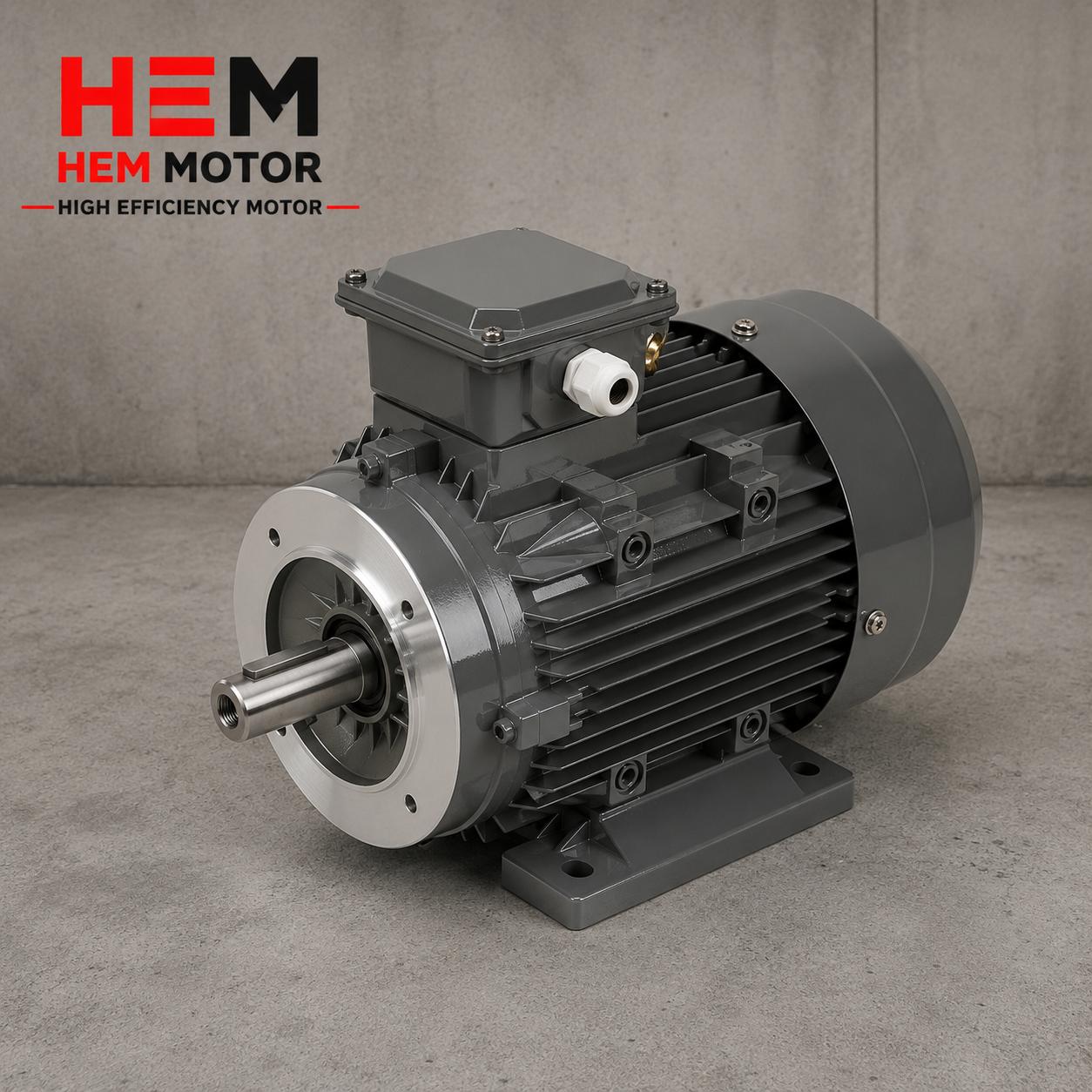
An overhead crane, monorail or hoist has three basic motions: hoisting (raising and lowering the load), trolley travel (horizontal movement of the load along the crane) and bridge travel (movement of the crane structure along the rails). Each motion is driven by its own motor and each has a different load profile. The hoisting motor takes on the hardest task; it moves the load against gravity and holds it when stopped. Travel motors overcome inertia to provide acceleration and deceleration. The common feature of these applications is that nearly all are brake motors: a brake that engages when the motor stops prevents the load from slipping. We cover the role of the brake motor in crane and conveyor applications in detail in our sibling article IE4 brake motor supply.
Lifting Brake Motor: High Starting Torque and Brake
The hoisting motor holds the load safely when stopped and moves it at start-up. Two critical properties stand out: high starting torque and adequate brake torque. When the motor stops with the load suspended, a spring-applied (fail-safe) electromagnetic brake engages automatically and holds the load; this brake stays safe even if the motor loses power. The brake torque must be selected sufficiently higher than the torque created by the lifted load. Moving the load against gravity at start-up requires a high starting torque, so torque class selection matters. You can review the right torque class and starting torque for the load in our asynchronous motor torque classes and starting torque article. A gearbox is usually involved in lifting applications; to lower output speed and increase torque, helical worm gear reducers and worm gear reducers are used.
Travel (Trolley and Bridge) Motors
Travel motors move the load on the horizontal plane: the trolley motor moves the load along the crane, and the bridge motor carries the whole crane along the rails. Soft starting and precise stopping matter here; sudden start and stop cause the suspended load to swing. Travel motors therefore also have a brake and controlled acceleration. On cranes needing finer speed control, a frequency drive is used; our frequency drive (VFD) with asynchronous motor article explains when a drive is needed. Since travel drives reduce speed to obtain high torque, a geared motor configuration is common; for mounting type selection, review B5, B3 and B35 options on our electric motor mounting types page.
Duty Type (S3/S4) and %CDF: The Importance of Intermittent Operation
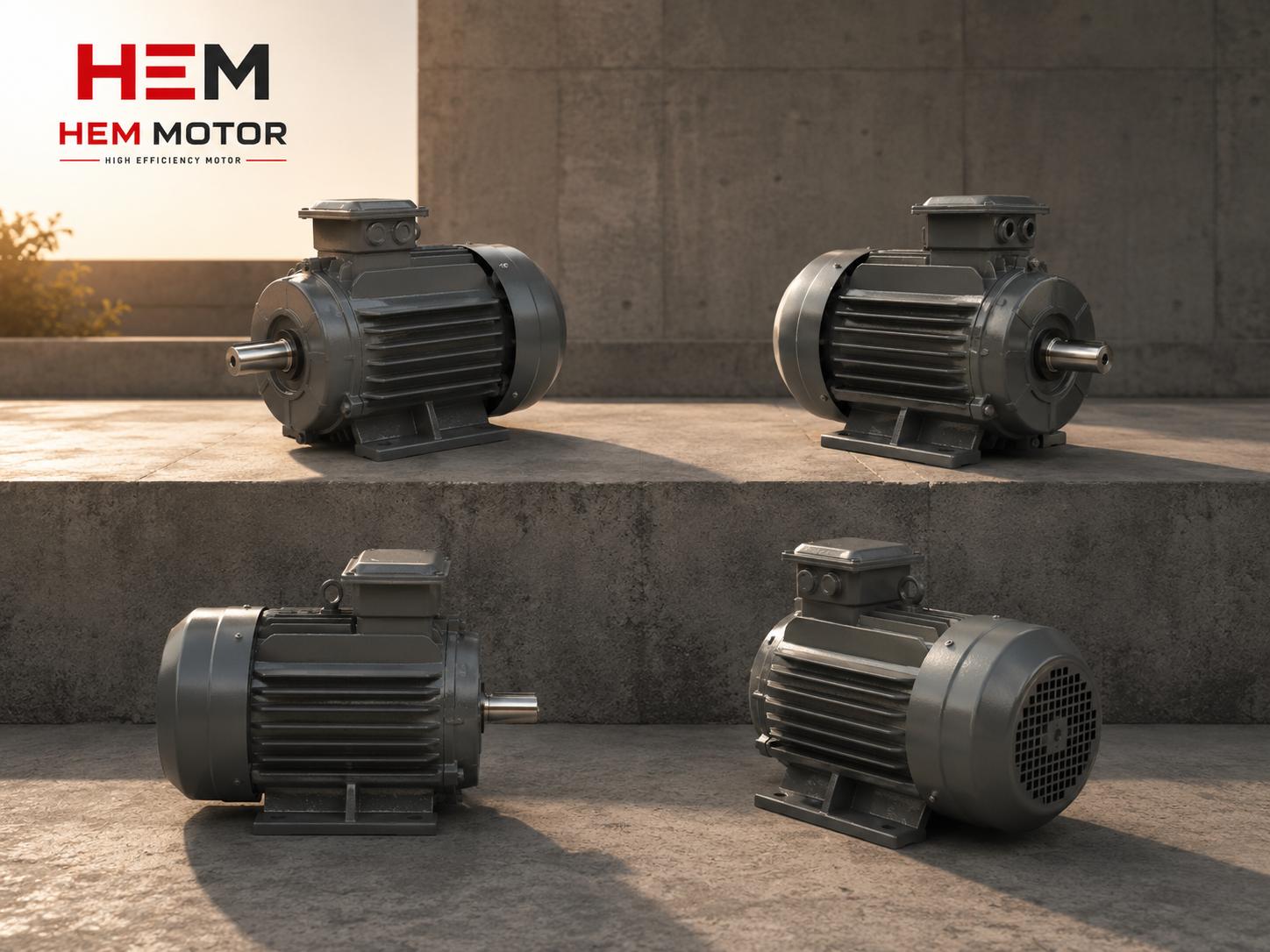
Crane motors run intermittently, not continuously: a lift-lower-wait cycle. This regime sets the motor's duty type apart from standard continuous duty (S1). Hoisting and travel motors are usually defined as S3 (periodic intermittent) or S4 (periodic intermittent with starting) duty and expressed by a %CDF (cyclic duration factor) value; for example, 40% CDF means the motor runs for 40% of a cycle. Correct duty type selection directly affects the motor's heating behaviour and life; our duty type (S1-S6) selection article explains the difference between continuous and intermittent operation in detail. Replacing a lifting motor with an S1 (continuous) duty motor gives the wrong result, because lifting involves high-frequency starting and braking. When supplying a crane motor, the cycle count, %CDF value and load must therefore always be stated.
Brake Torque and Safety
The most critical component of a brake motor is the brake. The brake holds the load when the motor stops and must be of the type that closes automatically (fail-safe) when power is cut. Brake torque is selected above the torque created by the lifted load, with a suitable safety margin. Brake wear reduces holding capacity over time, so periodic inspection is essential. How many seconds and how much slip the crane holds the load with when stopped should be monitored regularly for safety. When a lifting system needs the motor to produce high torque at low speed, you can evaluate the direct-drive advantage of high-pole motors in our low-speed high-pole motors article.
Supply and Stock Planning
Cranes and hoists are critical links in production and logistics flow; when a lifting motor fails, the whole operation can stop. Keeping spares for hoisting and travel motors is therefore wise; we detail this logic in our critical spare motor list article. When supplying a brake motor, stating the load, cycle count, %CDF value, brake torque need and mounting type is essential for an accurate quote; our information to provide when requesting a quote article lists what to prepare. If replacing an existing crane motor one-to-one, follow the steps in nameplate matching to avoid the wrong motor to prevent the wrong product. You can find how similar lifting logic applies to elevators and escalators in our elevator and escalator motor supply article.
Power, Speed and Pole Selection: Matching for Hoisting and Travel
The power and speed of crane and hoist motors are set by the motion and the load. The hoisting motor needs high torque because it moves the load against gravity; travel motors overcome inertia to provide acceleration. Since a gearbox is usually involved, motor speed together with the gearbox ratio sets the output speed. Choosing the right pole count affects lifting speed and efficiency; we compared the differences between 2-, 4-, 6- and 8-pole motors in our asynchronous motor pole selection article. To calculate lifting power from load weight and lifting speed, our motor power calculation article gives the core logic. IEC frame, flange and shaft compatibility is critical in a geared motor; for the right gearbox by output speed and torque, you can review our helical worm gear reducers and worm gear reducers pages.
Starting Current, Starting Method and Speed Control
Since hoisting motors run with high starting torque, starting current is also high; the starting method matters to limit this current and provide soft starting. You can find a star-delta versus soft starter comparison in our star-delta and soft starter article. In modern cranes, a frequency drive is widely used for precise speed control and smooth acceleration; the drive reduces swing of the suspended load and enables precise positioning. Our frequency drive (VFD) with asynchronous motor article explains when a drive is needed and how to select one. On sites running on a generator, the crane motor's high starting current affects generator selection; we cover this in our motor selection on generator-powered sites content.
Maintenance, Brake Inspection and Reliability
Since cranes and hoists are safety-critical machines, motor and brake maintenance must be done regularly. The brake's holding capacity drops over time with wear, so periodic inspection of the brake lining and brake torque is essential. You can find the general maintenance schedule in our electric motor maintenance and periodic check schedule article. Due to the intermittent, high start-brake regime, bearings and winding are stressed in lifting motors; we cover the importance of bearing greasing and lubrication in our bearing greasing and lubrication content. We detail the causes of early failure and understanding quality at purchase in our electric motor lifespan and early failure causes article. Keeping spares for critical hoisting and travel motors minimizes operational interruptions. When the right duty type, adequate brake torque and regular inspection come together, crane and hoist systems run safely and uninterrupted for a long time.
A Purchasing Checklist for Selecting the Right Motor
Supplying the right motor in a crane or hoist system is critical for both operational continuity and safety, so a few basic pieces of information should be clarified before purchase. First, define the type of motion: is hoisting, trolley travel or bridge travel being driven? Each motion requires a different torque and duty type; the hoisting motor needs the highest torque and the most reliable brake. Then clarify the load and operating regime: how many tonnes is the load to be lifted, how many cycles per hour, what is the %CDF value? This information sets the duty type (S3/S4) and the motor's heating behaviour. Third, evaluate the brake torque; the brake must be selected above the torque created by the load, with a suitable safety margin, and be of the type that closes automatically (fail-safe) when power is cut. Fourth, check the mechanical connection and gearbox compatibility: mounting type, shaft diameter, key size and gearbox ratio set the output speed and torque. If replacing an existing crane motor, matching the nameplate and %CDF value one-to-one eliminates the risk of the wrong product. Finally, plan spares for critical hoisting and travel motors. By following this checklist, you select the right and safe motor and speed up the quote process.
Frequently Asked Questions
Why is a brake motor needed on a crane?
In lifting, the load is under gravity; if there is no mechanism to hold the load when the motor stops, the load falls. A brake motor holds the load safely with a brake that engages when stopped and closes automatically (fail-safe) when power is cut. The lifting motion of cranes and hoists is therefore almost always done with a brake motor.
Which duty type should a crane motor be?
Since crane motors run intermittently, they are usually defined as S3 (periodic intermittent) or S4 (periodic intermittent with starting) duty and expressed by a %CDF value. An S1 motor designed for continuous operation is not suitable for lifting, which involves high-frequency starting and braking. For correct selection, the cycle count and %CDF value must be stated.
How is brake torque determined?
Brake torque is selected above the torque the lifted load creates at the motor shaft, with a suitable safety margin, so the brake holds the load safely. Since the brake wears over time, holding capacity can drop, so periodic inspection is important. The correct brake torque is determined together based on the load, gearbox ratio and the application's safety requirements.
Get a Quote
If you want to supply the lifting brake motor, travel motor and brake equipment for your crane or hoist system with the right starting torque, brake torque, duty type and mounting type, our team is here to help. Share your load, cycle count and %CDF value, and we will prepare a fast, accurate quote. Call us at +90 (532) 345 49 86 or reach us through our contact page.