English
 Türkçe

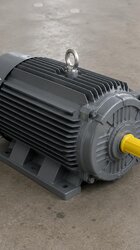
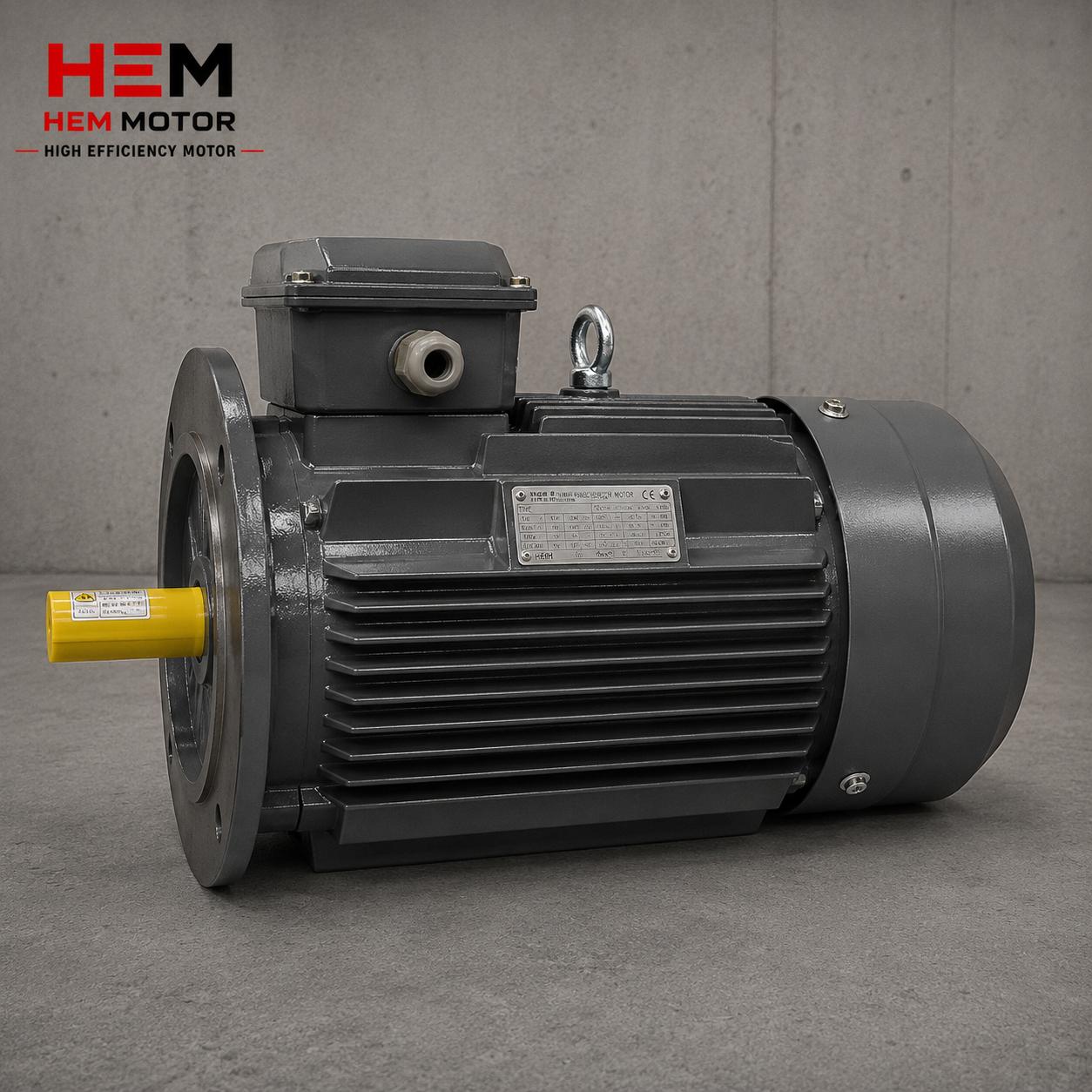

When ordering the electric motor that will drive a machine, not only power but also output speed is at least as decisive. The motor own speed is fixed by its pole count; however, the speed your machine needs is usually different from these standard speeds. This is exactly where speed adjustment methods such as the pulley-belt ratio, the gear reducer and the frequency drive come into play. As HEM Motor, with our identity as both manufacturer and supplier, we offer the solution that fits your machine exactly by planning the correct power-speed combination and speed adjustment method together. This article addresses motor speed and pulley-belt speed adjustment from a purchasing and correct-combination perspective.
Synchronous Speed and Pole Count: The Base Speed of the Motor
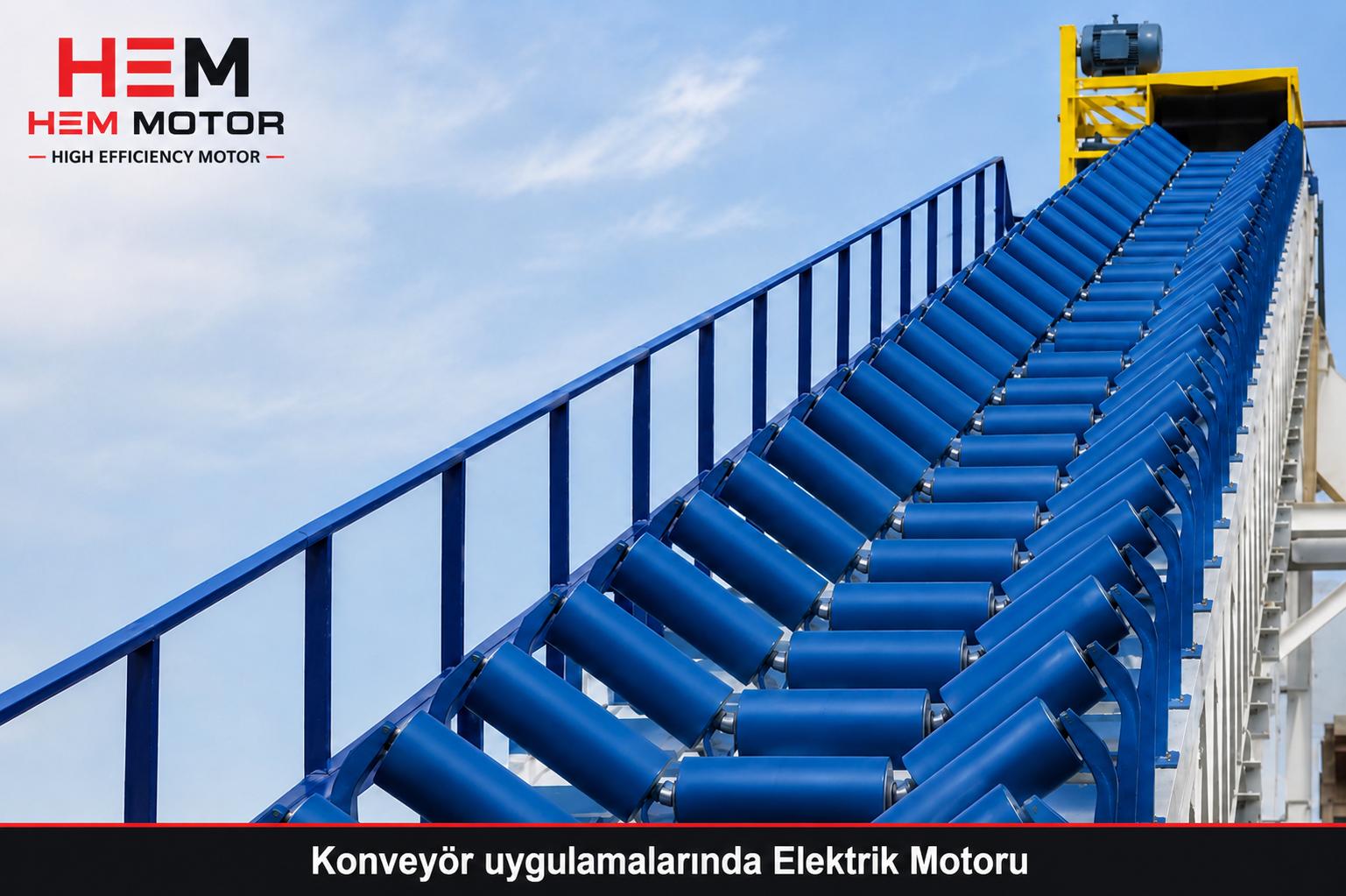
The speed of an asynchronous motor is determined by the grid frequency and the pole count. On a 50 Hz grid, a 2-pole motor runs at 3000 rpm, a 4-pole at 1500 rpm, a 6-pole at 1000 rpm and an 8-pole at 750 rpm synchronous speed. The actual speed is slightly below this value under load due to slip; for example, a 4-pole motor usually runs between 1440-1470 rpm. As the pole count increases, the speed decreases, but at the same power the motor has a larger frame and usually higher torque. Therefore, speed selection directly affects power and frame size. We covered pole selection in our which pole for which job article, and slip and actual speed in our slip and actual speed article.
If your machine needs, say, 900 rpm and the motor runs at 1500 rpm, a transmission method is needed to reduce this speed. This is where the pulley-belt ratio stands out as one of the simplest and most economical solutions; when a larger ratio is required, a gear reducer is preferred, and when variable speed is required, a frequency drive is chosen.
Why Do We Adjust Speed from the Transmission, Not the Motor?
The speed of a standard asynchronous motor is fixed; changing this speed from the motor itself means either choosing a motor with a different pole count or using a frequency drive. In most industrial applications, however, the speed the machine needs falls between the standard motor speeds. For example, if a speed between 1500 and 1000 rpm is required, it is not possible to obtain this directly with a single standard motor. This is exactly why speed is usually adjusted not at the motor but in the transmission element: with pulley diameters, reducer ratio or drive frequency.
This approach is also advantageous in terms of purchasing: a standard, stock-available and economical motor is chosen, and the required speed is reached with a suitable transmission. This both shortens the lead time and provides flexibility by changing only the pulley or ratio when a speed change is needed in the future. We covered the fast supply of standard motors from stock in our IE3 motor stock guide article.
Calculating Output Speed with the Pulley Diameter Ratio
In a pulley-belt system, the output speed is determined by the diameter ratio of the motor pulley to the machine pulley. If the motor pulley is small and the machine pulley is large, the speed decreases and torque increases; in the opposite case, the speed increases and torque decreases. The calculation is simple: the output speed is found by multiplying the motor speed by the motor pulley diameter and dividing by the machine pulley diameter. For example, a 1440 rpm motor with a 100 mm motor pulley and a 200 mm machine pulley gives about 720 rpm output. This way, the special speed the machine needs is reached with a standard motor.
The advantage of the pulley-belt method is its flexibility: by changing the pulley diameters, different speeds can be obtained with the same motor. This is valuable especially in applications where the speed is set by trial and error or may be changed over time. Because the compatibility of the pulley with the motor through the correct shaft diameter and key dimension is critical, these dimensions must be clarified before ordering; we covered the topic in our shaft diameter and key dimensions article.
Belt-Pulley, Reducer or Drive? Choosing the Right Method
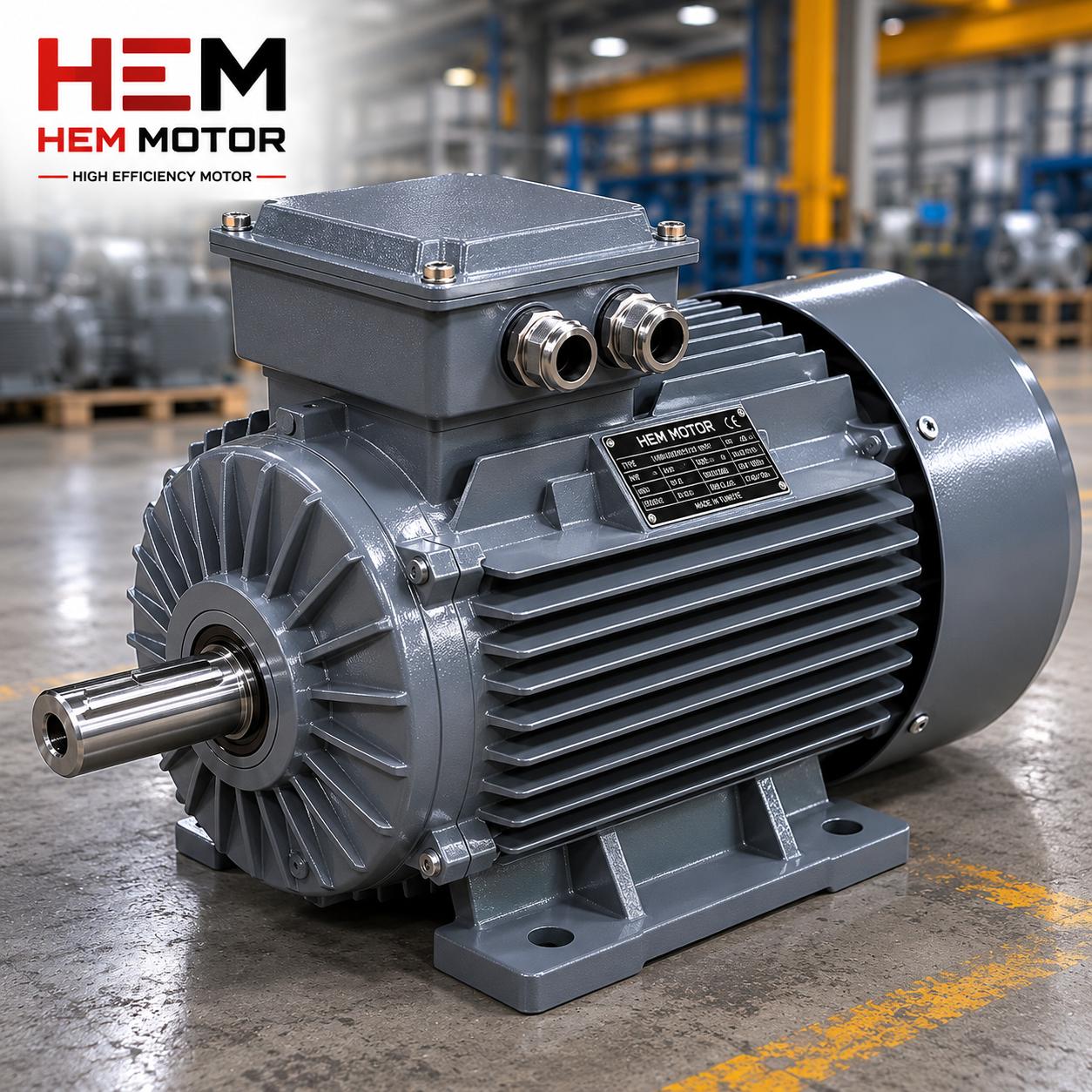
There are three basic methods for speed adjustment, and each has its own application area. Belt-pulley is an economical solution at low-to-medium speed ratios, where the centre distance is suitable and under light-to-medium loads. A gear reducer is preferred when a high speed-reduction ratio, high torque and a compact structure are required. A frequency drive comes into play when the speed must be continuously changed during operation.
When Is Belt-Pulley Sensible?
Belt-pulley is the most economical solution if a fixed speed ratio is sufficient and the ratio is not too high. It is easy to install, provides distance between motor and machine, and the belt softens sudden impacts to some extent. However, at high ratios more than one stage is needed and, because of belt slip, the speed is not perfectly constant. General industrial machinery, fans and some pump and mill applications are commonly driven by belt-pulley. To match power and speed correctly, our HP or kW power understanding article is also useful.
When Is a Reducer Needed?
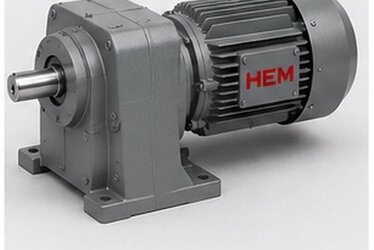
When a very high speed-reduction ratio and high output torque are required, a gear reducer is the right solution. For example, it is possible to reduce a 1400 rpm motor speed to about 46 rpm output with a worm gear reducer at a 1/30 ratio. A reducer offers a large ratio and high torque in a compact structure; reaching these ratios with a belt-pulley is not practical. We quote the motor together with our worm gear reducers and helical worm gear reducers ranges. We detailed the reducer-versus-belt-pulley decision in our geared motor or separate motor plus reducer article.
When Does a Frequency Drive Come into Play?
If the speed must be changed continuously and precisely during operation, a frequency drive (VFD) is used instead of mechanical methods. The drive adjusts the speed electronically by changing the motor frequency; this provides both speed control and significant energy savings in applications such as pumps and fans. While the belt-pulley offers a fixed ratio, the drive gives unlimited adjustment. We covered the asynchronous motor with a frequency drive in our asynchronous motor with VFD article, and motor selection in variable-speed applications in our motor selection in variable speed applications article.
The Effect of Changing the Output Speed on Power Need
A point often missed during speed adjustment is that the output speed also affects the power the motor must be selected at. The power a machine draws is proportional to the product of the required torque and the speed. When you reduce the speed and increase the torque with a belt-pulley, the power the motor must provide stays the same; because power is conserved, only speed and torque change inversely. However, due to losses in the transmission (belt friction, gear efficiency), the motor may need to be selected at a slightly higher power. This small margin ensures the system runs without strain in the long term.
Therefore, when deciding on speed adjustment, the output speed, required torque and transmission efficiency must be evaluated together and the motor power determined accordingly. A wrong power choice means either a motor that falls short or one that is larger and more expensive than necessary. We covered supply planning for high-power drives in our high-power motor supply above 90 kW article.
Correctly Establishing the Relationship Between Speed, Power and Torque
A common mistake in speed adjustment is focusing only on speed and ignoring torque and power. When you reduce the speed with a belt-pulley, the output torque increases; when you increase the speed, the torque decreases. The torque needed for the machine to operate must be met at the output speed; otherwise the motor falls short. Therefore, speed adjustment requires the power-speed-torque trio to be calculated together. We explained the importance of correct sizing for efficiency and continuity in our load ratio and correct sizing article.
The drive method also affects efficiency. While a belt-pulley has some friction loss, in a reducer the gear efficiency comes into play; in a drive there are electronic conversion losses. When evaluating total system efficiency, these losses must be considered together. Raising the motor efficiency by choosing an IE3/IE4 motor lowers the energy cost of the whole system.
Common Mistakes in a Belt-Pulley System
Although belt-pulley is economical and flexible, when applied incorrectly it harms both the motor and the machine. The most common mistake is setting the belt tension incorrectly: a belt that is too loose slips and the speed drops, while a belt that is too tight imposes excessive radial load on the motor shaft and bearing, shortening bearing life. The second common mistake is shaft misalignment of the pulleys; if the motor and machine pulleys are not in line, the belt wears quickly and vibration occurs. The third is choosing a pulley not suited to the shaft diameter.
These mistakes can make even a motor selected at the correct power and speed appear faulty over time; yet the problem is not in the motor but in the transmission. Therefore, in belt-pulley applications, alongside the correct pulley diameter, correct belt tension and shaft alignment, choosing a motor with strong bearings that can carry the side load on the shaft is also important. We covered the correct selection criteria for vibration and low-noise operation in our noise and vibration article, and fault symptoms in our electric motor failures article.
Using the Reducer Ratio Together with the Pulley Ratio
In some applications a single method is not enough; when a very low output speed is required, a reducer is used together with a belt-pulley. First the reducer lowers the speed by a large ratio and increases the torque, then a belt-pulley makes the final fine adjustment. This combination offers both a high ratio and flexible adjustment according to site conditions. Because the IEC frame and flange matching of the motor suitable for the reducer is critical, the motor and reducer must be planned together; we covered this matching in our reducer motor matching IEC article. We compared the economical choice between bevel-helical and worm gear reducers in our K series bevel-helical vs worm gear article.
Sector Examples: Which Method for Which Application?
The choice of speed adjustment method varies by sector and machine. In textile machines, precise and variable speed is important; here a frequency drive is mostly preferred. In mill and feed machines, since a constant but low output speed is required, belt-pulley or a reducer is common. In conveyor and belt systems, a reducer stands out for high torque and low speed. In fan and pump applications, both belt-pulley and a drive for energy savings can be used. These examples show that the right method depends on the load and speed profile of the machine.
We covered the correct speed selection in textile plants in our speed selection in textile plants article, and feed and mill drives in our feed factory and mill motors article. We detailed energy savings with a drive in pumps and fans in our high efficiency motor plus frequency drive article.
Motor Selection Criteria for a Belt-Pulley Connection
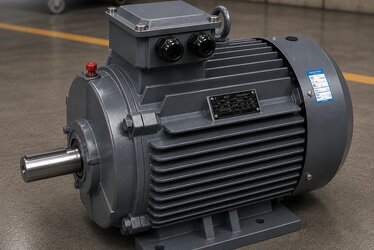
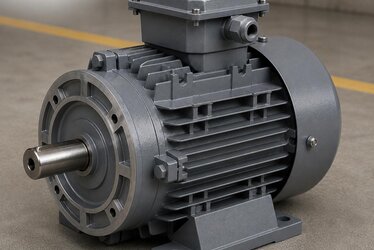
When selecting a motor driven by belt-pulley, the mounting type, shaft diameter, key dimension and bearing structure are critically important. Belt tension imposes a side (radial) load on the shaft; therefore, in belt-pulley applications, a foot-mounted (B3) body with reinforced bearings is preferred. You can examine the B3, B5 and B35 options on our electric motor mounting types page. The shaft diameter and pulley compatibility must be clarified before ordering; a wrong shaft dimension causes even a motor delivered at the right power and speed to be impossible to mount on the machine.
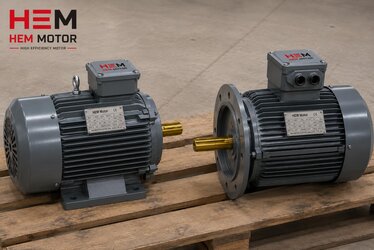
As HEM Motor, within our three-phase motor range we supply motors from 0.25 kW to 355 kW, at 1000/1500/3000 rpm with different mounting options, from stock and to order. The IE3 electric motor and IE4 electric motor options are offered with a shaft and key structure suitable for belt-pulley, coupling and reducer connections. For more guides, see our homepage.
Frequently Asked Questions
Can I reduce the motor speed by changing the pulley?
Yes. By reducing the motor pulley and enlarging the machine pulley, you can lower the output speed and at the same time increase the output torque. The output speed is calculated from the motor speed and the pulley diameter ratio. However, for very high speed-reduction ratios the belt-pulley becomes impractical; in that case a reducer is the more correct solution. When you share your need, we determine which method is suitable together.
Is belt-pulley or a reducer more economical?
At low-to-medium speed ratios and with a suitable mounting distance, belt-pulley is usually more economical. When a high speed-reduction ratio, high torque and a compact structure are required, a reducer is advantageous both technically and in long-term cost. The decision varies with ratio, torque, layout and maintenance preference. We recommend the right combination according to your application.
Which solution is needed if the speed will change continuously?
If the speed must be changed continuously during operation, a frequency drive (VFD) is the most correct solution. While a mechanical pulley or reducer offers a fixed ratio, the drive provides precise and variable speed control; it also brings energy savings in pump and fan applications. We evaluate the motor and drive together and quote the suitable solution.
Get a Quote
To plan the correct power-speed combination and speed adjustment method (belt-pulley, reducer or drive) for your machine, talk to the HEM Motor engineering team. When you share the required output speed, torque and mounting information, we quote the suitable motor and transmission solution for you. Call us now at +90 (532) 345 49 86 or send your request through our contact page.