English
 Türkçe

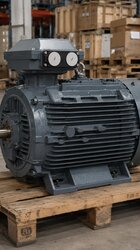
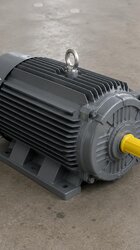
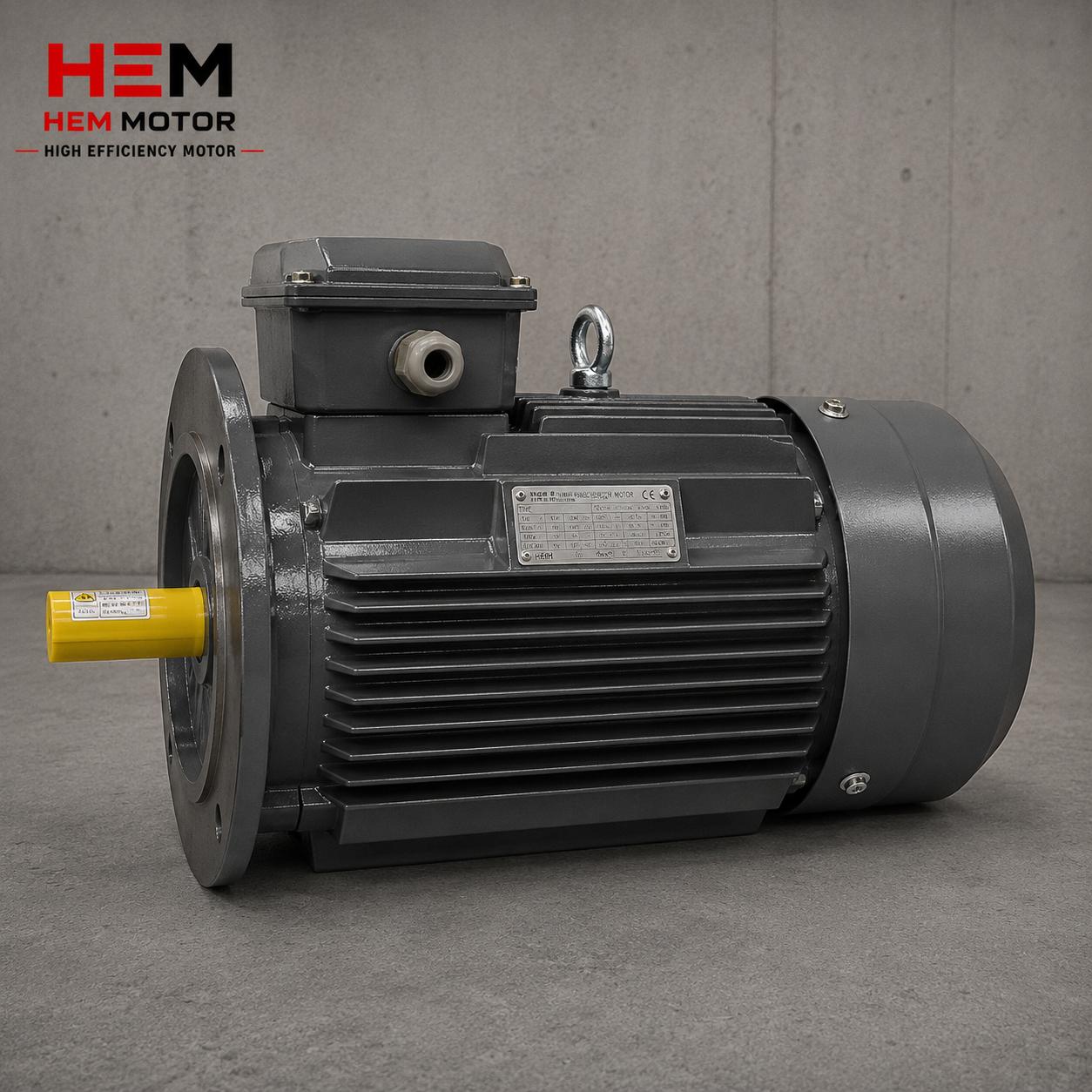

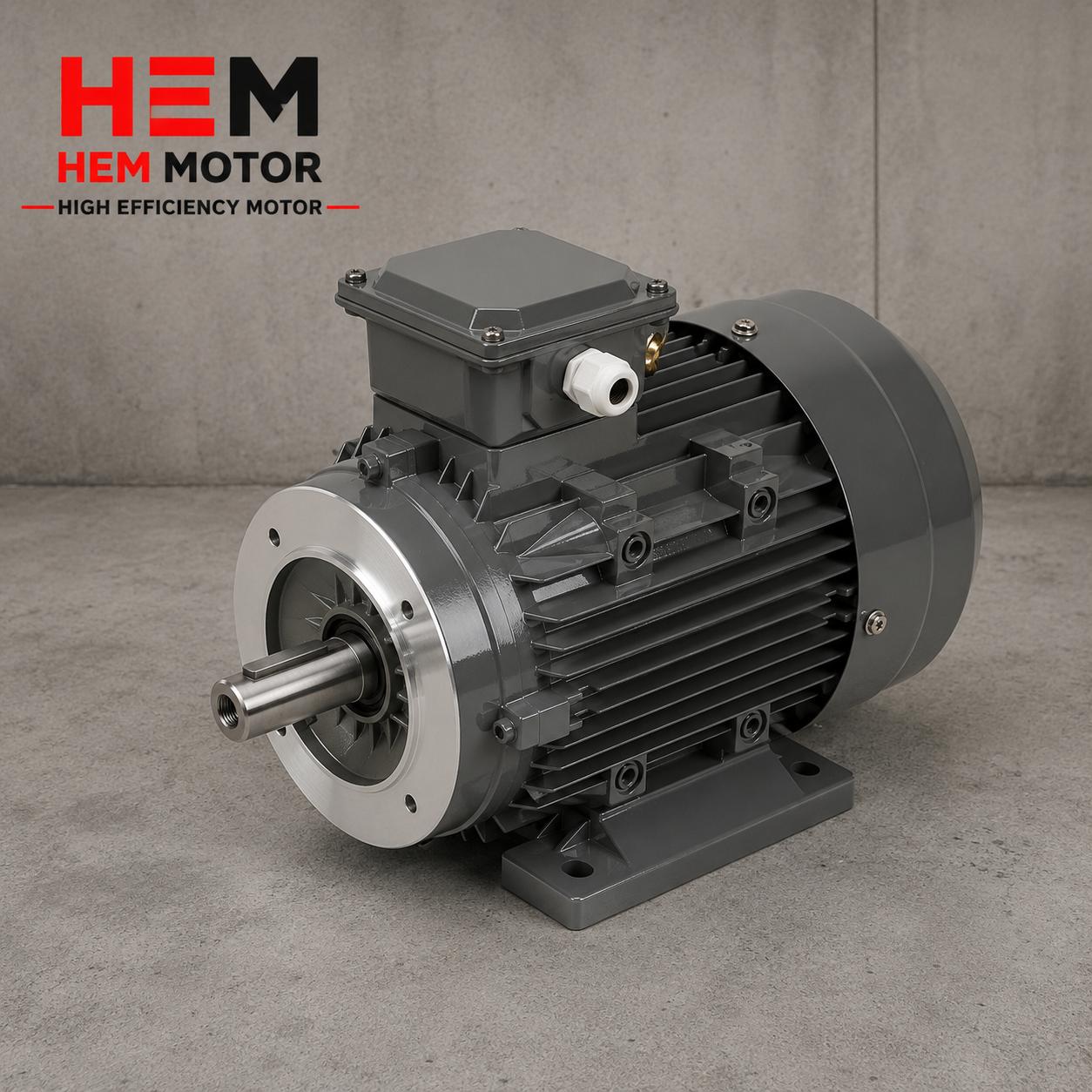
High-power motors such as 160 and 200 kW require a completely different purchasing process from small-power standard motors. A motor in this class is not just a product but a project: the frame size grows, the weight approaches tonnes, and the starting equipment and shipping plan become matters that must be considered separately. A wrong pole count, an inadequate starting method or an unplanned shipment both extends the delivery time and creates surprise costs during commissioning. This guide gathers all the commercial and technical questions that businesses buying a 160 and 200 kW electric motor should ask into a single article. HEM Motor, a company that has been manufacturing electric motors since 1979, supplies high-power motors in 315 and 355 frame sizes, cast-iron bodied, in IE3 and IE4 efficiency classes with stock and lead-time assurance.
Why Is Purchasing Different in the 160-200 kW Class?
The purchasing process for high-power motors differs from small motors in three main points. The first is cost and delivery time: these motors are not always ready on the shelf, and some frame and speed combinations require lead-time planning. The second is starting: when a 160-200 kW motor is started direct-on-line, it draws a high starting current reaching 6-8 times the nominal current; this can cause voltage drop at the transformer and affect other equipment. The third is physical size and weight: 315 and 355 frame motors can weigh from hundreds of kilograms up to a tonne, which makes lifting, handling and installation planning mandatory. This guide addresses all three of these axes in turn. If you are evaluating the smaller high-power class, our sibling article on 2/4 pole selection in 90-132 kW high-power motors is a complementary resource.
2 Pole or 4 Pole? Speed and Application Matching
In the 160-200 kW class, the pole count selection depends directly on the application. 2-pole (approximately 3000 rpm) motors are preferred in applications requiring high speed, especially centrifugal pumps, high-pressure fans and some compressors. 4-pole (approximately 1500 rpm) motors are used in a wider range of applications, in conveyor, mill, crusher and general industrial drives. The correct pole selection affects both energy efficiency and mechanical compatibility. To clarify the pole and speed decision, our articles on which pole for which job: 2, 4, 6 pole and efficiency and pole count comparison provide detailed guidance.
Frame Size: 315 and 355
160 kW generally corresponds to the 315 frame, while 200 kW corresponds to the 315 or 355 frame class; the pole count and efficiency class can affect the frame size. Because the frame size determines mounting dimensions, shaft diameter and weight, it is a critical parameter in replacement orders. If you are replacing an existing motor one-to-one, we recommend reviewing our articles on frame size and power matching and frame sizes (IEC 56-355): weight and handling.
Starting: Soft Starter and Auto-Transformer
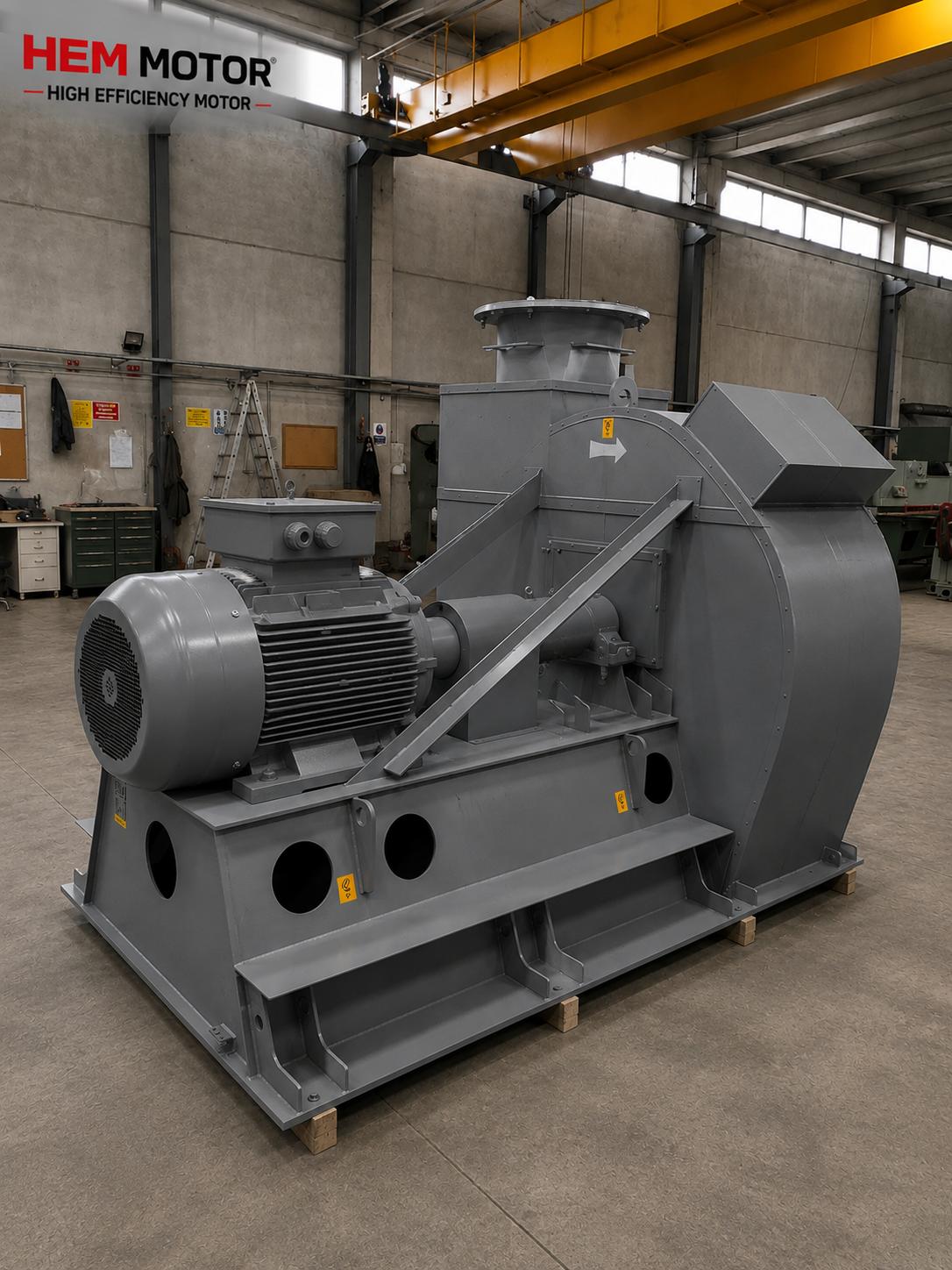
In high-power motors, the starting method directly affects both motor life and grid quality. When a 160-200 kW motor is started direct-on-line, it draws a starting current reaching 6-8 times the nominal current; this can cause a voltage dip at the transformer and affect other equipment. For this reason, star-delta, soft starter or auto-transformer starting is preferred in this class. The soft starter limits the starting current and mechanical shock in a controlled way; the auto-transformer provides an advantage in high-inertia loads by raising the voltage in steps. To choose the starting method correctly, our article on star-delta vs soft starter and our article on star-delta wiring diagram for practical connection provide guidance.
If the facility is fed by a generator, the starting current of the high-power motor can strain the generator; in this case the starting method and generator size must be planned together. Our article on how many kVA generator carries how many kW motor clarifies this matching.
Lead Time Plan: Stock or Production Order?
The most common question for 160-200 kW motors is delivery time. Motors in standard frame, standard speed and common efficiency class can generally be delivered from stock or with a short lead time; however, certain combinations such as special shaft diameter, special flange, high IP protection or IE4 may require lead time. For this reason, sharing the installation schedule of your project early is critical for correct planning. You can find the difference between stock and production order and the supply times in our article on stock delivery vs production order. To handle the lead time, shipping and commissioning plan of high-power motors holistically, our sibling article on high-power motor supply above 90 kW is a fundamental reference.
Shipping, Lifting Eyes and Handling
315 and 355 frame motors require special attention in terms of shipping and on-site lifting due to their weight. These motors have lifting eyes (eye bolts) on the body; when lifting with a crane or forklift, they must be held only from these eyes and never lifted by the cable or shaft. Wrong lifting both damages the motor and creates an occupational safety risk. To avoid impact on the bearings during transport, securing the motor and protecting the shaft lock is important. To reduce the risk of damage in the transport of high-power motors, our article on the shipping damage check list and our article on frame sizes and handling for post-delivery weight handling give practical information. For project delivery options to facilities in Anatolia, our motor shipping guide to facilities also helps.
Efficiency and Operating Cost
160-200 kW motors form the most decisive groups in operating cost because their installed power is large. In this class, the efficiency difference between IE3 and IE4 means significant savings in facilities with high annual operating hours. In Turkish and EU regulations, the IE4 requirement is on the agenda for certain pole motors in the 75-200 kW range; to choose the correct class, review our article on the IE3 and IE4 efficiency mandate regulation. To see the investment decision in numbers, our article on the total cost of ownership (TCO) calculation and our high-efficiency electric motors product page guide you. Correct sizing is also critical in high-power motors; an oversized motor means both excess investment and low part-load efficiency, for which our article on motor load ratio and correct sizing is important.
Commissioning and Temperature Monitoring
After high-power motors arrive at the site, commissioning is a more meticulous process than for small motors. Before connection, the insulation resistance must be measured, the rotation direction and phase sequence checked, and the thermal and protection settings made according to the rated current of the motor. In these motors, the use of PT100 or PTC thermistors is common to continuously monitor the winding temperature; our article on winding temperature monitoring with PT100 and PTC thermistor explains this protection. For all commissioning steps, we recommend applying our commissioning and first start-up check list. You can review our cast-iron-body high-power motors on our IE3 and IE4 product pages.
Shaft Diameter, Key and Mechanical Matching
In high-power motors, the shaft diameter and key dimensions are a critical parameter for the correct operation of the coupling, pulley or gearbox connection. In 315 and 355 frame motors, the shaft diameter generally varies from 80 mm to 100 mm; in the Turkish market, a Ø100 mm shaft diameter is common in 355 frame 1500 rpm motors. If you are fitting a motor to an existing coupling or pulley, the shaft diameter and keyway dimensions must match exactly; otherwise unbalanced operation, vibration and early bearing failure are inevitable. For correct mechanical matching, review our articles on shaft diameter, key and coupling and shaft diameter and key dimensions: coupling and pulley compatibility. For mounting type selection, you can find the difference between foot-mounted (B3), flanged or combined (B35) connections on our electric motor mounting types product page.
Replacing an Existing High-Power Motor One-to-One
Many businesses do not install a 160-200 kW motor from scratch; they replace an existing motor that has failed or lost efficiency with a new one. In this case, the safest way is to share the nameplate data and mounting dimensions of the old motor completely: power, speed, voltage, frequency, frame size, shaft diameter and mounting type. If you are replacing an old or foreign-origin brand with an equivalent, our articles on old brand motor direct replacement and one-to-one matching with nameplate data prevent wrong delivery. You can compare the advantages of replacing an imported motor from domestic stock in terms of delivery time, warranty and service in our article on imported motor vs domestic from stock. Our article on information to provide when requesting a quote summarizes which information you need to give.
Critical Spare Motor and Downtime Cost
A motor in the 160-200 kW class feeds the main production line in most facilities; an unplanned failure of this motor can cause hours, even days, of production loss. For this reason, keeping a spare motor in critical drives is especially meaningful in the high-power class. Because the lead time can be longer for large motors, fast replacement from stock at the moment of failure may not always be possible; in this case a pre-planned spare motor prevents production loss. Our article on the critical spare motor list and stock planning helps you determine which powers to keep in spare. To manage the motor fleet in three-shift facilities, our article on motor fleet management also guides you in terms of the replacement schedule and stock plan.
Frequently Asked Questions
In which frame size do 160 and 200 kW motors come?
160 kW is generally in the 315 frame class, while 200 kW is in the 315 or 355 frame class; the pole count and efficiency class can affect the frame size. If you share the frame and mounting dimensions of your existing motor, we finalize the exactly compatible model at the quotation stage.
Is direct-on-line starting done in this class?
Direct-on-line starting is generally not recommended for 160-200 kW motors; the high starting current strains the grid and transformer. In this class, star-delta, soft starter or auto-transformer starting is preferred. We determine the appropriate method together according to the inertia of the load and the grid capacity.
How long is the delivery time?
High-power motors in standard frame, standard speed and common efficiency class can be delivered from stock or with a short lead time. Special shaft, flange, high IP protection or certain IE4 combinations may require lead time; we share the exact delivery time together with your requirement details at the quotation stage.
Get a Quote
For your 160 and 200 kW high-power motor need, let us create the pole count, frame size, starting method, lead time and shipping plan together. Contact us with the application, existing motor nameplate and installation schedule details; let us present the stock status, the right solution and a clear lead time. Phone: +90 (532) 345 49 86 · You can also create a quotation request via our contact page.