English
 Türkçe


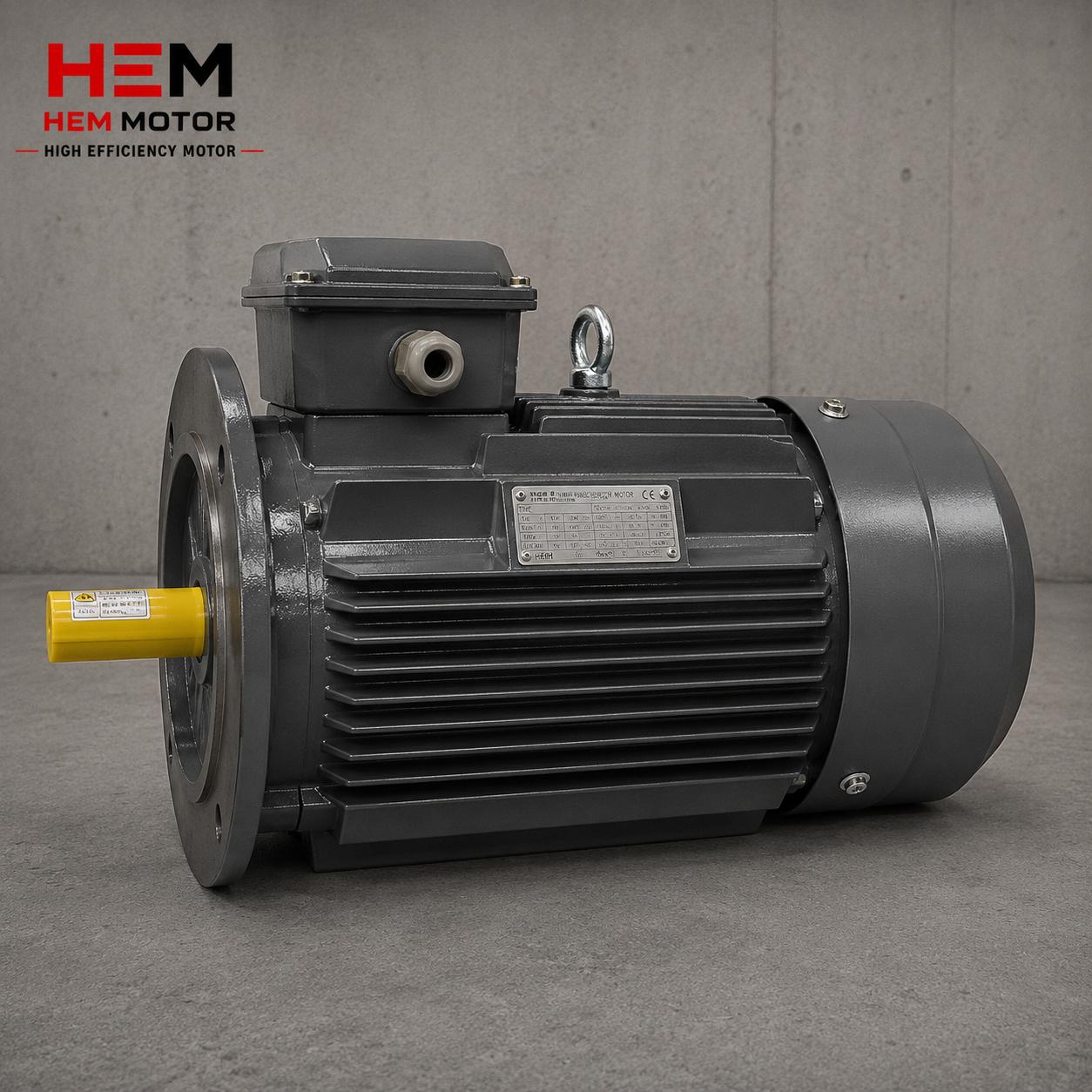

In most industrial applications, 2-pole (3000 rpm) and 4-pole (1500 rpm) motors are standard; however, some jobs by their nature demand low speed. Large-diameter fans, slow mixers, heavy conveyors and direct-driven loads can be run with 1000 rpm (6-pole) or 750 rpm (8-pole) motors without using a gearbox. When selecting 6- and 8-pole motors in the IE4 super premium efficiency class, knowing how the efficiency curve differs from 2/4 pole, what high torque at low speed means, and why the frame grows is the key to the right choice. In this article we address IE4 motor selection for 1000/750 rpm applications, the efficiency-torque relationship, and the logic of gearless direct drive.
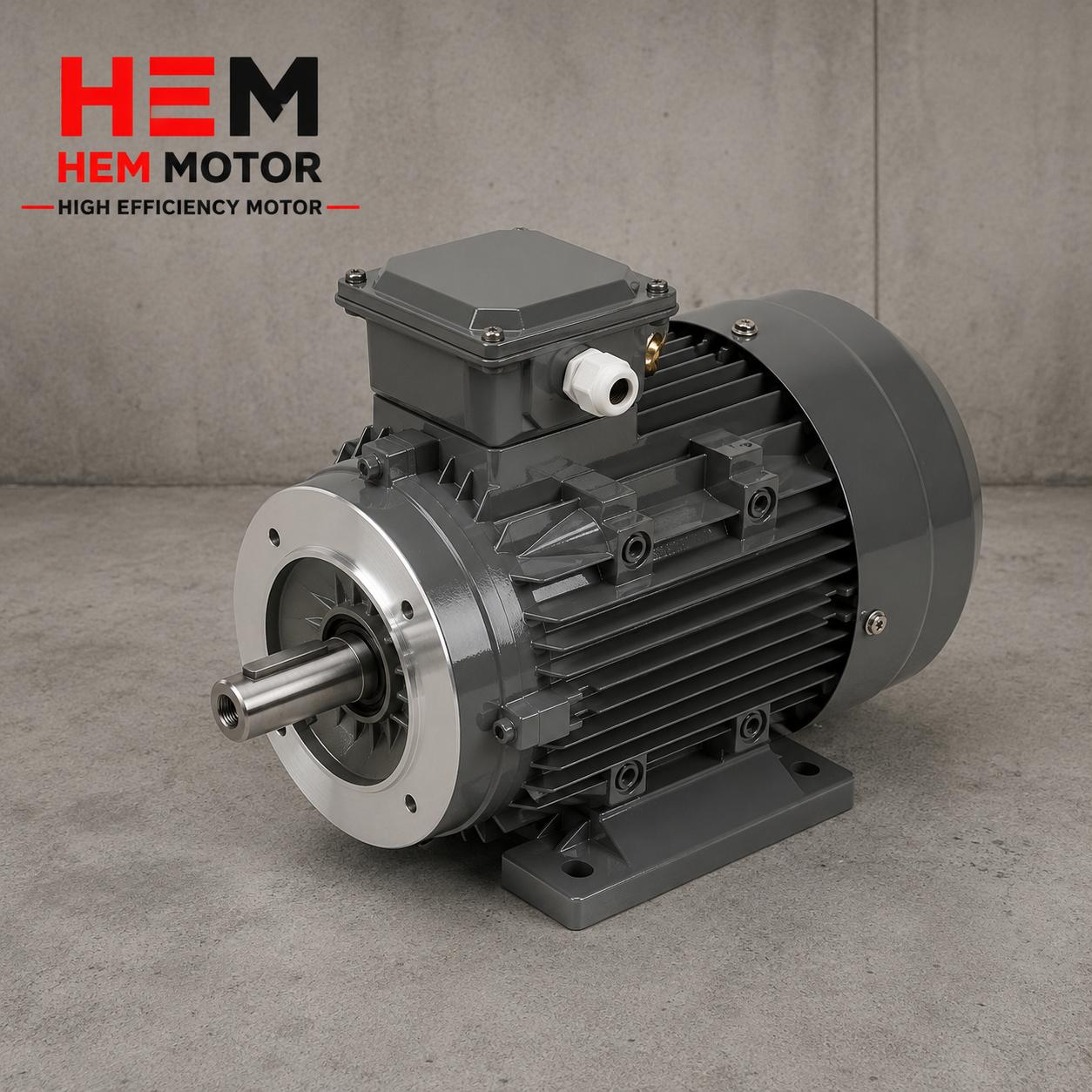
The Relationship Between Pole Count and Speed
The synchronous speed of an asynchronous motor is determined by the grid frequency and the number of poles. On a 50 Hz grid, 2 poles produce about 3000 rpm, 4 poles 1500 rpm, 6 poles 1000 rpm and 8 poles 750 rpm synchronous speed. The actual speed is somewhat below this due to slip; for example, a 6-pole motor turns at roughly 960–980 rpm under load. We explained the relationship of slip and actual speed in our article slip and actual speed in an asynchronous motor. We detailed the general logic of pole count selection in 2, 4, 6 pole which one for which job and the low-speed side in 6- and 8-pole low-speed motor selection.
Low Speed at the Same Power Means High Torque
There is a direct relationship between a motor’s shaft power (kW) and its speed and torque: power is proportional to torque times speed. Therefore a motor of the same kW power produces about twice the torque when its speed is halved. For example, while a 7.5 kW motor produces a certain torque at 1500 rpm, the same 7.5 kW produces about twice that torque at 750 rpm (8 poles). This is exactly why heavy-starting, high-torque loads can be directly driven by low-speed motors.
This high torque demand also affects the motor’s magnetic circuit and body. At the same power, an 8-pole motor is built in a larger frame than a 2-pole motor; because more poles require a larger magnetic cross-section and a bulkier rotor. This makes correct frame-power matching important. You can see the frame-power relationship in our article IE3 motor shaft diameter and frame table. We explained rated and starting torque selection in rated torque and starting torque in IE3 motor and torque classes (Design N/H).
IE4 Efficiency Curve: The Situation Is Different at High Pole Count
When the IE4 limit is set in the efficiency regulation, efficiency values are defined according to pole count and power. As a general rule, in high-pole (6- and 8-pole) motors the absolute efficiency value is defined somewhat lower than in a 2- or 4-pole motor of the same power; because relative losses increase at high pole count. However, this does not mean “8 poles is inefficient”. What matters is that the IE4 class sets a separate and more demanding efficiency threshold for each pole count; that is, an IE4 8-pole motor is in the highest efficiency group in its own category.
The practical meaning is this: instead of driving a low-speed load from a high-speed motor with a gearbox, driving it directly with an IE4 low-speed motor usually increases system efficiency because it eliminates gearbox losses. We examined the effect of pole count on efficiency in efficiency and pole count in an asynchronous motor and where losses are reduced in an IE4 motor in efficiency losses in an IE4 motor.
Beware of Oversizing at Partial Load
Because low-speed motors are usually large and expensive, the “let us buy big just in case” approach is a costly mistake. An oversized motor runs at partial load and its efficiency drops. We explained the importance of partial-load efficiency in an IE4 motor in partial and low-load efficiency in an IE4 motor and the correct load ratio in at what load should a motor run.
Gearless Direct Drive: When Does It Make Sense?
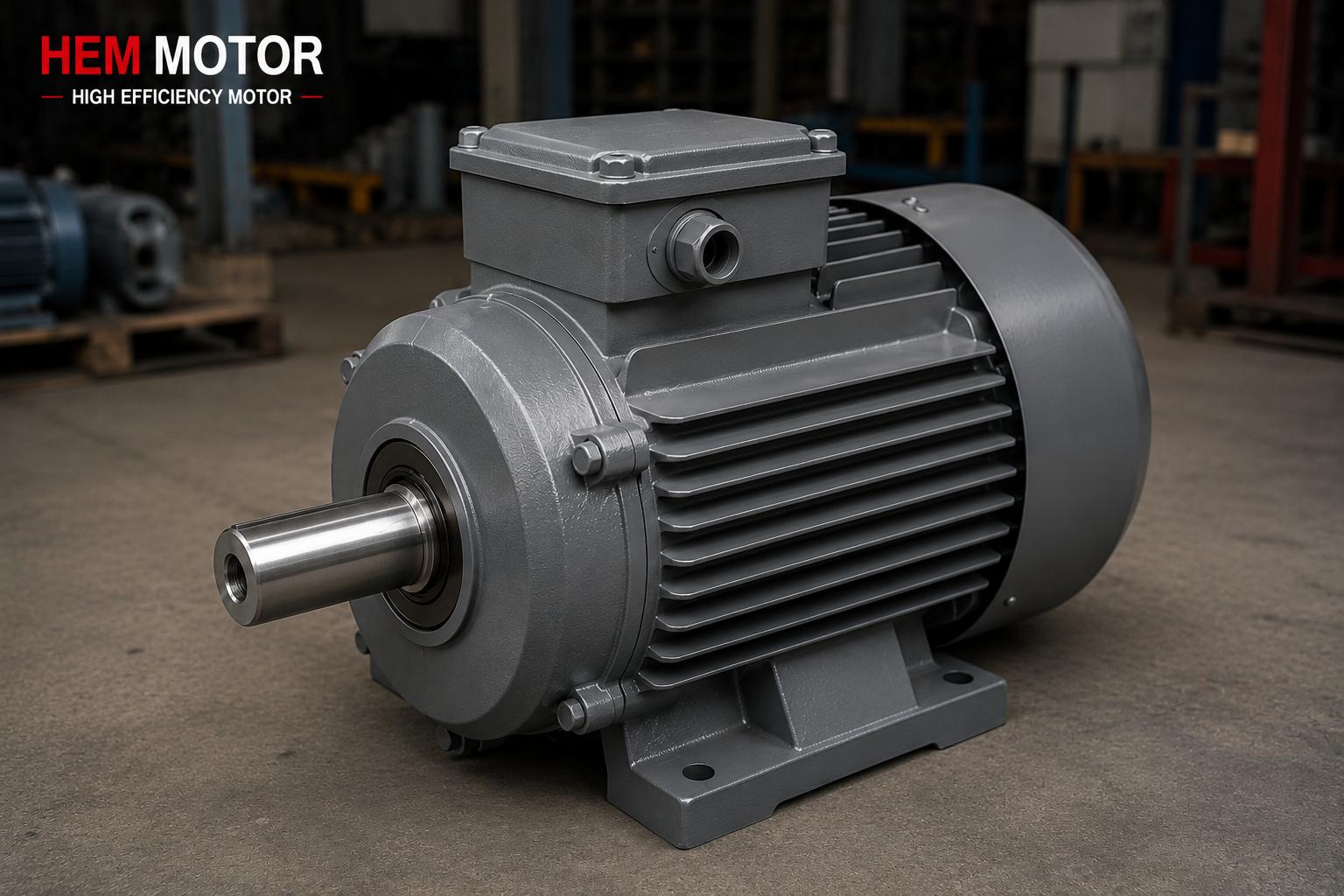
There are two ways to drive a load at low speed: high-speed motor + gearbox, or directly a low-speed motor. A gearbox brings extra cost, extra maintenance, oil changes and extra efficiency loss. If the load runs at standard low speeds such as 1000 or 750 rpm, direct drive is usually the simpler and more efficient solution. We detailed this logic in low-speed (high-pole) motors: gearless direct drive. If much lower speed is needed (e.g. 500 rpm), there is also the option of a 12-pole very low-speed motor.
On the other hand, if the load demands a much lower output speed (e.g. 50–100 rpm) or high torque multiplication, a gearbox is inevitable. In this case we explained the efficiency gain of matching the IE4 motor with a gearbox in using an IE4 motor with a gearbox.
Cooling and Heating at Low Speed
An overlooked aspect of high-pole motors is cooling. In a standard self-cooled (IC411) motor, the cooling fan is attached to the shaft end and turns at shaft speed. Because an 8-pole motor turns at 750 rpm, the air flow the fan produces is much lower than that of a 2-pole (3000 rpm) motor. That is, a low-speed motor is both cooled at a lower speed and has a larger frame at the same power. The manufacturer designs the motor considering this balance; however, the adequacy of cooling must be checked especially in low-speed motors running in high ambient temperatures. We explained cooling methods in electric motor cooling methods: IC411 and IC416 and power derating in high ambient temperature in cast iron motors in high ambient temperature.
If the motor will be run at variable speed with a frequency drive, at very low speeds its own fan’s cooling may be insufficient; in this case a force-cooled (IC416) frame or a separate cooling fan may be needed. We addressed the constant/variable torque distinction in variable-speed applications in motor selection in variable-speed applications.
Power Factor and Efficiency Label in Low-Speed Motors
In high-pole motors, the power factor (cosφ) is usually somewhat lower than in 2- or 4-pole motors; because the magnetising demand increases with pole count. This means the motor draws slightly higher current for the same active power and affects cable, fuse and contactor selection. When selecting protection components based on rated current in a low-speed IE4 motor, this point must be kept in mind. We explained the correct calculation based on rated current in IE3 motor rated current: cable, fuse and contactor selection. You can find how to read the motor efficiency label and which motor complies with the regulation in motor efficiency label and MEPS regulation.
It must not be forgotten that the IE4 efficiency class defines a separate threshold for each power and pole count. A motor being “IE4” does not mean the absolute efficiency value is fixed; the efficiency of an 8-pole 5.5 kW IE4 motor differs from a 2-pole 5.5 kW IE4 motor, but both are in the top group of their own category. We detailed how efficiency is measured and documented in how efficiency is measured in an IE3 motor (IEC 60034-2-1).
Starting Torque and Starting Method
Low-speed motors are usually used in loads demanding high inertia and high starting torque, which makes the starting method important. A large-frame low-speed motor draws a high starting current when started with direct-on-line (DOL). If the grid or generator cannot handle this current, star-delta or a soft starter is considered. We addressed starting methods in star-delta or soft starter and the starting current problem in a generator-fed facility in motor selection on a generator-fed site. You can find torque class selection by load in torque classes (Design N/H).
Typical Applications: Fan, Mixer, Conveyor
IE4 6- and 8-pole motors stand out in the following applications:
- Large-diameter fans: Low speed provides both quieter operation and the possibility of direct drive in a fan. You can find ventilation and fan motor selection in our article centrifugal and axial fan motor selection.
- Slow mixers and agitators: Low-speed mixing is common in concrete batching plants, chemical and food facilities.
- Heavy conveyors: A low-speed motor provides an advantage in belts demanding high starting torque and continuous load. We explained conveyor drive motor selection in cast iron heavy-duty conveyor drive motor.
You can find mechanical compatibility (are the frame, foot, shaft the same) when transitioning to an IE4 motor in mechanical compatibility in IE4 motor transition and correct power selection in motor power calculation: required kW for pump, fan and conveyor, and visit our home page for our product range.
Frequently Asked Questions
Is a 6-pole motor less efficient than a 4-pole motor?
In terms of absolute efficiency value, high-pole motors are defined with somewhat lower efficiency than 2- or 4-pole motors of the same power, because relative losses increase at high pole count. However, the IE4 class sets a separate efficiency threshold for each pole count; therefore an IE4 6-pole motor is in the top efficiency group in its own category. Also, driving a low-speed load directly without a gearbox usually increases system efficiency by eliminating gearbox losses.
Why does an 8-pole motor have a larger frame at the same power?
To produce the same power at low speed, the motor must produce much higher torque. High torque means a larger magnetic cross-section and a bulkier rotor, which leads to a larger frame. That is why an 8-pole motor is noticeably larger and heavier than a 2-pole motor of the same kW.
Should I choose a gearbox or a high-pole motor for a low-speed load?
If the load runs at standard low speeds such as 1000 or 750 rpm, a direct high-pole IE4 motor is usually the simpler, lower-maintenance and more efficient solution. If the load demands a much lower output speed (e.g. 50–100 rpm) or high torque multiplication, a gearbox is inevitable; in that case an IE4 motor + gearbox combination is preferred.
Get a Quote
Contact us to determine the correct power and frame of an IE4 6- or 8-pole low-speed motor for your fan, mixer or conveyor application. Share your load, speed and torque demand; let us evaluate together whether it should be geared or direct drive. To get a quote right away, call us on +90 (532) 345 49 86 or reach us through our contact page.
IE4 Low-Speed Motor Selection Checklist
- Is the application’s actual output speed demand (1000 or 750) clarified?
- Are the load’s starting torque and continuous torque calculated?
- Does the larger frame of a high-pole motor at the same power fit the installation space?
- Have gearless direct drive and the geared solution been compared in terms of efficiency?
- Is the motor selected with partial-load efficiency in mind, without oversizing?
- Is the IE4 efficiency class verified for the relevant power and pole count?
- Do the mounting type (B3/B5/B35) and shaft diameter match the application?
- Is it checked that the cooling fan does not impair efficiency at low speed?