English
 Türkçe

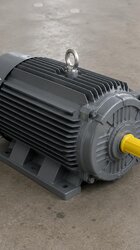
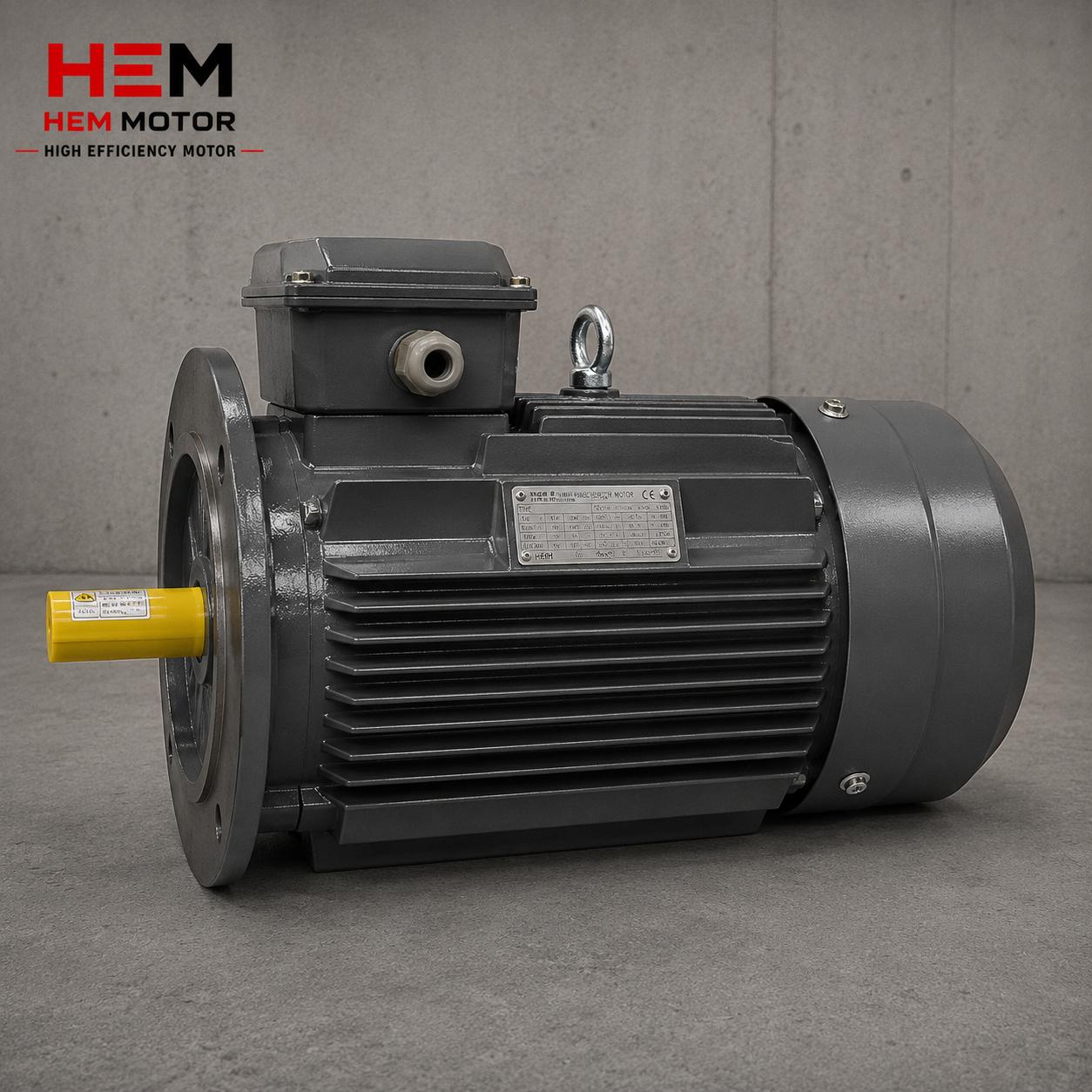

If you find yourself asking "why does this drive need such a low speed?" on a mixer, a cooling tower fan or a slow-rotating large drum, the answer is very often a 12-pole very low speed electric motor. On a 50 Hz grid, 12 poles produce a 500 rpm synchronous speed; under load this drops to around 480-490 rpm due to slip. The high pole count lets the motor produce far higher torque at the same power, which in many applications makes gearless direct drive possible. In this article we explain what speed a 12-pole motor produces, why it delivers high torque, in which frames and powers it is offered, and how to select it correctly for slow, high-torque applications such as mixers and cooling towers. As HEM Motor, with our identity as both manufacturer and supplier, we provide high-pole low-speed motors matched to your project requirements.
2, 4 and 6-pole motors are the most common types in the field; yet some applications demand a speed none of them can provide. This is where 8, 10 and 12-pole motors come in. In the low-voltage asynchronous range, 12 poles is practically one of the lowest-speed standard options, and it is especially valuable where a gearbox would add maintenance, efficiency loss and cost. For a general framework on correct pole and speed selection, our article on asynchronous motor pole selection complements this topic well.
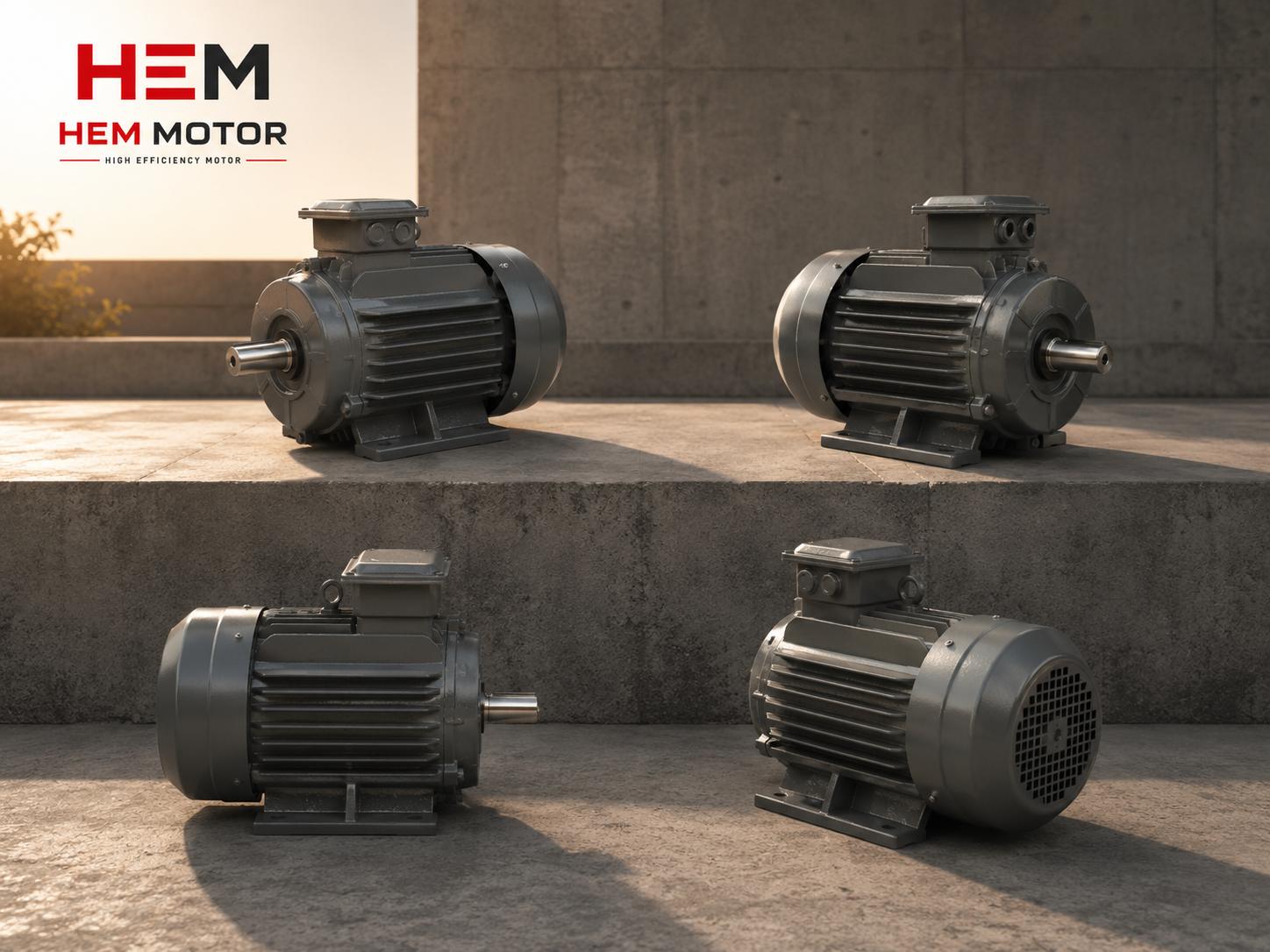
Why Do 12 Poles Produce 500 rpm?
The synchronous speed of an asynchronous motor depends on the grid frequency and the number of poles. The synchronous speed formula is 120 times the frequency divided by the number of poles. On a 50 Hz grid this works out as follows: 2 poles give 3000 rpm, 4 poles 1500 rpm, 6 poles 1000 rpm, 8 poles 750 rpm, 10 poles 600 rpm, and 12 poles 500 rpm. As the pole count rises, the synchronous speed falls; this is a clear relationship. 12 poles is one of the lowest standard synchronous speeds obtainable at 50 Hz.
However, an asynchronous motor never runs at exactly synchronous speed, because to produce torque the rotor must lag slightly behind the rotating field, that is, it must slip. Under load, the real speed of a 12-pole motor is not 500 rpm but around 480-490 rpm depending on slip. If full-load slip is in the 2-4% range, the output shaft turns at a value such as 485 rpm in practice. This is an important detail in application design: when calculating pump, fan or mixer flow, the real speed under load must be used, not the synchronous 500 rpm.
The Speed, Torque and Power Relationship
A motor's shaft power is proportional to the product of speed and torque. This simple but decisive relationship explains why low-speed motors produce higher torque. If the speed halves at the same kW power, the torque the motor produces roughly doubles. This is why a 12-pole motor offers a much higher rated torque than a 4-pole motor of the same power. For applications that demand slow but powerful rotation, this is exactly the desired characteristic.
- 500 rpm synchronous (12 poles): Ideal for mixers, cooling tower fans, slow drums and low-speed drives. Often eliminates the need for a gearbox.
- 600 rpm synchronous (10 poles): An intermediate solution between 12 and 6 poles; used in medium-low speed applications.
- 750 rpm synchronous (8 poles): A common choice for large fans and low-speed industrial drives.
- 1000 rpm synchronous (6 poles): The highest "low speed" limit for many general applications; insufficient where 12 poles are required.
The Advantage of Gearless Direct Drive
In the traditional approach, when a low speed is needed, a standard 4 or 6-pole motor is connected to a gearbox and the speed is reduced mechanically. This method works; but a gearbox adds extra cost, weight, lubrication need, periodic maintenance and some efficiency loss to the system. Each gear stage converts part of the power into heat through gear friction. The greatest advantage of a 12-pole motor is that it removes this intermediate link entirely, offering gearless direct drive.
In direct drive the motor shaft is connected to the driven load (mixer blade, fan hub or drum) directly or through a simple coupling. This structure leads to fewer parts, fewer maintenance points and quieter operation. Problems such as gearbox oil changes, seal leakage and gear wear disappear. In a continuously running facility this means a visible reduction in both operating cost and downtime risk. Matching the correct motor power and shaft structure to the load's inertia and torque is critical at this point.
In Which Frames and Powers Is It Offered?
For the same kW power, the motor frame grows as the pole count rises. This is because a high pole count requires more winding and a larger magnetic structure. Therefore a 12-pole motor is noticeably larger and heavier than a 4-pole motor of the same power. At medium powers, for example, 12 poles may be built in a frame two or three sizes larger than 4 poles. This is something to consider from the outset both for installation space and for lifting and shipping planning. On the subject of the motor's weight and handling method, our shipping and damage checklist article can offer guidance.
Mixer Applications
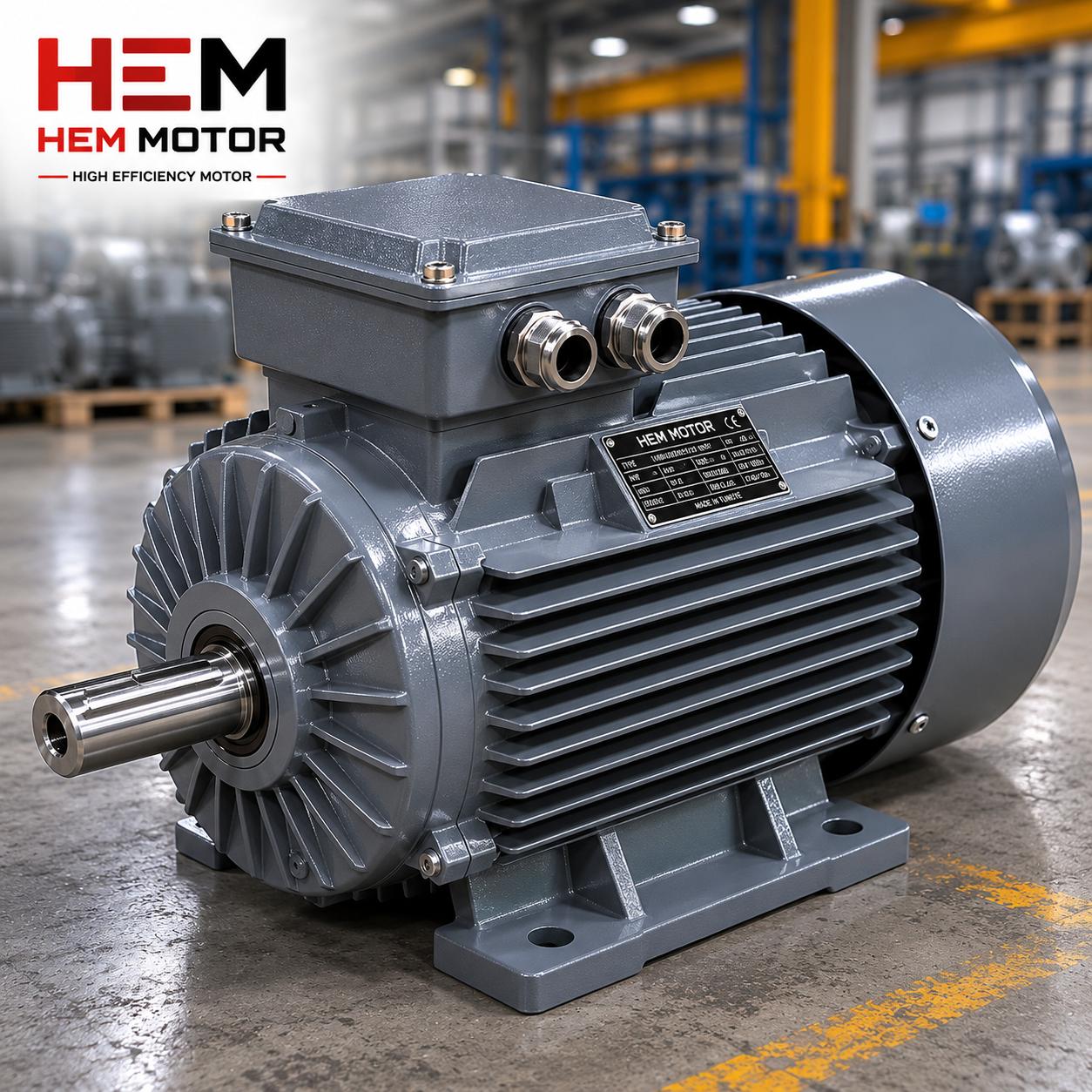
Mixers are one of the most typical application areas for 12-pole motors. To make the liquid, slurry or fluid-solid mixture inside a tank homogeneous, the mixer blade must rotate slowly but with high torque. A fast-rotating mixer creates turbulence and wastes energy; a slow, powerful mixer moves the mixture effectively. In areas such as wastewater treatment plants, chemical processes, paint and food production, slow mixing is often essential.
In these applications, the low speed of the 12-pole motor often limits the need for a gearbox to a single stage and a simple coupling, or removes it entirely. The starting inertia of the mixer shaft and the viscosity of the slurry require the motor to produce sufficient torque at start-up. Therefore, when selecting a mixer motor, not only power but also starting torque and continuous duty (S1) must be evaluated.
Cooling Tower and Large-Diameter Fan Applications
Cooling tower fans are the second major application area for 12-pole motors. In a cooling tower, a large-diameter axial fan moves a very large volume of air at low pressure. According to the fan laws, rotating a large-diameter fan at high speed creates both excessive noise and unnecessary energy consumption. For this reason large-diameter fans are run at low speed; a speed around 500 rpm provides sufficient air flow while limiting noise and energy use.
Here too, the low speed of the 12-pole motor makes it possible to drive the fan directly without a gearbox. Because cooling tower fan motors usually operate outdoors and in a humid environment, the protection class (at least IP55) and, where necessary, special coating are important. To ensure the motor has a long life in a humid and corrosive environment, the frame material and bearing structure must also be considered in the selection.
Other Slow, High-Torque Applications
- Slow drums and rotary equipment: Dryer drums, rotary screens and similar equipment demand low speed and high torque.
- Low-speed conveyor drives: On some conveyors carrying heavy material, a 12-pole motor reduces the need for reduction.
- Process mixers: In processes where high-viscosity mixtures must be stirred slowly and powerfully.
- Large industrial fans: In large-diameter axial fans where low noise and high air flow are required.
Points to Consider When Selecting a 12-Pole Motor
A few points must be clarified when selecting a 12-pole motor. First, whether the application really needs a speed around 500 rpm; if 750 or 1000 rpm is sufficient, a smaller and more economical 8 or 6-pole motor may be preferred. Second, the real speed under load (480-490 rpm) must be used in the application calculation. Third, the load's inertia and torque at start-up must not overstress the motor; especially when inertia is high, as in mixers and drums, the starting method becomes important. To control the high starting current, star-delta and soft starter methods can be evaluated.
Fourth, because of the motor's large frame size and weight, the installation area and lifting plan should be made from the outset. Fifth, in continuously running applications the efficiency class should also be taken into account, because the efficiency of a motor running all day is directly reflected in the electricity bill. As HEM Motor, we supply 12-pole low-speed motors in the correct frame and efficiency class according to your application's power, torque and protection requirements.
Frequently Asked Questions
At what speed does a 12-pole motor run under load?
A 12-pole motor has a synchronous speed of 500 rpm on a 50 Hz grid. However, asynchronous motors slip to produce torque; so under load the real speed drops to around 480-490 rpm. At full load the slip is typically in the 2-4% range. When calculating pump, fan or mixer flow, this real speed should be used instead of the synchronous 500 rpm.
Should a gearbox or a 12-pole motor be preferred for low speed?
Both provide low speed but offer different advantages. A gearbox lets you reach a very wide speed range with a standard motor but adds cost, maintenance, lubrication and efficiency loss. A 12-pole motor offers gearless direct drive, reducing maintenance points and simplifying the system. If the required speed is around 500 rpm and direct drive is possible, a 12-pole motor is often the simpler and more durable solution. For much lower speeds a gearbox is still necessary.
Why is a 12-pole motor larger and heavier than a 4-pole motor of the same power?
Shaft power is proportional to the product of speed and torque. Because a 12-pole motor runs at a much lower speed, it must produce much higher torque to deliver the same power. High torque means a larger magnetic structure, more winding and a larger frame. For this reason a 12-pole motor is several frame sizes larger and noticeably heavier than a 4-pole motor of the same power. This must be considered from the outset in terms of installation space and lifting planning.
Let Us Determine the Right Low-Speed Motor Together
A mixer, a cooling tower fan, a slow drum or a special low-speed drive; if your application demands a speed around 500 rpm and high torque, a 12-pole very low speed motor is often the simplest and most durable solution. As HEM Motor, we evaluate your application's power, torque, inertia and protection requirements together and determine the right low-speed electric motor in the correct frame and efficiency class. Share your need and, if available, the nameplate details of your existing motor; let us quickly select the most suitable motor for gearless direct drive.