English
 Türkçe

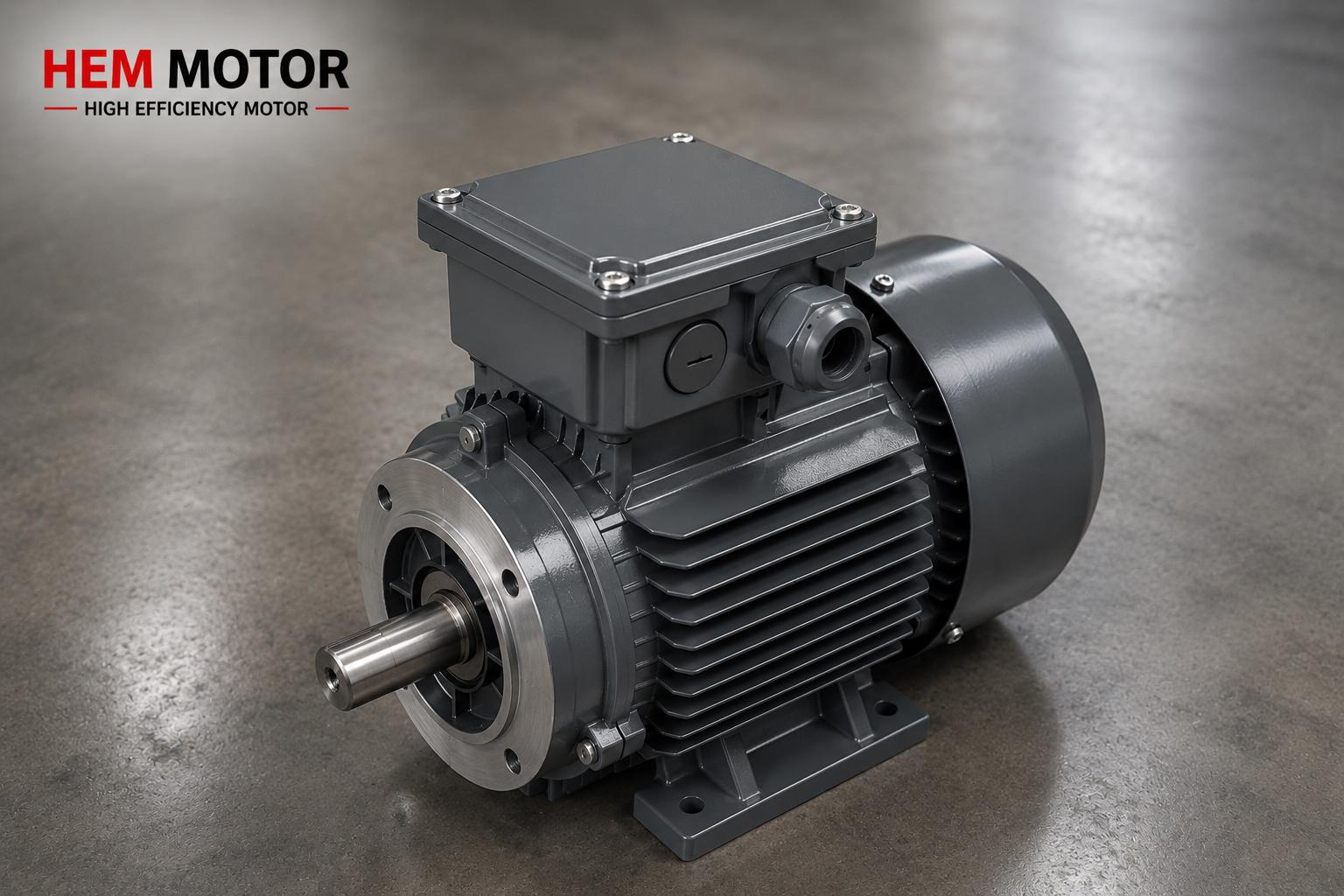

Frequently starting and stopping a motor to position, align or run it in short pulses (jogging or inching) is a far more demanding regime for the motor than it appears. At every start the motor draws several times its rated current, and this high current heats the winding in a short time. If the number of starts per hour exceeds the motor's limit, the motor overheats and shortens its life even though it does not run at continuous full load. In this guide we explain why jogging/inching generates heat, how the allowed number of starts is determined, which duty type (S4/S5) is suitable, and how to make the correct IE3 motor selection.
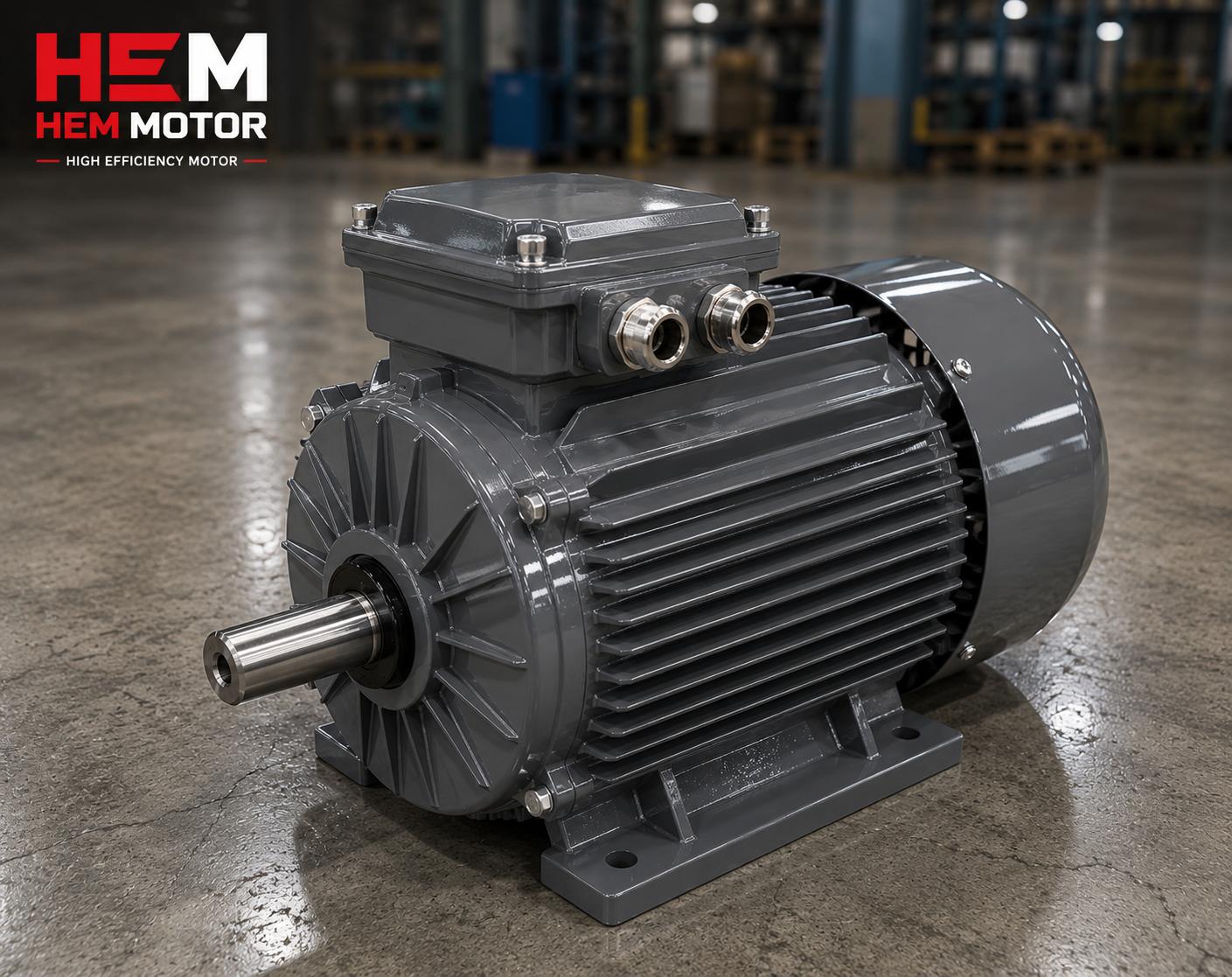
What Are Jogging and Inching?
Jogging (or inching) is the operation of starting and stopping a motor in short pulses without bringing it up to full speed. To bring a machine to a certain position, align a mould, move a belt slightly forward or slowly place a part, the operator runs the motor briefly and stops it immediately. This is very common in positioning and adjustment operations: conveyor alignment, press setting, crane positioning, machine tool calibration, and so on.
The basic feature of this regime is that the motor starts and stops very frequently. While a normal motor starts a few times a day, a jogging motor can start tens or even hundreds of times an hour. This is exactly where the problem begins. Our starts per hour limit article, in which we addressed the hourly starting limit in detail, forms the basis of this topic.
Why Is Heat Generated at Every Start?
When a stationary asynchronous motor starts, its rotor is motionless and the motor draws a starting current of about 5–8 times the rated current. This high current generates intense heat in the windings and rotor bars in a short time. When the motor reaches full speed the current returns to normal; however, if the start is repeated frequently enough, the motor has no chance to cool between two starts and heat accumulates.
For this reason the heating of a jogging motor comes from a different mechanism than that of a continuously running motor: it is not the load but the heat generated by the starting current that dominates. We examined why the starting current is so high and how to manage it in our starting current (LRA) article. We addressed the relationship between rated torque and starting torque in our rated torque and starting torque article.
Allowed Number of Starts (Starts/Hour)
Every motor has a maximum number of starts it can safely make per hour, depending on its thermal limit. This value varies with the motor's power, moment of inertia, load and cooling structure. Small-power motors can make more starts per hour, while in motors driving high-power, high-inertia loads this number drops significantly. If the "starts/hour" value given by the motor manufacturer is exceeded, the motor is thermally stressed.
The moment of inertia plays a critical role here: the greater the load inertia, the longer each start takes and the more heat it generates. We addressed motor selection in high-inertia impact loads in our motor selection in impact loads article. You can find how the hourly starting limit is determined in our starts/hour limit article linked above.
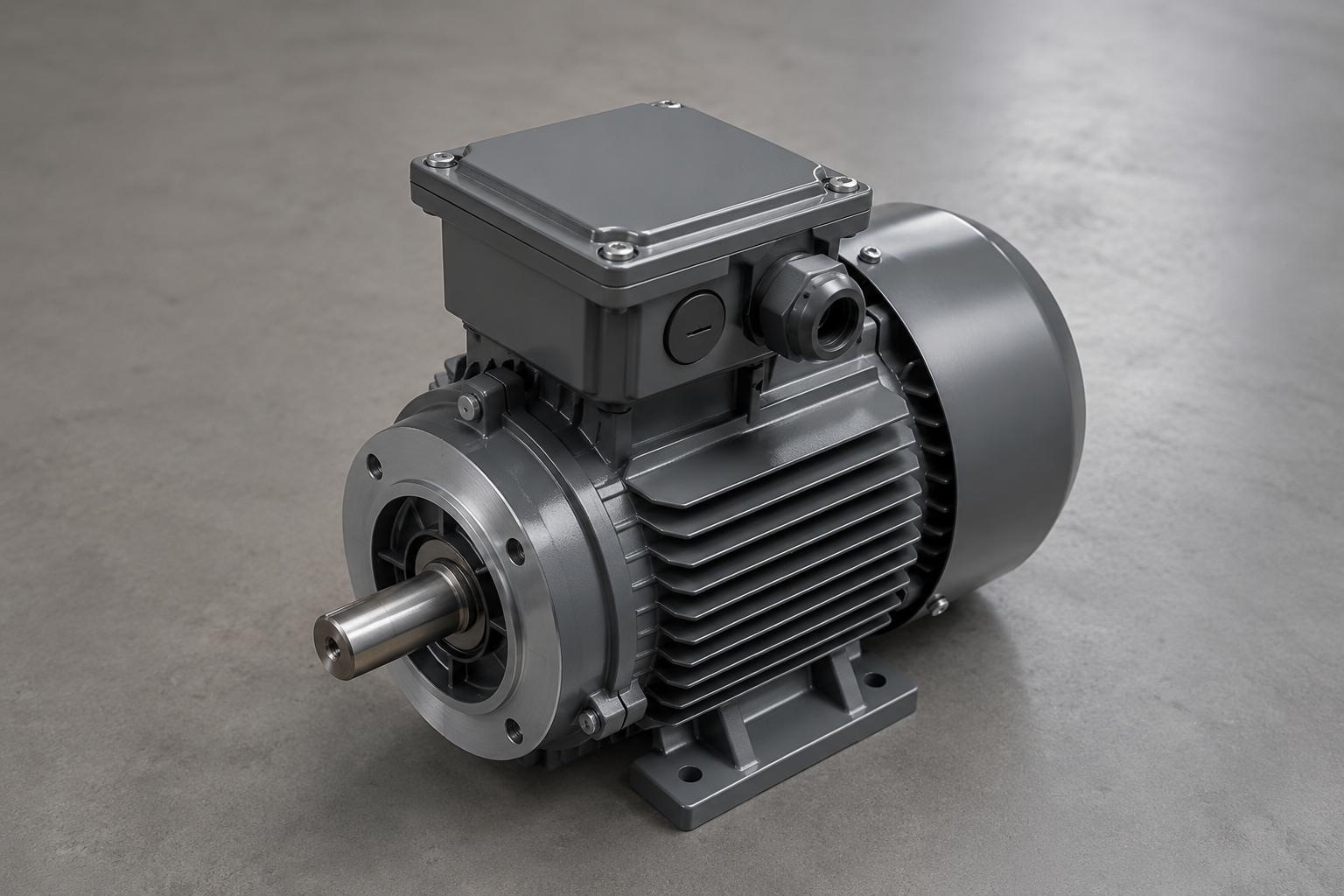
Duty Types S4 and S5: The Correct Definition
For applications with frequent start-stop, the motor's rated values must be given according to the intermittent and start-intensive duty types, not the continuous duty type S1. Two definitions stand out:
- S4 duty type: Intermittent periodic duty including the starting effect. The motor starts frequently, runs for a short time, stops; this cycle repeats. The heat generated by the starting current is within the definition.
- S5 duty type: Intermittent periodic duty including the electric braking effect in addition to S4. The motor both starts frequently and is stopped by electric braking; braking also generates additional heat.
Specifying the correct duty type in the order ensures the motor is sized for the jogging regime. We explained all the duty types in our duty type (S1-S6) selection article. You can find that the duty definition can change in dual-speed applications in our dual-speed (Dahlander) motors article.
Thermal Protection: PTC and Thermal Relay
In a jogging motor, the most reliable protection is thermal protection that directly monitors the winding temperature. A PTC thermistor (or PT100) embedded in the winding cuts the circuit and stops the motor when the winding temperature reaches a critical level. Because it directly senses the cumulative heating caused by frequent starting, this is a more sensitive protection than the classic current-based thermal relay; for in frequent starting, even if the average current appears low, the winding can heat up internally.
We addressed winding temperature monitoring with PT100 and PTC in detail in our winding temperature monitoring article. You can find thermal relay and fuse selection in our protection: thermal, relay and fuse article, and motor protection circuit breaker (MPCB) setting in our MPCB selection and setting article. We examined why the motor heats up in general in our temperature rise class and rise article.
A Brake Motor or VFD if Needed
If positioning accuracy is important in jogging applications, the motor must stop quickly when it runs. Two solutions stand out here. The first is a brake motor: an electromagnetic brake integrated behind the motor stops the motor quickly when power is cut and holds it in position. This is common in crane, conveyor and positioning applications. We addressed brake motor applications in our brake motor supply article.
The second is a variable frequency drive (VFD): with a VFD the motor is given a soft start and controlled stop; the starting current drops, heating decreases and positioning accuracy increases. In applications that jog very frequently, a VFD both protects the motor and increases accuracy. We explained VFD selection in our VFD with asynchronous motor article. You can find braking methods in an asynchronous motor in our braking: DC and dynamic braking article.
Correct IE3 Motor Selection
It is possible to select an IE3 motor suitable for the starting intensity without compromising on the efficiency class in the jogging regime. IE3 Premium efficient motors are the class made mandatory by the regulation across a wide power range and are also used in frequent start-stop applications; what matters is determining the motor's duty type and starts/hour value according to the application. We addressed the IE3 efficiency mandate in our IE3 efficiency class mandate article.
Reading the IE3 motor nameplate correctly (duty type, current, speed) is critical for selection; we explained this in our reading the IE3 motor nameplate article. For the margin that the service factor and overload capacity provide in jogging, you can look at our service factor and overload article. You can find the effect of the winding insulation class on life in our winding and insulation class (F/H) article, and the most sought power and speed combinations in our IE3 stock guide article. You can review all our IE3 content in our IE3 motors category.
Typical Jogging Applications
The frequent start-stop regime appears in many industrial applications. Bringing the belt to a certain position on conveyor lines, aligning the product on packaging machines, positioning the part on machine tools, press and mould settings, and precise placement of the load on cranes and hoists are typical examples of jogging. In these applications the motor runs in short pulses without reaching full speed and generates starting current heat at every pulse.
We addressed the brake motor and precise positioning need in crane and hoist applications in our crane and hoist lifting motors article. You can find conveyor belt motor replacement in our conveyor belt motor replacement article, and the positioning need in packaging machine motors in our IE3 use areas article.
Inertia, Load Type and Start Duration
How much heat a start generates depends largely on the load's moment of inertia. A high-inertia load (a large flywheel, a heavy drum, a full mixer) delays the motor reaching speed; during this time the motor continues to draw high starting current and heats up more. In low-inertia loads the start completes quickly and the heat is less. For this reason, when selecting a jogging motor, not only the power but also the inertia of the driven load must be evaluated.
We addressed torque class (Design N/H) and starting torque selection according to the load in our torque classes (Design N/H) article. You can find constant/variable torque selection in a variable-speed application in our motor selection in a variable-speed application article, and the low-speed direct drive option in our low-speed motors article.
Cooling and Monitoring: Managing Cumulative Heat
In the jogging regime, the motor's cooling is decisive in limiting heat accumulation. In standard surface-cooled (IC411) motors the fan rotates on the same shaft as the motor; when the motor stops the fan also stops, so cooling decreases at the moment of stopping. In applications with very frequent start-stop, independent fan cooling (forced cooling) continues cooling even at the moments the motor stops and reduces cumulative heating. This should be taken into account especially in applications with a high start frequency.
We detailed cooling methods (IC411/IC416) in our cooling methods article. You can find winding temperature monitoring in our winding temperature monitoring article, and motor lifespan and early failure causes in our motor lifespan and early failure article.
Frequently Asked Questions
Why does a jogging motor heat up even though it does not run continuously?
Because at every start the motor draws several times its rated current, and this high current generates heat in the winding in a short time. If the start is repeated frequently, the motor cannot cool between two starts and heat accumulates. So in jogging the cause of heating is not the load but the cumulative heat generated by the frequent starting current.
Which duty type motor should I choose for frequent start-stop?
S4 is suitable for intermittent duty including the starting effect, and S5 if electric braking is also involved. Specifying the duty type and the application's hourly start count in the order ensures the motor is sized for this regime. The S1 continuous duty type is not the correct definition for frequent start-stop.
What should I use as thermal protection in a jogging application?
The most reliable protection is to directly monitor the winding temperature with a PTC thermistor (or PT100) embedded in the winding. Because it directly senses the internal heating caused by frequent starting, it is more sensitive than a current-based thermal relay. Ideally a thermal relay and PTC are used together.
Get a Quote
Let us select together an IE3 motor with the right duty type, suitable for the starts/hour value and, if needed, with a brake, for your frequent start-stop (jogging/inching) application. We evaluate thermal protection and, if needed, the VFD requirement according to your application. For a fast quote call our line at +90 (532) 345 49 86 or reach us through our contact page. You can review our full product range from our home page and all related content from our IE3 motors category.
Purchasing and Selection Checklist
- Clarify the application's hourly start (starts/hour) count.
- Specify the duty type as S4 (start-intensive) or S5 (start + braking).
- Evaluate the load's moment of inertia; high inertia increases heat per start.
- Request PTC thermistor (or PT100) protection for the winding temperature.
- Set the thermal relay and MPCB according to the rated current.
- Evaluate a brake motor if positioning accuracy is needed.
- Consider a VFD option for soft starting in very frequent jogging.
- Verify the IE3 efficiency class and duty type from the nameplate.
- Choose the service factor and insulation class (F/H) according to the jogging margin.
- Supply a stock IE3 motor at the power and speed suitable for the application.