English
 Türkçe


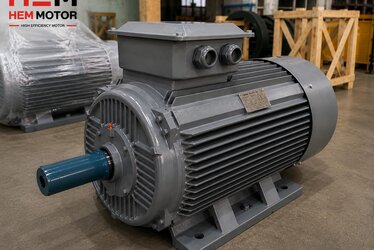
When you disconnect an asynchronous motor from the mains, it does not stop instantly. The rotor and the load attached to it keep turning because of the kinetic energy they carry. A small fan motor may stop within a few seconds, but high-inertia loads such as cranes, circular saws, centrifuges or large flywheels can keep spinning for minutes after being disconnected. This free coasting is perfectly acceptable for some applications; but where safety, productivity or process accuracy come first, it is not enough. In this article we examine in detail why braking an asynchronous motor is necessary, which methods exist, and how to choose between DC injection braking, dynamic braking, a VFD braking resistor and a mechanical brake according to your application.
The right braking strategy is not merely a matter of comfort. A poorly chosen or missing braking system can lead to safety accidents, lost production time, mechanical wear and even product damage. Conversely, a brake system designed far beyond the need brings unnecessary cost and complexity. To strike this balance, you must first understand the nature of the load.
Why Doesn't an Asynchronous Motor Stop Immediately?
A motor stopping means the depletion of the kinetic energy stored in the rotating masses. This energy is slowly converted into heat through passive losses such as friction and air resistance. The energy of a rotating system is proportional to its moment of inertia and the square of its angular speed. That is why a heavy mass spinning at high speed stores a surprising amount of energy and takes a long time to dissipate it passively.
In engineering, this rotational inertia is usually expressed as GD² (inertia factor) or J (moment of inertia). A centrifuge drum, a load wound on a crane drum, or a saw blade can have far more inertia than the motor's own rotor. In free coasting this energy is dissipated only through bearing friction and aerodynamic losses, so the stopping time can in practice reach several minutes.
When Is Free Coasting Insufficient?
- Safety: On a saw or cutting machine where the operator must approach quickly and safely, a blade spinning for minutes is a serious hazard. Machinery directives and emergency stop standards mandate specific stopping times.
- Repeatability: On automated production lines, the motor is required to stop at the same position every time for positional accuracy. Free coasting stops at different times and positions as the load changes.
- Productivity (cycle time): On a machine that stops and starts frequently, waiting minutes for each stop reduces production capacity.
- Process requirement: A centrifuge may need to slow down within a defined time for discharge, or an elevator/crane load may need a controlled descent.
Braking Methods and Working Principles
The main braking methods used on asynchronous motors differ by where they send the energy and what kind of stopping character they offer. Below we examine the four most common methods.
1. DC Injection Braking
DC injection braking is based on applying direct current (DC) to the stator windings after the motor is disconnected from the mains. This constant DC current creates a stationary (non-rotating) magnetic field in the stator. As the rotor, still turning by inertia, rotates within this fixed field, currents are induced in the rotor and a braking torque opposing rotation is produced. The rotor's kinetic energy is dissipated as heat in the rotor bars.
This method is attractive because it requires no mechanical brake lining, contains no wearing parts, and can be implemented with a relatively simple control panel. The DC current level (braking current) and the application time determine the braking torque and the stopping time. As current increases the brake torque rises; but because winding heating also rises, the thermal load must be calculated carefully, especially in frequently repeated cycles.
2. Dynamic Braking
The term dynamic braking is broad and refers to dissipating the energy produced by the motor as heat in a resistor. When an asynchronous motor is forced above synchronous speed (for example when a load pushes the motor), it enters generator mode and produces energy. In drive-fed systems this energy can be directed through the DC bus to a resistor. In dynamic braking, the motor converts rotational energy into electrical energy and then into heat.
This method is a standard solution especially in modern systems running with a VFD frequency drive, and provides a controlled, adjustable deceleration. In VFD-driven asynchronous motor applications, braking can be programmed precisely with the drive's ramp parameters.
3. Resistive/Regenerative Stopping with a VFD Braking Resistor
When a frequency drive decelerates a motor, the motor behaves like a generator and pumps energy back into the drive's DC bus. This energy raises the DC bus voltage. If the energy is not dissipated quickly, the drive trips on an overvoltage fault. This is where the braking resistor comes in, converting the excess energy into heat to keep the DC bus at a safe level and provide a fast, controlled stop.
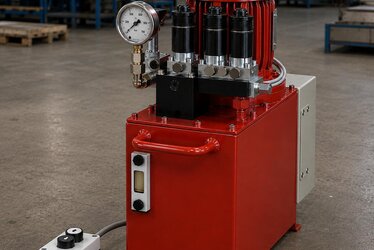
On high-inertia loads or where very short stopping times are required, correctly sizing the braking resistor is critical. The resistance value, power rating and duty cycle are selected according to the energy to be stopped and the braking frequency. Otherwise the resistor overheats and its life is shortened.
4. Mechanical (Electromagnetic) Brake
A mechanical brake usually takes the form of a spring-applied disc brake mounted at the rear of the motor. When power is cut, the spring engages to clamp the disc and hold the shaft; this is very valuable for safety because it engages automatically on power loss (fail-safe). In crane, elevator and lifting applications it acts as a holding brake to prevent the load from falling under gravity.
Because it contains moving and wearing parts, the mechanical brake requires periodic maintenance; but it is the only passive method that can lock the motor completely at zero speed. Electrical braking methods can slow the motor down greatly, but holding it fully at standstill is usually the job of the mechanical brake.
Choosing the Right Method by Application
The right braking strategy is often the result not of a single method but of a combination of them. When choosing, evaluate these criteria:
- Load inertia (GD²): High inertia requires stronger braking or a larger braking resistor.
- Braking frequency: If many stops are made per hour, thermal load and resistor sizing become prominent.
- Stopping-time target: If a safety standard mandates a specific time, the method is chosen accordingly.
- Need to hold at full standstill: If the load can slide under gravity, a mechanical holding brake is mandatory.
- Energy recovery: In large systems that brake very frequently, regenerative solutions can save energy.
Typical Application Matches
- Crane and lifting: Electromagnetic holding brake + controlled deceleration with a VFD.
- Circular saw: DC injection or VFD braking resistor for fast stops; safety-standard focused.
- Centrifuge: Strong braking resistor or dynamic braking due to high inertia.
- Conveyor and precise positioning: VFD ramp + mechanical hold if required.
Heating During Braking and the Importance of Motor Selection
Whichever method is chosen, a certain amount of energy turns into heat during braking. In DC injection this heat appears in the rotor and windings; with a braking resistor in the external resistor; and in a mechanical brake in the lining. In frequent stop-start applications, the accumulation of this heat directly affects motor selection. Therefore the motor's duty type, insulation class and thermal protection must suit the braking regime.
Braking load and starting load must be considered together; both heat the motor. Choosing the right bearing type and winding insulation directly determines motor life under repeated brake cycles. A high-efficiency IE4 high-efficiency electric motor, with its lower losses and better thermal behaviour, offers an advantage in demanding braking regimes.
The Right Solution with Stock and Engineering Support
Braked motor applications are not as simple as "picking a motor from a catalogue"; they require an engineering approach that evaluates load inertia, cycle count, safety requirements and thermal load together. With our broad stock and technical know-how in brake motors, braking resistors, frequency drives and asynchronous motors of the appropriate duty type, we can determine the most suitable solution for your application together. Share your project requirements and we will recommend the best braking strategy for your load and stopping target. You can explore our product range and more technical content on our homepage.
Parameters to Consider in Braking Calculations
To design a braking system correctly, it is not enough to simply say "stop the motor"; the energy to be stopped and the desired stopping time must be set out numerically. From an engineering standpoint, the following parameters are brought together: the total moment of inertia of the load, the initial speed, the targeted stopping time, the braking frequency and the ambient temperature. With this data, the heat energy released during braking and the required brake torque are calculated. When a high-inertia centrifuge is to be stopped in a few seconds, the released energy can be surprisingly large, and this energy must turn into heat somewhere.
Braking torque is inversely proportional to the stopping time: the faster you want to stop, the greater the torque needed. However, very high brake torque can cause sudden stresses in mechanical transmission elements (coupling, gearbox, shaft). Therefore braking must be evaluated not only electrically but also in terms of mechanical strength. A good design strikes the balance between a fast stop and mechanical safety.
Another important point is where the braking energy goes. In DC injection the energy is dissipated within the motor itself, in a braking resistor in the external resistor, and in regenerative systems by being returned to the mains. In large systems that brake very frequently, recovering this energy can be a significant saving. All these evaluations require the motor and the brake system to be selected together, as a whole.
Maintenance, Life and Reliability
When choosing a braking method, maintenance needs must also be taken into account. Mechanical brakes require periodic inspection and adjustment due to lining wear; as the lining wears, the air gap increases and brake performance drops. Electrical braking methods have a lower maintenance burden because there are no wearing mechanical parts, but the correct thermal sizing of the braking resistor and the drive determines their life. An overloaded braking resistor fails quickly; a correctly selected resistor operates trouble-free for years.
In safety-critical applications, the braking system is required to stay on the safe side even in the event of a fault (fail-safe). Spring-applied mechanical brakes are valuable in this respect because they engage automatically when power is cut. Electrical braking, on the other hand, depends on the presence of power, so at safety-critical points it is usually backed up with a mechanical brake. A well-designed system provides both comfort in normal operation and safety in the event of a fault.
Frequently Asked Questions
Does DC injection braking damage the motor?
When correctly sized, it does not. However, the braking current generates heat in the rotor and windings. Very frequent or very long DC injection can push the motor's thermal limit. Therefore, if braking frequency is high, the duty type must be chosen appropriately, thermal protection must be used, and if necessary an external braking resistor should be adopted.
How do I choose between a mechanical brake and electrical braking?
The general rule is this: electrical braking (DC injection, dynamic braking, braking resistor) decelerates the motor quickly and in a controlled way; a mechanical brake holds the motor safely at full standstill. In applications where the load can fall, such as cranes and lifting, a mechanical holding brake is mandatory. Often the best solution is a hybrid approach that uses both together.
How should I size a VFD braking resistor?
The resistor's value, power rating and duty cycle are determined by the kinetic energy to be stopped, the deceleration time and the braking frequency. In high-inertia systems that brake frequently, the resistor power should be selected high, otherwise the resistor overheats. For correct sizing, it is enough to share the load's GD² value, the speed range and the number of stops per hour with us.